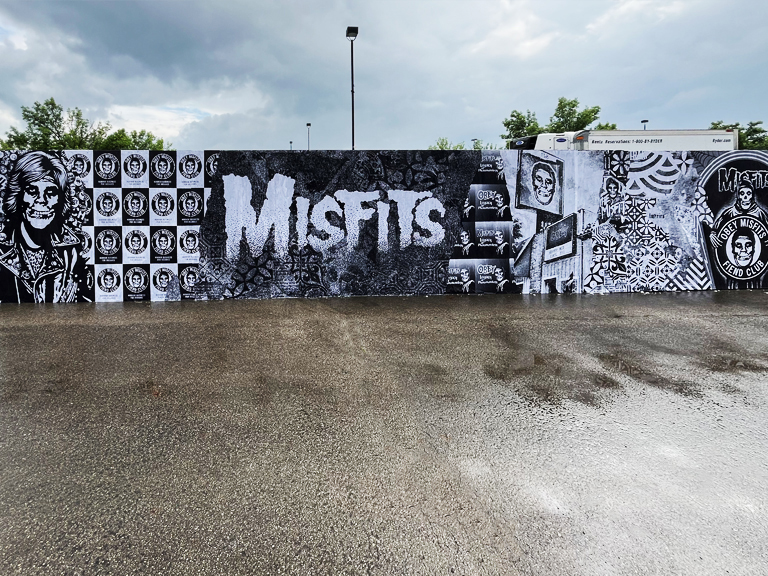
Lollapalooza is one of the most recognizable music festivals in the world, and four days in Grant Park in early August means over 400,000 festival-goer instances moving through downtown Chicago and the surrounding neighborhoods. For brands that want to reach a young, affluent, culturally-engaged audience in one of America’s greatest cities, no single event concentrates that opportunity more efficiently.
American Guerrilla Marketing deploys campaigns in Chicago year-round and executes event-adjacent activations across the Lollapalooza market every summer. Our street-level campaign infrastructure covers the Grant Park approach corridors, Chicago’s key festival-demographic neighborhoods, and the LED billboard truck routes that maximize impressions during the festival’s busiest windows. We handle everything from location scouting through GPS-documented post-campaign reporting.
Here’s what an effective Lollapalooza 2026 brand activation looks like, what formats we deploy, and how to get a campaign built and ready before the best locations are taken.
The Lollapalooza Market Opportunity
Lollapalooza’s footprint extends well beyond Grant Park. The festival’s attendee base lives and socializes across Chicago’s North Side, West Side, and beyond. They arrive via the L and Metra, through Union Station, along Lake Shore Drive, and through downtown pedestrian corridors that see dramatically elevated traffic during the four-day event window. The brand activation opportunity is citywide, not just perimeter-adjacent.
Audience Profile
Lollapalooza skews 18-34, with strong representation of the demographic that marketers spend the most effort trying to reach through conventional media and consistently underperform. This is an audience that curates its media consumption aggressively, blocks digital ads, and responds positively to experiences that feel authentic and relevant to their cultural world. Street-level brand presence in their actual environment, done well, breaks through in a way that display advertising simply doesn’t.
Four-Day Duration Advantage
Unlike single-day events, Lollapalooza gives brands four full days of concentrated audience presence in the Chicago market. A campaign that launches in the days before the festival and maintains presence through the closing weekend gets compounding impressions from the same core audience across multiple touchpoints. By day four, your brand is part of their Lollapalooza experience whether they consciously registered it or not.
LED Billboard Trucks Near Grant Park
Our LED billboard trucks are one of the most effective formats for Lollapalooza activations because they move. While fixed placements reach people in specific locations, a well-routed LED truck covers the full perimeter of Grant Park, the Michigan Avenue approach corridor, and the transit hub connections that feed the festival from the North Side and the Loop.
How We Route LED Trucks During Lollapalooza
Truck routes are designed around the festival’s daily schedule: pre-show arrival flows, mid-day peak periods, and the post-set dispersal wave when 100,000 people exit Grant Park simultaneously and flood the surrounding streets. The post-show window is one of the highest-density brand exposure moments we’ve documented in any U.S. market: a single truck working that exit corridor generates an extraordinary number of impressions in a compressed time window.
Michigan Avenue and the Festival Approach
Michigan Avenue is the primary approach corridor for festival-goers arriving from the North. Our LED trucks work this route during the pre-show morning and afternoon window, hitting commuters, tourists, and festival attendees as they converge on Grant Park. The visual impact of a full-size LED display on this corridor against the backdrop of the Chicago skyline creates the kind of memorable brand moment that stays with people.
Poster Campaigns in Chicago’s Festival Neighborhoods
Lollapalooza’s core audience doesn’t just appear at Grant Park. They live in specific Chicago neighborhoods that have been home to the city’s creative and cultural communities for decades. Reaching this audience in their own environment: days before they ever head to the festival: builds brand recognition that activates throughout the event weekend.
Wicker Park and Logan Square
These two North Side neighborhoods concentrate some of the highest densities of Lollapalooza-demographic residents in Chicago. Our large-format poster campaigns in these neighborhoods reach the festival audience in their local coffee shops, on their walk home, and along the corridors they travel daily. Placement here before the festival begins establishes brand presence that carries into the festival environment.
Pilsen and the West Loop
Chicago’s creative and arts communities have deep roots in Pilsen and the expanding West Loop. These neighborhoods add important reach into younger creative demographics that index highly for Lollapalooza attendance and cultural influence. A campaign that covers both North Side festival neighborhoods and the West Side creative districts builds a genuinely broad Chicago footprint.
Brand Ambassador Activations at CTA Transit Points
Chicago’s L system carries a substantial portion of Lollapalooza’s daily attendance. The Red Line and Blue Line funnel North Side residents toward the Loop, while the Green Line connects the South Side. Our brand ambassador teams positioned at key CTA interchange points during festival hours intercept the audience at their transit moments: waiting for the train, emerging from a station, transitioning between lines.
Transit Timing Strategy
The highest-value deployment windows for ambassador teams at CTA stations are the two hours before festival gates open and the 90-minute window following headline set endings. These are the moments when the audience is concentrated, moving predictably, and in a festival mindset that makes brand interactions feel natural rather than intrusive.
Sidewalk Stencil Campaigns Along Festival Routes
Chicago’s flat, wide sidewalks are excellent for sidewalk stencil campaigns. Stencil placements along the pedestrian routes from CTA stations toward Grant Park create a branded path that reaches the audience multiple times per day across the full festival weekend. We place stencils at high-visibility intervals: entry to station, midpoint corridor, final approach to festival entrance: so the same message is encountered in sequence.
What Chicago’s Street Culture Means for Campaign Creative
Chicago has one of the richest street art and outdoor visual culture traditions of any American city. The murals of Pilsen, the posted walls of Wicker Park, the stencil culture of Logan Square, and the gallery corridor of the West Loop have created a sophisticated visual audience that knows what it’s looking at. Brands that enter this environment with generic national creative face a harder time breaking through than brands that create work that belongs in the conversation Chicago’s visual culture is already having.
The Chicago Visual Standard
Chicago’s creative community has extraordinarily high standards for public visual culture. The city’s mural arts legacy, its strong design education infrastructure, and its deeply engaged creative professional community mean that the visual bar for what counts as “worth noticing” in a Chicago street environment is meaningfully higher than in many comparable U.S. markets. Brands that acknowledge this by investing in genuinely high-quality creative execution earn the audience’s respect and generate organic social documentation from exactly the culturally-influential creative professionals who matter most for brand credibility in this market.
Running the Full Lollapalooza Campaign Window
The most effective Lollapalooza brand activations we’ve executed combine multiple formats across the full campaign window: pre-festival poster placements in key neighborhoods (one to two weeks before), LED truck deployment during festival days, ambassador activations at transit points, and stencil campaigns on festival approach routes. This multi-format, full-window approach reaches the audience at multiple stages of their festival experience rather than betting on a single intercept moment.
Campaign Timeline
- 2-3 weeks before festival: Neighborhood poster placements in Wicker Park, Logan Square, Pilsen, Lincoln Park
- Festival eve: Final poster refresh, stencil placements on approach routes
- Festival days 1-4: LED truck deployment on defined routes, ambassador team activations at CTA points
- Post-festival: Campaign documentation compiled and delivered
Lollapalooza as a Brand Platform: Strategic Framing
The most effective brand strategies at Lollapalooza frame the festival not as a single activation moment but as a platform for connecting with a specific cultural community that uses the festival as one of its defining shared experiences. The brands that perform best in this environment are the ones that approach the festival with genuine cultural respect and strategic intelligence rather than simply showing up with a logo and a giveaway budget.
The Cultural Community Lens
Lollapalooza’s audience has a distinct cultural identity. They value musical discovery and authenticity, they’re sophisticated consumers who filter out generic commercial messages, and they share a set of cultural references and aesthetic sensibilities that define the festival’s communal character. Brands that enter this space with creative that demonstrates awareness of and respect for those cultural markers generate significantly stronger audience response than brands that treat the festival crowd as undifferentiated consumer inventory to be reached through standard advertising formats.
Alignment Between Brand Values and Festival Values
The brands that generate the most organic goodwill and social amplification at Lollapalooza are almost always the ones whose values genuinely align with the festival’s community values: creativity, discovery, sustainability consciousness, support for artists, and authentic human connection. This doesn’t mean brands in categories that aren’t inherently artistic or progressive can’t activate effectively here: it means the brand’s activation strategy needs to demonstrate genuine engagement with what the community cares about, rather than simply placing a logo in a high-traffic location and calling it done.
The Long Game: Multi-Year Presence
Brands that commit to Lollapalooza market presence over multiple years build the kind of recognition and familiarity that single-year activations simply cannot produce. The core of the Lollapalooza audience is relatively consistent year over year: many attendees return annually: and a brand that has been part of their festival experience for two or three years has earned a level of recognition and positive association that a first-year activation campaign, no matter how well-executed, cannot replicate. We specifically encourage brands with long-term Chicago market objectives to think about their Lollapalooza activation as a recurring annual program rather than a one-time investment.
Understanding the Chicago Festival Market in Depth
Chicago is the third-largest U.S. city and one of the country’s most vibrant outdoor advertising markets. The combination of a strong walkable downtown, densely populated North Side creative neighborhoods, and a robust transit system that moves large audiences through predictable corridors gives street-level campaigns in Chicago exceptional reach efficiency. For Lollapalooza specifically, these structural advantages multiply because the festival concentrates the city’s most culturally engaged demographic into a compressed geographic footprint for four consecutive days.
Grant Park Geography and Its Activation Implications
Grant Park’s position on the lakefront, bounded by Michigan Avenue to the west and Columbus Drive to the east, creates a specific activation geography that brands need to understand. The Michigan Avenue corridor is the primary approach from the North Side neighborhoods, the Chicago Riverwalk area, and downtown hotels. Columbus Drive and the lakefront path handle east-side approach traffic. Each corridor has distinct pedestrian characteristics and advertising environments that inform how we route LED trucks and position poster campaigns during the festival period.
The Multi-Day Accumulation Effect
Four days of continuous festival attendance creates a brand impression accumulation that single-day events cannot replicate. A poster placed on a wall along the Michigan Avenue approach corridor gets seen by the same festival-goers on their walk to the venue on each of the four festival days. By day four, that audience has seen the creative four times in the same context: which is a level of repetition that research consistently shows produces strong brand recognition and recall. This accumulation effect is one of the most underappreciated advantages of activating at multi-day festivals, and it’s a specific reason why Lollapalooza is worth investing in compared to single-day events with nominally higher attendance figures.
The Role of Social Media in Lollapalooza Brand Activation
Lollapalooza generates extraordinary social media documentation. Hundreds of thousands of attendees are actively creating and sharing content across the four-day event, and the creative that appears in their city surroundings competes for that documentation attention alongside the festival performances and experiences themselves. A visually compelling brand campaign in the Lollapalooza environment that gets photographed and shared by even a fraction of attendees generates organic social impressions that dramatically extend the campaign’s effective reach.
What Makes Campaign Creative Photographable in This Context
In the Lollapalooza environment, campaign creative competes with some of the most visually intense stimuli the city produces all year. The creative that gets photographed and shared is the creative that manages to be more visually interesting than everything else in the frame when someone decides to document their festival experience. Scale, unexpected color, clever messaging that resonates with the festival audience’s cultural references, or placement that creates an interesting juxtaposition with the urban environment: any of these can produce the kind of visual surprise that triggers social documentation behavior.
How We Help Brands Maximize Social Amplification
Our location scouting process specifically identifies surfaces that provide strong photographic backgrounds: clean walls that let creative speak without competing visual clutter, locations with interesting urban context that adds to the visual story of a photograph, and positions that are naturally encountered during the moments in the festival experience when people are most likely to be capturing content. We brief creative teams on these photographic considerations early in the campaign design process so that the creative and the placement strategy work together to maximize organic social documentation.
Budget Allocation Strategy for Lollapalooza Activations
How to allocate budget across the different formats and timing windows of a Lollapalooza activation is one of the most common strategic questions we work through with clients. The right allocation depends on campaign objectives, but some general principles hold across most brand categories and budget levels.
Prioritize Pre-Festival Neighborhood Presence
For brands with brand awareness objectives in the Chicago market that extend beyond the festival window itself, pre-festival neighborhood campaigns in Wicker Park, Logan Square, and Pilsen deliver disproportionate value relative to their cost. These placements reach the Lollapalooza audience before the event and continue generating impressions with Chicago residents who may not attend the festival but who represent the same demographic segment the brand is trying to reach. Allocating a meaningful portion of the Chicago campaign budget to pre-festival neighborhood placements delivers sustained market presence rather than event-only exposure.
LED Trucks for Peak-Density Windows
LED truck deployment is most effective when concentrated in the highest-audience-density windows rather than distributed evenly across all festival hours. The two-hour pre-gate window and the 60-90 minutes immediately following headline set endings are when audience concentration on festival approach corridors is highest. Concentrating LED truck deployment budget in these specific windows, rather than running trucks throughout the full festival day, delivers higher impressions per dollar and reaches the audience in a higher emotional state of engagement.
Ambassador Teams for Depth of Impression
Brand ambassador teams represent the highest per-contact brand impression quality in the campaign toolkit, and their allocation should reflect that. Rather than spreading ambassador coverage thinly across many locations, concentrating a smaller team at one or two high-value transit points and giving them the space to conduct genuine interactions with festival-goers delivers more valuable impressions than a large team briefly handing items to passing crowds. The quality of the ambassador interaction is what drives recall, not the raw number of contacts made.
Documentation and Post-Campaign Reporting
Every element of an AGM Lollapalooza campaign is GPS-tracked and photo-documented. Poster installations are photographed at placement and monitored for duration. LED truck routes are logged with GPS data. Ambassador shift reports document location, hours, and interactions. Post-campaign, you receive a consolidated report covering all campaign elements with the kind of verifiable data that makes presenting results to brand stakeholders straightforward.
Frequently Asked Questions About Lollapalooza 2026 Brand Activation
When is Lollapalooza 2026 in Chicago?
Lollapalooza 2026 takes place in Grant Park in Chicago, Illinois, typically over four days in early August. The festival draws over 100,000 attendees per day, making it one of the largest brand activation environments in the U.S. festival calendar and one of the most concentrated opportunities to reach young consumers in Chicago.
What brand activation formats work best at Lollapalooza?
LED billboard trucks along Michigan Avenue and the Grant Park perimeter, large-format poster campaigns in Wicker Park, Logan Square, and Lincoln Park, brand ambassador activations at CTA transit points, and sidewalk stencils along the pedestrian approach corridors all perform well for Lollapalooza brand campaigns. Multi-format campaigns outperform single-format approaches significantly.
Can AGM activate near Lollapalooza without official sponsorship?
Yes. AGM’s proximity marketing approach operates on public streets and permitted surfaces outside the festival perimeter. This reaches the Lollapalooza audience at the street level without requiring official festival sponsorship, often at a significantly lower cost with comparable or greater street-level reach and impression volume.
Which Chicago neighborhoods should brands target for Lollapalooza campaigns?
Wicker Park, Logan Square, Lincoln Park, Pilsen, and the Loop are the highest-value neighborhoods for reaching Lollapalooza demographics. These areas concentrate the festival’s core attendee base and provide excellent street-level advertising surfaces with high pedestrian traffic throughout the festival week.
How do I book a Lollapalooza 2026 brand activation with AGM?
Contact AGM through our contact page with your Lollapalooza target dates, campaign goals, and budget range. Our Chicago field team will scope locations and a deployment plan. Book at least 60-90 days before the festival to secure prime campaign inventory and LED truck availability.
Frequently Asked Questions
What is brand activation lollapalooza 2026 chicago?
American Guerrilla Marketing provides brand activation lollapalooza 2026 chicago services across 50+ U.S. markets. Every campaign is planned, scouted, executed, and GPS-documented by our field teams. We work with regional brands and Fortune 500 companies on campaigns that require real street-level execution and documented proof of performance.
How does AGM approach 2026 chicago?
Our process starts with a market consultation to understand your goals, target audience, and budget. We then scout locations, handle any required permissions or permits, coordinate production and installation with our local crews, and provide a full GPS-tagged photo report after the campaign runs.
What markets does American Guerrilla Marketing cover for 2026 chicago?
We operate in 50+ U.S. markets including New York, Los Angeles, Chicago, Miami, Houston, Atlanta, Seattle, Denver, Boston, and dozens of secondary markets. Contact us to confirm availability and pricing for your specific market.
How much does a 2026 chicago campaign cost?
Campaign pricing depends on market, format, quantity, and duration. We work with budgets ranging from targeted single-market runs to national rollouts across multiple cities. Use our RFP Builder or contact us directly for a custom quote based on your specific campaign requirements.
How do I get started with 2026 chicago through AGM?
The fastest way to get started is to submit your campaign details through our RFP Builder at americanguerrillamarketing.com, or contact us directly at [email protected] or (646) 776-2770. Our team typically responds within one business day with availability and initial pricing.