Los Angeles is not one market. It is a collection of neighborhoods with distinct consumer profiles, and the brands that activate successfully here know the difference.
Los Angeles is one of the most distinctive markets in the country for brand activation work. It is not just scale — the LA DMA is enormous, yes, but that is not what makes it different. It is the specific relationship between culture, neighborhood identity, and consumer behavior that is unique to LA and that requires a different strategic approach than running the same campaign in New York or Chicago.
The first thing most agencies from outside LA get wrong is treating it as a single market. Los Angeles is a collection of distinct neighborhoods with distinct consumer profiles, and the tactics that work in one will fall flat in another. Silver Lake is not Venice. West Hollywood is not Koreatown. Culver City is not Compton. The demographic, cultural, and aspirational differences between these neighborhoods are significant, and they matter for where you put your activation, how you staff it, and what creative language you use.
The second thing agencies get wrong is not accounting for car culture. LA is not a walking city in the way New York is. Street-level foot traffic works in specific corridors — Abbott Kinney, Melrose, Highland Park, parts of DTLA — but the assumption that a high-traffic pedestrian area will behave like its Manhattan equivalent does not hold. Mobile activations, parking-lot events, and destination experiences that people drive to often work better in LA than they do in other major markets.
American Guerrilla Marketing has run activations across Los Angeles from Santa Monica to East LA, from Hollywood to the South Bay. That on-the-ground experience in specific neighborhoods is what allows AGM to give clients real guidance on where to activate, not just general market recommendations.
In LA, the neighborhood is part of the brand statement. Where you activate signals what kind of brand you are. A CPG brand that shows up in Silver Lake reads differently than one that shows up on the Third Street Promenade. Both might be right — but it is a choice, not a default.
The LA Neighborhoods That Work for Brand Activation
For brands targeting younger, culturally engaged consumers, the east side neighborhoods — Silver Lake, Los Feliz, Echo Park, Highland Park — offer high foot traffic among an audience that responds to brands that feel authentic rather than mass-market. These neighborhoods reward creative work that fits the aesthetic context rather than interrupting it.
Venice and Abbot Kinney remain strong for lifestyle, wellness, and premium consumer goods. The foot traffic is real, the demographic skews affluent and health-conscious, and the outdoor environment supports activation formats that would not work in an urban grid. The Rose Avenue and Main Street corridors extend this reach into Santa Monica.
For streetwear, sneakers, music, and culture brands, Fairfax and Melrose offer both the right demographic and a built-in media environment. The concentration of brand-adjacent businesses in this corridor means activations get contextual amplification they would not get in a less brand-saturated neighborhood.
DTLA has changed significantly in the past decade and now supports activations in the Arts District, Little Tokyo, and the Fashion District that would have been unusual ten years ago. The Arts District in particular has become a legitimate destination for consumers who are specifically seeking out cultural experiences, which makes it a strong location for brand activations with a creative dimension.
Event-Driven Windows
LA’s event calendar creates concentrated opportunities for brand activation that do not exist in markets without the same density of cultural events. Coachella season sends a specific consumer type through LA both before and after the festival. Award season concentrates media and entertainment industry professionals in specific neighborhoods. Art shows, sneaker conventions, music festivals, and food events create moments where the right brand, in the right location, encounters a hyper-concentrated version of its target consumer.
AGM’s knowledge of the LA event calendar is part of the strategic planning process. Timing an activation to coincide with a relevant cultural event can multiply its effectiveness without adding to the production budget. The audience is already there; the activation just needs to meet them.
Mobile Activations in Los Angeles
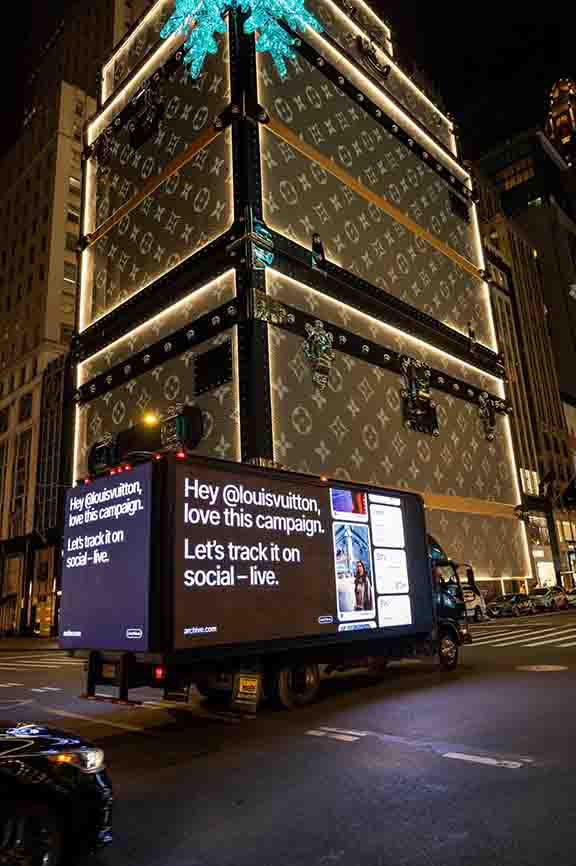
Given LA’s car culture, mobile activations — branded trucks, trailers, and vehicle builds — work particularly well. A branded vehicle that moves through multiple LA neighborhoods over the course of a day or a weekend reaches consumer segments that a fixed activation would never touch. It also creates a different media opportunity: a vehicle moving through Silver Lake at 2 PM and showing up in West Hollywood at 6 PM generates social documentation from different geographic audiences, building a sense of the campaign as something happening across the city rather than at a single location.
The production requirements for a mobile activation in LA are specific. Vehicle builds need to be designed for outdoor use in a market where the weather cooperates but where aesthetics are taken seriously. The visual standard for what looks premium in a market like Venice or Silver Lake is high. A vehicle that looks rough or hastily built will undercut the brand it is representing.
AGM has fabricated and deployed mobile activations in LA across categories including food and beverage, beauty, technology, and entertainment. The routing, timing, and staffing are all planned around the specific target in each deployment.
Permit and Location Considerations
Brand activations on public property in Los Angeles require coordination with the city and, in some cases, with the LAPD and neighborhood associations. The process is navigable but requires lead time and local knowledge. Activations that attempt to operate in public spaces without proper coordination run the risk of being shut down, which creates negative documentation and disrupts the campaign.
Private property activations — parking lots, retail spaces, event venues — are more straightforward from a coordination standpoint but require agreements with property owners and, in some cases, with anchor tenants. AGM’s local relationships in LA reduce the friction on both sides of this equation.
LA Neighborhood
Best For
Foot Traffic Level
Key Consideration
Silver Lake / Los Feliz
Lifestyle, indie brands, CPG
High on weekends
Aesthetic standards are high
Venice / Abbot Kinney
Wellness, premium goods
High year-round
Outdoor-friendly, competitive
Fairfax / Melrose
Streetwear, culture brands
High on weekends
Brand-saturated environment
Arts District (DTLA)
Art, design, experiential
Growing
Destination-driven traffic
West Hollywood
Beauty, entertainment, nightlife
High evenings
Event calendar matters
Staffing Brand Activations in LA
Los Angeles is a strong market for brand ambassador staffing because of the concentration of performers, models, and brand-trained talent. The challenge is finding people who can represent a brand with genuine knowledge and authority rather than just with physical presence. AGM’s staffing process in LA focuses on brand alignment as much as it does on logistics.
For activations in specific cultural contexts — a music-adjacent brand in a Silver Lake environment, for example — the staff needs to belong in that environment, not stand out as having been imported from a generic talent pool. This is a staffing brief, not just a production spec. The right people for a specific brand in a specific neighborhood are not the same people who would staff an activation at a trade show in Anaheim.
Content Production During LA Activations
Los Angeles has a deep concentration of content creators, photographers, and videographers who can be integrated into activation executions. Treating the activation as a content production opportunity — not just as a consumer touchpoint — is standard practice for brands that understand how to get compound value from their experiential spend.
A well-produced activation in a visually strong LA location, documented by a skilled photographer, generates content that can be used across channels for months. The incremental cost of bringing a dedicated photographer to an activation is small relative to the value of having high-quality content that authentically shows the brand in a real environment rather than in a studio.
AGM coordinates content production as an optional add-on to activations in all markets, including LA. The documentation approach is calibrated to what the brand actually needs: some clients want raw documentation for internal use; others want production-quality content for editorial and social.
LA activations generate strong earned media when the creative concept genuinely belongs in the neighborhood. Brands that try to import a New York or Chicago concept without adapting it to the LA cultural context often find that the response is flat even when the execution is clean.
Why Local Experience Matters in LA
Every major market has its quirks, but LA’s are specific enough that working with an agency that has real on-the-ground experience there makes a material difference. The neighborhood dynamics, the event calendar, the permit process, the staffing market, and the media relationships are all different from other markets. An agency that treats LA as “like New York but with better weather” will make systematic errors that an LA-experienced team would avoid.
AGM has worked in LA long enough to have relationships across the neighborhoods and venues that matter for brand activation work. That includes retail partners, property owners, city contacts, local media, and the talent community. Those relationships are not abstractions — they are the practical infrastructure that makes campaigns run smoothly.
Brand Activation Strategy for Specific LA Consumer Segments
The Los Angeles consumer market is defined by its diversity, and effective brand activation strategy in LA requires thinking about specific consumer segments rather than treating “LA consumers” as a monolithic group. The fitness and wellness consumer who structures their week around classes in Brentwood and shopping in Venice is not the same consumer as the streetwear collector who spends weekends on Fairfax. The entertainment industry professional in Studio City is not the same as the creative professional in the Arts District. Each of these consumers requires a different activation approach, a different neighborhood, and a different brand story.
For brands entering LA for the first time, the temptation is to target the highest-profile neighborhoods — Soho House West Hollywood, Abbot Kinney, the Sunset Strip — because they are the most visible. These are not wrong choices, but they are competitive choices. The brands that build the deepest LA relationships often find them in slightly less high-profile neighborhoods where the consumer community is tight-knit and word-of-mouth travels fast. A brand that earns genuine loyalty in Silver Lake will find that loyalty self-replicating in ways that a pop-up on Abbot Kinney, however well-executed, may not.
Multicultural marketing in LA is not a specialty — it is a requirement for any brand with significant market ambitions in this city. Los Angeles is majority-minority, with significant Latino, Asian American, African American, and other communities that have distinct cultural touchpoints and consumer behaviors. Brand activations that are designed without awareness of this demographic reality will miss a majority of LA’s consumer population.
Logistics and Operational Specifics in Los Angeles
Los Angeles traffic is a genuine operational variable, not just an inconvenience. A mobile activation that needs to move from West Hollywood to the Arts District in an hour is planning for reality-show conditions that will not exist on most execution days. The I-10, the 101, the 405 — these are not predictable arteries; they are variables that need contingency in any routing plan. AGM builds realistic transit time estimates into all LA mobile activation routing, with cushions that account for the market’s specific traffic patterns rather than the theoretical drive times on a map.
Parking for brand activation vehicles in LA varies dramatically by neighborhood. Abbot Kinney has very limited commercial vehicle parking. The Arts District has more industrial infrastructure that can accommodate larger vehicles. Fairfax and Melrose have specific loading zone configurations that need advance confirmation. All of these logistics are confirmed before the activation day rather than discovered when the vehicle arrives.
Weather in LA is generally favorable for outdoor activations, but Santa Ana conditions in fall and spring can create wind that is incompatible with lightweight branded structures. The beach communities see marine layer fog in the morning that burns off by midday, affecting visibility and consumer traffic patterns at oceanfront activation locations. These are real operational variables that AGM accounts for in planning.
Long-Term Brand Presence in Los Angeles
The brands that build the deepest Los Angeles presence are the ones that return consistently — not with the same activation every year but with a program that builds on what was established before. An annual activation in the same neighborhood creates an expectation that builds brand familiarity over time. A brand that has shown up in Silver Lake every spring for three years starts to feel like a neighborhood fixture rather than a visiting brand, and that change in perception is worth more than any individual activation.
AGM has managed multi-year LA presence programs for clients in multiple categories. The operational efficiency, the community relationships, and the media familiarity that come from repeated presence in the same market reduce the per-activation cost while increasing the impact of each successive deployment. The investment case for a sustained LA presence program is substantially better than the investment case for a single high-spend activation.
Integrated Campaigns: Combining Formats in Los Angeles
The most impactful brand activation campaigns in Los Angeles combine multiple formats rather than relying on a single activation type. A product launch might use a street mural in the Arts District to build ambient visual awareness, followed by a two-day pop-up in Silver Lake for direct consumer engagement, supported by a mobile vehicle deployment that extends the reach into neighborhoods the fixed pop-up could not cover. Each element reinforces the others and creates a cumulative effect that is more than the sum of its parts.
The integration of these formats needs to be planned from the beginning rather than assembled as separate activities that happen to share a brand. The mural, the pop-up, and the mobile deployment should tell the same story with the same visual language and the same brand messaging so that consumers who encounter them in any combination experience them as one campaign rather than three separate brand moments. AGM’s integrated campaign planning for LA programs is built around this narrative coherence across formats and channels.
Timing the components of an integrated campaign requires understanding the way each format builds on the previous one. An ambient campaign that builds neighborhood awareness before the pop-up opens creates a better-primed audience than one that is unknown in the market when the doors open. A mobile deployment that follows a fixed pop-up can carry the brand story to consumers who missed the pop-up and extend the campaign’s geographic reach after the fixed location has closed. The sequencing is a strategic decision, not a logistical one.
Working With Local Partners in Los Angeles
Los Angeles has a rich network of local creative partners — photographers, videographers, stylists, artists, musicians, food and beverage professionals — whose involvement in a brand activation can significantly elevate the quality and authenticity of the work. Brands that collaborate with local talent create activations that feel rooted in LA culture rather than imported from a national playbook. The local partner’s audience often overlaps with the brand’s target consumer, creating organic amplification that a purely national campaign cannot generate.
The selection of local partners needs to be deliberate. An artist collaboration that makes sense for a creative or lifestyle brand would be wrong for a financial services brand. A musician partnership that fits a youthful entertainment brand would be out of place for a healthcare brand. The local partner’s cultural positioning should align with the brand’s positioning, and the collaboration should feel like a natural meeting rather than a brand paying for cultural credibility it has not earned.
AGM facilitates local partner relationships in LA across creative disciplines. We have worked with LA-based photographers, muralists, chefs, musicians, and brand-adjacent influencers whose involvement has genuinely elevated the activations we have managed for clients in this market. These relationships are not a rolodex exercise; they are built on mutual respect and previous successful collaboration.
Planning, Timing, and the Strategic Calendar
Campaign planning in experiential marketing requires building the timeline backward from the activation date rather than forward from when the brand is ready to start. The date the brand wants to activate determines the date by which fabrication must be complete, which determines the date by which design must be approved, which determines the date by which the brief must be finalized. Working this sequence forward — starting with the brief and estimating the production timeline from there — consistently underestimates the lead time required and creates compressing deadlines that force compromises in quality.
A realistic production timeline for a high-quality activation builds in review cycles between stages rather than treating design, fabrication, and logistics as sequential tasks with no overlap. Design review with the client takes time. Revisions after the review take time. Pre-production material procurement has lead times that are outside the production team’s control. These are known variables that need to be in the timeline from the beginning, not surprises discovered when they cause delays.
The strategic calendar — the brand’s broader marketing calendar and the external events that create activation windows — needs to be part of the planning conversation from the start. An activation planned for a specific neighborhood during a specific season needs to account for what else is happening in that neighborhood and city at that time. Competing brand activity, local events that either complement or compete with the activation, and seasonal patterns in consumer behavior all affect what the activation can accomplish in its specific window.
Lead time investment pays a disproportionate return. The activation planning process that starts six months before the event date has dramatically more flexibility to respond to site survey discoveries, client feedback cycles, and vendor constraints than one that starts six weeks out. The same budget invested with adequate planning time produces a better result than the same budget rushed through an abbreviated timeline.
Staff Development and Brand Ambassador Quality
The brand ambassadors who represent the brand during an activation are not a logistics commodity — they are the primary driver of the consumer experience quality. A beautifully fabricated activation space with mediocre staff will underperform a simpler space with excellent staff, every time. The investment in identifying, training, and managing the right people for a specific activation is one of the highest-return investments in the activation budget.
Identifying the right staff for a specific activation requires defining what “right” means for that specific brand, that specific consumer audience, and that specific cultural context. The staff member who is perfect for a premium fragrance brand activation in a Soho pop-up is not the same person who is right for a high-energy sampling program at a summer music festival. The hiring criteria need to be written for the specific activation, not for a generic brand ambassador profile.
Training needs to go beyond product knowledge to include brand story, consumer profile, and the specific goals of the activation. A staff member who knows the product but does not understand why the brand is activating in this specific neighborhood at this specific time cannot make the judgment calls that distinguish excellent consumer interactions from adequate ones. Context knowledge enables performance that knowledge of facts alone cannot produce.
On-site staff management during the activation itself is a specific production function. The person managing the activation on the ground needs authority to make real-time decisions — adjusting staff positioning as consumer flow patterns emerge, managing wait times, handling unexpected situations, maintaining team energy through long shifts. This is a leadership role, not just a supervisory one, and it needs to be filled by someone with the judgment and authority to act decisively.
Post-Campaign Learning and Program Iteration
Every activation generates data and observations that should inform the next one. The challenge is capturing those learnings systematically rather than relying on individual team members’ memories of what worked and what did not. A formal post-campaign review process — covering what was planned, what happened, and what the team would do differently — is the mechanism by which campaigns improve over time rather than repeating the same mistakes or missing the same opportunities.
The post-campaign review should be structured around the original brief’s objectives rather than around general exposures of how the activation went. Did the activation accomplish what it was designed to accomplish? If yes, what specifically drove that success, and how can it be replicated or scaled? If no, what gap existed between the plan and the reality, and what does that gap reveal about either the brief or the execution?
Documentation from the activation — the photos, the staff logs, the consumer interaction records — is the evidence base for this review. Teams that document activations rigorously have more to work with in the post-campaign review than those that rely on memory and impression. The documentation investment is also an investment in the quality of future campaigns.
AGM conducts post-campaign reviews for all programs and shares the findings with clients in a format that informs future planning. The learnings from a Sacramento activation in September become part of the strategic input for the Sacramento program the following spring. The patterns across markets — which location types consistently outperform, which staffing approaches produce the best consumer interactions, which timing windows generate the most organic documentation — accumulate into operational knowledge that improves the quality of every subsequent program.
Frequently Asked Questions
Why does neighborhood choice matter so much for brand activations in LA?
Los Angeles is a collection of distinct neighborhoods with distinct consumer profiles. Silver Lake, Venice, Fairfax, and DTLA each have different demographics, different aesthetic standards, and different consumer behaviors. Choosing the right neighborhood is not a minor detail — it is a strategic decision that shapes the entire campaign.
Do brand activations in LA require permits?
Activations on public property require coordination with the city and sometimes the LAPD. Private property activations are more straightforward. AGM handles permit coordination as part of the planning process to ensure there are no day-of surprises.
How far in advance should a brand start planning an LA activation?
Six to eight weeks minimum for a straightforward single-location pop-up. More complex builds or activations tied to specific event windows should be planned further out — three months is a more comfortable lead time for anything involving permitting or custom fabrication.
Are mobile activations more effective than fixed pop-ups in LA?
It depends on the objective. Mobile activations allow you to reach multiple neighborhoods in a single day and generate documentation from different locations. Fixed pop-ups create a more concentrated experience for a specific audience. Many campaigns benefit from both formats at different stages.
Yes. AGM maintains a network of trained brand ambassadors across LA and other major markets. Staffing for LA activations is planned around brand alignment, not just logistics — the people representing the brand need to belong in the specific cultural context of the activation.