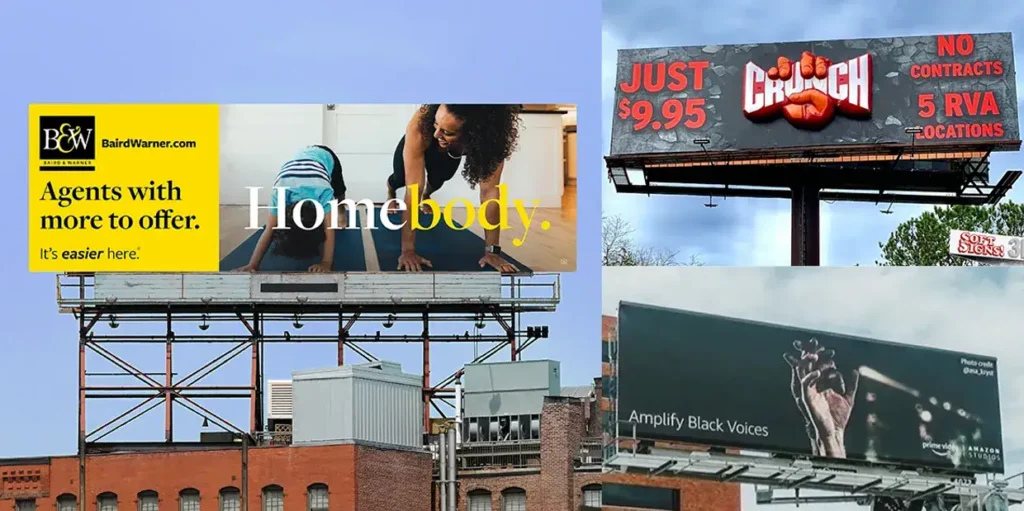
Jacksonville, Florida is the largest city by land area in the contiguous United States, 874 square miles of spread-out metro geography that makes billboard advertising not just useful but structurally essential for brands that want genuine market coverage. The city’s car dependency, driven by limited public transit and sprawling suburban development, means the average Jacksonville resident spends significantly more time in their vehicle than counterparts in transit-heavy cities, creating sustained, repeated exposure to highway and arterial billboard placements that denser transit-oriented markets don’t deliver at the same frequency. We’ve placed and managed OOH campaigns across Jacksonville, and this guide covers the real 2026 pricing, the corridors that matter, the specific streets and intersections that deliver the strongest audience quality, and how to integrate mobile advertising with fixed placements for maximum campaign impact.
Why Jacksonville’s Geography Makes Billboard Advertising Essential
Most major US cities have at least partial transit alternatives to driving, subway systems, light rail, dense bus networks, that reduce per-capita daily vehicle miles traveled and therefore reduce the exposure frequency of roadside billboard advertising. Jacksonville has essentially none of these alternatives at meaningful scale. The Jacksonville Transportation Authority (JTA) operates a bus network, but ridership is modest relative to population, and the Skyway automated people mover covers only a small section of downtown. The practical result: Jacksonville residents drive everywhere, every day, creating what outdoor advertisers call a captive mobile audience that is reliably intercepted by well-positioned roadside advertising.
This structural car dependency, combined with Jacksonville’s strong and continuing population growth (the MSA has crossed 1.6 million residents and continues to grow as Florida migration continues), creates a billboard advertising market with both strong reach metrics and expanding demand. Major employment corridors in the Southside, the Deerwood Park and JTB (J. Turner Butler Boulevard) area, downtown, and the growing River City Marketplace and Northside commercial zones create defined commuter routes that advertisers can intercept predictably day over day.
Jacksonville also has a military presence that many advertisers don’t fully account for: Naval Station Mayport on the Atlantic coast east of the city and NAS Jacksonville on the south side together constitute one of the largest naval installations on the East Coast. The military and contractor population associated with these installations represents a significant and distinct consumer demographic, younger, often with families, moving through specific geographic corridors that connect military housing and base access routes to commercial and residential areas.
2026 Billboard Advertising Costs in Jacksonville, FL
| Format / Corridor |
Monthly Rate (2026) |
| Standard static bulletin, suburban arterial (US-1, Beach Blvd, Atlantic Blvd) |
$1,200–$3,500/month |
| Standard static bulletin, I-95 corridor (non-prime) |
$2,000–$5,000/month |
| Premium highway position, I-95 approaching downtown |
$4,000–$10,000/month |
| I-295 beltway, prime interchange positions |
$2,500–$7,000/month |
| J. Turner Butler Blvd (JTB) / St. Johns Town Center area |
$2,000–$6,000/month |
| Digital bulletin, standard position |
$1,500–$4,500/month |
| Digital bulletin, premium I-95 / I-295 corridor |
$3,000–$8,000/month |
| Mobile LED billboard truck (per operating day) |
$250 to $300 per hour, 8-hour minimum |
| Static vinyl mobile billboard truck (per day) |
$700–$1,400/day |
| Vinyl production, 14×48 bulletin |
$800–$1,800 |
Contact AGM at americanguerrillamarketing.com/contact for current inventory availability in specific Jacksonville corridors. The Jacksonville market is served primarily by Lamar Advertising (the dominant operator) along with Clear Channel and several regional independent operators who manage specific corridors and surface-street inventory.
Jacksonville’s Key Billboard Corridors and What Each Delivers
Interstate 95: The Primary Spine
I-95 runs north-south through the geographic center of Jacksonville, connecting the Georgia state line in the north to the I-295 interchange in the south and serving as the primary commuter artery between the suburban Northside and Westside communities and downtown. The daily traffic volumes on I-95 between Exit 337 (Dunn Avenue) and the downtown I-10 interchange are among the highest in Northeast Florida, making this the premium highway advertising corridor in the market.
The most strategically valuable I-95 positions are: the approaches to the I-10 interchange from both north and south (where traffic converges from multiple origins heading downtown), the segment between Exit 344 (Lem Turner Road) and Exit 347 (Edgewood Avenue) where the expressway passes through high-density residential and commercial zones, and the southern segment approaching the I-295 interchange where traffic from the Southside and the Beaches areas merges with I-95 through-traffic.
Northbound boards in the morning rush and southbound boards in the afternoon rush maximize impression delivery during peak commute windows. For 24-hour campaigns where overnight impression volume contributes to the total, the I-95/I-295 interchange vicinity generates continuous traffic from port activity, long-haul trucking, and overnight interstate travelers in addition to the commuter-hour peaks.
I-295 Outer Beltway: Suburban Market Access
The I-295 Outer Beltway circles Jacksonville and provides direct access to the city’s major suburban communities, the Westside, the Southside commercial district, the Beaches communities approach via Butler Boulevard, and the Northside residential and industrial zones. The I-295/I-95 interchange in the Southside and the I-295/US-1 interchange on the south side are premium interchange positions that carry strong suburban professional traffic from the Mandarin, Orange Park, and Fleming Island residential communities heading toward major employment centers.
J. Turner Butler Boulevard (JTB) / Southside Commercial District
JTB connects I-95 on the west with the Beaches communities on the east, running through the Southside’s primary commercial zone. The St. Johns Town Center, one of the highest-grossing outdoor retail centers in the state, creates a consumer-mode audience on Gate Parkway and Town Center Parkway that is highly relevant for retail, dining, and consumer goods brands. Boards in the immediate JTB/Gate Parkway corridor intercept shoppers en route to the area’s highest-income consumer concentration in Jacksonville.
Deerwood Park and Baymeadows Road along the southern edge of the Southside commercial district carry dense financial services, technology, and insurance industry office traffic, a white-collar professional demographic distinct from the general highway commuter audience. Brands targeting this B2B-adjacent professional audience should prioritize inventory in this specific corridor over the broader JTB median.
Beach Boulevard (US-90) and Atlantic Boulevard: East Corridor
Beach Boulevard (US-90) and Atlantic Boulevard are the two primary east-west arteries connecting downtown and the Southside with the Beaches communities, Jacksonville Beach, Neptune Beach, and Atlantic Beach. These routes intercept the beach-lifestyle demographic that defines a significant portion of Jacksonville’s consumer culture: higher-income coastal residents, younger professionals, fitness-oriented consumers, and the hospitality and restaurant industry workforce that serves the thriving Beaches economy.
Boards on Beach Boulevard between I-95 and the JTB flyover, and on Atlantic Boulevard between Regency Square and the Beaches, consistently deliver strong engagement for lifestyle, outdoor, food and beverage, healthcare, and fitness brands targeting the coastal consumer segment. The summer tourism influx (May through September) adds additional out-of-market visitors to these corridors, making them particularly effective for tourism-adjacent and hospitality brands during peak season.
US-17 Corridor (Roosevelt Boulevard / Philips Highway)
US-17 splits into two distinct market personalities in Jacksonville. North of downtown (Roosevelt Boulevard), it serves the working-class and mixed-income Northside communities with surface-street commercial character. South of downtown (Philips Highway, also called US-1 south of downtown), it runs through the primary commercial strip serving Jacksonville’s southern half, the Avenues Mall area, major auto dealerships, fast food and restaurant corridors, and the big-box retail centers between downtown and the I-295 interchange.
Boards on Philips Highway/US-17 near the Avenues Mall and the I-295/US-17 interchange area reach high-volume suburban consumer traffic in a retail-purchase mindset. For brands in food service, automotive, healthcare, and consumer services, this corridor consistently delivers strong response rates because the audience is already in consumption mode when they encounter the advertising.
Downtown Jacksonville and the Sports District
The urban core around EverBank Stadium (Jacksonville Jaguars, formerly TIAA Bank Field), Daily’s Place amphitheater, Vystar Veterans Memorial Arena, and the baseball and minor league sports facilities creates a concentrated event advertising market downtown that operates differently from the commuter-focused highway corridors. On Jaguars home game days, 10 regular season home games in 2025 including the annual Gator Bowl in January, traffic through Bay Street, Adams Street, the Hart Bridge approach from the north, and the Fuller Warren Bridge approach from the south creates event-specific high-concentration advertising windows.
Event-Specific Billboard and Mobile Advertising in Jacksonville
Jacksonville’s event calendar creates multiple annual windows where concentrated audience traffic justifies event-specific advertising investment:
- TaxSlayer Gator Bowl (January): Major college football bowl game at EverBank Stadium. Draws significant out-of-market visitors who spend time on Bay Street, the Landing area, and the downtown sports district. Mobile truck campaigns in the downtown corridor during the bowl game weekend reach a concentrated visiting fan audience.
- Florida-Georgia Football Weekend (October): The annual rivalry game in Jacksonville draws 82,000+ fans to EverBank Stadium from across Florida and Georgia. This single weekend event transforms downtown Jacksonville into one of the highest-concentration sporting event markets in the Southeast. Brands with relevant cross-market positioning between Florida and Georgia should prioritize this window.
- Jacksonville Jazz Festival (May): Draws 100,000+ attendees to Metropolitan Park and the surrounding downtown riverfront. Foot traffic on the Southbank Riverwalk, in the Five Points neighborhood, and along Bay Street creates a cultural consumer audience that differs significantly from the typical sports crowd.
- PGA Tour Events at TPC Sawgrass (March): The Players Championship, typically drawing 250,000+ attendees over the tournament week to Ponte Vedra Beach (20 miles south of Jacksonville). Highway boards on I-95 between Jacksonville and Ponte Vedra, and on A1A, JTB, and US-1 south of the city, reach a premium golf audience demographic with high household incomes.
Street-Level and Neighborhood OOH in Jacksonville
While Jacksonville’s car dependency makes highway advertising the primary format for market-wide reach, the city’s revitalized urban neighborhoods support street-level OOH tactics that reach demographically distinct audiences not well-served by highway boards:
Riverside and Avondale: Jacksonville’s most walkable, densely developed neighborhood on the west bank of the St. Johns River. St. Johns Avenue, Park Street, and the surrounding commercial streets carry a young professional and creative class demographic. Street poster advertising and sidewalk stencil campaigns in this neighborhood reach the influencer-adjacent consumers whose brand choices ripple through Jacksonville’s social networks.
San Marco: The upscale mixed-use neighborhood on the south bank of the St. Johns River. San Marco Square and the surrounding residential streets carry a higher-income, established-professional demographic. Street-level formats in San Marco reach consumers with above-average purchasing power in a neighborhood context where they’re in daily-life mode rather than commuting mode.
Five Points / Riverside Arts District: Adjacent to Riverside proper, the Five Points area along Park Street between College Street and Margaret Street is Jacksonville’s arts and nightlife hub. Evening and weekend foot traffic here is significant among the 21–35 demographic. Bar, restaurant, nightlife, and entertainment brands benefit specifically from street-level presence in this zone.
Springfield / Urban Core: The historic Springfield neighborhood north of downtown is undergoing revitalization with young professionals and artists moving into a neighborhood with significant building stock and affordable rents. Street-level OOH in Springfield reaches an early-adopter audience that trends ahead of mainstream consumer markets.
Mobile LED Billboard Trucks in Jacksonville
Jacksonville’s highway-centric geography actually makes mobile billboard trucks more versatile and effective than in some other major markets. A single truck with a full-day operating window can cover the Southside commercial district in the morning, run JTB and the Beaches corridor at midday, hit the downtown sports district in the afternoon, and cover Riverside and San Marco in the evening, reaching genuinely distinct audience profiles in a single operating day without being geographically constrained by fixed placement locations.
For the Gator Bowl, Florida-Georgia game, and other major Jacksonville event weekends, mobile trucks running the approach corridors to EverBank Stadium from all four entry directions (Bay Street from downtown, the Talleyrand Avenue approach from the north, the Hart Bridge approach, and the Hendricks Avenue approach from the south) reach arriving fans in the 4-hour pre-game window with coverage that no fixed board can match for geographic comprehensiveness.
Measuring Jacksonville Billboard Campaign Performance
Measurement approaches that work specifically well in Jacksonville’s market include:
- Geofencing by corridor: The distinct geographic character of Jacksonville’s market zones (Southside, Beaches, Northside, downtown) makes it straightforward to set up discrete geofenced measurement zones around specific billboard positions and track mobile device behavior in those zones
- Foot traffic attribution: For retail and restaurant clients with locations in the market, location data platforms can measure whether billboard exposure on specific corridors correlates with increased store visits from devices that passed the billboard location
- Dedicated URL or phone tracking: Event-specific or promotion-specific URLs and phone numbers on billboard creative create direct attribution for response-oriented campaigns
Frequently Asked Questions
Billboards in Jacksonville, FL: The major advantage in Marketing generates better results when placement, timing, creative, and local execution all work together in Florida. These questions cover the details brands usually need before launch, during rollout, and while evaluating performance.
For billboard in Florida, the strongest campaigns usually come from tight geographic targeting, message discipline, and enough repetition to be remembered. Market conditions, neighborhood flow, event calendars, commuter behavior, and production logistics all change how the tactic performs, so the planning details matter as much as the idea.
How much does a billboard cost in Jacksonville, FL?
Standard static bulletins in Jacksonville run $1,200–$5,000/month depending on corridor and traffic volume. Premium I-95 positions approaching downtown run $4,000–$10,000/month. Digital billboards run $1,500–$8,000/month. AGM LED trucks run $250 to $300 per hour with an 8-hour minimum.
Who owns most of Jacksonville’s billboards?
Lamar Advertising is the dominant Jacksonville billboard operator, controlling the majority of highway and arterial inventory. Clear Channel has presence in the market. Several independent and regional operators manage specific surface-street and commercial corridor inventory. AGM has relationships with all major operators and can source and negotiate inventory across the full Jacksonville market.
Are there billboard opportunities near EverBank Stadium?
Yes. Several boards in the immediate downtown stadium vicinity are available through Lamar and independent operators. Fixed boards on Bay Street, the Adams Street corridor, and the Fuller Warren Bridge approach are the highest-value event-period positions. For event-specific campaigns where availability or timing doesn’t support fixed boards, mobile LED trucks in the stadium perimeter consistently deliver strong game-day impressions.
Can AGM manage a full outdoor campaign in Jacksonville?
Yes. We place and manage fixed billboard campaigns in Jacksonville, operate mobile LED billboard trucks for event-specific and market saturation campaigns, and coordinate street-level guerrilla tactics in Jacksonville’s urban neighborhoods. Contact us at americanguerrillamarketing.com/contact.
What’s the best billboard location for reaching Jacksonville Jaguars fans?
For game-day audience quality, the highest-impact positions are on Bay Street in the downtown sports corridor approaching EverBank Stadium from the west, and on the Hart Bridge approaches. For sustained season-long Jaguars fan reach (which extends throughout the metro), I-95 boards in the Northside and Southside approach corridors reach the broadest geographic cross-section of the fan base on their daily commutes.
How does billboard advertising work for seasonal businesses in Jacksonville?
Jacksonville’s strong tourist season (spring and summer, particularly March through August) and its snowbird influx (November through April in retirement and coastal communities) create seasonal audience variations that advertiser plans should account for. Tourism-adjacent brands (hospitality, restaurants, attractions, real estate) should time campaigns to peak visitor arrival windows. Year-round resident-focused businesses benefit from sustained presence with potentially improved investment during peak-demand months specific to their category.
Is mobile billboard advertising effective in Jacksonville?
Highly effective, particularly because of Jacksonville’s event calendar and the geographic flexibility that the city’s highway infrastructure allows. A single truck can cover diverse market zones in a full operating day that fixed boards spread across the same zones couldn’t match for cost. Game-day events create specific high-value windows where mobile truck reach during the arrival window exceeds the day’s fixed board impressions in the same area by a significant margin.
What lead time does a Jacksonville billboard campaign require?
Standard static billboard campaigns require 4–6 weeks from contract to installation including vinyl production time. Digital boards can launch in 1–2 weeks with pre-approved creative. Mobile LED trucks require 1–2 weeks for route planning, permit coordination, and creative setup. Event-period campaigns should be booked 6–8 weeks in advance due to higher competition for premium inventory during major Jacksonville event weekends.
What drives the price of this billboard campaign?
Location, traffic volume, unit size, lighting, term length, and production all change the final cost for billboard advertising in Jacksonville.
How long should a billboard stay up to be effective?
Four weeks is a common starting point because it gives the message enough repetition to register with local traffic.
Related Pages and Articles