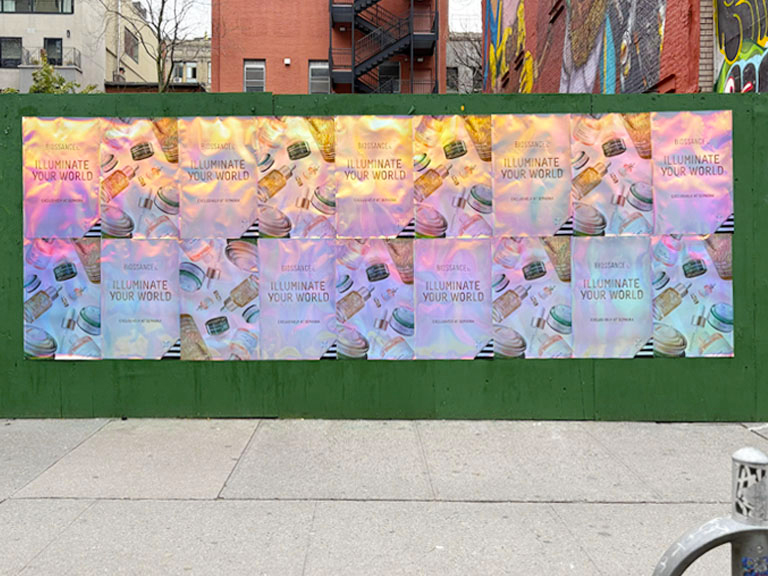
The best CPG marketing campaigns share something beyond big budgets and clever headlines. They understand how consumers actually make purchase decisions and they reach buyers at the right moment with the right message. Some of those moments happen on social media. Some happen on a sidewalk. Some happen at the shelf. The campaigns that win across all three moments are the ones worth studying.
We have executed CPG campaigns in New York, Los Angeles, Chicago, Miami, and more than 50 other American markets. We know what the street-level component of a CPG campaign looks like when it works. And we know how it connects to the broader marketing picture that drives lasting brand equity.
Good CPG campaigns drive short-term volume. They are promotional in nature. They offer a reason to buy right now. They work while they are running and stop working when the budget turns off.
Great CPG campaigns do something harder. They build brand memory. They create associations that persist in the buyer’s mind long after the campaign ends. When that buyer stands in front of a shelf three months after seeing your campaign, they reach for your brand without quite knowing why. That instinct is the result of great brand marketing.
The tactical difference comes down to three things:
Emotional resonance over information delivery. Great campaigns make people feel something. They do not primarily inform. The emotion is the message.
Consistency over novelty. Great campaigns reinforce a consistent brand idea over time. They resist the temptation to chase trends at the expense of coherent brand identity.
Multi-touchpoint presence. Great campaigns reach the buyer across multiple channels and physical environments. The cumulative effect of repeated exposure in varied contexts is what creates durable brand memory.
Not every CPG campaign follows the same structure. Different objectives require different campaign architectures. Here are the primary archetypes we work with:
The Launch Campaign
A launch campaign introduces a new product to the market. Its primary objective is trial generation. The creative challenge is to make a product that no one has heard of feel compelling and worth trying.
Launch campaigns work best when they concentrate activity in a limited geography before expanding. A brand that launches in Brooklyn before it launches in Manhattan can build genuine street credibility that supports the broader rollout. The energy of a local scene behind a product is a marketing asset that money cannot simply buy.
We design launch campaigns that saturate a launch market before moving to adjacent ones. Street-level postering, sampling at neighborhood events, creator seeding in the local community, and digital targeting by geography create a concentrated launch moment that drives trial and generates the social proof needed for retail buyers to expand distribution.
The Awareness Campaign
An awareness campaign builds brand familiarity in a target market. It does not ask for an immediate purchase. It builds the brand memory that makes future purchases more likely.
The best CPG awareness campaigns are built around a brand idea, not a product feature. A beverage brand that runs an awareness campaign about the experience of drinking their product in a specific context builds a much more durable brand association than one that runs a campaign about ingredients or calorie counts.
Awareness campaigns for CPG benefit enormously from out-of-home and street-level presence. A billboard on the BQE, a stencil campaign in Williamsburg, and a postering push in Echo Park put the brand into physical environments where it builds familiarity through repeated exposure at no marginal cost per impression beyond the initial placement.
The Cultural Moment Campaign
Cultural moment campaigns tie a CPG brand to a broader cultural event, season, or conversation. A summer campaign. A sports season. A music festival. A cultural movement.
These campaigns work because they borrow existing energy from the cultural moment and transfer it to the brand. The key is genuine relevance. A brand that inserts itself awkwardly into a cultural moment creates backlash. A brand whose product genuinely belongs in that moment creates affinity.
We execute cultural moment campaigns with a combination of event presence, contextual street-level activation, and digital content that reflects the moment authentically. The physical world component is often the most impactful because it puts the brand into the actual locations where the cultural moment is happening.
The Loyalty and Advocacy Campaign
Loyalty campaigns deepen relationships with existing customers and turn them into active brand advocates. They are not about acquiring new buyers. They are about converting existing buyers into people who actively recommend your brand to others.
These campaigns work through community building, exclusive experiences, and direct recognition of loyal customers. Events for existing fans. Limited product releases. Community-specific activations that reward people who have already bought into the brand.
The best CPG campaigns we have built started with a strong street presence that created genuine community energy. Digital campaigns that followed felt authentic because they were amplifying real activity, not manufacturing the appearance of it.
How Street Marketing Powers CPG Campaign Success
Street marketing is not a secondary channel for CPG brands. It is often the channel that creates the authenticity that makes everything else work.
Consider the credibility gap in digital advertising. Consumers know they are being targeted. They know the algorithm showed them an ad because of their browsing history or their demographic profile. That knowledge creates skepticism. The brand voice in a digital ad is assumed to be self-interested.
Street marketing operates in a different register. A stencil in a neighborhood is not targeted. It does not know who you are. It is just there, in the physical environment you share with thousands of other people. When you see it, it feels like a discovery. That discovery creates a different kind of brand relationship than a targeted ad ever can.
We use street marketing to create the initial credibility that makes digital campaigns more effective. When a consumer who has seen your stencil on Flatbush Avenue then encounters your Instagram ad, the recognition is different. “I’ve seen these people around.” That recognition is a form of social proof that operates at the subconscious level.
For CPG brands launching in new markets, we recommend leading with street-level presence. Postering, stenciling, sampling, and event presence build the local credibility that makes digital advertising more efficient. The street presence tells the neighborhood that this brand belongs here before the digital campaign asks them to buy it.
CPG Campaign Planning: The Timeline That Works
A well-planned CPG campaign follows a logical sequence. Rushing the sequence produces inferior results. Here is the timeline we recommend for a major CPG campaign:
Eight to twelve weeks before launch: Campaign strategy development. Brand idea, target audience, channel mix, messaging hierarchy, creative brief. This phase is about thinking, not doing. Getting the strategy right at this stage saves enormous wasted effort later.
Six to eight weeks before launch: Creative development. Campaign visuals, copy, social content, street-level creative. Testing with small audiences where possible. Design revisions based on feedback.
Four to six weeks before launch: Production. Print production for street-level materials. Video production for digital content. Creator briefs and content creation. Out-of-home production and vendor coordination.
Two to four weeks before launch: Pre-launch seeding. Creator content begins publishing. Street-level teaser activity begins. Trade marketing and retail team coordination.
Launch week: Full activation. Street-level presence live across all markets. Digital campaign active. Sampling events live. PR and creator content publishing. All channels simultaneous.
Post-launch (weeks two through eight): Sustained activation. Creative optimization based on performance data. Rotation of street-level materials. Creator content continuation. Retail velocity monitoring.
Measuring CPG Campaign Success
Measurement in CPG is more complex than in direct response advertising because the purchase decision often happens far from the point of advertising exposure. Here is how we approach measurement:
Retail velocity. The most important metric for retail-distributed CPG brands. Are sales per store per week increasing in markets where the campaign is running? This is the ultimate measure of campaign effectiveness.
Brand awareness lift. Pre- and post-campaign consumer surveys in target markets. Are aided and unaided awareness scores moving in the right direction? Are brand associations improving?
Trial rate. For launch campaigns, what percentage of category buyers in target markets tried the product during the campaign period? This metric is most directly measured through sampling program conversion tracking and consumer surveys.
Social engagement quality. More than likes and comments in aggregate, but the quality of organic conversation. Are people talking about your brand in ways that align with your campaign positioning? Are they generating their own content featuring your product?
Earned media reach. Street campaigns and sampling events generate press and social content. Track the reach of organic coverage generated by campaign activities. This tells you whether your physical world activations are creating enough cultural energy to generate organic amplification.
The best CPG campaigns we have built were the ones where our clients measured retail velocity alongside digital metrics. When both move together, you know your campaign is doing its job at every level of the consumer process.
Building Your Own Best-in-Class CPG Campaign
Here is the process we recommend for brands that want to build a CPG campaign designed to compete with the best in their category:
Start with audience clarity. Who are you trying to reach? More than demographics. Psychographics, cultural affiliations, daily routines, the moments in their lives where your product genuinely fits. The more precisely you understand your audience, the more precisely you can reach them.
Identify the purchase moment. Where do your buyers actually buy? Grocery chains, specialty retailers, convenience stores, farmers markets, or online? The purchase moment should shape your activation strategy. You want brand presence near the purchase moment, more than in front of the target demographic in general.
Build around an emotional territory, not a product feature. What feeling does your brand own? What emotional space does it occupy that no competitor owns as fully? Build your campaign around that territory.
Plan physical and digital together. Map both channels to the same consumer process. Physical presence near retail drives the final purchase decision. Digital reach builds the brand memory that makes the physical presence effective. Plan them together from the start.
Measure what matters. Set your success metrics before the campaign launches. Define what retail velocity improvement, brand awareness lift, or trial rate would represent campaign success. Measure against those pre-defined targets, not against whatever metrics happen to look good after the fact.
Lessons from the Best CPG Marketing Campaigns We Have Seen
Over the years we have run and observed hundreds of CPG campaigns. The lessons that hold up across categories, budgets, and market conditions are simpler than the marketing industry often acknowledges.
First: physical trial is irreplaceable. No digital ad converts buyers at the rate that a good sampling moment does. The best CPG campaigns we have seen allocate meaningful budget to getting the product into people’s hands directly. A consumer who has tasted your sparkling water, chewed your energy bar, or smelled your cleaning product is a fundamentally different prospect than one who has only seen an ad for it.
Second: the brand idea must be simple enough to communicate in under three seconds. If you cannot express your brand’s emotional territory in a single image or a short phrase, your campaign creative will be unfocused. The simplest brand ideas are the ones that translate most powerfully across channels.
Third: community matters more than audience. An audience is a group of people who share a demographic profile. A community is a group of people who share values, experiences, and relationships. CPG brands that become embedded in genuine communities build loyalty that competitor advertising cannot easily dislodge. We design campaigns that look for community entry points, more than demographic targeting.
Frequently Asked Questions
What makes a CPG marketing campaign effective?
The most effective CPG marketing campaigns combine direct product trial (which overcomes habitual category defaults at the shelf) with brand storytelling that builds emotional connection and loyalty. Trial drives first purchase; brand story drives repeat purchase and advocacy. Campaigns that do only one of these two things underperform relative to those that integrate both.
What are the best CPG marketing formats for driving product trial?
Direct sampling is the highest-trial-rate format for CPG brands. Sampling activations at relevant locations – farmers markets, transit hubs, retail corridors, event adjacencies – deliver product to the right consumer at the right moment with a human interaction that shapes how the product is received. Sampling consistently outperforms coupons, digital ads, and in-store displays for generating first trial.
How do CPG brands measure marketing campaign ROI?
Key CPG marketing ROI metrics include retail velocity changes in sampled vs. non-sampled markets, trial-to-repeat purchase rates, cost-per-trial, household penetration changes, and sales volume shifts in the distribution channels served by the campaign. Scanner data comparisons between campaign and control markets are the gold standard for measuring CPG campaign impact.
Experiential marketing drives trial and creates brand memory that passive media exposure doesn’t generate. For CPG brands, experiential tactics – sampling, street team programs, pop-up events – are most valuable for new product launches, market entry, and relaunch programs where existing consumer behavior needs to be disrupted in favor of trial.
How do you build a CPG marketing campaign for a new market?
A new market CPG entry campaign typically combines three elements: sampling in high-traffic locations frequented by the target consumer, retail partnership activation to ensure product availability when sampled consumers seek to purchase, and awareness-building outdoor or digital advertising to create brand familiarity before the sampling program runs. Timing the coordination of these three elements is critical.
What CPG categories use street marketing most effectively?
Food and beverage, personal care, health and wellness, and snack categories all benefit significantly from street marketing and sampling. The format is most powerful for products where sensory trial is important – taste, texture, scent – and where the product quality speaks for itself once experienced directly by the consumer.
Can AGM run CPG marketing campaigns nationally?
Yes. AGM runs CPG sampling, street team, and experiential campaigns across 50+ U.S. markets. We execute the full field program – location scouting, permitting, staffing, and GPS-tracked documentation – for CPG brands ranging from regional startups to national category players. Contact us at [email protected] or (646) 776-2770.