Advertising in Toronto | American Guerrilla Marketing
Toronto is Canada’s largest city and its commercial capital. With a metropolitan area population exceeding 6 million people and one of the most culturally diverse urban populations in the world, Toronto represents an enormous advertising opportunity for brands that understand how to navigate its scale and complexity. Advertising in Toronto effectively requires knowing where the city’s most valuable audiences cluster, what formats reach them best, and what creative standards you need to meet to earn their attention.
At American Guerrilla Marketing, we execute guerrilla and outdoor advertising campaigns in Toronto alongside our work in other major North American markets. We understand Toronto’s neighborhoods, its diverse consumer base, its outdoor advertising infrastructure, and the specific opportunities that non-traditional advertising creates in this market. This guide covers everything a brand needs to know about advertising in Toronto, from neighborhood selection to format choice to creative standards and measurement.
Why Toronto Is a Different Advertising Market from Other Canadian Cities
Toronto is more than a larger version of Vancouver or Montreal. It has its own distinct character that shapes how advertising works here.
Scale is the defining feature. Toronto’s Greater Toronto Area is home to more than a third of Canada’s entire population. A campaign in Toronto can reach more Canadians than campaigns in Vancouver and Calgary and Edmonton combined. This scale means that Toronto campaigns have access to advertising infrastructure, media buying opportunities, and audience concentration that no other Canadian city can match.
Diversity is the city’s defining demographic characteristic. Toronto is one of the most ethnically diverse cities in the world. Over 50 percent of Toronto’s population was born outside Canada. The city has major communities of South Asian, East Asian, Black Caribbean, European, Middle Eastern, and many other backgrounds. Advertising that assumes a monocultural audience is ineffective in Toronto because no single cultural perspective represents the city’s consumer base. The brands that succeed in Toronto’s advertising market are those that approach its diversity as an asset and design campaigns that can speak authentically across its varied communities.
Toronto’s density and transit use create strong conditions for outdoor advertising. The TTC (Toronto Transit Commission) carries over a million riders daily. The city has extensive pedestrian traffic in its downtown core, along King Street, Queen Street, and the Entertainment District. Unlike Vancouver’s primarily walkable character, Toronto is a mix of transit-heavy and pedestrian-focused zones, with some car-dependent areas in the inner suburbs and outlying neighborhoods.
Toronto’s media sophistication is high. The city is Canada’s media capital. Its residents are exposed to more advertising per day than Canadians in any other city. This creates advertising saturation in conventional formats and a corresponding premium on creative quality and non-traditional approaches that cut through the noise. Guerrilla and outdoor marketing in Toronto faces the same creative quality imperative as in London or New York: work that does not earn attention through genuine quality is simply invisible.
Toronto Neighborhoods for Advertising Campaigns
Toronto’s neighborhoods each serve distinct audience profiles. Effective advertising in Toronto starts with neighborhood targeting rather than city-wide reach.
Kensington Market and Chinatown
Kensington Market is Toronto’s most culturally eclectic neighborhood: a mix of independent shops, vintage stores, food vendors, and artists occupying a dense few blocks west of Spadina. It draws a young, creative, countercultural audience and is one of the most socially photographed neighborhoods in the city. Chinatown adjacent to Kensington is one of the largest in North America and draws an enormous Chinese-Canadian community as well as the broader Toronto population. This area is ideal for food, culture, fashion, and creative brands with genuine street-level presence.
Queen Street West
Queen Street West and its westward extension through Parkdale and Roncesvalles is Toronto’s most important fashion, design, and creative retail corridor. The stretch between Bathurst and Dufferin is particularly dense with independent boutiques, galleries, cafes, and design studios. This corridor attracts young creative professionals and design-conscious consumers from across the city. Brands in fashion, lifestyle, food, and design find Queen West an essential advertising location.
King Street West and the Entertainment District
King Street West is Toronto’s premium entertainment and hospitality corridor. It has the highest concentration of bars, restaurants, and nightlife venues in the city. The adjacent Entertainment District includes major arts institutions and is home to TIFF (Toronto International Film Festival) activities in September. The audience here skews toward affluent young adults and entertainment industry professionals. This is a strong location for premium lifestyle brands, entertainment companies, and brands targeting a nightlife and entertainment-engaged audience.
Ossington and Dundas West
The Ossington Strip and Dundas West corridor have emerged as two of Toronto’s most dynamic creative neighborhoods over the past decade. They have a mix of independent restaurants, galleries, bars, and boutiques with a less commercial character than Queen West. The audience here is creative, younger, and early in the adoption curve for emerging brands. These neighborhoods work well for brands that want to establish creative credibility before broader market expansion.
Leslieville and East End
Leslieville and the East End of Toronto have gentrified significantly and now attract young families, creative professionals, and the LGBT community. The stretch along Queen Street East through Leslieville has a strong independent retail and restaurant culture. The East End provides access to audiences that are slightly less saturated with advertising than the downtown west neighborhoods.
Yorkville
Yorkville is Toronto’s luxury retail district. It has a density of high-end boutiques, galleries, hotels, and restaurants that make it the right environment for premium and luxury brands. Foot traffic here is affluent and tends toward an older, higher-income demographic than the creative neighborhood corridors. Premium fashion, luxury goods, and high-end services find Yorkville an appropriate advertising environment.
Financial District and Downtown Core
Toronto’s Financial District and downtown core have the highest absolute foot traffic in the city. Bay Street, Yonge Street, and the PATH underground pedestrian system reach massive numbers of commuters and office workers daily. This is the right location for B2B brands, financial services, and mass-market consumer brands that need broad reach with Toronto’s professional population.
Toronto’s Scale Advantage: Toronto is the one Canadian city where a successful campaign can reach national media coverage on its own. A genuinely distinctive advertising campaign in the right Toronto neighborhood can earn national press because Toronto media sets the national agenda. This multiplier effect makes creative quality especially valuable in Toronto.
Outdoor Advertising Formats That Work in Toronto
Toronto’s outdoor advertising market includes both conventional major-network formats and independent alternative formats. Here is how we think about format selection for Toronto campaigns.
Mural and Wall Advertising
Toronto has a strong and growing mural culture. The city has invested in public mural programs in several neighborhoods, and brand-sponsored murals in areas like Kensington Market, Queen West, and Leslieville have become running parts of the advertising environment. Toronto murals benefit from the city’s high social media content generation rate. A distinctive mural in a high-foot-traffic neighborhood generates organic social documentation at a scale that reflects Toronto’s large and digitally active population.
TTC advertising is managed through national OOH media companies and covers subway station platforms, subway car interiors, bus shelters, and bus interiors. The TTC’s over one million daily riders represent enormous advertising reach for brands targeting Toronto’s broad urban consumer population. Subway platform advertising in high-traffic stations like Yonge-Bloor, St. George, and Spadina is particularly valuable for campaigns targeting the creative and professional communities that use the subway most intensively.
Billboard Advertising
Toronto’s major arterials, including the Gardiner Expressway, the DVP, and the 400-series highways approaching the city, carry significant billboard inventory reaching drivers in transit. Downtown billboard locations on major streets like Yonge, Queen, and King have strong pedestrian visibility as well as vehicular traffic. Pattison Outdoor and large outdoor media networks are the primary billboard operators in the Toronto market.
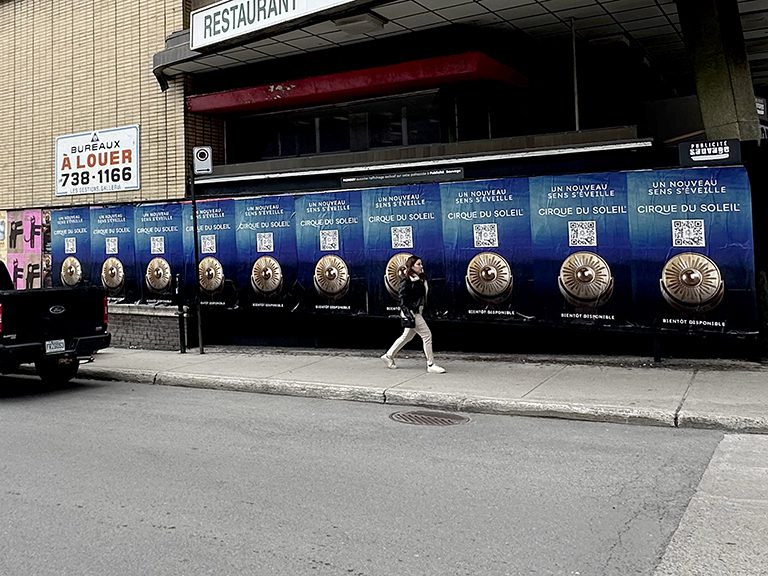
Independent poster advertising networks in Toronto’s creative neighborhoods provide access to specific demographic segments at lower costs than major OOH formats. Queen West, Kensington, Ossington, and the Danforth all have authorized poster surface networks catering to the creative and young professional audience that concentrates in these areas.
Street Team Activation
Street team marketing in Toronto’s high-traffic pedestrian zones, including Queen Street West, Kensington Market, and the Entertainment District, creates direct consumer engagement with specific community audiences. Toronto’s pedestrian culture in its core neighborhoods makes street team work particularly effective during the spring and summer months when outdoor activity peaks.
Format
Best Toronto Areas
Audience Reach
Relative Cost
Mural Advertising
Queen West, Kensington, Leslieville
Neighborhood + social
Medium
TTC Transit
Subway, buses city-wide
Broad urban commuter
Medium-High
Billboards
Gardiner, downtown arterials
Drivers + pedestrians
High
Poster Campaign
Creative neighborhood corridors
Neighborhood-targeted
Low-Medium
Street Team
Queen West, Kensington
Direct consumer contact
Medium
Toronto vs. Other Canadian Cities for Advertising Investment
Brands allocating Canadian advertising budgets often face the question of Toronto versus other major markets. Here is how Toronto compares to the other primary Canadian advertising markets.
Toronto vs. Vancouver: Toronto offers far greater scale but at higher cost and in a more cluttered advertising environment. Vancouver offers more precise neighborhood targeting for specific creative and lifestyle demographics at somewhat lower cost. For brands needing national Canadian impact, Toronto is the priority market. For brands targeting specific creative, tech, or lifestyle demographics, Vancouver may deliver better value per dollar. The ideal Canadian strategy often includes both markets.
Toronto vs. Montreal: Montreal is Canada’s French-language capital and a major creative market with its own distinct character. French-language requirements are essential for Montreal campaigns. Toronto and Montreal serve different geographic consumer bases with limited overlap. Brands entering Canada typically prioritize one or the other as a first market based on language strategy, with Toronto being the more common first choice for English-language brands.
Toronto vs. Calgary and Edmonton: The Alberta cities are significantly smaller than Toronto but have high per-capita incomes and a specific demographic profile oriented toward energy industry professionals and their families. For brands in outdoor recreation, financial services, and energy-adjacent industries, Alberta cities can be highly efficient markets. For most consumer brands, Toronto’s scale makes it the priority.
For brands with the budget to cover multiple Canadian markets, Toronto is almost always the anchor investment. The city’s scale, its media dominance, and its position as Canada’s commercial capital make it the market where advertising investment delivers the highest national visibility.
The Toronto TIFF Opportunity for Brand Advertising
The Toronto International Film Festival, held every September, is one of the most important cultural events in North America. It draws the global film industry to Toronto for ten days, generating enormous international media coverage and concentrating a highly influential creative and entertainment audience in the King West and Entertainment District area.
TIFF creates extraordinary advertising opportunities for brands that plan for it. The concentration of entertainment industry professionals, international press, and culturally engaged consumers in a specific geographic area creates conditions where a well-placed outdoor or guerrilla campaign can reach an exceptionally influential audience and generate significant international media coverage.
We have helped brands activate around TIFF in ways that go beyond standard festival sponsorship. Creative outdoor campaigns in the King West corridor during TIFF, experiential activations near festival venues, and social media amplification strategies tied to the festival’s content have all delivered strong results for brands that plan and execute well.
The key to TIFF advertising success is early planning. The festival fills the limited available outdoor advertising inventory in the King West area quickly. Brands that want to be present during TIFF need to secure their outdoor advertising positions months in advance. We recommend starting the planning conversation at least four to six months before the festival.
Toronto’s Creative Standard: Toronto’s large and sophisticated creative industry creates an audience with high advertising literacy. Work that is genuinely creative and original earns attention and respect in this city. Work that is generic or derivative earns indifference at best. We hold every Toronto campaign we produce to the same creative standard we apply in New York and Los Angeles.
Frequently Asked Questions
What makes Toronto different from other Canadian advertising markets?
Scale, diversity, and media centrality are the three defining differences. Toronto is Canada’s largest market by far, its most diverse, and the city whose media activity most strongly influences national conversation. A campaign that succeeds in Toronto achieves national visibility in ways that campaigns in other Canadian cities cannot match. This scale comes with higher advertising costs and more
What is the best neighborhood for outdoor advertising in Toronto?
The best neighborhood depends entirely on your target audience. For creative and young professional audiences: Queen Street West, Kensington Market, Ossington, or Leslieville. For luxury and affluent consumers: Yorkville. For mass-reach consumer advertising: the Financial District and downtown core. For entertainment industry audiences: King West and the Entertainment District. We always start nei
How does the TTC compare to other transit advertising networks for outdoor campaigns?
The TTC carries over a million daily riders, making it one of the largest transit advertising opportunities in North America. Its subway network creates concentrated dwell-time advertising opportunities at major transfer stations that are exceptional for brand campaigns targeting daily commuters. Compared to Vancouver’s SkyTrain or Montreal’s Metro, the TTC has greater absolute scale. Compared to
Can AGM run a Toronto campaign alongside a New York campaign?
Yes. We regularly coordinate simultaneous campaigns in Toronto and in major US cities for brands that are operating in both markets. We handle the strategic coordination centrally and manage both US and Canadian execution through our respective local partner networks. Campaign timing can be aligned for simultaneous launch or staggered based on brand strategy.
What is the minimum budget for an effective Toronto advertising campaign?
Entry-level campaigns focused on one or two Toronto neighborhoods with a single format can be executed for $12,000 to $25,000 (CAD or USD depending on billing arrangement). Meaningful multi-format campaigns covering multiple neighborhoods typically start at $40,000 to $80,000. Comprehensive Toronto market campaigns with major OOH, murals, street teams, and integrated amplification strategy can run
What season is best for outdoor advertising in Toronto?
Toronto has genuine seasons, unlike Vancouver. Summers (June through September) are warm and drive outdoor activity and foot traffic in the city’s outdoor neighborhoods. Spring (April through May) is good for launching campaigns as the city comes to life after winter. Fall (September and October) benefits from the TIFF concentration and the return of the professional population from summer holiday
How important is multilingual creative for Toronto advertising?
For campaigns targeting specific Toronto communities (South Asian, East Asian, Black, Latin American), language and cultural adaptation is important and can significantly improve campaign effectiveness. For general Toronto market campaigns targeting English-speaking consumers, English-only creative is standard. Toronto’s diversity makes culturally informed creative more broadly important than lang