Advertising in London | American Guerrilla Marketing
Advertising in London means competing for attention in one of the most cluttered, sophisticated, and expensive advertising markets in the world. London consumers see more advertising per day than almost any other urban population on earth. Traditional outdoor advertising in London is dominated by massive networks. Transit advertising through TfL commands premium prices. Digital out-of-home has saturated major stations and high streets.
In this context, the brands that actually get noticed and remembered are often not the ones spending the most. They are the ones being the most creative about where and how they show up. Street-level guerrilla marketing and creative outdoor advertising in London neighborhoods give brands access to audiences that premium OOH formats routinely miss, at costs that are far more accessible, with creative impact that is often far more memorable.
At American Guerrilla Marketing, we have been working in international markets including London for years. We help North American brands enter the London market and we help London-based brands thinking creatively about their own city’s advertising environment. This guide covers everything you need to know about advertising in London: the environment, the neighborhoods, the formats, the cost structures, and the creative principles that separate campaigns that work from campaigns that disappear into the noise.
London has one of the world’s most developed and sophisticated advertising markets. Understanding its structure is essential for brands planning their London campaigns.
The traditional OOH sector in London is dominated by large outdoor media networks, global outdoor advertising networks, and Global (formerly Exterion) who control the majority of billboards, bus shelters, and TfL-authorized formats. Booking major OOH in London is a process managed through these networks, typically involving significant lead times and minimum spend thresholds that put the best locations out of reach for smaller brands.
The digital OOH market has grown significantly in London over the past decade. Massive digital screens at key transport hubs (Waterloo, Liverpool Street, Paddington), in high-traffic commercial areas (Piccadilly Circus, Oxford Street), and in retail environments (Westfield centres) offer dynamic, programmatic advertising capabilities. These are premium formats with premium prices and are predominantly used by major national and international brands.
The independent and alternative outdoor advertising market is where guerrilla marketing operates. This includes authorized poster placements on independent landlord-owned surfaces, construction hoarding advertising, creative installations on non-standard surfaces with property owner permission, and street-level marketing activations across London’s diverse neighborhoods. This segment is less structured, less expensive, more creative, and more effective for reaching specific audience segments than the major OOH networks.
London’s advertising market also includes a substantial press and radio advertising network, a highly competitive digital advertising market, and one of the world’s most active social media content cultures. Any advertising campaign in London should be designed with social media amplification in mind, because London consumers create and share an enormous volume of urban content daily.
Key London Neighborhoods for Advertising Campaigns
London is not a single market. It is a collection of distinct neighborhoods, each with its own demographic profile, cultural character, and consumer behavior. The most effective London advertising campaigns are built around neighborhood targeting rather than generic London-wide reach.
Shoreditch and East London Creative District
Shoreditch is the undisputed center of London’s creative and tech economy. Tech companies, design studios, advertising agencies, fashion labels, and media companies cluster here. The foot traffic includes a mix of young creative professionals, fashion-forward young adults, and the international tourists who have made Brick Lane and surrounding streets a destination. Creative advertising here competes with some of the best street art in the world, so the bar for quality is high.
The broader East London creative district extends through Dalston, Hackney, and Bethnal Green. Each neighborhood has its own micro-character but all serve broadly similar young, creative, and culturally engaged audience profiles. This corridor is our most recommended area for brands targeting London’s creative class.
Brixton and South London
Brixton is culturally rich, ethnically diverse, and increasingly gentrified. The Brixton Market area and the Village create a concentrated foot traffic zone with strong community character. Music brands, food and beverage companies, and culturally engaged lifestyle brands find Brixton an excellent environment. The neighborhood’s cultural identity means that brands need to approach it with genuine cultural awareness and community respect.
Camden and North London
Camden remains one of London’s most visited neighborhoods for domestic and international tourists seeking alternative culture. The concentration of music venues, independent shops, and Camden Market makes this area particularly effective for music brands, youth-oriented consumer products, and alternative lifestyle brands. Advertising in Camden competes for attention in a very visually busy environment, so creative distinctiveness is essential.
Notting Hill and West London
Notting Hill and the surrounding West London neighborhoods (Ladbroke Grove, Portobello Road) attract a more affluent and design-conscious audience. The beautiful Victorian architecture and garden squares create a different advertising context than East or South London. Premium lifestyle, fashion, food, and home brands perform well here. The Notting Hill Carnival in August creates an extraordinary foot traffic moment with enormous social content generation.
Soho, Covent Garden, and the West End
The West End has the highest absolute foot traffic of any area in London. Soho mixes creative industry workers with visitors, tourists, and London’s LGBTQ+ community. Covent Garden is tourist-heavy but also attracts theatre-goers and the arts community. Oxford Street and Regent Street are London’s major retail arteries. Mass-reach consumer brands, entertainment companies, and major retail brands are most active in West End advertising.
South Bank and the Cultural Quarter
The South Bank corridor, from Tate Modern through the National Theatre to the Southbank Centre, attracts London’s cultural audience. People come here to see art, theatre, music, and film. They are engaged, curious, and receptive to creative advertising. Brands associated with culture, creativity, sustainability, and arts are particularly well-served by South Bank presence.
London Advertising Truth: London is so large and so diverse that a campaign described as “running in London” tells you very little. The question that matters is where in London, and for whom. Neighborhood targeting is not optional in this city. It is the difference between an effective campaign and an expensive one.
Street-Level and Guerrilla Advertising Formats in London
The most effective non-traditional advertising formats in London share one characteristic: they put brands into the physical fabric of the city in ways that feel genuine rather than inserted. Here are the formats we use most frequently in London campaigns.
Construction Hoarding Advertising
London is in a perpetual state of construction. There are always construction sites throughout the city, each enclosed with temporary hoarding that represents excellent large-format advertising space. Construction hoarding in prime London locations can be secured directly with site managers and often represents better value and better sightlines than comparable billboard space. This is one of our primary formats for London campaigns because it is widely available, creatively flexible, and often commands excellent pedestrian viewership.
Mural and Wall Advertising
London has a strong mural culture rooted in its street art tradition. Shoreditch, Brixton, and Camden all have running mural environments where brand-sponsored wall art is part of the visual environment. A well-executed mural in these neighborhoods creates a genuine cultural object that earns community appreciation and generates significant social media content. London murals often receive press coverage from local lifestyle publications and design blogs.
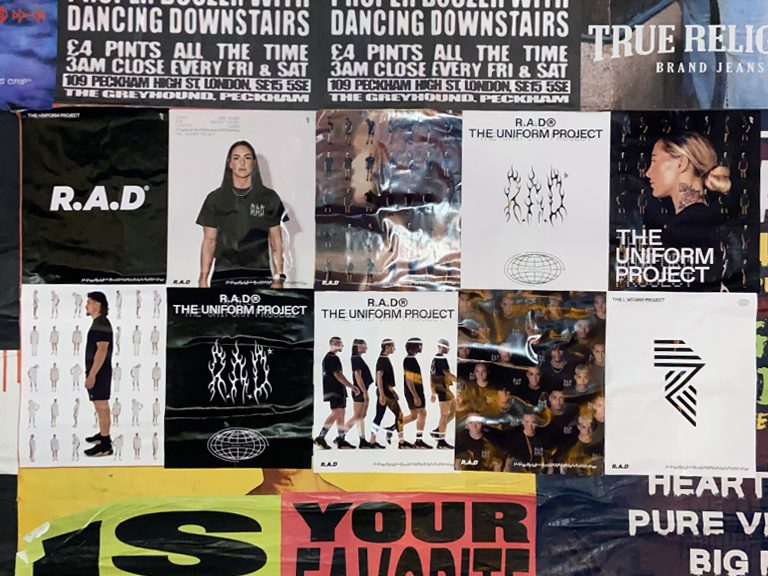
Independent poster advertising surfaces in London’s creative neighborhoods offer targeted audience access at accessible cost points. These range from poster frames on independent building walls to creative placements on permitted surfaces in high-foot-traffic areas. An experienced operator with London market knowledge can identify surfaces that reach specific audience profiles effectively.
Street Activation and Sampling
London’s pedestrian zones, markets, and public spaces offer opportunities for direct consumer engagement through street team activation and product sampling. The regulations around street marketing in London require careful attention to borough-specific rules, but experienced operators navigate these routinely. Campaigns that include a direct engagement component consistently achieve stronger brand recall than pure visual advertising alone.
Projection and Ambient Advertising
Projected brand imagery onto iconic London buildings and bridges is a dramatic format that generates strong press coverage and social content when executed well. Ambient advertising installations in unexpected locations create the surprise and delight that London’s sophisticated advertising audiences respond to. These formats work best as part of integrated campaigns with supporting social and PR strategy.
Format
Best London Areas
Audience
Lead Time
Social Potential
Construction Hoarding
City-wide
Pedestrians near sites
2-6 weeks
Medium
Mural
Shoreditch, Brixton, Camden
Creative, culturally engaged
6-10 weeks
Very High
Authorized Poster
All neighborhoods
Targeted by neighborhood
3-5 weeks
Medium
Street Team
High foot traffic zones
Direct consumer contact
2-4 weeks
Medium
Projection/Ambient
Iconic landmarks
Broad/viral
4-8 weeks
Very High
Creative Principles for Advertising in London
London advertising audiences have seen everything. Creating work that genuinely gets noticed and remembered requires understanding the specific creative principles that work in this market.
British wit and understatement are genuine cultural values that shape how London advertising lands. Campaigns with a dry, intelligent sense of humor earn disproportionate respect and sharing. Earnest, American-style advertising can come across as naive or pushy to London audiences. This does not mean you cannot run a US brand’s advertising in London, but it does mean that adapting the tone and delivery to fit British sensibility pays dividends.
Referencing London itself, its neighborhoods, its culture, and its shared experiences, creates an immediate connection with London audiences. A campaign that shows genuine knowledge of and affection for specific parts of the city feels like it belongs there in a way that generic urban creative never does.
Scale matters more in London’s busy visual environment than in quieter cities. Large-scale creative commands attention in a city where small-format advertising disappears into the background noise. When we recommend London formats, we almost always push for the largest practical size available.
Typography is a particularly important element of London outdoor advertising because the city’s pedestrian pace allows for more reading than many other urban environments. Clear, bold, well-crafted typography that communicates efficiently works well here. Over-designed type that sacrifices legibility for style fails in an environment where you need to communicate in seconds.
Authenticity to the brand is non-negotiable with London’s sophisticated consumer base. A brand that tries to be something it is not in its London advertising will be noticed and mocked. London consumers have highly sensitive detectors for brand inauthenticity. Campaigns that are honest about what a brand is, that have a genuine point of view, and that are not trying to be all things to all people perform consistently better than campaigns that try to appeal to everyone.
London Creative Standard: If your creative would work just as well in any other city, it is probably not good enough for London. The best London campaigns feel specific to this city and this moment. Invest in creative that earns its place on London’s streets.
Budgeting for Advertising in London
London advertising costs span an enormous range depending on format, location, and campaign duration. Here is a practical framework for budget planning.
Entry-level guerrilla campaigns in London’s creative neighborhoods (Shoreditch, Brixton, Hackney) focused on authorized poster placements and street team activation can be executed for £10,000 to £20,000 (approximately $13,000 to $25,000 USD at current rates). This is appropriate for brands testing the London market or brands with limited budgets that want to make an impact in specific communities.
Mid-range campaigns combining mural advertising, construction hoarding, poster campaigns, and street team activation across two or three neighborhoods typically run £30,000 to £75,000 ($38,000 to $95,000 USD). These campaigns create genuine London market presence and generate meaningful social media amplification.
Comprehensive London campaigns that include premium OOH formats, multiple murals, sustained street-level activation, and integrated social and PR support can run £100,000 to £500,000 ($125,000 to $625,000 USD) and beyond. These are major market presence campaigns appropriate for running brands making significant London market investments.
The right budget depends on your campaign goals and your London market ambitions. We will always develop a proposal calibrated to your specific budget and objectives rather than recommending the most expensive option available.
Working With American Guerrilla Marketing for London Campaigns
We execute London campaigns through a combination of central creative and strategic leadership from our New York team and vetted local execution partners in London. We have relationships with local poster campaign operators, mural installation crews, street team coordinators, and experiential production vendors who know the London market intimately.
For North American brands entering London, we serve as the bridge between your brand’s North American identity and London’s specific cultural context. We help you understand where your brand needs to adapt its presentation for a British audience and where it can stay exactly as it is. We bring the same strategic and creative rigor to your London campaign that we bring to campaigns in New York, Los Angeles, and Chicago.
For London-based brands that want to approach their own city’s advertising market with fresh eyes, we bring a perspective shaped by years of working in the most competitive urban advertising markets in North America. The guerrilla marketing strategies that have worked for brands on the streets of New York and LA often translate with excellent results to London’s creative neighborhoods.
Frequently Asked Questions
How does advertising in London compare to advertising in New York?
Both cities are world-class advertising markets with sophisticated, ad-experienced audiences. London skews toward wit and understatement in creative sensibility where New York tends to be more direct and bold. London’s tube system creates different audience concentration patterns than New York’s subway. London has more walkable neighborhood clusters with distinct character than New York’s more con
Do I need a local UK agency to advertise in London?
Not necessarily. What you need is an agency with genuine London market knowledge and running local execution relationships. That can be a UK-based agency or a specialist agency like ours with deep London experience and local partner networks. The critical factor is demonstrated London execution track record, not physical office location.
What are the most common mistakes brands make when advertising in London?
The most common mistakes are: running US creative without adapting it for British cultural context, choosing advertising locations based on general London awareness rather than specific neighborhood audience profiles, underestimating the creative quality required to stand out in London’s saturated advertising environment, and not building social amplification into the campaign from the beginning.
Is Piccadilly Circus worth advertising at?
The Piccadilly Lights (digital screens at Piccadilly Circus) are iconic but expensive and reach a tourist-heavy audience that may not be your primary target. Unless your brand genuinely needs the iconic association of Piccadilly Circus or has a tourism-focused campaign, the same budget deployed in creative neighborhood advertising in Shoreditch, Camden, or Brixton will typically deliver stronger b
How long should a London advertising campaign run?
Four to eight weeks is the standard minimum for a London awareness campaign. Shorter campaigns can create a moment but rarely build the frequency needed for meaningful brand recall. Sustained campaigns of three to six months, or permanent mural placements that run for a year or more, deliver proportionally stronger brand recognition. We always recommend campaign durations that match your brand-bui
Can you run London and US campaigns at the same time?
Yes. We regularly coordinate simultaneous multi-city campaigns that span the US and UK. We manage creative consistency across all markets while adapting executions for each city’s specific context. If you are launching a brand, a product, or a campaign globally, we can help ensure that the London execution is as strong as the New York or LA execution.
What documentation do we get from a London campaign?
We provide comprehensive post-campaign documentation including professional photography of all placements, installation logs with dates and locations, foot traffic estimates for each location, social media monitoring report, and a summary of any press coverage generated. This documentation is delivered in a format suitable for internal reporting and decision-maker presentations.