Advertising Companies Chicago: What Separates Street-Level Specialists From the Rest
Chicago’s advertising company market includes traditional agencies, digital specialists, outdoor companies, and field execution shops. Knowing which serves which need is the starting point.
The term “advertising companies” casts a wider net than “advertising agencies.” It includes the full range of businesses that sell advertising services: traditional agencies, media companies, production houses, field execution vendors, and technology platforms. In Chicago, all of these categories are present and active. Understanding how they differ and what each is actually built to deliver is the starting point for any brand trying to build an effective Chicago advertising program.
These are the full-service shops — strategy, creative, media, and often digital — that most people mean when they say “advertising agency.” Chicago’s traditional agency market includes holding company networks (Leo Burnett, FCB, DDB among others) and independent full-service shops of varying sizes. They handle brand-level advertising work from positioning and strategy through campaign execution.
Media Companies and Publishers
Chicago has significant local media properties — newspapers, television stations, radio stations, digital publications, and event properties — that sell advertising directly. The Chicago Tribune, Chicago Sun-Times, WTTW, and dozens of local media properties represent direct advertising opportunities in the Chicago market. These are advertising companies in the sense that they sell access to their audiences, though they do not do the agency work of developing campaigns.
Digital Advertising Companies
The digital advertising network in Chicago includes paid search and social agencies, programmatic advertising companies, ad technology vendors, and data companies that support digital campaign targeting. This segment of the market has grown substantially over the past decade and now represents a significant portion of advertising spending in the Chicago market.
Outdoor and Physical Advertising Companies
Companies that sell physical advertising placements — billboard companies, transit advertising vendors, and other out-of-home advertisers — are a distinct segment of the Chicago advertising company market. The major outdoor companies (Lamar, Clear Channel, Outfront Media) have Chicago inventory. Transit advertising through the Chicago Transit Authority is managed through JCDecaux and similar vendors.
Field Execution Companies
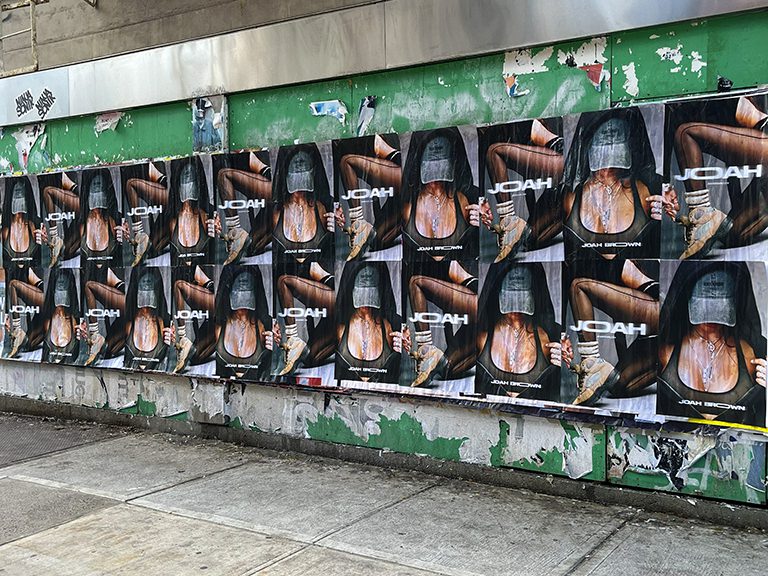
This is the category AGM occupies. Field execution companies design and run physical campaigns in public spaces: guerrilla poster campaigns, wheat paste campaigns, street team programs, and experiential events. Unlike the outdoor advertising companies that sell space in their owned inventory, field execution companies work in the ambient environment using a combination of owned materials and negotiated access to locations.
The distinction between outdoor advertising (buying space in owned inventory) and guerrilla field execution (placing campaigns in the ambient environment) is important for brands planning Chicago physical campaigns. They reach similar physical spaces but operate through entirely different business models and produce different types of brand presence.
How Advertising Companies in Chicago Typically Work
Different types of advertising companies operate on different engagement models. Traditional agencies typically work on retainer or project fees. Media companies sell advertising through rate cards and negotiated packages. Outdoor companies sell inventory on contract periods. Field execution companies like AGM work on project-based engagements scoped to specific campaigns.
Understanding the engagement model before you enter a conversation with an advertising company helps set appropriate expectations. A retainer agency expects to be a sustained partner. An outdoor company expects a contract period commitment. A field execution company like AGM can work on a single campaign with no long-term commitment required.
What to Look for in Chicago Advertising Companies for Physical Campaigns
For brands specifically looking for physical advertising companies in Chicago — whether for outdoor placements, street-level campaigns, or experiential work — the relevant vetting criteria are operational rather than creative.
Chicago market depth: Do they have specific knowledge of Chicago’s neighborhoods, foot traffic patterns, and consumer concentrations? Or are they generalists who apply the same approach in every market?
Execution infrastructure: Do they have in-house field staff and production capacity, or do they outsource the actual work? Outsourced execution adds cost and reduces accountability.
Documentation standards: What documentation do they provide after a campaign? Photo documentation, route maps, and summary reports are the minimum standard for any physical campaign.
Specific experience: Can they show you examples of similar work executed in similar Chicago neighborhoods? Recent, specific examples matter more than general case studies from other markets.
AGM as a Chicago Advertising Company
AGM is a field execution advertising company. We do not sell outdoor advertising inventory. We do not place media. We design and execute physical and experiential campaigns in Chicago and across the country using guerrilla marketing methods: poster campaigns, wheat paste campaigns, street team programs, and experiential events in public spaces.
Our Chicago operations are built on genuine market knowledge. We know which neighborhoods concentrate which consumer profiles. We know the foot traffic patterns on Milwaukee Avenue in Wicker Park versus Milwaukee Avenue in Logan Square. We know the seasonal patterns that affect outdoor campaign timing. We know which types of executions generate organic social documentation and which do not.
We provide photo documentation, route maps, and summary reports for every campaign. For street team and experiential work, we also provide staff logs and activation-level notes. Documentation is delivered within 5 business days of campaign completion.
Company Type
What They Sell
Typical Chicago Budget Range
AGM Comparison
Traditional agency
Strategy, creative, and media services
$50K+ monthly retainer (large); $20-50K per project (boutique)
We execute, not strategize
Outdoor company
Billboard and transit inventory
$5-50K+ per location per period
We create ambient presence without buying inventory
Digital company
Paid digital placements and strategy
$5-30K+ monthly depending on spend
Different channel entirely — we are physical
AGM (field execution)
Guerrilla campaigns, street teams, experiential
$3K-50K+ per campaign depending on scope
Direct to field — no outsourcing
Building a Chicago Advertising Company Roster
Most effective Chicago advertising programs use multiple companies across different specializations rather than a single provider. A brand might use a traditional agency for brand strategy and creative development, a digital company for paid media, and AGM for physical and guerrilla campaign execution. Each company does the type of work it is actually built for.
Coordinating across multiple companies requires a brand-side owner who manages the integration. Campaign timing, creative consistency, and shared documentation standards need to be managed centrally. The individual companies should be responsible for their specific deliverables, but the integration is the brand’s responsibility or the responsibility of a lead agency designated to coordinate the other partners.
AGM integrates smoothly with other agency partners. We coordinate directly with digital agencies to align timing between physical and digital campaigns in the same neighborhoods. We provide documentation in formats that other agencies can incorporate into integrated campaign reports. We do not require exclusivity and we do not try to expand beyond our scope — we execute the physical work and we do it well.
Chicago’s Advertising Market in Numbers
Chicago is the third-largest advertising market in the United States by total ad spending. The Chicago DMA (Designated Market Area) reaches approximately 10 million people across the city and surrounding suburbs. The city of Chicago itself has a population of approximately 2.7 million, making it the third-largest city in the country. The broader Chicagoland area, which includes the collar counties and suburban municipalities, adds several million more consumers.
For brands planning Chicago advertising campaigns, the geographic scope of the target audience matters as much as the city itself. A campaign targeting the Chicago DMA for national reach purposes has very different logistics than a campaign targeting specific city neighborhoods for brand-building among specific consumer segments. Both are legitimate Chicago strategies, but they require different approaches, different agency partners, and different execution infrastructure.
Seasonal Considerations for Chicago Campaigns
Chicago’s climate creates seasonal patterns that affect physical advertising campaigns in ways that do not apply to digital campaigns. Outdoor placements — posters, wheat paste, and ambient installations — are most effective from April through October when pedestrian foot traffic is highest and weather allows for sustained outdoor activity. Winter campaigns in Chicago require adaptation: more transit-adjacent placements, indoor venue partnerships, and weather-resistant materials for outdoor executions.
Summer in Chicago concentrates large consumer audiences at outdoor events and along the lakefront. Lollapalooza in Grant Park draws approximately 400,000 attendees over four days in August. The Chicago Air and Water Show draws millions of people to the lakefront. Neighborhood street festivals run nearly every weekend throughout summer. Each of these events creates an advertising opportunity in the surrounding area for brands that plan their campaigns around the city’s event calendar.
Winter brings indoor concentration opportunities. The holiday shopping season concentrates consumers in the Magnificent Mile and other retail corridors. The restaurant and entertainment scene in neighborhoods like River North and Wicker Park drives evening foot traffic through the colder months. Indoor venue partnerships and transit advertising become proportionally more valuable when outdoor execution is limited by weather.
Chicago Transit Authority as an Advertising Environment
The Chicago Transit Authority operates one of the country’s most extensive urban transit networks. The L rail system has eight lines serving the city and immediate suburbs. The bus network extends coverage into every neighborhood in the city. Combined, the CTA carries over 400 million rides annually — a substantial and broadly distributed audience for transit-adjacent advertising.
Transit advertising in Chicago includes station placements at L stops, car card advertising inside rail cars, platform takeovers at high-traffic stations, and bus shelter advertising throughout the city. Different lines and different stations reach different demographic profiles. The Red Line, which runs north-south through the city’s most densely populated residential areas, carries a different demographic mix than the Blue Line running to O’Hare or the Green Line serving the South Side.
For guerrilla and ambient campaigns, the areas immediately surrounding major L stations are high-value locations. Concentrated foot traffic enters and exits these stations at consistent times, creating predictable windows for poster campaigns and street team activations. The stations themselves — particularly major hubs like Fullerton, Clark and Division, and Damen on the Blue Line — are surrounded by commercial activity that sustains foot traffic between transit peaks.
Event-Adjacent Campaign Opportunities in Chicago
Beyond the summer festival calendar, Chicago’s year-round event schedule creates sustained opportunities for campaign timing around major audience concentrations:
Chicago Bears games at Soldier Field (fall and early winter) draw approximately 60,000 attendees per game with significant foot traffic in the Museum Campus and surrounding lakefront area
Chicago Bulls and Blackhawks games at the United Center draw consistent audiences to the Near West Side with the United Center serving as the anchor of a dense pre- and post-game dining and entertainment scene
Chicago Cubs games at Wrigley Field concentrate enormous audiences in Wrigleyville and the surrounding North Side, creating one of the most active street-level advertising environments in the city during the baseball season
Major conventions at McCormick Place — including trade shows and consumer expos — bring tens of thousands of concentrated audience members to the South Side lakefront area
The Chicago Auto Show at McCormick Place draws hundreds of thousands of visitors over its two-week run in February, creating a significant opportunity for brands adjacent to the automotive category
AGM plans campaigns around Chicago’s event calendar regularly, positioning street-level executions in proximity to major event venues to reach concentrated audiences before and after events. This timing-based approach often produces better cost-per-contact outcomes than sustained campaigns without event alignment, because the audience concentration is higher and the consumer mindset is more receptive.
Chicago Campaign Integration With Digital Channels
Physical and digital campaigns in Chicago can be integrated to create a reinforcement effect that neither channel achieves alone. The strategy is straightforward: run physical placements in specific Chicago neighborhoods and simultaneously run geotargeted digital advertising to the same zip codes or geographic zones. Consumers who see the physical campaign and the digital campaign are receiving reinforced brand messaging from multiple directions, which builds brand recognition faster and more durably than either channel in isolation.
The documentation from AGM’s physical campaigns — photo documentation organized by location and date, route maps showing geographic coverage — provides the geographic data needed to align digital targeting. A poster campaign running in Wicker Park and Logan Square can be precisely matched by geotargeted paid social ads to the same neighborhoods. The result is a consumer who sees the brand in their physical environment and then sees it again in their social feed, which creates a brand familiarity that single-channel campaigns cannot build at the same efficiency.
AGM coordinates with digital agency partners when clients are running integrated physical-digital campaigns. We provide documentation and geographic coverage data in formats that digital partners can incorporate into their targeting and reporting, making the integration operationally clean rather than a manual coordination burden for the brand team.
The Chicago Consumer and What Drives Brand Loyalty Here
Chicago consumers are known for strong brand loyalties that, once established, tend to endure. The city’s working-class heritage and its strong neighborhood identity culture create consumer relationships with brands that feel personal and local in ways that are difficult to build through purely digital channels. Brands that invest in physical presence in Chicago’s neighborhoods over sustained periods earn a kind of recognition that brand managers from outside the market sometimes underestimate.
The mechanism is straightforward: repeated physical exposure in the environments where consumers live their daily lives creates familiarity and positive association that advertising cannot generate through exposures alone. A brand that is consistently present on the streets of Wicker Park for two consecutive years is not just running advertising in Wicker Park — it is becoming part of the neighborhood’s visual environment in a way that builds genuine brand recognition with the consumers who live and work there.
This is why brands that take a sustained approach to Chicago physical campaigns tend to see compounding returns over time. The first campaign builds initial awareness. Subsequent campaigns reinforce and deepen that awareness. By the third or fourth campaign wave, the brand is recognized before the consumer consciously reads the messaging, which is the highest possible level of brand recognition efficiency.
Multi-Market Chicago + Midwest Campaign Coordination
For brands using Chicago as part of a broader Midwest market strategy, the coordination between Chicago and secondary Midwest markets — Milwaukee, Indianapolis, Columbus, Kansas City, Minneapolis, Detroit — is an important logistical consideration. Chicago typically anchors the Midwest strategy as the largest and most brand-influential market in the region. Secondary markets are activated with campaign formats adapted to their specific scale and consumer character.
AGM coordinates multi-market Midwest campaigns from the Chicago anchor market outward. We execute Chicago first to establish the campaign format and document what works, then carry those learnings into the secondary markets with appropriate adaptations. This sequential approach produces better secondary market results than simultaneous multi-market launches because the Chicago campaign learnings can improve execution quality in subsequent markets.
The documentation standard for multi-market campaigns is consistent: photo documentation, route maps, and summary reports for each market, delivered within 5 business days of that market’s campaign completion, with a consolidated multi-market report covering the full campaign at its conclusion. This consolidated documentation gives the brand manager a unified view of what was executed across the Midwest and a clear basis for planning the next campaign wave.
Chicago Campaign Budgeting: What Actually Drives Cost
Physical campaign costs in Chicago are driven by several variables that brands new to the format often do not fully anticipate. Understanding these cost drivers upfront prevents budget overruns and allows for realistic campaign scoping.
The primary cost drivers for street-level campaigns in Chicago:
Geographic scope: A campaign covering three North Side neighborhoods costs less than one covering the full city. Each additional neighborhood adds location scouting, deployment time, and documentation coverage.
Campaign duration: A one-day street team activation has very different costs than a four-week poster campaign. Sustained campaigns require material replenishment and ongoing staff deployment that one-day events do not.
Campaign format: Poster campaigns have different costs from wheat paste campaigns, which have different costs from street team programs, which have different costs from experiential events. Format choice significantly affects the cost structure.
Materials production: Print production for poster and wheat paste campaigns, branded materials for street team programs, and custom builds for experiential events each have their own cost range based on volume, quality, and specifications.
Staff requirements: Street team and experiential campaigns require trained brand ambassadors. The number of staff, the training requirements, the supervision structure, and the deployment duration all affect staffing costs.
AGM provides specific budget estimates after understanding the campaign scope on each of these dimensions. We are direct about what different budget levels can and cannot achieve, and we recommend campaign structures that match the brand’s objectives to the budget it has available — not campaign structures that maximize billings regardless of fit.
Understanding Chicago’s Consumer Diversity for Physical Campaigns
Chicago is one of the most demographically diverse major cities in the United States, and that diversity is organized geographically in ways that matter enormously for physical campaign planning. The North Side, South Side, and West Side of Chicago have distinct demographic profiles, consumer behaviors, and cultural contexts that require genuinely different campaign approaches.
The North Side corridor from Wicker Park through Lincoln Park to Rogers Park is characterized by younger demographics, higher educational attainment, strong independent retail culture, and brand-conscious consumers who are active social media users. This is the area where guerrilla poster campaigns and wheat paste campaigns generate the most organic social documentation and the strongest brand recognition building among trend-setting consumers.
The South Side from Hyde Park through Bronzeville to the Far South Side has a large African American consumer population with strong brand loyalties and significant purchasing power that is underserved by most national brand advertising programs. Brands that invest in physical presence on the South Side reach consumers who often do not see significant brand investment from national companies, which means the brand recognition built here is often deeper and longer-lasting than in markets where the advertising competition is more intense.
The West Side from Pilsen and Little Village through the Mexican and Latin American communities of the Southwest Side has the city’s largest concentration of Hispanic consumers. This is a substantial and rapidly growing consumer segment with distinct media habits, brand relationships, and cultural context for advertising. Campaigns that feel genuinely relevant to this community — that are executed with cultural awareness rather than generic national campaign materials — perform significantly better than campaigns that do not adapt to the cultural context.
The Importance of Permit and Property Clearance in Chicago Campaigns
Physical campaigns in Chicago operate in a regulatory environment that varies by activity type, location, and scale. Understanding what requires permit or property clearance versus what can be executed in the ambient public environment is essential for campaign planning that does not run into legal or logistical obstacles.
Street team activations on public sidewalks in Chicago generally do not require permits as long as the team is not blocking pedestrian traffic or engaging in activities that require special clearance. Large-scale experiential events in public parks or plazas typically require permits from the Chicago Park District or the relevant city agency. Poster placements require appropriate surface permissions from property owners. Wheat paste campaigns have specific location requirements that vary by neighborhood and property type.
AGM navigates the Chicago permit and property clearance environment on every campaign we execute in the city. We have established relationships with the relevant city agencies and with property owners in key neighborhoods, which allows us to plan campaigns efficiently within the appropriate legal and operational framework. We do not execute campaigns that create unnecessary legal exposure for our clients, and we advise clients when campaign concepts require modifications to fit within appropriate operational boundaries.
Frequently Asked Questions
What types of advertising companies operate in Chicago?
Chicago has traditional full-service agencies, digital advertising specialists, outdoor advertising inventory companies, media publishers, field execution specialists like AGM, and a range of other advertising service providers. The type that matters for your campaign depends entirely on what kind of advertising you are trying to run.
How is AGM different from other advertising companies in Chicago?
AGM is a field execution specialist. We do not sell advertising inventory, run digital campaigns, or do brand strategy. We plan and execute physical and experiential campaigns: guerrilla poster campaigns, wheat paste campaigns, street team programs, and experiential events. We bring operational infrastructure and Chicago market knowledge that generalist agencies outsource to specialists like us.
What documentation does AGM provide for Chicago campaigns?
Photo documentation organized by location and date, route maps showing geographic coverage across Chicago, and summary reports detailing what was executed, when, and where. For experiential and street team campaigns, we also deliver staff logs and activation notes. All documentation is provided within 5 business days of campaign completion.
Can a small brand afford to work with Chicago advertising companies?
Budget thresholds vary significantly by company type. A small-scale guerrilla poster campaign in a single Chicago neighborhood can start at $3,000-5,000 with AGM. Traditional agency retainers start much higher. The right question is what type of advertising your budget supports and which company type delivers that at the right quality level for your investment.
Does AGM help brands select other Chicago advertising companies to work with?
AGM can advise on the physical and experiential side of a Chicago campaign mix and share what we have seen work in terms of channel integration. We do not formally refer to or manage other advertising companies, but we are happy to share our perspective on what Chicago campaign structures tend to produce good results.