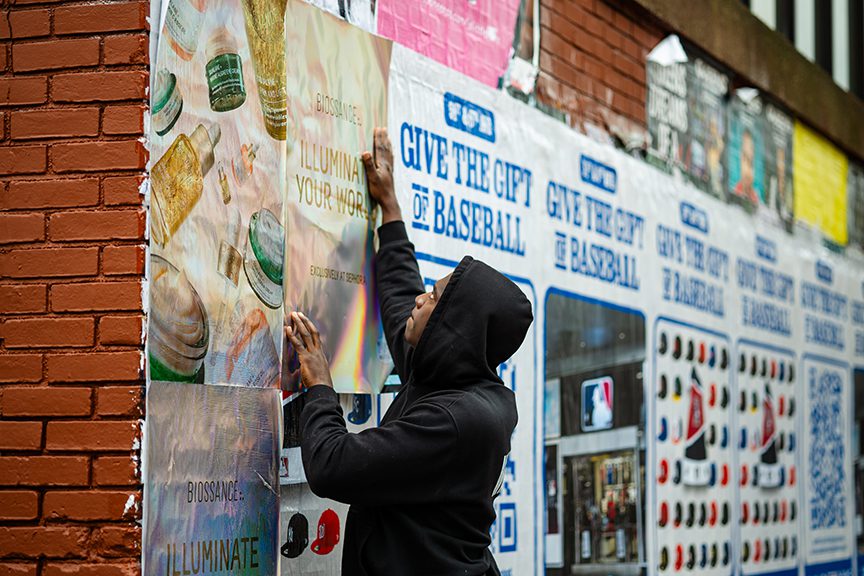
Illinois has one of the most developed advertising markets in the country. Chicago alone is the third-largest advertising market in the United States. It’s the home of Leo Burnett, DDB, and a deep history of brand-building that has shaped the modern advertising industry. Beyond Chicago, Illinois has a network of regional cities and markets that support their own advertising ecosystems: Rockford, Peoria, Springfield, and the greater Chicagoland suburbs each have distinct media landscapes and consumer audiences.
For brands looking for advertising agencies in Illinois, the options are vast and varied. The challenge isn’t finding an agency. It’s finding the right one for your specific objectives. A full-service agency built for a Fortune 500 packaged goods brand is not the right partner for a startup consumer brand trying to break into the Chicago market through street-level marketing. A suburban digital shop isn’t the right partner for a brand that needs outdoor presence in Wicker Park or Logan Square. The type of campaign you need determines the type of agency you need.
At American Guerrilla Marketing, we specialize in physical outdoor and street marketing campaigns. We work in Illinois primarily through Chicago, which is our third most active market after New York and Los Angeles. This guide covers the full advertising agency environment in Illinois, with emphasis on Chicago’s neighborhood-specific marketing opportunities, and helps brands understand how to choose the right type of agency for their needs.
The Chicago DMA covers approximately 3.5 million households and is home to the headquarters of major consumer brands including McDonald’s, Kraft Heinz, Wrigley, United Airlines, and dozens of others. This concentration of marketing-spending companies has supported a deep professional services network including some of the world’s most famous advertising agencies.
Chicago’s advertising agency market includes large legacy shops, mid-size full-service agencies, digital specialists, PR firms, media buying services, and a growing community of boutique creative and activation agencies. The market is competitive and the quality is high. Brands that come to Chicago expecting to find only second-tier alternatives to New York and LA are consistently surprised by the depth of talent and capability here.
Beyond Chicago, the Illinois market has regional advertising activity concentrated in the major downstate cities. Peoria and the Peoria-area market have a tradition of serving as a bellwether for national marketing programs. “Will it play in Peoria?” became a cultural shorthand for broad consumer appeal precisely because Peoria represents a kind of middle-American consumer profile that many national brands care deeply about.
Types of Advertising Agencies in Illinois
Understanding the agency environment requires understanding the categories. Here’s how we divide the market.
Chicago Neighborhoods and Their Advertising Audiences
For brands that want physical marketing presence in Chicago, neighborhood strategy is everything. Chicago is a city of distinct communities, each with its own character, demographic profile, and relationship to brands and marketing. Here’s how we think about the city’s most productive marketing corridors.
Wicker Park and Bucktown
Milwaukee Avenue through Wicker Park from Division Street north to Armitage Avenue, and the Bucktown extension through Western Avenue and North Avenue, forms the most concentrated creative community corridor in Chicago. Independent retail, music venues, restaurants, bars, galleries, and boutique fitness studios cluster in this zone. The audience skews young professional, creative, brand-aware, and relatively high-income. For lifestyle, music, fashion, food and beverage, and consumer goods brands, Wicker Park is the Chicago street marketing anchor point.
Logan Square
Milwaukee Avenue extending northwest through Logan Square gives access to a neighborhood that’s been at the center of Chicago’s independent restaurant and music scene for the past decade. The boulevard medians along Logan Boulevard and Kedzie Boulevard give the neighborhood a distinctive open feel. The audience here is similar to Wicker Park but slightly younger and with a stronger arts and nightlife orientation. Brands in food, beverage, music, and creative lifestyle categories perform well on Milwaukee Avenue through Logan Square.
Pilsen and the Lower West Side
18th Street through Pilsen is Chicago’s most visually striking marketing corridor. The neighborhood has a long tradition of mural art and large-format outdoor creative. The audience is primarily Hispanic and young, with a strong arts community presence and an independent business network. Brands that show up in Pilsen with genuine creative and respect for the neighborhood’s cultural identity earn significant loyalty. Brands that treat it as a budget outdoor location without cultural sensitivity earn the opposite.
The Loop and River North
The Loop’s pedestrian traffic along State Street and Michigan Avenue, and River North’s concentration of restaurants, galleries, and bars, give access to a more corporate and tourist audience. These corridors are useful for brands that need broad reach across a mainstream Chicago consumer profile. They’re less useful for brands seeking specific lifestyle or youth culture audiences.
Andersonville and Uptown
Clark Street through Andersonville, from Bryn Mawr north to Foster, is one of Chicago’s most cohesive independent commercial strips. Andersonville has a strong community identity, active small business network, and a consumer audience that actively supports local and independent brands. For food, beverage, and lifestyle brands that want to signal local authenticity in Chicago, Andersonville is a valuable marketing zone.
Hyde Park
The Hyde Park commercial corridor along 53rd Street and 55th Street, and the university zone around the University of Chicago campus, gives access to a highly educated, culturally engaged South Side audience. Hyde Park is underserved by most brand marketing campaigns, which means brands that show up here stand out more than they would in the saturated North Side corridors.
Chicago’s neighborhoods aren’t interchangeable. A campaign in Wicker Park reaches a completely different audience than a campaign in Pilsen, which is completely different from Hyde Park. Know which neighborhood your audience actually lives in before you choose a location.
What American Guerrilla Marketing Does in Illinois
We run street-level campaigns in Chicago across all of the neighborhoods described above. Our Chicago work includes outdoor poster and visual campaigns, street team deployments, sampling programs, and event-adjacent activations tied to Chicago’s music, arts, and food festival calendar.
Chicago’s festival calendar creates opportunities for street and outdoor campaigns that connect to major annual events. Lollapalooza concentrates enormous numbers of consumers in Grant Park on the lakefront in late July. Pitchfork Music Festival in Union Park draws a highly specific independent music audience to the West Side. The Chicago Jazz Festival at Millennium Park draws a culturally sophisticated audience to the lakefront. Each of these events creates a temporary geographic concentration of a specific type of consumer that brands can market to through outdoor presence in the surrounding streets and neighborhoods during the event window.
We also run integrated campaigns that connect outdoor presence in Chicago’s neighborhoods to digital channels. A brand that runs street creative in Wicker Park and at the same time targets users in the 60622 zip code with paid social advertising creates a surround-sound effect that dramatically increases brand recall compared to either channel alone.
How to Choose an Advertising Agency in Illinois
The selection process depends entirely on what you need to accomplish. Here are the key questions to answer before you start talking to agencies.
What is the primary goal of this campaign? Brand awareness, direct response, product launch, retail support, event promotion, and digital conversion are different objectives that require different agency types. Be specific about what you’re trying to achieve before you start the search.
What is your audience’s relationship to Chicago’s neighborhoods? A brand targeting suburban Illinois consumers through mass market media has different needs than a brand targeting Chicago’s creative community through neighborhood-specific physical campaigns. The geography of your audience determines which agencies have relevant experience.
What is your budget and timeline? Chicago’s advertising market has agencies operating at every budget level. But good agencies at every level have minimum engagement thresholds below which they can’t deliver quality. Be honest about your budget upfront to avoid wasting time with agencies whose minimums exceed it.
Do you need local expertise or national capability? A Chicago launch that needs deep neighborhood knowledge needs a Chicago-fluent agency. A national campaign that’s deploying in Chicago as one of ten markets needs an agency with national infrastructure and consistent execution across markets.
The best agency in Illinois for your campaign is the one with actual experience in the specific environment where you need to show up. Ask for examples, more than capabilities.
The Role of Out-of-Home Advertising in the Illinois Market
Out-of-home advertising has a strong tradition in Illinois, particularly in Chicago. The city’s density of transit riders and pedestrians makes transit advertising and street-level OOH highly effective. The CTA system carries nearly 1.5 million rides per day. Bus shelters, train platforms, and station walls give advertisers sustained visual contact with a mobile urban audience that digital advertising can’t fully replicate.
Bulletin and poster boards along expressways like the I-90/94 (the Dan Ryan and Kennedy corridors), the I-290, and the I-55 reach commuters from Chicago’s suburbs and exurbs who may not spend significant time in the city’s walkable neighborhoods. These highway boards reach a different audience than street-level neighborhood campaigns and serve different objectives: mass reach rather than targeted neighborhood presence.
Chicago’s elevated train network, known as the L, is one of the most distinctive advertising environments in any American city. The platforms and cars of the Red, Blue, Brown, and Green lines give access to riders from specific neighborhoods and transit corridors. A Red Line campaign from Howard to 95th Street passes through neighborhoods as distinct as Rogers Park, Wrigleyville, Boystown, the Gold Coast, the Loop, the South Loop, Bronzeville, and Woodlawn. That’s an extraordinary range of consumer profiles in a single transit line. Smart advertisers use the L strategically, more than for blanket coverage but for neighborhood-specific messaging calibrated to the communities each station serves.
Guerrilla and street marketing campaigns in Chicago complement OOH by operating at the neighborhood level rather than the corridor level. While a transit shelter or highway board reaches a broad audience passing through, a street campaign on Milwaukee Avenue or 18th Street reaches people who are specifically spending time in that neighborhood because they choose to. That neighborhood-intentional audience is often more valuable for brands trying to reach specific lifestyle communities than the transit commuter passing through.
Illinois Beyond Chicago: What Brands Miss in Secondary Markets
Most brands planning an Illinois campaign think Chicago and stop there. That’s usually the right call. Chicago is where the audience density is. But secondary Illinois markets sometimes offer specific opportunities that brands don’t consider.
Champaign-Urbana is home to the University of Illinois’s flagship campus. During the academic year, the student and faculty population of about 50,000 people concentrates on Green Street and the campus perimeter. For brands targeting college students, Champaign offers dense, walkable pedestrian zones that are significantly cheaper to advertise in than Chicago’s Wicker Park. A brand testing a campaign before a Chicago rollout sometimes finds Champaign a useful proving ground.
Evanston sits immediately north of Chicago’s city limits and is home to Northwestern University. The downtown Evanston retail corridor along Sherman Avenue and Davis Street has strong pedestrian traffic from both students and the area’s professional residential base. Evanston blends into the Chicago market closely enough that some Chicago-oriented campaigns extend north to cover it without much additional operational complexity.
Peoria’s reputation as a bellwether market makes it useful for campaigns that want to test creative before rolling out nationally. The traditional logic of “Will it play in Peoria?” reflects a real truth: Peoria’s consumer base is broadly representative of middle-American demographics in a way that Chicago’s diverse urban market is not. Brands doing consumer research sometimes use Peoria as a test bed before committing to a full national push.
Illinois Market Campaigns We’ve Run
We’ve built campaigns in Chicago for brands in music, food and beverage, consumer electronics, fashion, and lifestyle categories. Our work in the city concentrates on the neighborhoods described above, with particular depth in Wicker Park, Logan Square, Pilsen, and Andersonville. Our campaigns run across the full seasonal calendar, from spring festival prep through summer peaks and into fall’s underrated marketing window.
One pattern we see repeatedly: brands that launch in Chicago with a strong neighborhood strategy built around Wicker Park and Logan Square consistently see better early traction than brands that try to cover the whole city with a thin presence. Concentration in the right neighborhoods builds real recognition faster than spreading a limited budget across every corridor at the same time. Start tight, build recognition, then expand. We’ve built campaigns that proved this approach in Chicago’s most competitive neighborhoods and the data consistently supports concentration over spread at the launch stage.
The second pattern: the festival windows in Chicago are among the most valuable marketing moments in the year. Running a campaign timed to Lollapalooza or Pitchfork or the Chicago Food Truck Festival gives you a concentrated audience and a natural hook for creative messaging that connects to what the audience is already excited about. Don’t ignore the calendar when you’re planning campaign timing in Chicago. The festival windows are finite but they concentrate more of the right audience in a single space than almost any other marketing environment. They reward planning and punish last-minute execution. Get on the calendar early. Build the campaign to match the moment and you’ll see results that a general outdoor placement in the same neighborhood on a random Tuesday simply can’t match.
Frequently Asked Questions
What types of advertising agencies are in Illinois?
Illinois has a full range of agency types including large full-service creative agencies, digital performance agencies, public relations firms, out-of-home specialists, guerrilla marketing and street campaign agencies, and experiential marketing companies. Chicago is the center of the market and has one of the deepest concentrations of advertising talent in the country.
What makes Chicago a strong advertising market?
Chicago has the headquarters of major consumer brands, a long history of brand-building agencies, and a diverse consumer market that spans urban, suburban, and regional audiences. The concentration of packaged goods, food service, and transportation company headquarters has supported a deep professional services network. Chicago’s media market is also significant: it’s a top-ten television DMA and
What neighborhoods should brands focus on for street marketing in Chicago?
The most productive street marketing corridors in Chicago are Milwaukee Avenue through Wicker Park and Bucktown, Logan Square, Andersonville’s Clark Street, Pilsen’s 18th Street corridor, and the Hyde Park 53rd Street zone. Each neighborhood has a distinct audience. The right neighborhood depends on your brand category and target consumer profile.
How much does advertising in Chicago cost?
Costs vary enormously by format and channel. Television advertising in the Chicago DMA is expensive. Digital advertising costs are comparable to other major markets. Street-level outdoor and guerrilla marketing campaigns in Chicago neighborhoods can run from $3,000 to $25,000 depending on format, duration, and scope. We can provide specific estimates once we understand your target neighborhoods an
Do I need a local Chicago agency or can a New York or LA agency handle my Illinois campaign?
For campaigns that require deep Chicago neighborhood knowledge, a local or Chicago-fluent agency is a significant advantage. For national campaigns that are treating Chicago as one market among many, a national agency with Chicago operational capability can work well. The key is ensuring whoever you hire has actual experience executing in the specific Chicago neighborhoods and contexts where your
What’s the best time of year for outdoor marketing campaigns in Chicago?
Late spring through early fall (May through October) is the most productive outdoor marketing season in Chicago because foot traffic is significantly higher when weather is good. The Lollapalooza window in late July and the Pitchfork Music Festival window in late July are particularly high-value moments for brands trying to reach Chicago’s creative and youth audiences. Winter campaigns are possibl
How does American Guerrilla Marketing approach Chicago campaigns?
We start with neighborhood selection based on your audience profile. We scout specific locations within those neighborhoods for optimal pedestrian visibility and cultural fit. We design creative that’s built for the physical environment where it will run. We execute with locally recruited and trained teams. We provide full documentation and reporting. Chicago is one of our strongest operational ma