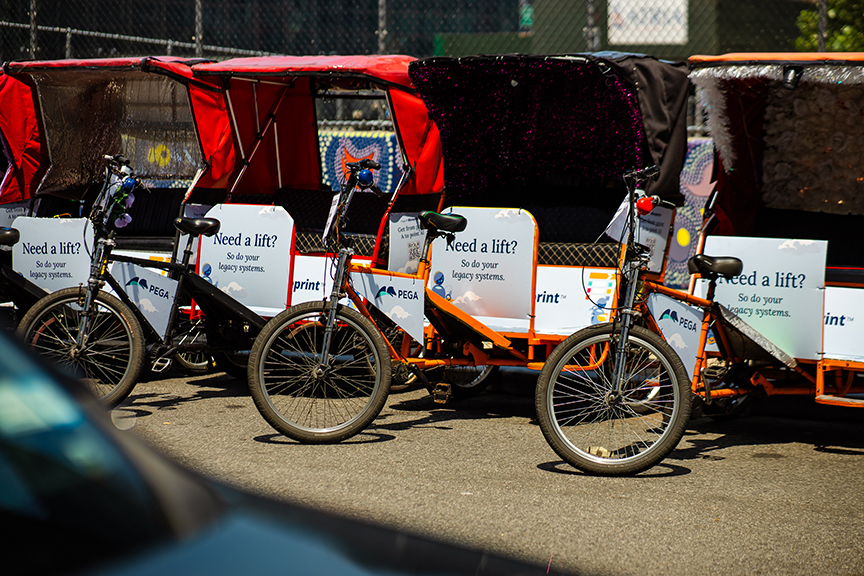
In marketing, an activation is any initiative that brings a brand to life through direct consumer engagement. It is how brands move from being known to being experienced.
The word “activation” gets used constantly in marketing conversations, but the definition is sometimes fuzzy. A brand activation can mean a pop-up event, a sampling program, a sponsorship presence, a product demo, a street team, or a large-scale experiential installation. All of those things are activations, but they are not the same thing. Understanding the definition clearly, and the different types of activations and what each is designed to accomplish, makes you a more effective marketing planner and a better client or partner when working with agencies that execute this kind of work.
At American Guerrilla Marketing, activations are one of our core services. We design and execute brand activations in cities across the United States. We have run activations at festivals, on street corners, in parks, at retail entrances, and at corporate events. This guide defines activations clearly, explains the major types, and covers the strategic decisions that determine whether an activation succeeds or fails.
Activations Definition: What Is an Activation in Marketing?
A brand activation is a marketing event, campaign, or interaction that directly engages consumers with a brand, moving them from passive awareness to active experience. The word “activation” captures the idea that the brand is being brought to life, made real, and made tangible for a specific consumer or group of consumers at a specific moment.
Activations differ from advertising in a fundamental way. Advertising reaches consumers passively, through a message encountered while they are doing something else. An activation requires and rewards active participation. The consumer does something, experiences something, receives something, or participates in something. The engagement is two-directional in a way that advertising cannot be.
This active engagement is what makes activations so effective for brand memory formation. Memory research consistently shows that experiences, especially emotionally resonant ones, create stronger and more durable memories than passive message exposure. A consumer who participates in a brand activation remembers the brand differently than a consumer who has seen the brand’s ads. The activation creates a story, and stories stick.
The activation distinction: Advertising tells consumers about a brand. Activations let consumers experience it. Both are valuable, but experience creates deeper and more durable brand relationships than messaging alone. Brands that invest in activations alongside their advertising programs build loyalty that advertising alone cannot generate.
Types of Brand Activations
The category of brand activations is broad. It includes many different formats and approaches, each suited to different objectives and contexts. Here are the major types of activations we work with.
Sampling Activations
A sampling activation puts a product directly in the consumer’s hands for trial. For food and beverage brands, this is the most direct path from zero awareness to purchase intent. A consumer who tastes a product and likes it has crossed the most significant barrier in the entire purchase funnel: actually experiencing the product.
Sampling activations can range from a staffed table at a farmers market to a full-scale immersive tasting experience at a major event. The scale and setting should match the brand positioning. A premium food brand samples in a setting that reflects premium positioning. A sports drink brand samples at athletic events where the consumption context is natural.
Experiential Pop-Ups
A pop-up activation creates a temporary physical environment that immerses consumers in the brand’s world. These range from simple branded rooms at events to multi-room installations in high-traffic urban locations. Pop-ups work best when the designed environment reflects something meaningful about the brand’s identity and creates an experience that the consumer cannot have through advertising or online interaction.
The pop-up activation is particularly effective for lifestyle brands, luxury brands, and any brand where sensory experience, aesthetic, and atmosphere are central to the value proposition. A pop-up for a home goods brand that lets consumers feel the quality of the products in a beautifully designed space creates a brand experience that no digital campaign can replicate.
Event Activations and Sponsorships
An event activation is a brand presence within an existing event, whether a music festival, sporting event, trade show, community gathering, or corporate conference. The brand does not create the event. It activates within the event’s existing audience and atmosphere. Event activations can range from a simple sampling booth to a major branded experience zone within the event footprint.
Sponsorship activations are a specific form of event activation where the brand’s presence is connected to a formal sponsorship agreement with the event. Sponsorship rights typically include branding on event materials, access to specific spaces, and often focused activation areas within the event. The activation is how the sponsorship value is delivered to consumers beyond logo placement.
Street Team Activations
Street team activations deploy brand representatives directly into target communities to create one-on-one brand interactions. Street teams can distribute product samples, conduct surveys, demonstrate products, or simply engage consumers in conversations about the brand. They bring the brand directly to the consumer rather than waiting for the consumer to come to a fixed location.
Street teams are highly flexible and can be deployed wherever the target consumer concentrates: outside subway stations, at park entrances, near retail locations, in office districts at lunchtime, or at community events. Their flexibility makes them one of the most adaptable activation formats available.
Retail Activations
Retail activations bring the brand to life at or near the point of purchase. In-store demonstrations, checkout lane sampling, end cap interactive displays, and brand ambassador programs within retail stores all activate the brand at the moment when purchase decisions are being made. For CPG brands especially, the retail activation is often the highest-ROI format because it puts the brand experience directly in the path of the purchase decision.
Digital and Hybrid Activations
Digital activations create brand experiences through online platforms, social media, apps, and virtual environments. Challenges, contests, interactive campaigns, and augmented reality experiences all fall into this category. Hybrid activations combine physical and digital elements, like an in-person activation with a social component that extends the experience to people who are not physically present.
Activation Type
Best For
Primary Benefit
Sampling activation
CPG brands, food and beverage
Direct product trial, highest conversion rate
Experiential pop-up
Lifestyle, luxury, premium brands
Deep brand immersion, social sharing
Event activation
All brand categories
Captive relevant audience, community association
Street team
New brands, market entry, apps
Geographic flexibility, direct engagement
Retail activation
CPG, consumer goods at point of sale
Purchase proximity, highest commercial conversion
Digital/hybrid
Brands with large existing audiences
Scale without geographic limitation
What Makes an Activation Successful
The difference between an activation that creates genuine brand value and one that merely creates activity is a function of design quality, execution precision, and strategic alignment. Here is what the best activations share.
Clear Objective
A successful activation has a clear, specific objective. Drive 2,000 product trials. Generate 500 email sign-ups. Create a social-sharing moment that reaches 100,000 consumers beyond the event. Without a specific objective, the activation is activity without direction, and measurement becomes impossible.
Authentic Brand Expression
The most effective activations express something true about the brand rather than simply displaying the brand logo. An activation that reflects the brand’s values, aesthetics, and personality creates a consistent impression that reinforces rather than contradicts what the brand communicates through other channels. An activation that feels generically commercial, with no connection to what makes the brand distinctive, creates no lasting brand impression.
Genuine Consumer Value
The best activations give consumers something they actually want: a free product experience, an entertaining moment, a useful resource, an exclusive access, or a memorable interaction. Activations that take consumer attention without giving anything in return generate resentment rather than goodwill. The exchange needs to feel fair to the consumer for the activation to create positive brand associations.
Trained and Authentic Staff
The people running an activation are the brand in the consumer’s eyes. Staff who are enthusiastic, knowledgeable, and genuine in their interactions create positive brand exposures. Staff who are bored, scripted, or uncomfortable in the activation environment undermine the brand impression regardless of how well the physical elements are designed. Investing in staff training and selecting people who genuinely fit the brand’s culture is as important as the physical design of the activation.
Planning an Activation: Timeline and Budget Considerations
Planning timelines for activations depend on the scale and complexity of the planned experience. A street team sampling activation can be planned and executed in two to three weeks with a streamlined process. A large-scale experiential pop-up with custom fabrication elements may require three to six months of planning. Most event activations require planning timelines set by the event’s application and production deadlines, which often require commitment several months in advance.
Budget allocation for activations should account for design and strategy, production and fabrication, staffing, product for sampling or giveaway, venue or event fees, and documentation through photography and video. Documentation is often underbudgeted but is critical for post-activation reporting, social content, and demonstrating ROI to decision-makers.
Document everything: High-quality photography and video of every activation is one of the most important investments you can make. This content serves immediate social posting, post-event reporting, sponsor value demonstration, and case study material for future business development. An activation without documentation is an opportunity lost. Budget for it from the beginning.
Measuring Activation Success
Every activation should be measured, and the measurement framework should be defined before the activation runs. Post-hoc measurement, designed after seeing the results, consistently produces metrics that make the activation look better than it was. Pre-defined metrics create the accountability and honesty that makes activation programs improve over time.
Sampling activations are the most directly measurable type of activation. Count the number of samples distributed. Track sales velocity at retail locations near the sampling points before and after the activation. Compare velocity at activated locations versus non-activated control locations. The difference is attributable to the activation and can be valued against the cost of the sampling program.
Experiential pop-ups are measured through footfall counts, dwell time within the activation, social content generated, earned media value, and post-activation surveys measuring brand awareness and purchase intent among people who experienced the activation versus those who did not. Event activations use similar measures plus any engagement data collected through interactive elements like contests, sign-ups, or games.
Street team activations measure success through direct contact counts, conversion rates on whatever action the team is driving (sample acceptance, sign-up, app download, conversation), and post-activation sales data from the geographic zones where teams were deployed. For app or digital product launches, download rates in the specific zip codes where teams operated are a direct measure of street team effectiveness.
The Longer-Term Impact of Sustained Activation Programs
Sustained activation programs that run consistently over months or years build brand equity in ways that single activations cannot. The brand that appears at a community event once is interesting. The brand that appears at the same community event for three years in a row is part of the community. That distinction matters enormously for the quality and durability of the brand relationship with that community.
Measuring the longer-term impact of sustained activation programs requires tracking brand sentiment and NPS in activated markets over time, comparing those metrics to non-activated markets with similar demographic profiles. Brands with sustained activation programs in specific markets typically show measurably higher loyalty and lifetime value from customers sourced in those markets, which validates the long-term brand-building investment beyond what any single activation measurement can demonstrate.
Activations vs. Advertising: How to Think About the Mix
Activations and advertising are not competitors for budget. They serve different functions and produce different results. The most effective brand programs use both in a mix that reflects the specific objectives of each phase of the brand’s growth.
Advertising is better at reaching large numbers of consumers efficiently with a consistent message over time. It is the right tool for building broad brand awareness, maintaining salience, and reaching consumers who are not yet ready to actively engage. Activations are better at creating deep, memorable experiences with a smaller number of consumers. They are the right tool for driving trial, building loyalty, and creating the brand advocates who tell others about the brand.
A brand that only advertises reaches a lot of people shallowly. A brand that only activates reaches a smaller number of people deeply. The right balance depends on the brand’s stage of development, its category dynamics, and its specific objectives. Brands at early stages of development typically need more activation to build the core of deeply engaged advocates. Brands at scale need more advertising to maintain broad awareness while using activations selectively to deepen relationships in key markets.
Frequently Asked Questions
What does activation mean in marketing?
In marketing, an activation is any initiative that directly engages consumers with a brand through experience, interaction, or participation rather than passive message exposure. Activations bring the brand to life for specific consumers at specific moments, creating deeper brand relationships than advertising alone can achieve.
What are examples of brand activations?
Brand activation examples include product sampling at events, experiential pop-up installations, sponsored festival presences with interactive experiences, street team product demonstrations, retail in-store demonstrations, branded activation zones at sporting events, and online challenges or contests that engage the brand’s social community. All of these share the quality of active consumer engag
What is the difference between an activation and an event?
An event is an occasion that happens regardless of brand involvement. An activation is a brand’s presence or experience within that event, or a brand-created experience. An event can exist without an activation. An activation at an event is the brand’s active engagement with the event’s audience. A brand that sets up a sampling booth at a community festival is running an activation within that eve
How much does a brand activation cost?
Activation costs range from under $5,000 for a simple street team sampling program to well over $500,000 for a large-scale experiential installation at a major event. Most mid-scale activations, including event presences with some branded elements and trained staff, run between $15,000 and $100,000 depending on the scale, duration, and complexity of the activation design.
What is a sponsorship activation?
A sponsorship activation is a brand experience created within a sponsorship agreement with an event or property. The sponsorship provides the rights to be present and associated with the event. The activation is how those rights are converted into actual consumer engagement. A brand that sponsors a music festival but does not activate within it gains little beyond logo exposure. The activation is
What is the goal of a brand activation?
The goal of a brand activation depends on the specific objective. Common goals include driving product trial, building brand awareness and affinity, generating social content and earned media, creating brand advocates within specific communities, and demonstrating product value through direct experience. The activation should have a specific, measurable goal defined before design and execution beg
How long should a brand activation last?
Activation duration varies widely by format and objective. A street team sampling activation might run for four to eight hours in a single day. A pop-up installation might run for a weekend or a week. An event activation runs for the duration of the event. Sustained activation programs, like a rolling series of sampling events across multiple markets, can run for months. The right duration is what