
November 20, 2026
Mobile Billboard Advertising Rates: What Drives Scope
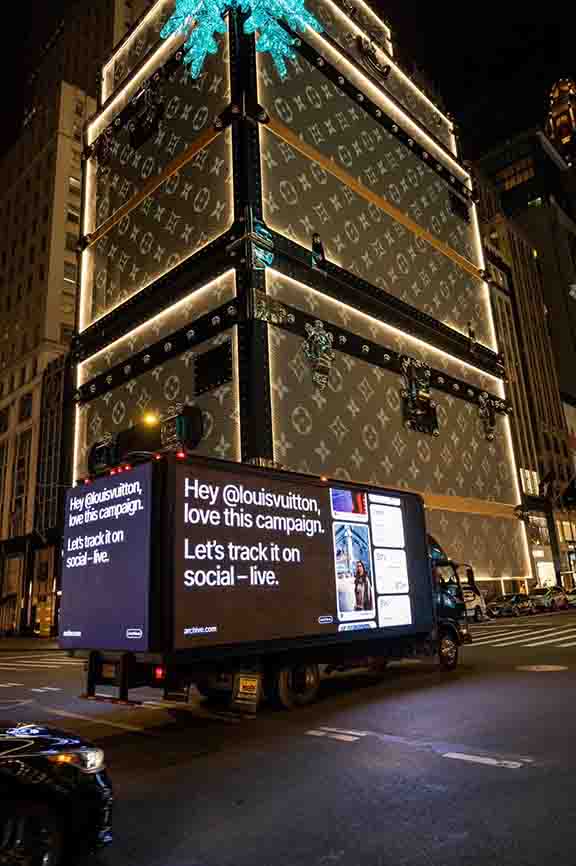
People searching for mobile billboard advertising rates and prices are almost always trying to answer a different question than the one they typed.
They are trying to work out what a campaign involves, what makes one quote bigger than another, and whether the thing they are being offered is the same product the other quote described. Two proposals for “a day of mobile billboard advertising” can be completely different operations, and the gap between them has nothing to do with anyone being greedy.
So this page does not contain numbers. It contains the variables. Every one of them moves scope, and once you understand them you can read a proposal properly, compare two quotes that look alike and spot the one that has quietly removed the parts that make the campaign work.
I plan and run these engagements. The list below is what actually changes the shape of a job.
Why two quotes for the same thing are not the same thing
The phrase “a day of mobile billboard advertising” conceals at least eight decisions.
Is it printed vinyl or an LED video wall. How many vehicles. What size vehicle. How many hours, and which hours. Is there a second crew member or just a driver. Was the route surveyed on the ground or drawn on a desk map. Does the engagement include documentation, and what kind. And does anybody hold the schedule together when an event runs late.
Strip out the second crew member, the ground survey and the documentation, and you can produce a much smaller number for something that will look identical on paper and perform considerably worse in the street. That is the single most common reason a cheap engagement disappoints.
When you compare proposals, compare those eight decisions. Not the headline.
Display type: vinyl or LED
The first fork, and it changes everything downstream.
Printed vinyl carries a large static printed panel, usually on both flanks and the rear, sometimes lamp-illuminated at night. The image is fixed. Changing it is a physical swap.
Vinyl suits settled creative, longer engagements, simple messages and daytime running. A large printed panel in bright sun reads beautifully, which is actually its underrated advantage.
LED carries a high-brightness video wall. Content changes instantly, motion is possible, and after dark the screen is the brightest thing on the street.
LED suits evening and after-dark hours, dayparted messaging, and campaigns where the message needs to change mid-engagement.
Scope implications: LED carries more hardware, more power requirement and more setup discipline, including a content check played through on the wall itself rather than on a laptop. Vinyl carries a production step instead, since the panel has to be printed and fitted before anything moves, which affects lead time rather than operating complexity.
Buying LED for a single static daytime message means paying for capability you never use. Buying vinyl for a nightlife campaign leaves you unreadable after 8pm. A proposal that does not ask which hours matter before recommending one is not a plan.
Hours, and specifically which hours
Hours are the most obvious scope driver and the most frequently misused.
Display behaviour changes across the day. Morning commute works for business corridors and transit mouths. Midday is the weakest window for LED, because overhead sun reduces perceived contrast and footfall thins in most districts. Late afternoon into dusk is when the format strengthens, as congestion builds and light drops. After dark belongs to LED entirely. Late night is excellent in nightlife and venue districts and pointless almost everywhere else.
The consequence is that a long flat schedule is mostly waste. Twelve continuous hours is largely time spent driving through districts where nobody is looking.
Three sharp windows across two or three days, placed where the audience is genuinely dense, will outperform the same total hours run as one long day. If a proposal offers a long continuous schedule without questioning it, somebody is filling hours rather than planning a campaign, and you are carrying the scope for the dead ones.
Number of vehicles, and vehicle size
One vehicle on a well-designed loop produces real repetition at the dwell points on that loop. What it cannot do is be in two districts in the same hour. The honest limit of a single truck is one coherent area covered properly.
A second vehicle earns its place in two cases. When the audience splits across separate locations simultaneously, which happens with multi-venue events and conventions running several halls. And when you want a convoy, two or three vehicles in sequence through one corridor, which reads completely differently from a single truck and photographs far better. A convoy is a spectacle. A lone truck is media.
Vehicle size is a separate variable and bigger is not automatically better. A larger display needs a larger vehicle, which is harder to get into dense downtown blocks, harder to park and turn, and more restricted on certain streets. In a tight urban core a smaller rig that can actually reach the dwell points beats a bigger one confined to arterial roads.
Ask what size vehicle is proposed and whether it can physically reach the positions in the route plan. That question has caught problems more than once.
Crew structure
A driver alone can drive. A driver alone cannot photograph properly, cannot log dwell times safely and cannot reassess when the crowd exits the other side of the building.
On most engagements worth running there is a second crew member handling navigation, timing, documentation and live judgement. That person is the reason you find out the event ran forty minutes late in time to still catch the egress, which is frequently the best fifteen minutes of the entire day.
This is one of the first things removed from a lean quote. Check whether it is included.
Route survey
A route planned from a desk map and street imagery will contain at least one position that no longer works. Scaffolding, a new no-stopping restriction, construction closures, a sightline blocked by hoarding, or a venue whose crowd leaves by a different door.
Ground survey takes time and it is genuine scope. It is also the difference between a route and a list of addresses.
Ask whether the route was driven or walked, who did it and when.
Run length and repetition
A single day is an event. Several days across the right windows is a campaign.
Repetition is what converts exposure into memory, and on a vehicle route repetition comes from two places: the loop returning to the same dwell point several times within a window, and the engagement running across more than one day in the same corridors.
Longer runs change logistics too. Driver hours, staging arrangements, fuel, and for vinyl the condition of the panel over time. These are real planning items, not line padding.
Market and geography
The same brief is a different operation in different cities.
Dense walkable cores give you excellent dwell points, heavy congestion and pedestrians close to the vehicle, but difficult staging, restricted streets and contested parking. Everything takes longer and smaller vehicles work better.
Car-first metros are the opposite. Easy movement, easy staging, but your dwell points are concentrated into a handful of intersections and venue approaches, and the rest of the route is transit overhead.
Distance from the operator’s base matters. A market where crew and vehicle are already present is a different operation from one requiring repositioning.
And event congestion compresses everything. The same density that makes an event worth targeting makes access, staging and parking hard, which means more planning time and tighter sequencing.
Documentation and verification
This is scope, and it is scope worth paying for.
The artefacts that matter are a logged route trace with dwell times, and timestamped, geotagged photography showing the vehicle in position with recognisable surroundings and crowds visible.
A photograph of the display alone proves nothing. It could have been taken in the yard. A photograph of the display in front of an identifiable venue with a timestamp is evidence.
If a proposal is vague about what you receive and when, that is the warning. Ask to see the artefacts from a comparable past engagement.
Permissions, staging and the grey area
Rules governing advertising vehicles vary by municipality. Where they may operate, where and how long they may stand or park, whether certain districts restrict them, and how idling is treated all differ, and enforcement is inconsistent, sometimes between neighbouring jurisdictions inside the same metro.
This is a grey area. There is no national answer. We do not give legal advice and we will not tell you a route or a position is permitted.
What reduces exposure in practice is staging and holding in permitted commercial parking rather than improvising on a kerb, using private property with owner agreement where a static hold is wanted, keeping the vehicle moving on a loop rather than occupying one public position for long stretches, briefing crews to reposition rather than argue, and documenting agreements.
Securing private staging or a property agreement near a high-value position takes time and sometimes it is the work that makes a plan viable at all. It is legitimate scope.
How a vendor talks about this is diagnostic. Anyone declaring it all straightforwardly fine, or brushing the question aside, is either uninformed or willing to put your brand somewhere awkward.
Creative production and revision
Artwork is its own scope item, and the common failure is handing over a file built for something else.
You get two to four seconds, at an angle, often in motion, sometimes in glare or rain. One image. One short line. Very large type. Maximum contrast, meaning light on dark or dark on light, never mid-tone on mid-tone. No fine detail. No multi-scene animation on LED, because by the time scene two plays the viewer is gone. No long URLs or phone numbers, because nobody transcribes a string at a red light.
On LED, check the dark areas. Deep shadow becomes a black void at night and can leave your composition looking like a floating fragment.
Artwork that needs reworking to be legible adds time before anything runs. Getting the spec right at briefing removes that entirely.
What we talk clients out of, and why it usually reduces scope
Most of our pushback makes a job smaller, not bigger.
Maximum mileage. The argument we have most often. Dwell beats distance. A tighter route with more returns to the same dwell points outperforms a sprawling one.
Midday hours bought to fill a schedule. Weak contrast, thin footfall. Cut them.
Twelve-hour days. Split into sharp windows.
LED for a single static daytime message. Vinyl does that job properly.
Animated story creative. Nearly static wins, and it is less to produce.
Even coverage across a multi-day event. Load the arrival window and the final egress instead. Even coverage is politeness, not strategy.
A vehicle running alone with nothing around it. This one does add scope, and it is the most important recommendation on the page. A truck is an event: present, then gone, with recall decaying almost immediately. On its own it produces a good photograph and a thin result.
Guaranteed impression counts. Fixed networks sell against modelled audience data tied to a known location. A route has no equivalent dataset. We will not invent a figure, and I would ask any vendor offering one to show their methodology.
Lead time, and how rushing changes a job
Time is a scope variable that buyers rarely think of as one.
A comfortable lead time lets the route get surveyed on the ground, lets permission and staging conversations happen on the property owner’s schedule rather than yours, lets artwork come back once if it needs reworking for legibility, and lets vinyl be printed and fitted without drama.
Compress that and things start getting substituted. The survey becomes a desk exercise. The staging plan becomes improvisation on the day. The artwork runs as supplied, legible or not. Those substitutions do not always show up in a proposal, which is precisely why a rushed engagement can look like a bargain and perform like a mistake.
The flip side is genuinely useful, and it is one of the format’s real strengths. Compared with fixed inventory, which is committed months ahead and gone entirely in the busiest weeks of the year, a vehicle engagement can be stood up in a short window because the constraint is crew and vehicle availability rather than booking a structure somebody else owns. More than one route we have run existed because a planned fixed buy fell through and the launch date did not move.
So the honest position is that short lead times are workable, they are not free, and you should know which corners are being cut rather than discovering them afterwards. Ask directly: with this timeline, what would you normally do that you will not be able to do.
What you can honestly measure
Less tidy than a table of impressions. Far more defensible under scrutiny.
Where the scope does the most work
If you are weighing how to allocate a street-level campaign, the structure that consistently performs is static base plus vehicle spike.
Poster and snipe work across the target district for two to three weeks is the frequency engine. It is exclusive, continuous, and it reaches the same pedestrians repeatedly between the train and the office. Paper does not share a rotating loop with anyone.
Then the vehicle runs on the one or two days that genuinely matter, on a route built around real dwell points.
The lift comes from the interaction. Someone who has passed your poster a dozen times in a fortnight responds to a vehicle at a red light differently than a stranger. The posters make the truck mean something. The truck gives the posters a moment and a photograph.
If you have already committed to a vehicle engagement, the highest-value addition is not more truck hours. It is the poster campaign running in front of it.
Frequently asked questions
What actually drives the scope of a mobile billboard campaign?
Display type, number and size of vehicles, how many hours and which hours, crew structure, whether the route was surveyed on the ground, run length, market and distance, documentation, permission and staging work, and creative preparation. Two proposals described identically can differ on every one of those, which is why headline comparisons between quotes are misleading.
Why do two quotes for the same campaign look so different?
Usually because one has removed the parts that make it work. A second crew member, a ground survey of the route and proper documentation are the first things stripped from a lean proposal, and their absence is invisible on paper. Compare the eight underlying decisions rather than the description, and ask what is excluded.
How many hours should I book?
Fewer than most schedules propose, concentrated where your audience is genuinely dense. Three sharp windows across two or three days generally beats one twelve-hour day on the same total hours, because long schedules are mostly time driving through districts where nobody is looking. Load event arrival windows and egress instead of spreading coverage evenly.
Is printed vinyl or LED the better choice?
Neither in general. Vinyl suits settled creative, longer runs and daytime hours, and it holds contrast well in bright sun. LED suits evening and after-dark hours, dayparted messaging and campaigns needing mid-flight changes. A proposal that recommends one before asking which hours matter to you has not considered the brief.
What should documentation include?
A logged route trace with dwell times at each planned position, plus timestamped and geotagged photography showing the vehicle in position with recognisable surroundings and crowds visible. A photograph of the display alone proves nothing, since it could have been taken anywhere. Ask to see the artefacts from a comparable past engagement before committing.
Do permissions affect what a campaign involves?
Yes. Rules on where advertising vehicles may operate, stand, park and idle vary by municipality and enforcement is inconsistent, sometimes between adjacent jurisdictions in one metro. It is a grey area. Securing private staging or property agreement near a high-value position takes real time and is legitimate scope. We do not give legal advice.
Request a campaign quote
Tell us the market, the dates, where your audience will physically be and what the campaign has to achieve. We will come back with a route built around real dwell points, the hours we think are worth running and the ones we think are not, display type with a reason, crew structure, a staging and permission approach, and the exact documentation you will receive.
We will also tell you which parts of your brief we think should be cut, which is usually the most useful part of the conversation.
Request a campaign quote.

Ready to Run Your Campaign?
Call us or email us. We’ll tell you exactly what we can do in your market and what it costs.
Related Services
Explore similar advertising solutions offered by American Guerrilla Marketing.
American Guerrilla Marketing — Los Angeles
Street-level campaigns in Los Angeles and nationwide. Wheatpasting, LED trucks, street teams, and more.
(646) 776-2770
Related Articles
-
LED Trucks & Mobile Billboards in Virginia Beach
November 20, 2026
-
Planning LED Trucks & Mobile Billboards in Sacramento
November 20, 2026
-
LED Truck Billboard: How It Actually Works
November 20, 2026
-
Electronic billboard companies: How It Actually Works
November 20, 2026
-
LED Trucks & Mobile Billboards in Milwaukee, Wisconsin
November 20, 2026