
November 10, 2026
DOOH Companies: How It Actually Works
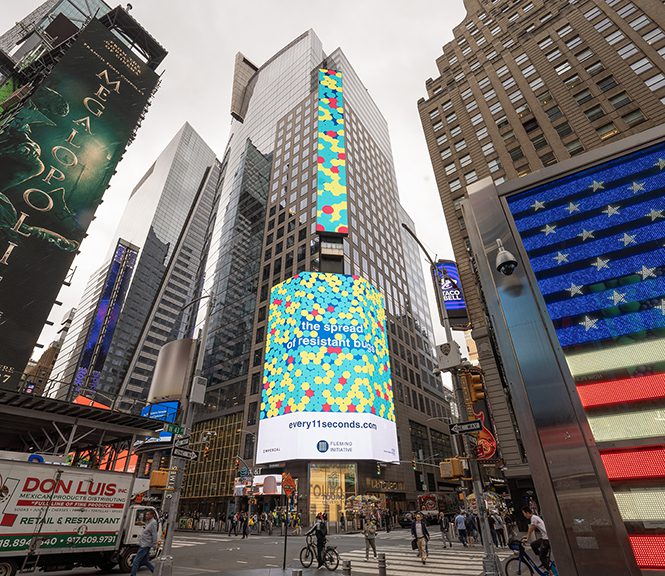
Buyers start searching for DOOH companies at a specific moment: someone has decided the brand needs screens, the digital budget has hit a wall, and nobody in the room can explain what the category actually contains.
It contains at least five different businesses that have almost nothing in common operationally. A screen bolted to a building, a screen in a lift lobby, a screen above a fuel pump, a screen inside a store and a screen on the side of a truck are not variations of one product. They have different owners, different booking mechanics, different audiences and completely different failure modes.
I run street-level campaigns, including LED Trucks and projection. So I will be straight about where we sit in this category and where we do not. That honesty is the useful part, because most pages on this topic are written to make every format sound like the right one.
The buyer problem is this. You need motion, you need it outdoors or in a public space, you need it in specific places at specific hours, and you need to know what you are actually buying before you commit a quarter’s budget to it.
What DOOH actually means, stripped of jargon
Digital out of home is any screen-based advertising surface outside the home. The defining feature is not resolution and it is not programmatic buying. It is that the creative can change without anyone physically visiting the site.
That single property drives everything else about the category. It means dayparting. It means multiple advertisers sharing one surface in a loop. It means you can swap a message in the afternoon. It also means your ad is one of several in rotation rather than the only thing on the wall, which is the trade nobody mentions up front.
Static out of home is the opposite: one advertiser, one surface, full occupancy for the whole period. Paper does not share.
That is the real decision. Not digital versus print. Shared rotating exposure versus exclusive continuous exposure.
The five kinds of operator inside the category
Large-format roadside and urban screen owners
These are the companies that own big digital displays on buildings, roadsides and transit corridors. They are property and inventory businesses. They sell slots in a loop. Availability is the constraint, especially in the best urban locations, where the good faces are booked out well in advance.
Strengths: scale, reach, prestige, strong creative impact.
Constraints: you share the loop. Your share of time on that surface is a fraction of the hour. Location is fixed, so if your audience concentrates somewhere without a screen, there is nothing to buy.
Place-based network operators
Screens in lift lobbies, gyms, medical waiting rooms, bars, salons, university buildings, office towers. These are network businesses: hundreds or thousands of small screens aggregated into a buyable audience.
Strengths: targeting by venue type is genuinely precise, and dwell time in a lift lobby or waiting room is real.
Constraints: screen size is small, audio is usually off, and attention competes with phones. Measurement is modelled from venue footfall rather than observed per screen.
Retail and in-store screen networks
Screens at the point of purchase, in aisles, at checkout, on coolers. Closest to the transaction of anything in the category.
Strengths: proximity to purchase, sometimes retailer sales data attached.
Constraints: access is gated by the retailer, lead times are long, and creative rules are strict.
Transit and station digital
Platform screens, concourse displays, in-vehicle screens. High frequency, captive audience, strong commuter repetition.
Constraints: contested inventory, long lead times, and service disruption affects your delivery in ways nobody controls.
Mobile and projected digital, which is where we work
Two formats that break the fixed-location rule entirely.
LED trucks and Mobile Billboards carry a high-brightness LED wall on a vehicle and take the screen to the audience rather than waiting for the audience to pass a screen.
Projection Advertising throws light onto a building face after dark, producing enormous apparent scale with nothing physically installed.
Both are exclusive rather than shared. There is no loop. The screen is yours for the whole engagement.
Why mobile and projection exist at all
Fixed digital inventory has a hard limitation that the category does not advertise: the screens are where somebody decided to build a screen, which is not necessarily where your audience is.
Three situations where this bites:
Concentrated short-window audiences. A conference, a stadium, a festival gate, a trade show district. For a few hours, tens of thousands of exactly your target are in a four-block area. There may be no digital inventory pointed at that area, or it may have been booked a year ago.
Audience behaviour your screens miss. Egress from a venue happens in fifteen minutes. The fixed screen three blocks away is running your spot for a sixth of the hour and most of your audience is walking the other direction.
Markets with thin digital inventory. Plenty of mid-size metros have very little premium digital out of home. A truck is the entire answer.
Mobile and projection trade away the permanence and the modelled audience data of a fixed network, and buy back exclusivity, placement control and timing control.
How an LED truck engagement actually runs
This is the part buyers never see, and it decides whether the campaign works.
Route planning comes first, before anything else. A truck campaign is a route document, not a media buy. We build it around where the audience will physically be, hour by hour. That means identifying the corridors, the dwell points where traffic slows or stops, the venue approaches, the egress paths, and the places where the vehicle can legally and safely sit or circle.
Dwell points matter more than mileage. A truck crawling past a stadium exit in heavy pedestrian traffic produces far more real exposure than the same truck covering thirty miles of open road. Clients often ask for maximum miles. Maximum miles is usually the worst possible route.
Crew. A driver, and on most engagements a second person for navigation, timing, photography and on-the-ground judgement about where the crowd actually went. Solo operation is possible and it is worse.
Hours. The useful window is set entirely by your audience. A business district route works mid-morning through the lunch hour and again at the evening exit. A nightlife or venue route works from late afternoon into the night. There is no point running a truck through an empty district to fill hours on a schedule.
Brightness and light. A modern LED wall is readable in daylight, but direct midday sun on the screen face reduces perceived contrast, and the format is at its best from late afternoon onward. After dark it is dominant. If your campaign has one night that matters, run it then.
Traffic reality. Congestion is both the enemy and the point. Gridlock means your screen sits in front of the same drivers for several minutes, which is excellent exposure. It also means your route takes three times as long. We plan loops, not linear paths, so a stall does not strand the vehicle away from the audience.
Weather. Rain is mostly fine for a truck, which is one of its real advantages over Street Teams and paste work. Heavy snow and ice are a safety call. High wind matters for taller rigs.
Verification. Timestamped and geotagged route photography, plus a logged route trace. If a truck ran and nobody documented it, you have bought a rumour.
How projection actually runs
Projection is the most oversold format in the category and I would rather you hear its limits from someone who sells it.
You need full dark. Not dusk. In northern markets in June that means you are not starting until well after 9pm and the useful window is short. In winter you can start in the late afternoon, but then the cold limits how long a crew wants to be outside.
You need the right surface. Light coloured, large, flat, matte, minimal windows, no reflective cladding. Glass towers are useless. Red brick eats light and shifts colour. The ideal is a big pale blank wall or a light stone facade.
You need throw distance and a place to put the rig. The projector must sit somewhere with an unobstructed line to the surface, at a distance proportional to the image you want. That somewhere is a vehicle, a rooftop, a private forecourt or a reserved parking area, and it needs permission and power.
You need ambient light control you do not have. Street lighting, illuminated signage and lit windows on the target building all reduce contrast. We survey at night, not during the day, because a wall that looks perfect at 2pm can be washed out by a floodlight you never noticed.
It is temporary by nature. Projection exists only while it is running. Nothing to remove, nothing to damage, no residue. That is genuinely valuable where surface permission is difficult, and it is a weakness if you need multi-week persistence.
Most projection briefs should be one or two carefully planned nights, not a month. You get the asset, the crowd and the social capture in those nights, and the rest of the budget does more work elsewhere.
Permission, ordinances and the grey area
Fixed digital inventory comes with the permissions baked in. The screen owner holds the permits and you are buying time on a sanctioned surface. That is a real advantage and I will not pretend otherwise.
Mobile and projection are different, and they sit in a grey area.
Rules governing advertising vehicles, where they may park, how long they may idle, whether they may operate in certain districts, and rules governing projected images onto buildings vary substantially by municipality. Enforcement is inconsistent, sometimes between neighbouring jurisdictions inside the same metro. There is no national answer and I will not give you one.
What reduces exposure in practice:
We do not give legal advice, we do not quote ordinance numbers we have not verified, and we will not tell you a placement is permitted. We will tell you what we have been able to document and where a market tends to be strict.
What we talk clients out of
Buying digital because it sounds modern. If your objective is three weeks of saturation in one neighbourhood, a poster campaign will put your brand in front of the same people far more often than a shared slot in a screen loop. Digital’s advantage is flexibility and timing, not frequency per dollar of attention.
Maximum mileage on a truck route. Covered above. Dwell beats distance every time.
Animated creative with fine detail. On a moving vehicle seen for two to four seconds, you need one image, one short line and high contrast. Multi-scene animation with small type is wasted. The strongest truck creative is almost static.
Projection for a month. Two nights produces the asset and the moment.
Projection on glass. We will survey it and we will tell you no.
Treating a truck as a substitute for presence. A truck is an event. It is there and then it is gone. Pair it with something persistent in the same district.
Guaranteed impression counts for mobile formats. Fixed networks have modelled audience data behind them. A truck route does not, and anyone who hands you a precise number for one is making it up.
Choosing between the formats, honestly
Pick fixed large-format digital when you need prestige placement in a known high-traffic location, you want creative flexibility across a flight, and you accept sharing a loop.
Pick place-based networks when your targeting is defined by venue type rather than geography, and dwell time matters more than screen size.
Pick retail digital when proximity to purchase is the whole point and you have the lead time.
Pick an LED truck when your audience concentrates somewhere for a short window, when the inventory you want does not exist or is unavailable, when you need exclusive uninterrupted screen time, or when you need to be in front of a specific building, gate or corridor on a specific day.
Pick projection when you want scale without installation, you have a dark window and a suitable surface, and the objective is a moment plus the content it generates.
And pick static poster work when the objective is frequency and neighbourhood saturation over weeks, which digital in any form does not do economically.
Lead times, availability and the planning calendar nobody warns you about
The thing that derails more digital out of home plans than budget is timing, and it is entirely avoidable.
Premium fixed urban faces are inventory. Good ones in the best corridors are committed well ahead, and the strongest weeks of the year are committed earliest. If your launch lands in the final quarter, you are competing with every retail and entertainment advertiser in the country for the same screens. Discovering this three weeks out is a planning failure, not bad luck.
Transit and station inventory runs on even longer cycles, because the contracts sit with transit authorities and their concessionaires and the approval chain is slow.
Retail and in-store networks have the longest lead of all, because creative passes through retailer approval before anything goes live, and that approval has rules about claims, competitor products and category exclusivity that will send your artwork back at least once.
Mobile and projection sit at the other end. A truck engagement can be planned in a short window because the constraint is vehicle availability and route survey, not inventory booking. Projection needs a night survey of the surface, which has to happen after dark, so build a few days in for that.
This asymmetry is genuinely useful. When a date moves, when a competitor announces something, or when a fixed buy falls through, mobile formats are the ones that can still be stood up. More than one truck engagement we have run existed because a planned screen buy evaporated and the date did not.
One more calendar factor: major events in a city compress everything. Hotel, parking, staging and vehicle access all tighten during a large convention or a championship, and so does road access. If your campaign targets that event, plan the logistics earlier than feels necessary, because the audience density you want is the same density that makes the operation hard.
The pairing that does the most work
The strongest use of an LED truck I know is not as a standalone buy. It is as the spike on top of a static base.
Run poster and snipe work across the target district for two to three weeks. That builds the recognition, cheaply, at high frequency, on foot traffic. Then put the truck on your one or two critical days, on the routes where your audience concentrates, and let the screen do the job paper cannot: motion, night-time dominance and the ability to be exactly where the crowd is at 7pm.
People who have seen your poster eleven times that fortnight react differently to the truck than strangers do. That is the whole trick.
Frequently asked questions
What is the difference between DOOH and traditional out of home?
Digital screens can change creative remotely, which allows dayparting and mid-flight changes, but your message shares a rotating loop with other advertisers. Static media such as posters gives one advertiser exclusive continuous occupancy of the surface for the whole run. The real choice is shared rotating exposure against exclusive continuous exposure, not digital against print.
Where do LED trucks fit in the digital out of home category?
They are mobile exclusive screens. Instead of waiting for your audience to pass a fixed display, the screen goes to where the audience concentrates, on your schedule, with no loop to share. That suits short-window events, venue egress, conference districts and markets with thin fixed digital inventory. The trade is no modelled audience data and no permanence.
How long should a projection campaign run?
Usually one or two well-planned nights rather than weeks. Projection needs full darkness, a pale matte surface without reflective glass, a clear throw distance and a legitimate place for the rig. Within those constraints it delivers enormous apparent scale and strong content capture quickly, and additional nights tend to repeat the same result rather than compound it.
Do you need permission for a truck route or a projection?
It is a grey area. Rules on advertising vehicles, idling, district restrictions and projected images vary by municipality and enforcement is inconsistent, sometimes between neighbouring jurisdictions in one metro. We reduce exposure by working from private property with owner agreement, staging in permitted parking and documenting everything. We do not give legal advice.
Can you guarantee impressions on a mobile screen?
No, and I would question anyone who does. Fixed networks sell against modelled audience data tied to a known location. A truck route has no equivalent dataset. What we provide is a logged route trace, timestamped and geotagged photography, documented dwell points and honest footfall context for the corridors, kept separate from any claim we make ourselves.
What creative works on an LED truck?
Almost static. You have two to four seconds at an angle, often in motion, often in poor light. One image, one short line, very high contrast, large type, no fine detail and no multi-scene animation. Treat it as a moving poster that happens to glow, not as a television placement, and it performs far better.
Request a campaign quote
Tell us the market, the dates, where your audience will physically be and what the campaign has to achieve. We will come back with a route plan or a projection survey, crew and hours, a permission approach, a verification package and a straight view of whether a mobile screen or a static campaign is the better instrument for your brief.
If fixed inventory is genuinely the right answer for you, we will say so.
Request a campaign quote.

Ready to Run Your Campaign?
Call us or email us. We’ll tell you exactly what we can do in your market and what it costs.
American Guerrilla Marketing — Los Angeles
Street-level campaigns in Los Angeles and nationwide. Wheatpasting, LED trucks, street teams, and more.
(646) 776-2770
Related Articles
-
DOOH: How It Actually Works
November 10, 2026
-
DOOH Advertising: How It Actually Works
November 6, 2026