
November 10, 2026
Experiential Marketing: How It Actually Works
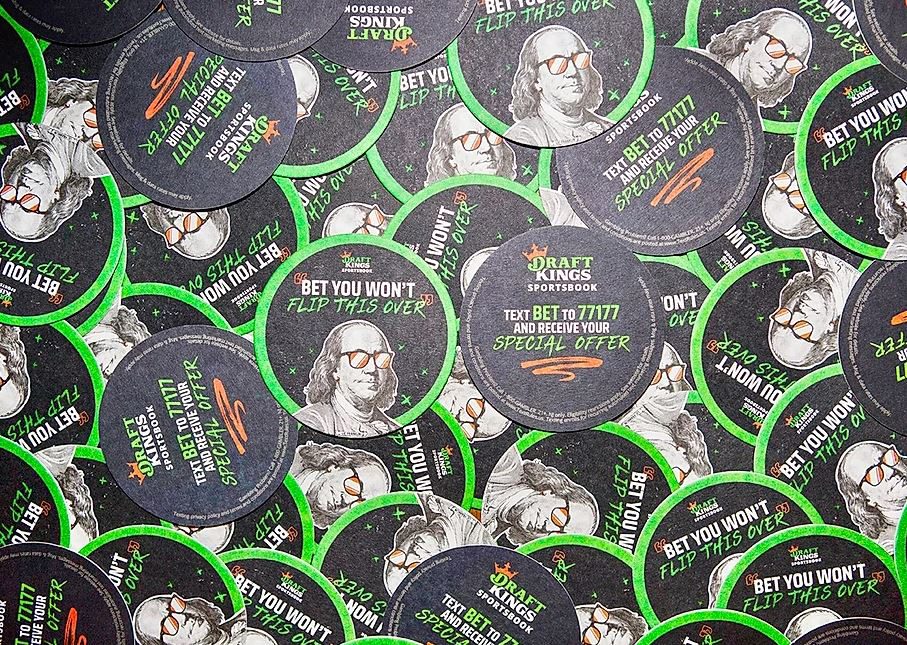
Most of what gets written about experiential marketing is written by people who have seen the photographs. The photographs are the last five percent. The other ninety five is a load-in at six in the morning, a staffing roster with two no-shows, a generator, a weather call, and somebody standing on a corner for seven hours talking to strangers.
I run street-level campaigns for a living. Experiential is the part of the work where the media is a person instead of a piece of paper, and that single change rewrites the whole operation. Paper does not get tired. Paper does not call out sick. Paper does not improvise a claim about your product that your legal team never approved.
That is the honest frame for this page. Not what experiential marketing is in theory, but what it takes to run one, what it costs you in effort and attention, where it genuinely outperforms everything else, and the briefs we turn down.
If you are weighing this format against a media buy, you need to understand that you are not comparing two purchases. You are comparing a purchase to a production.
What experiential marketing actually means on the ground
The category covers anything where a person encounters your brand as an event rather than a message. In practice, for street-level work, that lands in a handful of real formats.
**Sampling and handing.** A team distributes a product, a sample, a card or a small object at a location with dense foot traffic. Simple, measurable by units moved, and the easiest format to execute badly.
**Staffed activations.** A footprint. A table, a tent, a structure, a branded vehicle, a demo station. People stop, engage, do something, leave with an impression and usually an object.
**Brand ambassador teams.** Trained people in a market over multiple days, working venues, campuses, transit nodes and events, having conversations rather than running a station.
**Mobile tours.** The same activation repeated across markets on a schedule, with a travelling core team and local hires filling out each city.
**Stunt and spectacle.** A one-off built thing designed primarily to be photographed and shared. This is a content production with a street address, and it should be budgeted and planned like a production, not like a media placement.
**Hybrid street coverage.** A team working alongside physical media: posters already up in the corridor, a truck circulating, decals on the ground outside the venue, and humans at the point where someone can act.
That last one is where the format earns its keep, and it is the one buyers ask for least often. A street team dropped into a neighbourhood with no supporting media is starting every single conversation from zero. The same team working a corridor that has been papered for a week is walking into recognition. People have already seen the thing. The conversation starts halfway through.
Crew: the part nobody budgets properly
Every experiential campaign lives or dies on staffing, and staffing is harder than it looks on a plan.
A basic sampling team is four to eight people plus a lead. The lead is not optional and should not also be handing. The lead manages breaks, restocks, moves people between positions as foot traffic shifts, handles the property manager who comes out to ask what you are doing, and takes the photographs.
A staffed footprint needs the same plus setup and strike crew. Load-in for a modest structure is a couple of hours. Strike is faster but it still has to happen, and it usually happens when everybody is tired.
Staffing rates in the industry are overbooked deliberately, because attrition on day-of is normal. Anyone promising you a perfect roster with no buffer has either never run one or is planning to come up short and hope you do not count heads.
Training matters more than appearance. The brief is the script, the boundaries and the fallback. What to say, what not to say, what to do when someone asks a question nobody anticipated, who to call. Untrained staff default to improvisation, and improvisation about your product is a risk you own.
Shift length is the quiet killer. Engagement quality drops hard after about four hours on feet in public. A seven-hour activation needs rotation, or the last three hours produce a fraction of the first three. I have watched clients stretch a team to save on headcount and lose far more in the back half of the day than they saved.
Weather gear, water, a bathroom plan and a place to put bags are not nice-to-haves. They are the difference between a team that is still engaging at hour five and a team standing in a doorway.
Location is the whole campaign
You cannot create foot traffic. You can only go and stand in it.
That sentence is the most useful thing in this article. The single most common cause of a disappointing activation is a location chosen for brand fit or convenience rather than for people.
Good locations share characteristics. Existing dwell, meaning people are already stopping rather than striding past. A natural approach where someone can be engaged without being ambushed. Enough width that a queue or a cluster does not block the path. Line of sight from distance so the thing registers before someone reaches it. And a reason for the audience to be there that matches your audience.
Transit exits are high volume and low dwell, which makes them good for handing and bad for anything that takes two minutes.
Queue lines are the best dwell in the world. People in a line are captive, slightly bored and happy to be interrupted. Venue queues, food truck lines, box office lines, campus dining.
Park and plaza edges work when weather works. Campus quads during term. Event ingress and egress routes, which are better than event interiors because the interior usually belongs to a sponsor.
Nightlife corridors have the audience but a difficult engagement state. Judge that honestly against your product.
Where a location is on private property, somebody owns it and you need their yes. That yes takes time and it is the single most common schedule slip in this business.
One practical habit that saves campaigns: scout the exact spot at the exact hour and the exact weekday you intend to run. Not a nearby hour, not the Saturday version of a Tuesday plan. Foot traffic in most corridors swings enormously across a single day, and the corner that looks perfect at six in the evening can be dead at eleven in the morning. Stand there for twenty minutes and count. That count is worth more than any map, any demographic overlay and any confident assurance from somebody who has not done it.
Second habit: find the bathroom, the loading access and the power before you commit. A location with no realistic place for staff to take a break will degrade over a long day no matter how good the traffic is, and a footprint with no load-in access turns setup into an hour of carrying.
Permission, ordinance and the grey area
Street-level activity in public space sits in a grey area, and the rules vary by municipality.
Some cities have a straightforward process for a sidewalk footprint, amplified sound, or a vehicle used as a static display, with a lead time measured in weeks. Some have no clear process at all. Some draw a sharp distinction between distributing something and merely talking to people. Enforcement is inconsistent in both directions, and what happens on a given day often comes down to the property owner or the local officer rather than the written rule.
I am not going to tell you an activation is legal or illegal. It depends on the city, the surface, the ownership and the permission you hold. Any operator giving you a flat answer about that across markets is either guessing or not telling you the truth.
What we do about it is concrete. We locate activity on private property with owner permission wherever possible, because an owner's yes is worth more than an argument about public space. We keep the footprint inside the agreed area. We keep paths clear. We do not block entrances, fire routes or accessibility ramps. We arrange the sensible insurance a property owner or venue will ask for. We brief staff on what to do when challenged, which is to be polite, stop, and call the lead rather than debate. And we leave nothing behind.
Clients with strict risk tolerance should plan permission-first, which means fewer locations on a longer lead. That is a reasonable way to run this. It is just not a last-minute way.
Weather, seasons and the realities of a calendar
Experiential is the most weather-exposed format in street marketing, because the audience has to choose to stand outside with you.
Rain does not just reduce engagement, it ends it. People walk faster, do not stop, and do not take things that get wet. Any outdoor activation needs a weather call protocol agreed in advance: who decides, by what time, and what the fallback is. The fallback is usually a covered location, a shifted date, or converting the day to media coverage instead.
Cold has a threshold rather than a slope. Above a certain temperature people will stand and talk. Below it they will not, almost regardless of how good the offer is.
Heat is the inverse and worse for staff than for audience. Midday activations in Phoenix, Las Vegas, Houston or Miami in summer should run in the morning and evening, not through the middle of the day.
Wind destroys tents, banners and anything light. This is the most common cause of a cancelled footprint and the most commonly ignored forecast number.
Season drives audience more than most briefs admit. College markets are empty between terms. Downtown business districts are busy Tuesday to Thursday and quiet Friday afternoon. Beach and resort markets invert entirely between seasons. Picking a date before checking the local rhythm is how activations end up with great execution and no people.
What we talk clients out of
**A single day in a single location.** One day is a photograph, not a campaign. If the objective is content, fine, call it that and build it accordingly. If the objective is reach or trial, one day in one spot touches a tiny number of people. Multi-day in the same corridor compounds, because repeat passers-by start recognising you.
**A footprint that needs too much from the audience.** Every additional step you ask for cuts your participation sharply. Scan this, then fill this in, then wait for this, then receive that. Each gate loses people. The best-performing activations I have worked on asked for almost nothing.
**Activating with no supporting media.** Street Teams working cold are expensive conversation starters. Put posters in the corridor first. Put decals on the ground at the approach. Put a truck on the route. The team then converts recognition instead of building it.
**Locations chosen because the client likes them.** The place your team likes is rarely the place your audience stands.
**Scaling to ten markets before proving one.** Run one market properly, learn what the script gets wrong, fix it, then roll. Mobile tours that skip this step repeat the same mistake in every city.
**Over-engineered structures.** Big builds eat budget, need permits, need longer load-in, break in transit and look identical in photographs to something far simpler. The structure almost never is the reason an activation worked.
**Amplified sound by default.** It draws complaints, it often needs its own permission, and in most street settings it reduces willingness to approach rather than increasing it.
How markets differ
Experiential does not transfer cleanly between cities, and anyone quoting you a national plan that reads the same in every market has not run them.
New York gives you extraordinary density and the hardest permission environment, with constant competition for the same corners. Expect to work private frontage.
Chicago has strong corridor structure and a hard seasonal split. The same location is a different campaign in May and in January.
Los Angeles has almost no incidental foot traffic outside a handful of pockets. LA activations need to attach to an existing gathering, a venue, a market, a campus, a beach path, or they need a vehicle to bring the presence to people.
San Francisco and Seattle have dense cores, strong weather windows in the dry months and short daylight in winter.
Austin, Nashville and New Orleans run on an event calendar. The city is a different place during a festival, and so is every permission conversation.
Campus markets run on the academic calendar and nothing else.
Southern and southwestern markets need morning and evening windows for most of the year.
A good operator will name corridors, not cities, and will tell you which days of the week they work.
Measuring it without pretending
Experiential measurement is better than most street formats, because there are humans counting, and worse than digital, because the counting is human.
What you can genuinely report:
Units distributed. Hard count, reconciled against stock at load-out and load-in. This is the most reliable number in the format.
Engagements. Meaningful conversations, counted by staff with a clicker or an app. Treat as directional. Counting discipline varies and nobody counts perfectly at hour six.
Data captures, if you collected any. Exact, but remember every capture gate lowers participation.
Redemptions. If the campaign hands out a code, redemption is the cleanest performance signal available, and it also tells you something about the quality of the location.
Photo and video documentation. Timestamped, location-logged, including the crowd rather than just the staff smiling at the camera.
Geographic lift. Compare activity in treated areas against comparable untreated areas over the same window.
What I will not give you is a confident impressions figure. Anyone who tells you precisely how many people were exposed to a street activation is estimating, and they should say so.
Where it sits next to physical media
The honest positioning: experiential is the highest-intensity, highest-cost-in-effort, lowest-reach format in street marketing, and the highest in depth of impression. Someone who talks to your team and leaves holding something remembers you in a way a poster cannot achieve.
So you use it narrowly and deliberately, at the point of conversion or the moment of highest attention, and you build reach around it with media that scales.
The stack that works: a [Wheatpasting & Poster Campaigns](/services/wheatpasting-poster-campaigns) layer across the corridor for a week or more before the activation, so the neighbourhood already knows the name. [Sidewalk Decals & Stencils](/services/sidewalk-decals-stencils) on the approach to the footprint, because they work at exactly the distance where someone decides whether to walk over. [LED Trucks & Mobile Billboards](/services/led-trucks-mobile-billboards) circulating the wider area on activation day to pull traffic in. Then [Street Teams & Experiential](/services/street-teams-experiential) at the centre of it, doing the thing only people can do.
That is one campaign in one geography on one window. It is not four line items. It is a plan.
Frequently asked questions
How far ahead do I need to book an experiential campaign?
Four to six weeks is comfortable for a staffed activation with real permission work, trained staff and produced materials. Simple handing in a market we already work can move faster. Anything needing a built footprint, a venue agreement, insurance certificates or multi-market scheduling needs longer. Short notice usually means fewer locations and a permission-light plan.
How many people do I need on a street team?
A functional sampling team is four to eight plus a dedicated lead who does not hand. Footprints need setup and strike crew on top. Shifts longer than about four hours on feet need rotation, because engagement quality drops sharply after that. Overbooking slightly is standard practice, because day-of attrition is normal in every market.
Is street-level activation allowed in public space?
It is a grey area that varies by municipality and depends on ownership, local ordinance, whether you are distributing anything and whether you hold permission. Enforcement is inconsistent. We reduce exposure by using private property with owner permission, keeping paths clear, carrying appropriate insurance, briefing staff to stop and escalate if challenged, and leaving no trace.
What happens if it rains on activation day?
We agree a weather protocol before the campaign: who makes the call, by what time, and what the fallback is. Options are a covered or indoor-adjacent location, a date shift, or converting the day to physical media coverage. Rain does not reduce engagement gradually, it ends it, so a plan made in advance beats a decision made at dawn.
Should I run an activation or just buy media?
Depends on the objective. Media buys reach, activation builds depth with far fewer people. If you need trial, demonstration, data capture or genuine conversation, you need people. If you need a market to know a name, media does it more efficiently. Most campaigns that work use both, in the same geography, in the same window.
How do you measure whether an activation worked?
Units distributed is the hardest number, reconciled against stock. Engagement counts are directional. Redemptions on a campaign-specific code are the cleanest performance signal. Add timestamped photo documentation and a geographic comparison between treated and untreated areas. We will not give you a precise impressions figure, because for street formats that number is an estimate.
Request a campaign quote
Tell us the market, the dates, the audience and what you want someone to walk away having done. We will tell you how many people it takes, which corridors are worth standing in, and whether a different format gets you there with less friction.
Request a campaign quote.

Ready to Run Your Campaign?
Call us or email us. We’ll tell you exactly what we can do in your market and what it costs.
Related Services
Explore similar advertising solutions offered by American Guerrilla Marketing.
American Guerrilla Marketing — Los Angeles
Street-level campaigns in Los Angeles and nationwide. Wheatpasting, LED trucks, street teams, and more.
(646) 776-2770
Related Articles
-
Ambient Advertising Examples: A Field Guide From the Crew
November 10, 2026
-
Guerrilla Advertising Examples: How It Actually Works
November 10, 2026
-
Top Experiential Agencies: How It Actually Works
November 10, 2026
-
Orlando Projection Advertising: How It Works
November 10, 2026
-
Toronto Experiential Marketing Agency: Materials, Surfaces
November 10, 2026