
November 25, 2026
How Sidewalk Decals & Stencils Runs in Fort Worth
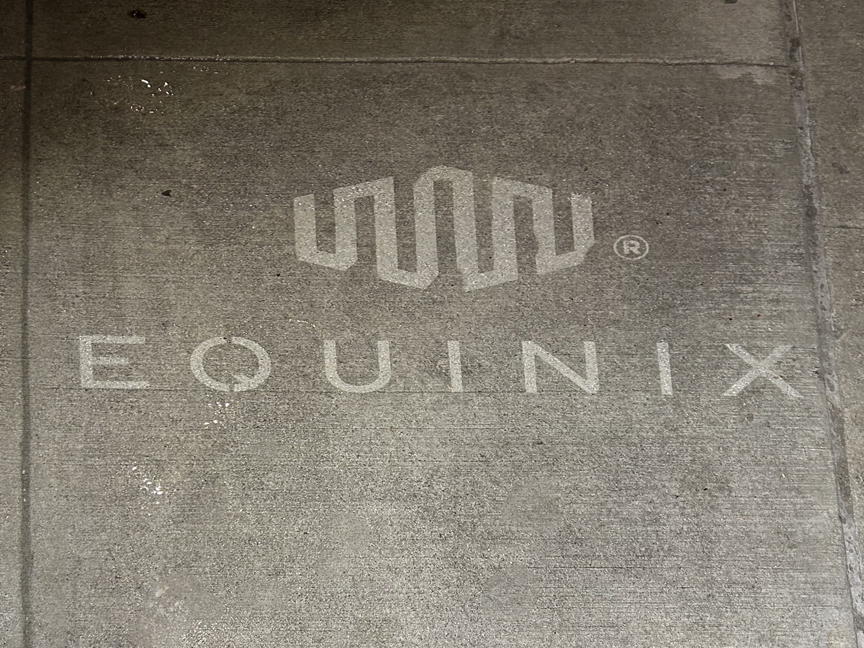
Every other format we run has one thing in common: the surface is vertical, and it is more or less what it appears to be from across the street.
Ground work is different. The surface is horizontal, people stand on it, water sits on it, the sun cooks it all afternoon, and in Fort Worth it is genuinely not the same material from one block to the next.
So this page is built as a substrate walkthrough rather than a neighbourhood tour. What is actually underfoot in each part of this city, what that does to adhesion and to stencil edges, and what the North Texas climate does to both.
I want to set expectations in the first few lines, because ground work is the format most often sold badly. A sidewalk decal is not a billboard that happens to be on the floor. It is a short-range, high-intent format. It catches someone in the last few seconds before a door, at a crossing while they are stopped, or in a queue. The useful question is never “how many people walk past this”, it is “what is the person standing here about to do”.
Fort Worth answers that question differently in each of its four destinations, and the ground answers it differently again.
A quick definition so the rest makes sense. A decal is a printed adhesive graphic, usually with a textured anti-slip laminate, applied to a prepared surface and removed on a defined date. A stencil is a cut template through which a medium is applied directly to the ground. Those two things look similar in a mood board and behave nothing alike in the field.
The ground is the product, and Fort Worth’s ground is not uniform
Four destinations, four different paving stories.
Sundance Square is a privately managed downtown district. Managed districts maintain their own paving standard because the streetscape is part of the product they sell, which means the ground there is a property asset and the property decides what touches it. That is the operative fact, more than the material itself.
The Stockyards is a National Historic District. Historic paving carries heritage oversight, and the surface is part of what visitors come to look at. We treat historic paving as off-limits by default and survey before we ever discuss it. Any specific material claim about a given Stockyards block would need a site survey to confirm, and I am not going to assert one here. UNVERIFIED.
The Near Southside is the independent district, with older building stock and the mixed, patched, repaired sidewalk you get in any neighbourhood that has been continuously occupied rather than comprehensively rebuilt. That is good news and bad news. Good, because owners decide for themselves and are reachable. Bad, because surface condition varies wall to wall, and a decal needs a flat, sound, clean substrate to hold.
West 7th is the newer entertainment strip running out toward the Trinity River, built for walking between venues. Newer development generally means more consistent, better finished paving, which is the friendliest ground in the city for decal work. The complication there is ownership, which is split between larger landlords and independent operators along the same stretch.
The Cultural District beside it is institutional ground serving a daytime museum audience. Interesting as context, rarely available as inventory.
If I had to rank Fort Worth districts purely on substrate suitability for decals: West 7th first, Near Southside second with surface-by-surface checking, Sundance Square third and permission-gated, Stockyards last and usually excluded.
Pavement temperature is the variable that governs everything
This is the Fort Worth specific that most out-of-market buyers miss, and it is the single biggest driver of whether a ground campaign holds here.
Fort Worth is humid subtropical. Air temperatures run from around 36°F in winter to around 98°F in summer across the year. June averages near 92°F in the daytime with overnight lows around 73°F, humidity near 66 percent, and roughly four inches of rain across about six rainy days.
Air temperature is not the number that matters for ground work. Horizontal concrete in direct Texas sun runs far above the air temperature, and it holds that heat into the evening because mass releases slowly. That has three consequences.
First, application. Adhesive on a hot slab grabs instantly at the contact point, before you have squeegeed the air out. You get trapped bubbles and a lifted edge within days. The window for a clean summer application in this city is night into early morning, when the slab has finally shed enough heat, and even then the early part of the night is too warm in July. We push summer applications toward the pre-dawn hours for that reason alone.
Second, service life. Sustained heat and long Texas ultraviolet load are hard on both the print and the laminate. Colour shifts first, then the anti-slip texture starts to polish under foot traffic. A summer decal on an exposed south-facing sidewalk is a shorter-lived object than the same decal under an awning.
Third, removal. Adhesive that has been heat-cycled for weeks on a hot slab comes off harder than adhesive that has sat through a mild autumn. We plan removal labour around the season the campaign ran in, and we say so up front rather than discovering it on the removal date.
The honest recommendation that follows: October into November is the right window for ground work in Fort Worth. Comfortable temperatures, settled weather, and the strongest outdoor pedestrian dwell of the year. Deep summer is the trough for daytime street presence here anyway, because people are not lingering on hot sidewalks. Running a pedestrian-facing format in the Fort Worth July is paying for a surface that nobody is standing still on.
Surface by surface: what we check before anything goes down
Our survey is short and it is non-negotiable, and in this market it kills more proposed placements than permission does.
Is the surface sound? Spalling, cracking, lifting and patched repairs all defeat a decal. The Near Southside has plenty of perfectly good sidewalk and also plenty of patched sidewalk within the same block.
Is it clean and can it be cleaned? Ground in an entertainment district carries months of accumulated residue. West 7th and the Near Southside are both nightlife environments, and the surface outside a bar at 3am is not the surface you photographed at noon. We clean and dry properly or we do not apply. This is the step crews skip when they are behind schedule, and it is the reason decals fail in week one.
Is it dry, all the way through? A slab that has taken rain can look dry on top and still be holding moisture. With roughly 37 inches of annual precipitation and summer rain arriving in short heavy bursts, this is a live issue in Fort Worth rather than a theoretical one. We allow drying time after rain rather than squeezing an application in behind a shower.
Is it in a traffic line or a pivot point? Foot traffic that turns on a decal shears it. The corners of a decal placed at a doorway where people pivot will lift before the centre shows any wear.
Is it shaded or exposed? This decides expected life more than any other single factor in a Texas summer. An awning changes the answer completely.
Is it textured, jointed or profiled? Stamped, brushed or heavily jointed finishes do not take flat vinyl cleanly. That is where stencil work has an argument, and where we will say so.
Stencils versus decals, and why we usually land on decals here
Clients often ask for stencils because they imagine the look. In Fort Worth we usually steer toward decals, and the reasons are mostly local.
A stencil applies medium directly to the ground. That makes the permission conversation heavier, because the property owner is being asked to accept something applied to their surface rather than something laid on top of it and peeled off on a date. In a city where the practical route to a yes is an independent owner in the Near Southside making a quick judgement call, the easier ask wins more surfaces.
A stencil also depends on the substrate accepting a clean edge. Patched, aged and jointed sidewalk gives soft edges and bleed. Newer West 7th paving would take a stencil better, and that is exactly where larger landlords are most cautious.
Decals carry a cleaner story. Defined run, defined removal date, surface documented before and after. When a property owner’s actual worry is “what does my sidewalk look like in a month”, a removable graphic with a dated commitment answers that question directly.
There is a real case for stencils. Heavily textured ground, longer runs where repeated decal replacement is impractical, and surfaces where a client wants something less glossy than vinyl. We will do that work on a consenting private surface with the method agreed in writing. We just do not lead with it in this market.
What we will not do is water-based removable stencil work on heritage paving in the Stockyards, whatever the medium. The surface there is part of the attraction and the oversight is real.
Permission for the ground is its own conversation
Street-level placement sits in a grey area in any American city. It varies by municipality, by surface ownership and by local ordinance, and enforcement varies with it. I am describing character here, not rules, and I am not in a position to advise you on the rules in your situation.
Ground work has a wrinkle that wall work does not. Sidewalk ownership and maintenance responsibility are frequently split between the public authority and the adjoining property owner, and the split is not obvious by looking at it. The owner who confidently says yes to their forecourt may have no standing over the pavement four feet further out.
So we define the surface precisely before anything happens. The specific area, measured, photographed, with a named contact who has authority over that particular ground and written, dated consent naming the removal date. Private forecourts, entry aprons, courtyards and privately managed plazas are where this format works best, because custody is clear.
The district character in Fort Worth runs the way it does for every format. Sundance Square is a privately managed environment reached through property management, so it is permission-first and never opportunistic. The Stockyards carries heritage oversight and tourism interests, and unapproved work there generates a complaint faster than anywhere else in the city. The Near Southside has independent owners who decide for themselves and are approachable, with a visible local arts identity that makes the conversation easier. West 7th has larger landlords and independent operators mixed along the same walk, so permission moves at two speeds.
Enforcement across the city reads as owner-driven and complaint-driven rather than proactive patrol. That is not an invitation. It means the risk concentrates in one annoyed owner, and Fort Worth’s business districts are tightly networked enough that a bad removal gets talked about. We treat the removal date as an obligation and document the ground before and after, every time.
Rain, hail, ice and the rest of the North Texas calendar
Ground work has its own weather exposure profile and it is worth separating from wall work.
Summer rain in Fort Worth tends to arrive in short heavy bursts rather than long drizzle, which means standing water and then fast drying. Standing water is the enemy of a fresh application, and a decal that went down on a slab holding moisture will tell you about it within a week.
Spring brings North Texas severe weather. For ground work hail is less destructive than it is for paper on a wall, but the storm systems bring debris, grit and water that scour a fresh surface. We check systems per job rather than per season and we will move an application night rather than fight a front.
Winter ice events happen here, with about an inch of snow in a typical year. The operational concern is not the ice itself, it is what follows: grit, sand and scraping on sidewalks, all of which abrade a decal surface and lift edges that were not fully bedded. Ice also shuts access down for a day or two at a time.
The calendar matters as much as the weather. The Stock Show and Rodeo is the dominant fixed event in this city, 23 days in winter, reshaping traffic and attention citywide and congesting the Stockyards and Will Rogers area throughout. Downtown’s spring arts festival on Main Street is the other major street-level draw and is the one event where ground work genuinely shines, because a street festival produces exactly the standing, queueing, slow-moving pedestrian behaviour this format needs.
Fort Worth also sits inside the wider North Texas convention and events economy, so downtown footfall can move independently of local seasonality. Check your actual dates.
Crew night, and what we talk Fort Worth clients out of
A ground campaign here is a park-and-walk job, four to five stops across a night. The city is car-dependent between districts and walkable inside them, so the route is a short list of parking decisions with a walking loop hanging off each.
Downtown works as one compact walk from a single garage. The Near Southside is its own cluster. West 7th is one linear walk from end to end. The Stockyards, if it is in scope at all, is a separate trip.
Two crew is standard, with a third added when the placement count is high, because ground work is slower per unit than wall work. Every placement needs cleaning, drying, positioning, application and photographing, and the cleaning is the part that takes real time on a nightlife sidewalk.
Night windows are decent in this city. Downtown clears outside event nights. The Near Southside quiets in the small hours. West 7th runs latest of the four and is worked pre-dawn, which happens to line up with when the slab is coolest in summer.
Now the pushback, and these are Fort Worth specific.
We talk clients out of summer ground campaigns on exposed sidewalk. Not because we cannot apply them, we can, at four in the morning. Because the Fort Worth deep summer is the trough for daytime street presence, and a format that needs a pedestrian standing still is the worst possible format to run when nobody is standing still outside.
We talk clients out of the Stockyards. It is the image of Fort Worth and everyone wants it. It is heritage ground with oversight attached and a visitor audience that is mostly not going to act on a local message.
We talk clients out of spreading placements thinly across all four destinations to claim city coverage. Ground work is short-range by nature. Thin coverage of a short-range format is not a campaign, it is a scatter. Pick the walk your audience actually takes and own it.
And we talk clients out of treating decals as a standalone awareness buy. This format converts attention that already exists. Where it pays for itself in Fort Worth is paired with Street Teams & Experiential work on the same walk, the Near Southside on an evening or West 7th on a weekend, where a person hands over the reason and the ground underfoot repeats it every time someone looks down.
Frequently asked questions
How long does a sidewalk decal last in Fort Worth?
Season and shade decide it. An autumn placement under an awning holds well. An exposed south-facing slab through a Texas summer takes sustained heat and ultraviolet load, so colour shifts and the anti-slip texture polishes under traffic sooner. We agree a realistic run length and a removal date before application rather than leaving it open.
Why do you apply at night here?
Horizontal concrete in Fort Worth sun runs far hotter than the air and holds that heat into the evening. Adhesive on a hot slab grabs before the air is worked out, leaving trapped bubbles and lifting edges. We apply once the slab has cooled, which in summer means pre-dawn rather than early night.
Is ground advertising permitted in Fort Worth?
It sits in a grey area that varies by municipality, ownership and local ordinance, and sidewalk responsibility is often split between a public authority and the adjoining owner. We work private forecourts and plazas with a named contact, written and dated consent and a committed removal date. We do not advise on the rules and suggest you take your own.
Decals or stencils for a Fort Worth campaign?
Usually decals. The permission ask is lighter, which matters in a city where the practical yes comes from an independent Near Southside owner making a quick judgement. Decals also carry a defined removal date, which answers the owner’s real question. Stencils earn their place on heavily textured ground and longer runs, on consenting private surfaces.
Which district is best for ground work?
West 7th has the most consistent paving and a linear walk built for venue-hopping, so it leads on substrate. The Near Southside is close behind if surfaces are checked block by block, and owners there are reachable. Sundance Square is permission-gated through property management. We normally exclude the Stockyards entirely.
When should a ground campaign run?
October into November. Settled weather, comfortable temperatures and the strongest pedestrian dwell of the year. Downtown’s spring arts festival on Main Street is the other strong window, because festival crowds stand still and queue, which is exactly the behaviour this format needs. Deep summer is the weakest period for pedestrian-facing work.
Request a campaign quote
Tell us the walk you want to own, the Near Southside on a weeknight, West 7th on a weekend, a festival footprint downtown, and we will survey the ground before we quote anything. Sound surface, clear custody, honest run length, a removal date in writing.
If your dates fall in a Fort Worth July and your placements are on exposed sidewalk, expect us to suggest October before we suggest anything else.
Request a campaign quote.

Ready to Run Your Campaign?
Call us or email us. We’ll tell you exactly what we can do in your market and what it costs.
Related Services
Explore similar advertising solutions offered by American Guerrilla Marketing.
American Guerrilla Marketing — Los Angeles
Street-level campaigns in Los Angeles and nationwide. Wheatpasting, LED trucks, street teams, and more.
(646) 776-2770
Related Articles
-
How Sidewalk Decals & Stencils Runs in Arlington
November 25, 2026
-
How Sidewalk Decals & Stencils Runs in Indianapolis
November 24, 2026
-
How Sidewalk Decals & Stencils Runs in Santa Monica
November 24, 2026
-
How Sidewalk Decals & Stencils Runs in Cleveland
November 24, 2026
-
Sidewalk Decals & Stencils: South Nashville Metro
November 23, 2026