
November 3, 2026
Renting vs Buying an LED Truck: Where Each One Works
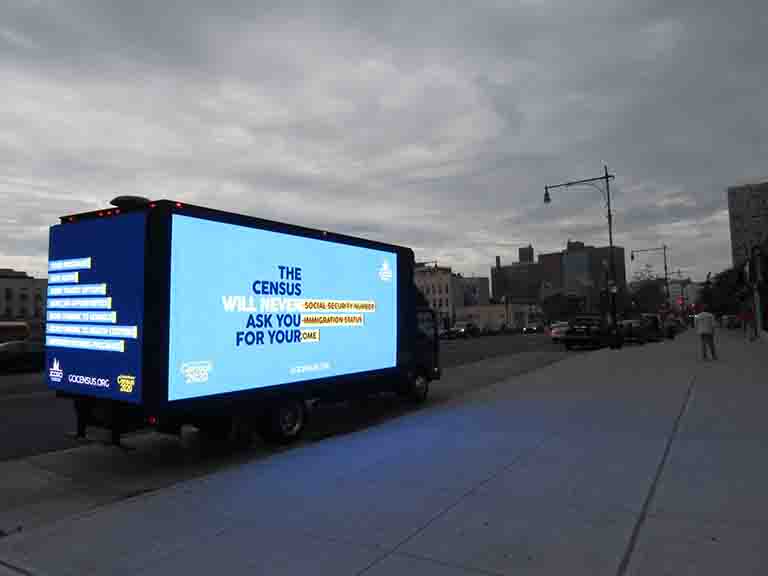
Every year or so a client asks whether they should just buy their own LED truck.
It usually arrives after a campaign went well. They look at the shift reports, they look at how much they want to be out on the street, and they do the obvious arithmetic in their head. If we are going to do this often, why are we renting.
It is a reasonable instinct and sometimes it is the right answer. More often it is not, and the reasons have almost nothing to do with the arithmetic people do in their heads.
I am not going to put any figures on this page. The numbers would be wrong by the time you read them and they are not where the decision actually lives anyway. What I can give you is the operator’s version of what owning a truck involves, because I have spent enough time around these vehicles to know what breaks, what sits idle, and what nobody tells you until you own one.
Here is the honest shape of it.
The arithmetic people do in their heads is the wrong arithmetic
The calculation buyers run is roughly this. We spend a certain amount on truck days per year. A truck costs a certain amount to acquire. Divide one by the other, get a payback period, decide.
That calculation misses the entire operating layer, and the operating layer is most of the job.
A truck is not a screen on wheels that you park when not in use. It is a commercial vehicle with a power system, a display system and a content system, and it needs a driver with the right licence, insurance that covers both the vehicle and the advertising use, somewhere to park it that is secure and has power access, a maintenance relationship, and somebody whose job it is to care about all of that when nobody is asking for a campaign.
That last one is the real cost and it never appears in the spreadsheet. Owning a truck means owning a small operations function. Someone has to schedule it, someone has to drive it, someone has to fix it, someone has to decide what happens when it fails the week before a launch.
Agencies and brands that buy trucks and then regret it almost always regret the staffing, not the vehicle.
Utilisation is the only number that matters
Strip everything else away and ownership comes down to one question. How many days a year will this thing actually work?
Not how many days you want it to. How many it will.
The honest picture for most brands is that demand is lumpy. A launch quarter, a conference season, a sports season, a holiday retail window. Between those, the vehicle sits. And a truck that sits is not neutral, because it still needs insurance, storage, registration, periodic running to keep the mechanicals healthy, and screen maintenance.
The brands where ownership genuinely works have continuous, predictable demand. A regional operator running their own promotional presence most weeks of the year. A venue or entertainment group with multiple properties and an ongoing calendar. An organisation whose whole model is being visible on streets constantly. In those cases the vehicle is working often enough that the fixed overhead is spread thin and the control is worth having.
The brands where it fails have seasonal or campaign driven demand. Two big pushes a year, each a few weeks long. For them, ownership converts a variable commitment into a permanent one in exchange for a vehicle that is idle most of the calendar.
There is a middle case that catches people out. A brand with steady demand in one city and occasional demand in others. Owning solves the home market and does nothing for the rest, because moving a truck across the country for a week is its own expensive exercise in deadhead time and driver hours. People buy for the home market and then still rent everywhere else, which is often fine but is not the saving they pictured.
What ownership actually gets you
I want to be fair to the case for buying, because when it fits it fits well.
Availability on demand. The single best argument. Marquee dates in major markets exhaust local vehicle availability well in advance. Convention weeks, big game days, major festivals and holiday retail periods are genuinely hard to book late. If your business needs to be out on those exact dates every year, owning removes that fight entirely.
Branding the vehicle itself. A rented truck carries your creative on the screen. An owned truck can be wrapped, shaped and finished as part of your identity, which matters for organisations whose vehicle presence is part of the brand.
Spontaneity. Something happens, and you can be on the street that evening. No scoping call, no availability check. For organisations that respond to news cycles or community moments, that is real value.
Customisation. Owned vehicles can carry whatever else you need. Sound systems, sampling storage, generators for activation gear, display frontage. If your truck is always the centrepiece of a street activation rather than just a screen, building it around that is sensible.
Long run economics at high utilisation. If the thing works most weeks, the maths eventually does favour owning. It just needs the utilisation to be real rather than aspirational.
Institutional memory. An in house crew that works the same market constantly does eventually build the route knowledge that makes shifts good. It takes seasons rather than weeks, but for an organisation committed to the format long term, that knowledge compounds and stays with them instead of living with a vendor.
Secondary use. Owned vehicles get pressed into service for things a rental never would. Moving activation gear, serving as a staging point at a street event, acting as a mobile base for a field team. Organisations that run a lot of ground level activity often find the truck earns its keep partly as logistics rather than purely as a screen.
What ownership costs you that nobody mentions
Drivers. This is the one that surprises people most. You need people who can legally and confidently drive a large box bodied vehicle in dense urban traffic, park it in tight positions, and operate the screen. That is a specific skill set and finding it reliably, including backup when someone is sick on the night of a launch, is an ongoing recruitment problem.
Insurance. Vehicle cover is the easy part. Cover that properly contemplates commercial advertising operation, stationary display on third party ground, and the activities you will actually be doing, is a conversation with a broker who understands the use. Clients are frequently surprised by this step.
Storage and power. A truck needs somewhere secure with access for maintenance and ideally power. In the dense cities where the format works best, that space is not easy to come by, which means the truck often lives well outside the market it serves and burns deadhead time every single shift.
Maintenance on two systems. The chassis is a commercial vehicle and ages like one. The screen is an electronic display living outdoors under vibration, heat cycling and weather. Panels develop dead modules. Drivers and controllers fail. Mounting hardware loosens. None of this is dramatic and all of it needs someone who knows what they are looking at.
Technology drift. LED panel quality moves. A screen bought today will look noticeably older in a few years next to newer vehicles, in brightness, pitch and colour. Renters get whatever is current. Owners get whatever they bought.
Downtime risk. When a rented truck fails, that is the operator’s problem and they send another. When your truck fails three days before your biggest event of the year, it is entirely your problem, and the rental market may not have a vehicle available precisely because it is your biggest event of the year and everybody wants one.
Depreciation and exit. Specialist advertising vehicles have a narrow buyer pool. A standard box truck can be sold to anyone. A truck with a large LED panel bonded to its flank and a brand wrap on the rest of it sells to a much shorter list of people, and that constrains how easily an organisation can change its mind. Leaving the format is harder than entering it, which is worth knowing before the decision rather than after.
Content operations. A screen needs something on it, correctly sized, correctly timed, tested on the actual panel rather than a monitor. Colours behave differently on LED and artwork that looks right in a design file can read washed out or muddy on a street at night. Rental operators do that adaptation and testing as part of the job. Owners inherit it, and it is a recurring task every time the creative changes.
Route knowledge. This is the least obvious and maybe the most important. A big part of what makes a shift work is knowing which curb is open at which hour, where the egress doors actually feed, which lot owners say yes, and which positions get you moved along. Crews build that over seasons. Buying a vehicle does not buy that knowledge, and a new in house operation spends a year learning what experienced crews already know.
The permission picture does not change with ownership
People occasionally assume that owning the vehicle puts them on firmer ground. It does not.
Mobile advertising vehicles sit in a grey area that varies by municipality. Some cities have ordinance language aimed specifically at vehicles whose primary purpose is advertising display. Others handle the same behaviour through parking, standing, idling and noise rules. Some have nothing format specific. Enforcement is inconsistent between cities and inconsistent within a single city, and it tightens around major events because more officers are actively managing streets.
Exposure concentrates when a truck is stationary for long periods on public right of way, and that is true whoever owns it.
What changes with ownership is who carries the consequence. A rental operator absorbs the operational friction as part of doing business, including moving along, rescheduling positions and handling the conversations. An owner handles all of that themselves, with their own brand on the side of the vehicle, in a market they may not know well.
The risk reduction measures are the same either way. Put long holds on private ground with the owner’s permission. Never block a travel lane, a bus stop, a hydrant, a crosswalk or an accessible ramp. Keep permission documentation in the cab. Build an alternate position for every hold so the crew relocates rather than argues.
There is no universal national permit for the format. Some jurisdictions have film, event or special use permits covering vehicle staging in particular circumstances. Beyond that, anyone operating a vehicle of their own should take their own counsel on their own situation rather than relying on a general article.
Weather and wear, which owners feel differently
Renters experience weather as a campaign variable. Owners experience it as an asset variable too.
Heat is the hardest condition for an LED panel, especially stationary operation in direct sun with no airflow across the housing. A vehicle that spends summers doing midday holds in Phoenix, Las Vegas, Houston or Dallas accumulates thermal stress that a vehicle working evenings does not. Owners who schedule their own trucks badly age their own equipment.
Rain is fine for the hardware and ruinous for the audience. A wet night produces almost nothing regardless of who owns the truck.
Cold is easy on the panel and hard on the crowd. Winter work in Chicago, Boston, Minneapolis and Denver needs positions tight to doors and pickup points because nobody lingers.
Wind is a positioning constraint. A tall flat sided vehicle is a sail and exposed waterfront or open lot positions get vacated in gusts.
Road vibration is the quiet one. Screens live on a moving vehicle and connections work loose over time. Owners discover this as a maintenance rhythm. Renters never think about it.
Salt is the other quiet one. Trucks that work northern winters live in road salt for months, and salt is patient. It works into mounting hardware, frames, fasteners and anything behind the panel that nobody inspects. An owner in a salt market needs a washing and inspection routine that an owner in a dry market does not, and skipping it shortens the life of the mounting system long before the screen itself gives out.
What I actually tell people who ask
My advice usually sorts into three answers.
If you will genuinely use a vehicle most weeks in one home market, and you are prepared to staff an operations function around it, buy. The control and the availability are worth it and the utilisation justifies the overhead.
If your demand is campaign shaped, two or three pushes a year, rent. You will get current equipment, crews who already know the city, no idle asset, and no recruitment problem. Put the difference into more shifts or into another format.
If you are somewhere in between, which most people are, the usually correct move is to rent and get much better at specifying. Most clients who feel they are overpaying for truck work are not suffering from rental economics. They are suffering from poorly specified campaigns. Buying a full day when the audience exists for four hours, asking one vehicle to cover a whole metro, routing loops instead of holds, running dense creative that nobody can read in six seconds. Fixing those things changes the value of the work far more than ownership does.
And there is a fourth answer I give more often than any of these. Sometimes the reason a client wants their own truck is that they want constant visible presence, and they have concluded a truck is how you get it. It is not. A truck is a spike. It owns a window and makes a night feel like yours. It does not make a neighbourhood feel like you live there. For continuous presence, Wheatpasting & Poster Campaigns holds corridors for weeks at a time with no vehicle, no driver, no storage and no insurance conversation. Several clients who came to me asking about buying a truck ended up running paper instead and were happier with it.
Frequently asked questions
Is buying an LED truck cheaper than renting one?
Only at genuinely high utilisation. The calculation most buyers run compares acquisition against campaign days and ignores the operating layer, which is most of the work. Drivers with the right licence and availability, insurance that contemplates advertising use, secure storage with power, maintenance on both chassis and screen, and someone whose job it is to manage all of it.
How many working days a year justify owning a truck?
There is no universal threshold, but the honest test is whether demand is continuous or campaign shaped. Organisations that need street presence most weeks of the year in one home market tend to do well owning. Brands with two or three seasonal pushes convert a variable commitment into a permanent one and watch the vehicle sit idle for most of the calendar.
What do owners underestimate most?
Staffing and route knowledge. Finding people who can confidently drive and position a large box bodied vehicle in dense traffic, including backup cover, is an ongoing recruitment problem. Separately, knowing which curbs open when, where venue egress actually feeds, and which lot owners say yes is knowledge crews build over seasons, and buying a vehicle does not buy it.
Does owning a truck make permissions easier?
No. Mobile advertising vehicles sit in a grey area that varies by municipality, enforcement is inconsistent, and exposure concentrates when a vehicle is stationary for long periods on public right of way regardless of who owns it. What changes is who carries the operational friction, and an owner handles it themselves with their own brand on the side of the vehicle.
What happens if an owned truck breaks down before a major date?
It becomes entirely your problem, and the rental market may have no vehicle available precisely because your big date is everybody else’s big date too. Marquee weekends, convention weeks and major game days exhaust local availability well in advance. Renters get a replacement from the operator’s fleet. Owners get a repair timeline.
If I want constant street presence, should I buy a truck?
Usually not. A truck produces a concentrated spike of attention inside a defined window, which suits launches, game days and conferences. It does not create the sense that a brand has lived in a neighbourhood. Wheatpasting & Poster Campaigns holds corridors continuously for weeks with no vehicle, driver, storage or insurance overhead, and generally fits that goal far better.
Request a campaign quote
If you are weighing ownership, tell us honestly how many days a year you expect to be out and in how many markets, and we will give you a straight read on whether renting or owning fits. If the real goal turns out to be continuous presence rather than a series of moments, we will tell you that too and show you what from our side does it better. Request a campaign quote with your markets, your calendar and what you are trying to achieve.

Ready to Run Your Campaign?
Call us or email us. We’ll tell you exactly what we can do in your market and what it costs.
Related Services
Explore similar advertising solutions offered by American Guerrilla Marketing.
American Guerrilla Marketing — Los Angeles
Street-level campaigns in Los Angeles and nationwide. Wheatpasting, LED trucks, street teams, and more.
(646) 776-2770
Related Articles
-
LED Trucks & Mobile Billboards in Knoxville, TN
November 4, 2026
-
Trailer Billboard Advertising Formats: How Installs Work
November 4, 2026
-
Digital Billboard Truck: How It Actually Works
November 3, 2026
-
Mobile Billboard Campaign Minimums: An Honest Breakdown
November 3, 2026
-
Box Truck Advertising: How It Actually Works
November 3, 2026