
November 5, 2026
Mobile LED Truck Advertising: Timelines and Routes
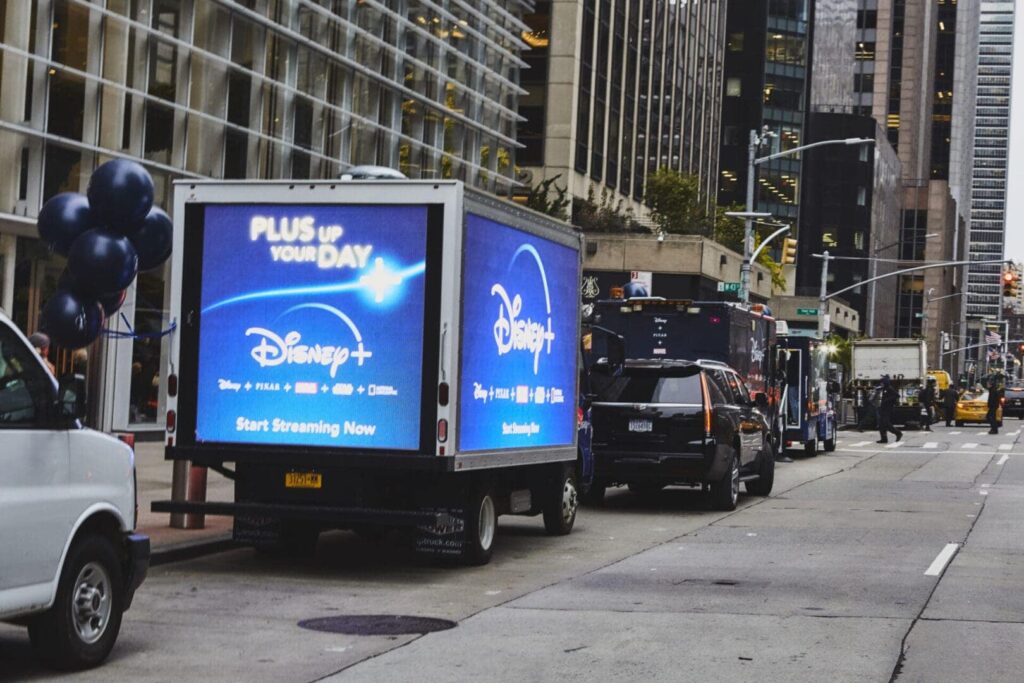
Most people who call us about mobile LED truck advertising have already decided they want the truck. What they have not decided is when it runs, where it drives, how slowly it drives, and who at the city level might care.
That is the part that decides whether the campaign works.
I have sat in the cab of an LED truck at 7:40pm on a Friday in downtown Austin watching the screen wash out against a low sun, and I have watched the same screen at 9:15pm on the same block look like the only thing on the street. Same truck. Same creative. Ninety minutes apart. The second one is the campaign. The first one is a vehicle with an expensive sign on it.
So this piece is about timelines and permissions and the operational numbers that actually matter. Not money. Scope.
Here is the honest shape of it: a mobile LED truck campaign is a routing problem wearing a media buy costume. If you treat it like a media buy, you will book hours and get very little. If you treat it like a routing problem, you will book fewer hours and get far more.
I want to walk through how we build that routing, what the lead time really looks like, where permission questions come up, and the handful of things we talk clients out of almost every week.
What a mobile LED truck actually is, mechanically
A mobile LED truck is a box truck or a purpose-built chassis carrying LED panel arrays on two or three faces. Usually both long sides and sometimes the rear. The panels are modular tiles, typically in a pixel pitch range built for street viewing distance rather than close reading, which is why fine type disappears and bold type survives.
There is a generator or a battery bank feeding the display. There is a media player. There is a driver, and on most of our runs there is a second person.
The screen is bright. Brighter than a laptop by a very large factor, because it has to compete with daylight and streetlight and storefront glow. That brightness is adjustable, and knowing when to pull it down matters as much as knowing when to push it up. A screen running at full output on a dark residential street at 10pm does not look impressive. It looks like a problem, and problems generate phone calls.
Mobile Billboards without screens, the vinyl kind, are a different animal. They are passive, quiet, and legible in daylight. The LED truck trades daylight legibility for night dominance and for motion. If your creative needs motion or needs to own a dark street, you want the LED truck. If your creative is a single static image and your hours are mid-afternoon, you may genuinely be better served by something else, and I will say so on the call.
The real timeline, start to wheels rolling
People ask how fast we can get a truck on the street. The answer depends on which city and which week, but the structure of the timeline is consistent.
Market confirmation and vehicle hold. This is the first real gate. Trucks are physical assets in finite supply in any given metro. A Tuesday in February in a mid-size market is easy. A Saturday during a major festival weekend in Austin, Nashville, Miami or Los Angeles is not. Those dates get held months out. If you are chasing an event date, the vehicle hold is the long pole, not the creative.
Route design. We build this from the brief, not from a template. It takes a couple of working days in a market we run regularly and longer in a market we are scouting fresh. Route design means picking corridors, picking the loop direction, setting dwell points, and checking the known construction and closure picture.
Creative build and screen test. Creative for LED needs to be built for LED. Aspect ratio comes from the panel array, not from a social template. We test the file on a real screen before the first shift, outdoors, at night. This catches the two most common failures: type that vanishes and colour that blooms.
Permission and access checks. This is where private property matters. Public roads are public roads, but the places you actually want to sit still, lots, plazas, event-adjacent ground, private forecourts, all belong to someone. Those conversations take time and they are worth starting early.
Shift run. Then it drives.
In a market we know, with creative ready and no event-date pressure, the realistic span from signed scope to first shift is one to two weeks. Rush is possible. Rush usually means accepting a route we did not get to drive beforehand, and I would rather tell you that upfront than pretend scouting is optional.
How we design a route, corridor by corridor
A route is not a list of streets. It is a sequence of impressions built around where people are standing still.
Moving traffic gives you a glance. Stopped traffic gives you a read. Pedestrians waiting at a light give you a long read and sometimes a phone camera. So we build routes around friction.
In Manhattan, that means the approaches around Herald Square and the slow grind along Eighth Avenue in the evening, where the truck moves at walking pace whether we planned it or not. In Los Angeles, it means Sunset through West Hollywood after dark, and the surface streets around Crypto.com Arena on event nights rather than any freeway, because freeway speed is wasted on an LED screen. In Chicago, it is the Loop at shift change and the stretch of North Avenue near Wicker Park on weekend nights. In Austin, it is the Rainey Street and Red River corridors and the approaches to the convention centre. In Miami, Ocean Drive and Collins in South Beach, plus the Wynwood grid on second Saturdays. In Nashville, lower Broadway, where traffic is slow enough that the truck becomes part of the scenery for several minutes at a time.
Those are corridors we return to because they produce friction reliably.
Then we set loop length. A short loop repeats a lot, which is good for frequency in a dense pedestrian zone and bad in a car market where the same drivers pass you repeatedly and stop seeing you. A long loop spreads reach and dilutes frequency. Most of our campaigns run a short loop in the core and a longer connector arm out to a secondary cluster.
We also set dwell points. A dwell point is somewhere legal to sit, with permission where permission is needed, facing a crowd. Venue exits after a show. A plaza edge where the lot owner has said yes. Dwell points are where the format earns its keep, and they are also where sloppy operators get themselves asked to move.
Time of night, and why it decides everything
Screen contrast against ambient light is the whole game.
Daylight hours, roughly 10am to 5pm depending on season and latitude, the screen competes with the sun. It is visible. It is not dominant. Daytime shifts make sense when the objective is presence at a specific daytime moment, a conference let-out, a midday campus crossing, a street festival. They do not make sense as a general awareness buy.
Golden hour through full dark is the sweet spot. Call it roughly thirty minutes before sunset onward. The sky drops, the screen stays constant, and the relative contrast climbs fast. In practice our strongest windows are about 7pm to 11pm in summer and about 5pm to 10pm in winter, shifted by the city's own rhythm.
Late night past midnight is specialised. Crowd volume drops but concentration rises around venue exits and bar closing. A truck sitting on the right block at 1:30am as a venue empties can out-deliver three hours of mid-evening cruising. It also raises the noise and nuisance question sharply, which brings us to brightness discipline.
We run a lower output setting after about 11pm in any area with residential frontage. It is not a rule anybody handed us. It is what keeps the truck from becoming the reason someone calls to complain.
Crew reality
The baseline is two people on a shift: a driver and a street-side operator.
The driver drives, and that is genuinely a full job in dense traffic at low speed with a tall vehicle. The operator handles the screen, watches for obstructions, manages the dwell stops, handles anyone who approaches the truck, and shoots the verification photos and video.
One-person shifts exist. We do them for simple daytime corridor runs in markets with forgiving traffic. I do not like them for night work in dense cores, because the driver ends up trying to do three jobs from a seated position and the documentation suffers.
Shift length runs four to six hours typically. Beyond six, driver fatigue in low-speed dense traffic becomes real and route discipline starts to slip.
Where a street team runs alongside the truck, which is a pairing I recommend more often than clients expect, you add two to six people on foot. The truck holds the position and does the visual work. The team closes the distance, hands something over, answers the question the screen raised. That combination consistently outperforms either element alone, and it is the single most common upgrade we propose.
Weather, and what actually stops a shift
LED panels on a professionally built truck are weather-rated for normal rain. Light to moderate rain is a running night. Wet pavement is reflective, and a bright screen over wet asphalt reads beautifully in photos.
Heavy sustained rain is a different matter. Not because of the panels, but because the audience is gone. Pedestrians go inside. Sidewalk dwell collapses. We would rather move a shift than burn hours driving past empty sidewalks.
High wind is the real stop. A box truck with flat sides is a sail. Sustained high wind, especially gusting, means we park it. That is a safety call and it is not negotiable.
Extreme cold affects generator behaviour and battery performance, and it affects crowds. A Chicago lakefront route in deep January evening cold will have a fraction of the foot traffic it has in October. We tell clients that before they book it.
Extreme heat in Phoenix or Las Vegas in July pushes everything later. Nobody is walking at 6pm. The street comes alive at 9pm and stays up past midnight. The route plan has to follow the city's actual behaviour, not a template.
Snow accumulation creates its own problem: parking and dwell positions disappear under plough piles and the usable curb shrinks. Winter routes in Boston, Chicago, Minneapolis and Denver need dwell alternates built in.
Permissions, ordinances and the grey area
This is the section people skim and should not.
Mobile LED advertising sits in a grey area in a lot of American municipalities, and I want to be precise about why rather than give you a confident answer I cannot stand behind.
Driving a vehicle on a public road is ordinary. The vehicle carrying commercial messaging is where local rules start to vary. Some municipalities have specific provisions addressing vehicles whose primary purpose is advertising display. Some address illuminated or animated signage. Some address idling. Some address noise. Some have nothing specific at all and the question never comes up. Enforcement is inconsistent even within a single city, and what happened on one block last year does not reliably predict what happens on the next block tonight.
It also varies by what you are doing. Driving a normal traffic pattern is treated differently from parking and dwelling in one place for an extended period. Dwell is where attention concentrates, so dwell is where we are most careful.
Here is how we reduce exposure, which is a different thing from promising an outcome.
We dwell on private property with the owner's permission, in writing where we can get it. A lot owner, a venue, a business with a forecourt. That removes the public-right-of-way question from the dwell portion entirely.
We check the local picture per market before a shift rather than assuming a national answer. Markets differ, and some differ a lot.
We keep brightness, idling and positioning conservative near residential frontage, because most interventions start with a complaint rather than a patrol.
We document every shift. Time-stamped photo and video of the truck in position, route logs, dwell confirmations. If a question comes later, we have an evidentiary record rather than a memory.
We do not advise clients on local law. We are an operator, not counsel. If your campaign has genuine regulatory sensitivity, talk to someone qualified in that jurisdiction. What we can tell you is how the format behaves operationally in a given market, which conversations we have had with property owners, and where we would and would not dwell.
For event-adjacent work there is a second layer. Stadiums, arenas, convention centres and festival footprints often control surrounding ground and approaches under their own agreements, and those controls can extend further than people expect. A truck that is fine three blocks out may not be welcome at the gate. We scout that boundary rather than guess at it.
What goes wrong, and what we talk clients out of
Too much copy. The most common creative failure by a wide margin. A screen passing a pedestrian at 15 miles per hour gives roughly two to three seconds of usable read. That is a handful of words and one image. Clients send us layouts designed for a page. We send them back. Brand mark, five to seven words, one visual, and a short URL or handle if it is genuinely memorable. Anything more is decoration.
Freeway routing. Someone always asks about highway miles because the traffic counts look enormous. Highway speed plus lane separation plus driver attention on the road equals a glance measured in fractions of a second, at a distance and angle that kills legibility. We decline freeway-heavy routes. The counts are a fantasy.
Booking the wrong hours. People book 11am to 3pm because it is convenient. That window is the weakest the format has. We will push hard to move those hours into evening, and if the hours genuinely cannot move, I would rather talk about whether a different format fits.
Buying coverage instead of depth. A client wants six cities in one week. One truck, one night each, spread across a country. That is six single impressions nobody remembers. Two cities with sustained multi-night presence in defined corridors beats six cities of tourism every time. Frequency in a tight geography is where this format actually converts attention into recall.
Expecting the truck to do the whole job. The truck creates attention. It does not capture it. Without a street team, a landing page built for the exact message on screen, or a reason for someone to act in the next ten seconds, you are buying awareness and nothing further down. Pairing the truck with Street Teams & Experiential is the fix, and it is the thing I recommend most often.
Assuming empty streets are fine. A truck on a beautiful empty boulevard at 2am is a lovely photograph and a wasted hour. We route to people, not to scenery.
How we measure a mobile LED truck campaign
Measurement here is honest-but-imperfect, and I would rather say so than hand you a precise-looking number that is actually an estimate stacked on an estimate.
What we deliver as proof of delivery is concrete: GPS route logs, shift start and end times, dwell durations by location, and time-stamped photo and video from the street. That is verification that the campaign ran as scoped, and it is the baseline every client gets.
What we can observe directionally is exposure. Published traffic counts and pedestrian estimates for a corridor, combined with actual time spent in that corridor, give you an order-of-magnitude sense of scale. I will not dress that up as a precise impression figure, because the honest version has wide error bars.
What actually tells you something is response. A campaign-specific URL or landing page. A unique handle or hashtag. A code that only appears on the screen. Geo-held search and direct-traffic lift in the market during the run window compared to a matched period before it. Social mentions and user-generated photos of the truck, which this format produces more than almost anything else we run, because a bright moving screen on a dark street is inherently photographable.
If you build none of those capture mechanisms, you will finish the campaign with lovely footage and no read on performance. Decide the measurement before the first shift, not after the last one.
Frequently asked questions
How far in advance do I need to book a mobile LED truck?
In a market we run regularly, with creative ready, one to two weeks from signed scope to first shift is realistic. Event dates are the exception. Major festival and convention weekends in cities like Austin, Nashville, Miami and Los Angeles get vehicle-held months ahead. If you are chasing a specific date, the truck availability is the binding constraint, not production.
Do you need a permit to run an LED advertising truck?
It varies by municipality and it sits in a grey area. Some cities have provisions touching vehicle-based or illuminated advertising, some address idling or noise, and many have nothing specific. Enforcement is inconsistent. We check the local picture market by market, dwell on private property with owner permission, and document every shift rather than assume one national answer applies.
What hours give the best results?
Golden hour through late evening. Roughly 7pm to 11pm in summer and 5pm to 10pm in winter, adjusted for the city. Contrast against ambient light is what makes the screen dominant, so the darker the surroundings the stronger it reads. Midday shifts are visible but not commanding, and we only recommend them for a specific daytime moment.
How much copy can I put on the screen?
Less than you want. A pedestrian gets two to three seconds of usable read as the truck passes. Plan for a brand mark, five to seven words, one strong visual, and at most a short memorable URL or handle. Fine type and long paragraphs disappear at street viewing distance. We test every file on a real panel outdoors before the first shift.
Does rain or cold stop the shift?
Light and moderate rain do not. The panels are weather-rated and wet pavement actually reflects the screen well. Heavy sustained rain empties the sidewalks, so we would rather reschedule than drive past nobody. High wind stops us outright on safety grounds, since a flat-sided box truck behaves like a sail. Deep cold mainly thins the crowd.
Should I run one city or several?
Almost always fewer cities with more nights. One night in six markets produces six forgettable single impressions. Sustained presence across several nights in two tightly defined corridors builds the frequency that turns a glance into recall. We push clients toward depth over coverage, and pairing the truck with a street team on foot lifts results further.
Request a campaign quote
If you have a date, a market and a message, we can tell you quickly whether a mobile LED truck is the right tool or whether something else in the mix fits better. We will be direct about it either way, including the times we say the hours you want are the wrong hours.
Tell us the city, the window, the objective and what you want someone to do after they see it. We will come back with a route concept, a shift structure, crew sizing and the permission picture for that specific market.
Request a campaign quote and we will start with the routing, because that is the part that decides whether this works.

Ready to Run Your Campaign?
Call us or email us. We’ll tell you exactly what we can do in your market and what it costs.
Related Services
Explore similar advertising solutions offered by American Guerrilla Marketing.
American Guerrilla Marketing — Los Angeles
Street-level campaigns in Los Angeles and nationwide. Wheatpasting, LED trucks, street teams, and more.
(646) 776-2770
Related Articles
-
How Mobile Billboard Impressions Are Counted
November 5, 2026
-
LED Trucks and Mobile Billboards in Miami, Florida
November 5, 2026
-
LED Trucks & Mobile Billboards in Knoxville, TN
November 4, 2026
-
Trailer Billboard Advertising Formats: How Installs Work
November 4, 2026
-
Digital Billboard Truck: How It Actually Works
November 3, 2026