🚀 NEW WHEATPASTING MARKETS Discover our wheatpasting campaigns in : 🇬🇧 London • 🇨🇦 Canada • 🇲🇽 Mexico City

American Guerrilla Marketing

Nationwide Service

Media planning, media buying, billboard advertising, & guerrilla marketing

Fly Posting in Santa Fe, NM

Sidewalk Decals Advertising in Santa Fe, NM

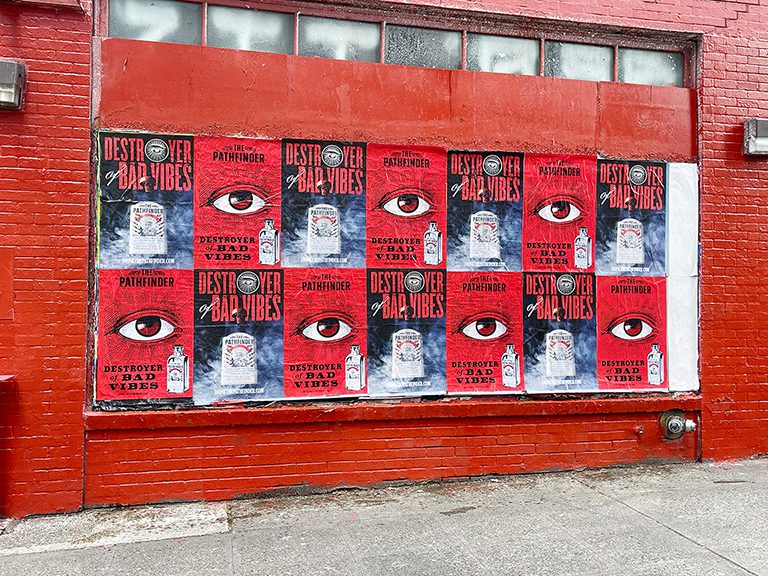
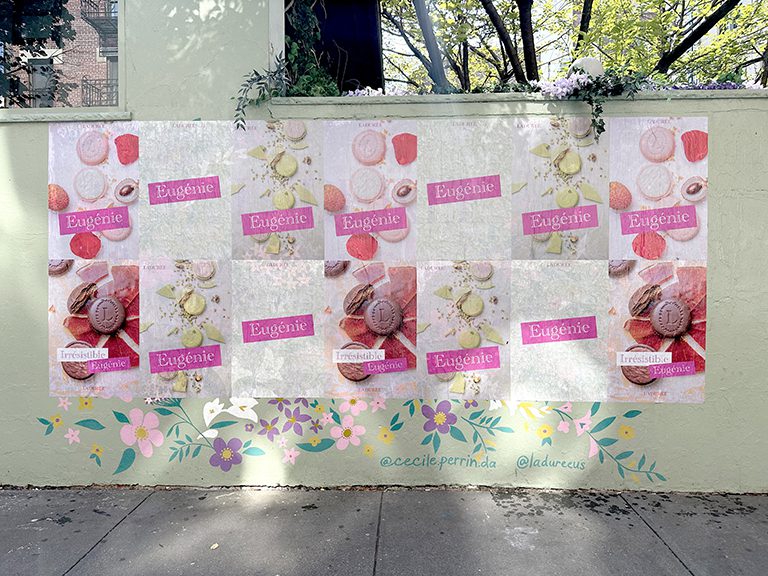
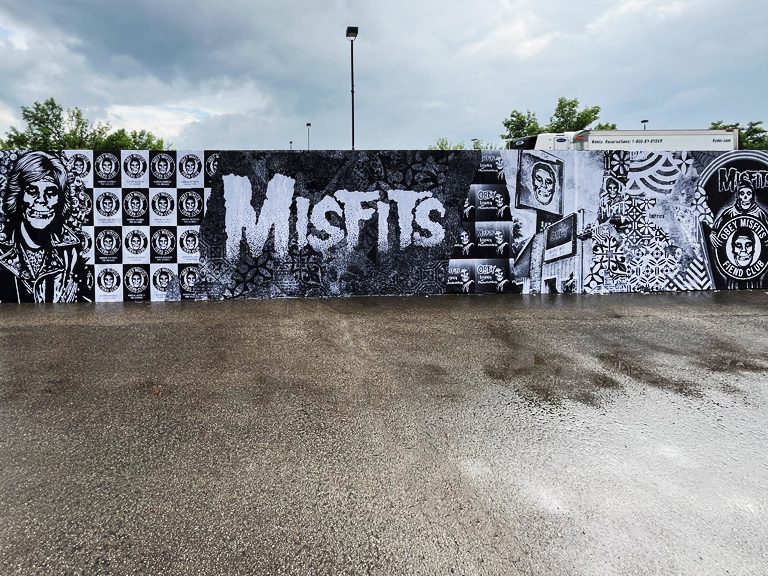
Street-level wheatpaste campaigns in the country’s most art-saturated small city. AGM covers Canyon Road, the Downtown Plaza, the Railyard, and SITE Santa Fe — every placement printed, installed, and GPS-documented in-house.

Santa Fe’s Art-Saturated Culture Makes Every Poster a Statement

There is no city in the United States quite like Santa Fe as an environment for creative street advertising. At an elevation of 7,000 feet, under skies that have drawn painters for more than a century, surrounded by Pueblo Revival architecture that enforces a visual continuity stretching back to the Spanish colonial era, Santa Fe operates as a city where aesthetics are not incidental to daily life but fundamental to it. Every surface is considered. Every color carries weight. Visitors and residents alike move through the city with a heightened visual attentiveness that is the product of living in and traveling to one of the world’s most deliberately beautiful places.

This aesthetic consciousness is what makes Santa Fe a genuinely exceptional environment for fly posting campaigns. A market where audiences are already visually engaged — already looking, already evaluating, already forming judgments about the character of what they see on walls and streets — is precisely the market where a well-executed, creatively disciplined street poster campaign achieves its highest impact. The Santa Fe audience does not need to be taught to pay attention to visual media. It arrives pre-trained, from every direction: from the galleries on Canyon Road, from the museums clustered around the Plaza, from the adobe walls and carved wooden doorways that define the visual grammar of the city’s architecture.

The economic character of Santa Fe’s tourism market is another critical factor for brands considering fly posting here. Santa Fe draws affluent visitors from across the United States and internationally — buyers who travel specifically to purchase art, stay in high-end hotels, eat at nationally recognized restaurants, and shop at boutiques that carry goods unavailable in their home markets. This is not a coupon-clipping demographic. It is a high-discretionary-spending audience that is actively in consumption mode when it visits Santa Fe, and that visits Santa Fe specifically because it trusts the city’s cultural curation. A poster campaign that fits the visual language of Santa Fe’s streets reaches this audience in a state of receptivity that few advertising formats in any market can reliably achieve.

The density of arts institutions in Santa Fe is remarkable for a city of its size — approximately 85,000 residents, with a daytime and visitor population that swells the effective audience substantially during peak seasons. Canyon Road alone contains more than one hundred galleries. The Georgia O’Keeffe Museum, the New Mexico Museum of Art, SITE Santa Fe, and the Museum of International Folk Art each draw thousands of visitors annually who have specifically traveled to engage with visual culture. Meow Wolf’s House of Eternal Return — a nationally celebrated immersive art installation that attracts hundreds of thousands of visitors each year — has added a contemporary arts audience that skews younger and more experiential than traditional gallery visitors, expanding the reach and diversity of Santa Fe’s arts economy audience.

Santa Fe’s event calendar creates specific, high-value campaign windows that brands can target with timed fly posting activations. The Santa Fe Indian Market, held annually in August, is the largest juried Native American art market in the world, drawing over 100,000 visitors and contact us for pricing million in economic activity into the city in a single weekend. The International Folk Art Market, held nearby in July, attracts a similarly culturally engaged, high-spending audience. The Santa Fe Film Festival, the Santa Fe Opera season, and the various gallery walk events on Canyon Road create additional concentrated audience moments throughout the year. A fly posting campaign timed to any of these events reaches its maximum possible impression density within Santa Fe’s peak-audience windows.

American Guerrilla Marketing is a Best of Brooklyn award winner with a client roster that includes Netflix, The Onion, EA Sports, Biossance, and Shepard Fairey. Our Las Vegas regional office at (702) 996-1806 coordinates New Mexico operations including Santa Fe. Every Santa Fe campaign AGM runs is executed entirely by our own in-house crews — no subcontractors, no third-party installers, no gaps in accountability between campaign planning and delivered results.

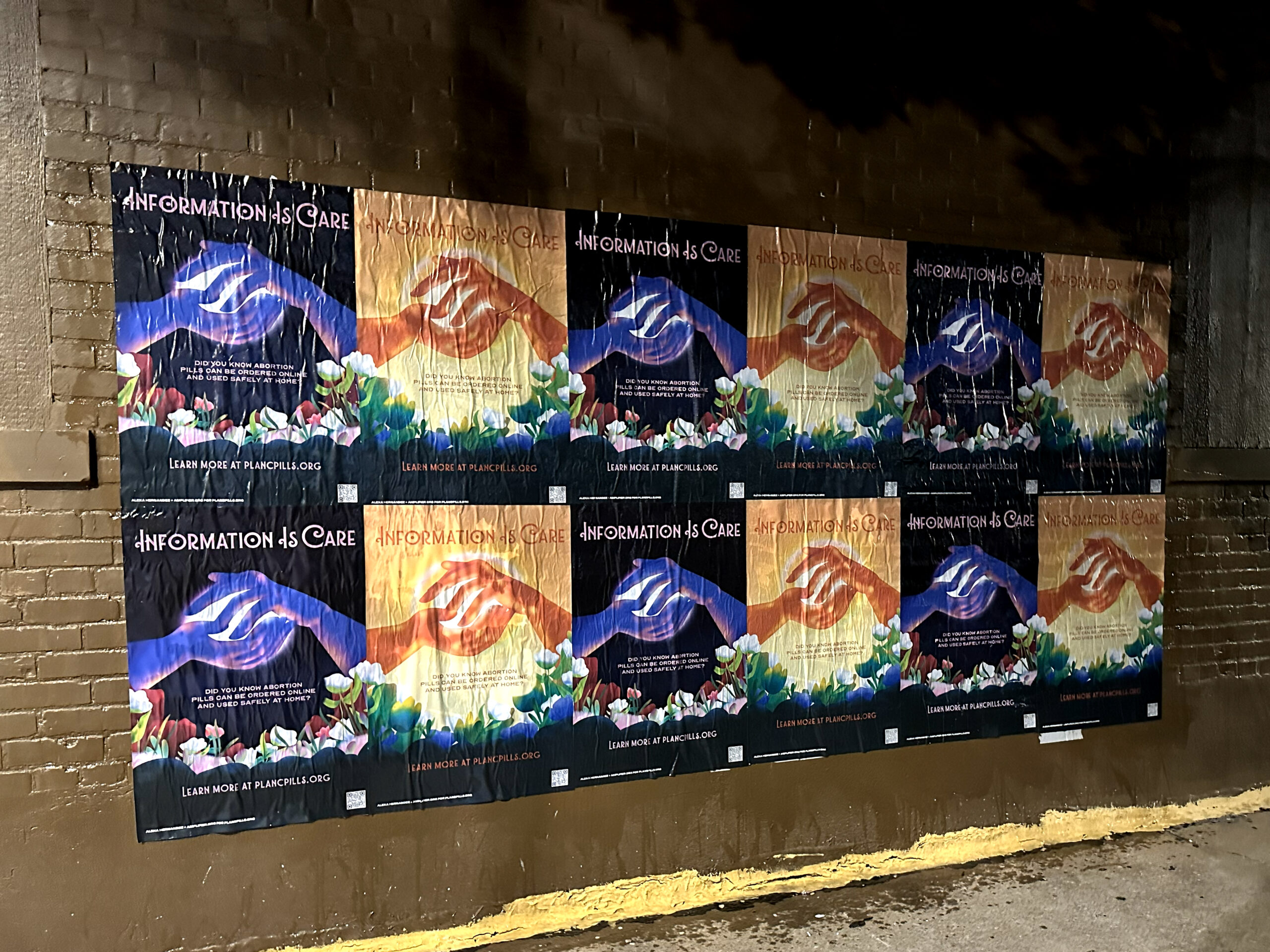
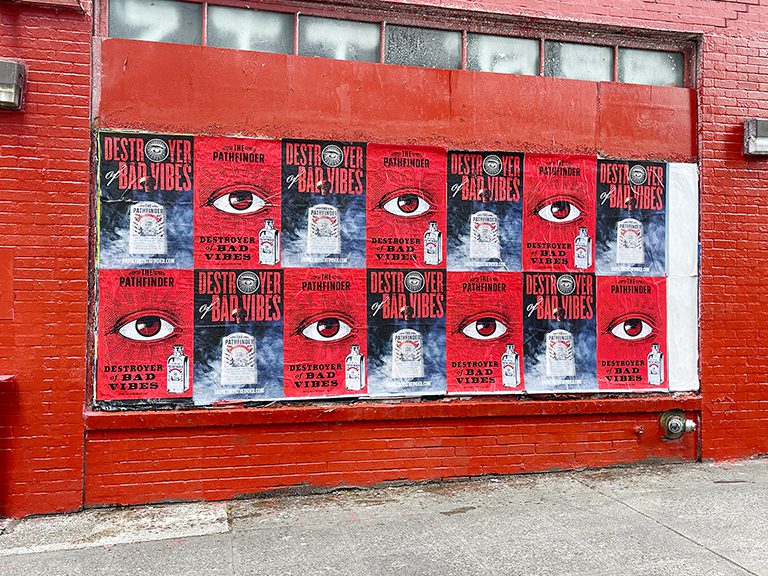
Post on Santa Fe's Most Culturally Charged Streets

Canyon Road. The Plaza. The Railyard. SITE Santa Fe. AGM's crews reach every corner of Santa Fe's arts-engaged pedestrian core — every placement GPS-documented, every poster printed and installed in-house.

Browse Cities in New Mexico

Select a city to explore Fly Posting Advertising opportunities.

Where Street Poster Campaigns Work Best In Santa Fe

Santa Fe’s walkable zones are compact and distinct. Each neighborhood draws a different audience segment, and surface opportunities vary meaningfully by district. AGM scouts specific surfaces within each zone, prioritizing locations that combine strong visual visibility, quality surface conditions for wheat paste adhesion, and alignment with the target audience your campaign is built to reach.

Canyon Road Gallery Corridor

Canyon Road is the most culturally concentrated street in New Mexico and one of the most gallery-dense streets in the United States. Running approximately one mile from Paseo de Peralta southeast into the foothills, the road is lined almost continuously with galleries, studios, sculpture gardens, and arts-adjacent businesses — restaurants, jewelry boutiques, and specialty shops that serve the gallery-going audience. Foot traffic on Canyon Road during gallery season is composed almost entirely of aesthetically sophisticated visitors who are specifically on this street because they want to look at and buy art. They walk slowly. They look at everything. They are the most receptive audience for creative visual street advertising of any demographic segment that exists anywhere in the New Mexico market. Posting surfaces adjacent to the Canyon Road corridor — building faces on connecting streets, walls on structures approaching the road from Paseo de Peralta — capture this audience at the moment of maximum cultural receptivity.

Downtown Santa Fe — The Historic Plaza and Surrounding Retail Zone

The Santa Fe Plaza is the geographic and cultural heart of the city, a historic public square surrounded by the Palace of the Governors, the New Mexico Museum of Art, high-end retail, restaurants, and the commercial blocks that define Downtown Santa Fe’s character. The pedestrian density around the Plaza is the highest in the city year-round, with visitor traffic supplemented by the steady flow of Santa Fe residents who use the downtown commercial zone as their primary shopping and dining destination. Streets radiating from the Plaza — Palace Avenue, San Francisco Street, Old Santa Fe Trail — connect the historic core to the city’s broader commercial network and carry sustained foot traffic throughout the day. Posting surfaces in the blocks surrounding the Plaza reach the full cross-section of Santa Fe’s resident and visitor audience simultaneously.

SITE Santa Fe and the Guadalupe Street Arts Corridor

SITE Santa Fe, the internationally recognized contemporary art space on Old Pecos Trail, anchors Santa Fe’s contemporary arts district — a zone distinct from Canyon Road’s traditional gallery character and Meow Wolf’s experiential orientation. The audience that circulates through SITE Santa Fe events and programming is contemporary-arts-engaged, internationally aware, and younger on average than the traditional gallery-going demographic. Guadalupe Street, connecting the SITE Santa Fe area to the Railyard district, runs through a commercial zone of restaurants, boutiques, and arts-adjacent businesses that draws a daily mix of locals and visitors with a distinctly creative-professional character. Posting surfaces along Guadalupe Street and in the blocks surrounding SITE Santa Fe reach an audience that is urban, culturally fluent, and exceptionally well-suited to creative brands, premium consumer goods, and arts and entertainment campaigns.

The Railyard District — Contemporary Commerce and Community Programming

The Santa Fe Railyard District has become the city’s most dynamic contemporary commercial and community hub over the past fifteen years. The former rail yard was redeveloped into a mixed-use public space that now houses the Santa Fe Farmers Market, SITE Santa Fe, Meow Wolf, the Violet Crown Cinema, independent restaurants, and a growing collection of contemporary retail. The Railyard’s programming — weekly farmers market, live events, art installations, and community gatherings — generates consistent and diverse foot traffic that spans Santa Fe’s full demographic range: locals, tourists, young creatives, established arts patrons, and the outdoor recreation community that uses the adjacent Paseo Trail. The physical character of the Railyard — industrial buildings, metal structures, exposed concrete and brick surfaces — is distinctly different from the adobe-dominated historic districts, and provides large-format posting surfaces that feel architecturally appropriate to bold contemporary advertising creative.


Selecting Between 24×36 And 48×72 For A Santa Fe Campaign

Santa Fe’s compact walkable districts and its audience’s heightened visual sensitivity make format selection a particularly important decision for campaigns in this market. The right choice depends on whether your objective is repeated encounters across a district or singular visual impact at specific landmark locations.

24×36 Inch — Repeated Encounters

In Santa Fe’s compact walkable zones, the 24×36 format creates a pattern of repeated encounters that is particularly well-suited to the city’s gallery-walking and neighborhood-strolling audience patterns. A visitor who walks Canyon Road, crosses to the Plaza district, and visits the Railyard in the course of a Santa Fe afternoon may encounter the same poster creative at multiple points along their route — each encounter building recognition and recall. This format works especially well for gallery openings, cultural event announcements, luxury brand introductions, and film or music campaigns targeting Santa Fe’s aesthetically engaged audience. One hundred placements start at contact us for pricing. Two hundred placements are contact us for pricing. Creative development is available for contact us for pricing.

48×72 Inch — Singular Visual Authority

Santa Fe’s Railyard industrial buildings, the blank walls of warehouse structures adjacent to Guadalupe Street, and the larger building faces in the commercial blocks approaching Canyon Road provide ideal surfaces for the 48×72-inch format. In a city where a single piece of public art can define a block’s visual identity for years, a 48×72 placement executed with strong creative commands attention and conversation in a way that scales the visual impact of a gallery piece to the street level. Luxury brands, premium consumer goods, major cultural events, and campaigns where a single authoritative image is more effective than saturation coverage should default to this format. One hundred placements start at contact us for pricing. Two hundred are priced at contact us for pricing. Creative development for this format is contact us for pricing. Both formats run for one to two weeks.

Build Your Fly Posting Campaign

    Award Winning Personalized Service

    You will get thoughtful, devoted, and individualized attention from our experienced, qualified, and professional personnel. Being one of the most illustrious agencies in Brooklyn, New York, American Guerrilla Marketing has been awarded the Best of Brooklyn title.

    Nationwide

    Industry City, Brooklyn, New York 11232

    American Guerrilla Marketing

    +1 (646) 776-2770

    [email protected]

    Telegram: @americanguerillamarketing

    Hours

    Mon - Fri: 9 AM - 5 PM

    Sat & Sun: Closed

    Automate your campaign with AGM’s Request for Proposal Builder.

    Automate your campaign with AGM’s Request for Proposal Builder. Simply answer a few quick questions about your campaign goals, markets, and timeline, and the system will generate a tailored presentation with recommended strategies, quantities, and pricing. Click the RFP Builder to instantly receive your customized proposal.

    How Agm Executes A Santa Fe Fly Posting Campaign

    Santa Fe’s cultural character requires campaign planning that is more contextually sensitive than in many other markets. AGM’s process in Santa Fe reflects this — surface selection, campaign timing, and creative guidance are all calibrated to the specific visual and cultural environment of the city’s distinct neighborhoods.

    1. Campaign Brief and Context Review: We begin with your campaign objectives, target audience, preferred Santa Fe districts, and timeline. In Santa Fe specifically, we also review the cultural context of your creative — ensuring that the visual approach and messaging register appropriately with the city’s aesthetically sophisticated and culturally aware audience.
    2. Surface Scouting with Cultural Sensitivity: AGM’s scouts identify consented surfaces in your target zones — Canyon Road approaches, Plaza-adjacent blocks, Railyard industrial surfaces, and Guadalupe Street commercial walls. Santa Fe’s historic district has specific visual guidelines that our scouts are familiar with, and we target surfaces that produce maximum visual impact while respecting the city’s architectural character.
    3. In-House Production: Posters are printed by AGM’s production team to wheatpaste specifications. In Santa Fe, where your audience will scrutinize your creative with genuine aesthetic judgment, print quality is particularly important. AGM’s production standards ensure that color fidelity, contrast, and detail reproduce correctly at the final installed poster dimensions.
    4. Crew Installation: AGM’s installation crews apply every placement using the double-coat wheat paste method. Santa Fe’s high elevation means lower humidity than most Southwest cities, which is favorable for paste adhesion and poster longevity. Our crews take advantage of Santa Fe’s dry climate to achieve particularly strong initial bonds on smooth sealed surfaces.
    5. GPS-Tagged Post-Campaign Documentation: Every placement receives GPS-tagged photographic documentation at the time of installation. You receive a complete post-campaign report confirming the precise location and surface of every installed poster. This documentation gives you verifiable proof of campaign delivery in a format that is straightforward to share internally or with clients.

    Case Study: The Onion Takes Manhattan and DC

    The Onion engaged AGM for a coordinated street poster campaign across Manhattan and Washington DC — two of the most visually competitive and politically aware urban environments in the country. The campaign required creative that could hold its own in environments where audiences are perpetually bombarded with sophisticated advertising from every direction, and where the satire and cultural commentary that defines The Onion’s brand needed to land cleanly at street level without the benefit of online context or reader familiarity.

    AGM’s execution focused on neighborhood precision in both cities — placing The Onion’s campaign in the specific districts where the target audience’s daily foot traffic was highest and where the creative’s cultural register would resonate most directly. In Manhattan, that meant SoHo, the Lower East Side, and West Village. In DC, it meant Adams Morgan, Capitol Hill adjacent, and U Street. In each neighborhood, surface selection prioritized locations where the campaign would encounter its intended audience at peak daily movement times.

    Santa Fe presents an analogous opportunity for campaigns that rely on creative quality and cultural precision. The city’s audience is sophisticated enough to recognize the difference between a campaign that has been developed for this specific context and one that has been dropped into the market without localization. The Onion’s success in Manhattan and DC — markets defined by audience sophistication and high creative standards — translates directly to the Santa Fe context, where the audience’s aesthetic judgment is similarly exacting and similarly rewarding for campaigns that meet it on its own terms.

    Why Sophisticated Brands Choose Street Advertising In Santa Fe

    AGM has executed campaigns for Netflix, The Onion, EA Sports, Biossance, Shepard Fairey, and other clients whose audiences are defined by cultural engagement, aesthetic awareness, and strong opinions about authenticity. These are the same characteristics that define Santa Fe’s resident and visitor audience. The brands that have worked with AGM understand that reaching this kind of audience requires a format that shares their values — a format that exists in the physical world, that requires craft and local knowledge to execute well, and that arrives without the tracking, targeting, and optimization machinery that has made digital advertising feel intrusive and impersonal to the audiences who matter most in this market.

    Fly posting in Santa Fe is also particularly effective because the competition for street-level visual attention from conventional advertising is lower than in large metros. Santa Fe’s historic district regulations and its strong community aesthetic standards limit the presence of large-format conventional billboards and corporate signage in the city’s most walkable zones. A fly posting campaign executed in this environment benefits from a relative absence of competing visual noise — each placement stands out more clearly precisely because the surrounding environment has not been colonized by conventional outdoor advertising at the same density as in other markets.

    For luxury brands, premium consumer goods companies, arts organizations, and culturally oriented campaigns of any kind, Santa Fe offers an audience combination that is almost impossible to assemble through conventional media: affluent, aesthetically literate, actively engaged in cultural consumption, and physically present in a compact walkable environment where street-level advertising reaches them at maximum receptivity.

    AGM regional offices: Brooklyn NY (646) 776-2770 · Miami FL (305) 792-4523 · Orlando FL (321) 261-0402 · Las Vegas NV (702) 996-1806 · Los Angeles CA (213) 328-4480. Santa Fe campaigns are coordinated through the Las Vegas Southwest regional office.

    Santa Fe Fly Posting FAQ

    AGM targets surfaces in and around the Canyon Road corridor — walls on buildings approaching the road from Paseo de Peralta, surfaces on commercial structures flanking the gallery district, and consented walls on the properties adjacent to the main gallery strip. Canyon Road’s historic district character means that specific surfaces require careful vetting, and AGM’s scouts identify the highest-quality available locations that are both consented and positioned to capture the gallery-going foot traffic that makes this corridor uniquely valuable. Contact AGM to discuss specific Canyon Road area targeting for your campaign.

    Yes, and AGM accounts for this in every Santa Fe surface scouting process. The city’s historic district regulations enforce visual standards that preserve the Pueblo Revival and Spanish Colonial architectural character of the downtown and Canyon Road zones. AGM’s scouts are familiar with these guidelines and identify surfaces that comply with applicable standards — typically commercial properties outside the most restrictively regulated historic core, industrial and warehouse surfaces in the Railyard district, and construction hoarding where active development is underway. Compliance with these guidelines is built into AGM’s surface selection process, not treated as an afterthought.

    It is one of the most effective formats available for this specific audience in this specific market. Santa Fe’s luxury visitor demographic is characterized by high media literacy and active resistance to conventional advertising — this is an audience that uses ad-blocking technology, that has the cultural capital to identify and dismiss mass-market messaging, and that responds to advertising that demonstrates taste and intentionality. A well-executed fly posting campaign in Santa Fe, with creative that matches the visual quality standards the audience brings from their gallery experience, reaches this demographic through a channel that they are genuinely receptive to — one that feels like part of the city’s visual culture rather than an intrusion upon it.

    The arts scene creates an audience that is already trained to engage with visual communication at a high level of attention and discriminative judgment. When this audience encounters a street poster, it applies the same visual literacy it brings to a gallery — noticing composition, color, typography, and conceptual clarity. A campaign that meets this standard creates positive brand associations precisely because it demonstrates that the brand understands and respects the visual culture of the place it’s advertising in. A campaign that falls below this standard is noticed for the wrong reasons. Santa Fe’s arts scene raises the creative bar and simultaneously raises the reward for brands that clear it.

    Yes, and this is one of the highest-value timing opportunities in the Santa Fe advertising calendar. The Santa Fe Indian Market in August and the International Folk Art Market in July each bring over 100,000 visitors into the city during a concentrated window — visitors who are culturally engaged, high-spending, and physically moving through the same walkable zones where AGM’s poster campaigns deploy. A fly posting installation timed to go up in the week before and run through the duration of either market reaches this peak-concentration audience at maximum density. Book your campaign at least three to four weeks in advance of these events to secure the best surface inventory.

    Santa Fe’s street-level audience is one of the most demographically distinctive of any small city in the United States. It is composed of a mix of long-term Santa Fe residents (a community with a high proportion of artists, academics, retirees with arts patronage history, and creative professionals), seasonal residents who maintain second homes in the city and spend significant time there annually, and the substantial tourist population that moves through the city year-round with peaks in summer and fall. This audience spans age ranges but skews toward 35-and-above in terms of purchasing power, and it consistently indexes high on measures of cultural engagement, luxury goods consumption, arts patronage, and travel expenditure. It is an unusual combination of relatively small total scale with extremely high per-capita purchasing power and cultural receptivity.

    Yes. Santa Fe’s compact walkable zones mean that a 100-placement 24×36 campaign can achieve meaningful coverage of the key pedestrian corridors without the higher placement counts that larger cities require to achieve comparable neighborhood saturation. The city’s small geographic footprint is an efficiency advantage for campaigns with tighter budgets: you do not need 200 placements to cover Santa Fe’s core walkable audience zones the way you might in a sprawling metro. A focused 100-placement campaign concentrated across Canyon Road approaches, Plaza-adjacent blocks, and the Railyard district delivers strong per-placement impression quality in a compact, high-attention-density environment.

    Meow Wolf’s House of Eternal Return, located in the Railyard district, draws several hundred thousand visitors annually — many of them younger, more experience-oriented, and more engaged with contemporary visual culture than Santa Fe’s traditional gallery visitor demographic. This audience cluster in and around the Railyard creates a secondary high-value foot traffic zone that complements Canyon Road’s traditional arts market audience. Poster placements in the Railyard and Guadalupe Street corridor reach Meow Wolf visitors during their approach, within the broader Railyard commercial zone, and as they move toward and from the parking areas that serve the attraction. This is a younger, more diverse arts-engaged audience than the Canyon Road gallery-goer, and it represents a genuine expansion of Santa Fe’s street poster campaign audience beyond the traditional arts patronage demographic.

    Santa Fe’s peak tourism season runs from approximately May through October, with the highest visitor density concentrated in July, August, and the early fall weeks of September and October. The Indian Market in August represents the single highest-density visitor weekend of the year. A campaign running in July or August reaches the maximum combined audience of both resident and visitor populations. The shoulder seasons of May-June and late September-October offer strong visitor traffic with somewhat lower competition for street-level visual attention. Winter months bring significantly lower tourist volume but can be advantageous for campaigns targeting primarily the Santa Fe resident demographic — long-term residents who are often underserved by campaigns timed exclusively to peak tourist season.

    It is one of the most natural integrations in the Santa Fe market. Gallery openings on Canyon Road and at major institutions like SITE Santa Fe and the New Mexico Museum of Art generate advance buzz through digital channels, but the audiences that attend these events are also physically present in the city’s streets in the days and weeks before the opening. A fly posting campaign installed in the Canyon Road corridor and Downtown Plaza blocks in the two weeks preceding a major opening reaches the in-city audience — both residents and visitors who are already in Santa Fe — in the physical environment where they are most receptive to visual discovery. The street poster functions as part of the visual conversation happening in the city around the event rather than as a separate, disconnected advertising channel.

    The critical distinction is audience quality relative to market size. Most small cities with populations under 100,000 offer limited advertising value because their audiences are small and economically undifferentiated. Santa Fe is categorically different: its resident and visitor audience is unusually affluent, unusually culturally engaged, and unusually concentrated in compact walkable zones that fly posting is specifically designed to serve. The city’s per-capita arts consumption, luxury retail spending, and cultural travel expenditure consistently rank among the highest of any city its size in the country. You are not advertising in a small market — you are advertising to a small city’s worth of people with the purchasing power, cultural engagement, and brand sophistication of a major metropolitan arts district.

    AGM handles all surface scouting, vetting, and permission processes as part of the campaign planning fee. Clients are not required to source or negotiate their own posting locations. AGM’s scouts identify available consented surfaces, confirm permission with surface owners or managers, and secure installation rights before any creative is printed. This full-service model means you never encounter a situation where your posters are printed but cannot be installed because permissions fell through. Surface permissioning is part of what you purchase when you book an AGM campaign — not an additional service you coordinate separately.

    Browse All States

    Explore Fly Posting Advertising opportunities across the United States.

    No locations found

    American Guerrilla Marketing Blog Posts