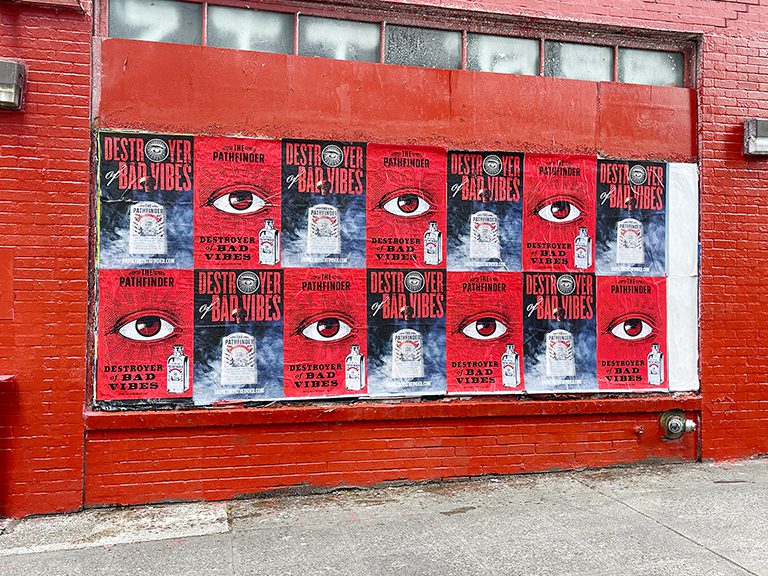
Street poster advertising in Ottawa gives brands a way to put their message into the physical environments where people walk, shop, work, commute and spend time. From downtown corridors and entertainment districts to neighbourhood shopping areas and event destinations, posters can help brands build local awareness and create repeated exposure.
For businesses planning an outdoor advertising campaign in Ottawa, the challenge is not simply printing posters. Effective campaigns require the right locations, creative, posting strategy, permissions, timing and measurement.
This guide explains how street poster advertising works in Ottawa, where campaigns can be placed, what factors influence cost, how to plan a campaign and what businesses should consider before posting.
What Is Street Poster Advertising in Ottawa?
Street poster advertising is a form of out-of-home advertising that uses printed posters to communicate a brand, product, service, event or campaign message in public-facing environments.
Depending on the campaign and location, posters may be displayed through approved poster systems, on eligible utility poles, on private property with permission, or through other permitted advertising placements.
The objective can vary from campaign to campaign. A brand may use street posters to:
- Build local brand awareness
- Promote a product or service
- Support an event or launch
- Reach a specific neighbourhood
- Drive people to a website or landing page
- Promote a store, venue or location
- Support a broader guerrilla marketing campaign
- Create repeated exposure around a target audience
The most effective campaigns start with a clear objective and then select locations and creative that support that objective.
Why Use Street Poster Advertising in Ottawa?
Ottawa provides a range of urban environments that can be considered when planning a street poster campaign. The city combines government, business, residential, retail, entertainment, tourism and educational audiences.
Street posters can be particularly useful when a campaign needs to reach people within a defined geographic area rather than relying entirely on broad media coverage.
A local campaign can be planned around:
- Downtown pedestrian activity
- Retail districts
- Entertainment areas
- Restaurants and nightlife
- Neighbourhood shopping streets
- Event and venue areas
- Universities and student-oriented areas
- Business districts
- Tourism destinations
- Specific postal codes or neighbourhoods
The campaign can then be structured around the areas most relevant to the target audience.
Where Can Street Poster Advertising Work in Ottawa?
Location selection should be based on the audience, campaign objective, available legal placements and the environment around the placement.
Downtown Ottawa
Downtown can be useful for campaigns targeting workers, visitors, students, shoppers and people travelling through the central area.
Poster campaigns can be planned around relevant pedestrian environments and approved posting locations, subject to applicable City regulations and property permissions.
ByWard Market
ByWard Market is one of Ottawa’s best-known shopping and entertainment districts. Ottawa Tourism describes it as the city’s oldest shopping district and highlights its boutiques, cafés, shops and public spaces.
For brands targeting consumers, visitors, nightlife audiences or people exploring downtown, the area can be considered as part of a broader location strategy.
However, postering in the downtown core and ByWard Market is subject to specific City of Ottawa poster-collar rules.
The Glebe and Bank Street
The Glebe and the Bank Street corridor can be relevant for campaigns targeting shoppers, local residents and people visiting restaurants, retailers and community destinations.
Ottawa Tourism describes the Glebe as a popular shopping destination along Bank Street and highlights its independent shops, boutiques and Lansdowne-area attractions.
Westboro
Westboro can be considered for campaigns seeking exposure in a neighbourhood-oriented retail environment.
The campaign should be planned around the specific audience and permitted locations rather than assuming that every visible surface is available for advertising.
Lansdowne and Event Areas
Event-driven campaigns can benefit from being planned around areas where relevant audiences are already gathering.
The timing of the campaign is particularly important here. A poster campaign can be coordinated with an event, product launch, seasonal promotion or local activation.
Other Ottawa Neighbourhoods
Depending on the target audience, a campaign may also consider areas such as:
- Centretown
- Hintonburg
- Little Italy
- Chinatown
- Sandy Hill
- Old Ottawa South
- Vanier
- Kanata
- Nepean
- Orléans
The appropriate locations depend on the campaign rather than simply choosing the neighbourhood with the highest overall population.
Types of Street Poster Advertising in Ottawa
Different poster formats can be used depending on the campaign, location and available permissions.
Traditional Street Posters
Traditional posters communicate a simple message through a printed creative placed in an approved location.
They work particularly well when the message can be understood quickly.
Wheatpaste Posters
Wheatpaste-style posters are commonly associated with guerrilla and street-level marketing.
They can create a distinctive visual aesthetic, but brands should only use surfaces where they have the necessary permission and where the placement complies with applicable rules.
Event Posters
Event posters can promote:
- Concerts
- Product launches
- Retail events
- Festivals
- Brand activations
- Community events
- Promotional campaigns
Retail-Area Posters
Brands can also explore poster placements around relevant retail environments when property owners or operators provide permission.
Campaign Poster Networks
Instead of relying on one location, a campaign can use a network of placements across several target areas.
This creates repeated exposure and can help make the campaign more noticeable.
How to Plan a Street Poster Advertising Campaign in Ottawa
A successful campaign starts before the posters are printed.
1. Define the Campaign Objective
First decide what the campaign needs to achieve.
For example:
- Increase awareness
- Generate website visits
- Promote an event
- Launch a product
- Drive people to a store
- Generate leads
- Support another advertising campaign
The objective determines the creative, locations and measurement strategy.
2. Define the Target Audience
Identify who the campaign is intended to reach.
Consider:
- Age group
- Interests
- Lifestyle
- Profession
- Location
- Shopping behaviour
- Event attendance
- Commuting patterns
A campaign targeting students may require a very different location strategy from one targeting business professionals.
3. Select Target Areas
Create a list of priority neighbourhoods and corridors.
Instead of trying to cover the entire city, concentrate the campaign where the target audience is most relevant.
4. Research Available Placements
Not every wall, pole, building or public surface is legally available for advertising.
Confirm the ownership and advertising rules for each proposed location before installation.
5. Develop the Creative
Street poster creative needs to communicate quickly.
A strong poster normally has:
- A clear headline
- Strong visual hierarchy
- Recognisable branding
- Short supporting copy
- One clear call to action
- Website or QR code where appropriate
Avoid filling the poster with long paragraphs.
6. Print the Posters
Choose the poster size and production method based on the approved placement.
The material should be suitable for the expected campaign duration and outdoor environment.
7. Install the Campaign
Posters should only be installed at locations where the campaign has the appropriate authorization.
The installation method also matters. Ottawa’s rules specify different requirements for poster signs on city roads, including restrictions on how posters may be attached.
8. Monitor the Campaign
During the campaign, check:
- Poster condition
- Visibility
- Placement
- Removal or damage
- QR scans
- Website traffic
- Campaign dates
- Photographic proof of placement
9. Remove the Posters
Campaign management includes taking posters down when the campaign ends.
Ottawa’s rules include specific removal requirements for poster signs, and the applicable rules depend on where and how the poster is displayed.
How Much Does Street Poster Advertising Cost in Ottawa?
There is no single price for street poster advertising in Ottawa.
Campaign costs can vary depending on:
- Number of posters
- Poster size
- Printing materials
- Number of locations
- Campaign duration
- Installation requirements
- Removal requirements
- Location permissions
- Property fees
- Staffing
- Creative production
- QR tracking and reporting
- Additional marketing services
A small neighbourhood campaign may require a very different budget from a city-wide campaign covering multiple areas.
For an accurate estimate, define the campaign’s target locations, number of placements and duration before requesting a quote.
Ottawa Street Poster Advertising Rules and Permissions
This is one of the most important parts of planning a campaign.
Ottawa has specific rules governing posters and advertising devices on City roads. The City’s current guidance states that poster signs on City roads can be placed on eligible utility poles or community bulletin boards subject to specific requirements.
The City also operates poster collars in areas including the downtown core and ByWard Market. Where poster collars are installed, posters must be displayed according to the applicable rules.
Some key requirements include:
- Only one poster with the same information per owner at a given poster location
- Posting dates must be displayed where required
- Posters must be attached using permitted methods
- Posters must be removed within the applicable time period
- Certain utility poles and locations are restricted
- Poster size requirements apply to poster signs under the City’s rules
The City’s current general guidance states that posters can be no larger than 28 cm × 43.5 cm (11 × 17 inches) for the poster signs covered by those rules.
Private-property signage is governed separately. Temporary signs on private property are regulated under Ottawa’s Temporary Signs By-law, and requirements can include permits, placement restrictions and other conditions.
Because regulations can change and different properties have different requirements, businesses should confirm the applicable rules and obtain permission before installing a campaign.
Street Poster Advertising vs. Traditional Outdoor Advertising
Street posters and traditional outdoor advertising serve different purposes.
Street Posters
Street posters can provide:
- More targeted neighbourhood coverage
- Flexible creative
- Repeated exposure
- Smaller-format placements
- Campaigns concentrated around specific areas
Traditional Outdoor Advertising
Large-format outdoor advertising such as billboards can provide:
- High-visibility placements
- Large creative formats
- Broader roadside exposure
- Longer viewing distances
A campaign can also combine different out-of-home formats depending on its objectives.
How to Make Street Poster Advertising More Effective
Keep the Message Simple
People may only have a few seconds to notice the poster.
Focus on one main message.
Use Strong Visual Hierarchy
The viewer should immediately understand:
- Who the brand is
- What is being promoted
- What action they should take
Use a Memorable CTA
Examples include:
- Visit the website
- Scan to learn more
- Get tickets
- Visit the store
- Shop now
- Book a consultation
Use QR Codes Strategically
A QR code can connect an offline poster campaign to a digital landing page.
Use a dedicated URL or campaign-specific tracking where possible so campaign traffic can be measured.
Concentrate Rather Than Scatter
A campaign with a strong concentration of relevant placements can be more useful than spreading a small number of posters across an entire city.
Match Locations to the Audience
The best location isn’t necessarily the busiest location.
A location is valuable when the people seeing the message are relevant to the campaign.
Measuring a Street Poster Campaign
Offline advertising should still be measurable.
Useful metrics include:
Poster Quantity
How many approved placements were used?
Campaign Duration
How long did the campaign remain active?
QR Scans
How many people scanned the campaign QR code?
Website Traffic
Track visits from campaign-specific URLs or QR codes.
Leads
Measure enquiries, registrations or other conversions generated through the campaign.
Promotional Code Usage
A unique campaign code can help connect offline exposure with purchases or enquiries.
Brand Search Activity
For larger campaigns, monitor whether searches for the brand or campaign increase during the campaign period.
Geographic Performance
Where possible, compare performance across different neighbourhoods or campaign areas.
Who Can Benefit From Street Poster Advertising in Ottawa?
Street poster advertising can be considered by a range of organisations and businesses.
Examples include:
- Restaurants
- Retail brands
- Entertainment companies
- Events
- Music and nightlife brands
- Consumer products
- Technology companies
- Universities and education providers
- Fitness brands
- Real estate companies
- Tourism businesses
- New product launches
- Local businesses
- National brands running local campaigns
The important factor is matching the audience and location rather than using the same campaign strategy for every business.
Street Poster Advertising for Product Launches
A new product launch can use street posters to build awareness before or during the launch period.
A launch campaign might combine:
- Street posters
- QR codes
- Brand ambassadors
- Experiential marketing
- Sampling
- Social media
- Influencer activity
- Event activations
The poster provides the initial physical touchpoint, while the QR code or campaign URL can move the audience into the digital campaign.
Street Poster Advertising for Events
Events can use posters to create awareness in the weeks leading up to an event.
Creative should make the most important information immediately visible:
- Event name
- Date
- Location
- Main attraction
- Ticket or registration information
- QR code or website
For events involving public-road signage, make sure the campaign follows the applicable City rules. Ottawa’s City Roads By-law contains specific provisions for community special event signs and other signage.
Combining Street Posters With Guerrilla Marketing
Street posters can become part of a larger guerrilla marketing campaign.
For example, a brand could combine:
Street Posters + Brand Ambassadors + Sampling + Social Media
The poster creates awareness, the brand ambassador creates a personal interaction, and the digital component gives the audience somewhere to continue the experience.
This approach can be especially useful when a brand wants an integrated campaign rather than a standalone poster placement.
Why Work With a Street Poster Advertising Agency?
Managing a street poster campaign involves more than printing and distributing posters.
An experienced agency can help with:
- Campaign planning
- Location research
- Audience targeting
- Creative recommendations
- Production
- Placement coordination
- Installation
- Campaign monitoring
- Photography
- Removal
- Reporting
For campaigns across multiple neighbourhoods, having one team coordinate the process can make execution easier.
How American Guerrilla Marketing Can Help
American Guerrilla Marketing develops and executes experiential and guerrilla marketing campaigns designed to connect brands with audiences in physical environments.
For a street poster campaign in Ottawa, the campaign can be planned around the brand’s audience, objectives, locations and timeline.
Depending on the campaign, street poster advertising can also be integrated with other services such as:
- Guerrilla marketing
- Experiential marketing
- Brand ambassadors
- Product sampling
- Street teams
- Event marketing
- Outdoor advertising
The campaign strategy should be built around the audience and objective rather than simply choosing the largest possible number of poster locations.
Frequently Asked Questions About Street Poster Advertising in Ottawa
What is street poster advertising in Ottawa?
Street poster advertising uses printed posters to promote a brand, product, service, event or campaign in approved public-facing or private locations throughout Ottawa.
How much does street poster advertising cost in Ottawa?
The cost depends on the number of posters, locations, campaign duration, production, installation, permissions and other campaign requirements. A custom quote is normally needed because campaigns can vary significantly in scope.
Where can posters be placed in Ottawa?
Poster placement depends on the location and applicable regulations. Ottawa has designated poster collars and rules governing poster placement on certain utility poles and community bulletin boards. Private-property placements require the appropriate property permission and must comply with applicable regulations.
Can I put advertising posters on utility poles in Ottawa?
Certain utility poles can be used for poster signs under Ottawa’s City Roads By-law, subject to specific conditions. The rules include restrictions on location, attachment method, poster quantity and removal.
How large can a street poster be in Ottawa?
The City’s current guidance for poster signs covered by its postering rules states a maximum size of 28 cm × 43.5 cm (11 × 17 inches). Different signage types and private-property arrangements may have different requirements.
How long can an Ottawa street poster stay up?
The applicable duration depends on the type and location of the poster. The City’s current guidance generally states that posters on eligible utility poles can remain for up to 21 days after posting or 48 hours after an event, whichever is shorter, while poster collars have their own instructions.
Do I need permission to put posters on private property?
Yes. Private-property advertising requires permission from the property owner or operator and must comply with the applicable City regulations.
Can street posters be used for a product launch?
Yes. Street posters can be used to create awareness around a product launch and can be combined with QR codes, experiential marketing, sampling, brand ambassadors and other campaign activities.
Can street poster advertising be combined with other marketing?
Yes. Poster campaigns can be integrated with guerrilla marketing, experiential marketing, street teams, product sampling, events, social media and digital campaigns.
How do you measure street poster advertising?
Campaigns can be measured using QR scans, dedicated URLs, website traffic, leads, promotional codes, campaign-specific landing pages and other measurable actions.
Is street poster advertising suitable for small businesses?
It can be, particularly when the campaign is concentrated around a specific neighbourhood or audience. The appropriate scale depends on the business objective, target audience and available budget.
Start a Street Poster Advertising Campaign in Ottawa
Street poster advertising can help brands build physical visibility in the places where their target audiences spend time.
The key is to combine the right locations, creative, timing and campaign execution while following Ottawa’s applicable postering and signage rules.
If you’re planning a street poster advertising campaign in Ottawa, American Guerrilla Marketing can help develop a location-focused campaign based on your audience, objectives and budget.