
September 7, 2026
Experiential Marketing NYC: Brand Activations That Hit in 2026
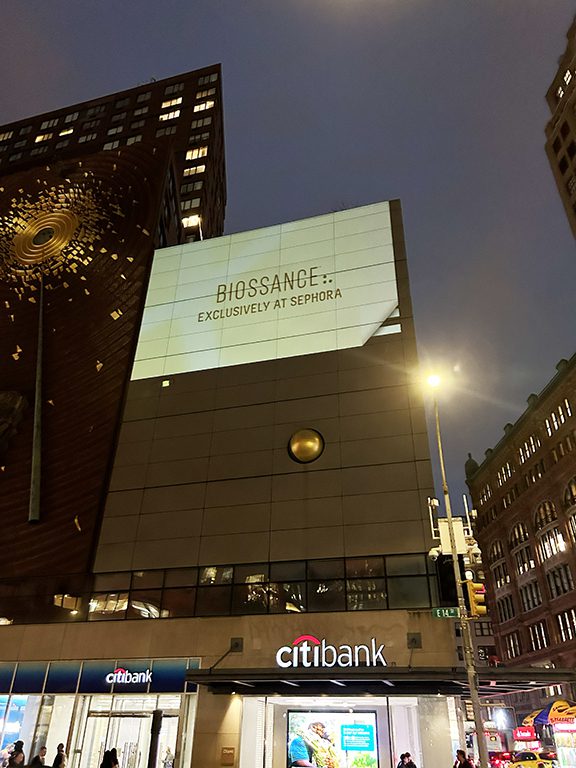
New York City doesn’t slow down for anyone, and neither do we. We’ve spent years running experiential marketing campaigns across all five boroughs, from the cobblestones of Dumbo to the rooftop bars of Williamsburg, from the commuter crush at Grand Central Terminal to the curated crowd strolling the High Line on a Saturday afternoon. We know this city’s rhythms, its dead zones, its peak-hour hot spots, and its hidden pockets of foot traffic that most agencies have never thought to activate. When brands come to us asking for experiential marketing in NYC, they’re not getting a template. They’re getting a team that has schlepped gear through subway turnstiles, negotiated activation space on Bedford Avenue, and turned a cold Tuesday in February into a brand moment that people posted about for weeks afterward. That’s what we do, and we’re proud of how we do it.
What Experiential Marketing Actually Means in New York City
The term gets thrown around a lot. Brands want experiences. They want engagement. They want people to feel the brand. Those goals mean something real to us, but they only matter if the execution actually lands. Experiential marketing, at its core, is about getting people to interact with a brand in the physical world in a way that creates a genuine memory. It’s not a billboard. It’s not a flyer. It’s a moment that a person carries with them long after they walk away from your activation.
In New York City, the bar is high. New Yorkers have seen everything. They walk past Times Square every day without looking up. They’ve been handed more flyers than they can count. They can spot a half-hearted marketing attempt from across the street. To break through in this city, you have to do something that genuinely earns their attention. Our crews have spent years figuring out what that takes, and the answer is different block by block, neighborhood by neighborhood, and hour by hour.
Beyond Traditional Advertising
Traditional advertising asks people to watch or listen. Experiential marketing asks people to participate. A brand activation on the Williamsburg waterfront isn’t competing with a magazine spread or a radio spot. It’s competing with everything else happening in that person’s life at that exact moment: the friends they’re with, the food they’re eating, the view they’re looking at. That’s the challenge, and that’s also the opportunity. When you win that competition, the impression runs deep.
When we run an activation, we’re thinking about what’s going to stop someone mid-stride. What’s going to make a group of friends pull out their phones? What’s going to generate a conversation that lasts past the moment itself? We’ve done it with massive physical installations in Flatiron Plaza. We’ve done it with intimate brand sampling experiences in the West Village. We’ve done it with projection work on warehouse walls in Bushwick. The format changes every time. The goal stays the same.
The brands that get the most out of experiential marketing treat the in-person moment as the beginning of the story, not the whole story. They build campaigns where the street activation creates content, and that content lives on social media, in press coverage, and in word-of-mouth conversations long after our crew packs up and goes home. That’s the multiplier effect we help our clients build toward from day one.
Why NYC Demands a Different Approach
Every city has its personality. New York’s personality is loud, fast, skeptical, and deeply self-aware. A tactic that works in Austin or Chicago doesn’t automatically translate here. NYC crowds are dense, diverse, and opinionated. They’ll engage hard when something earns their attention, and they’ll completely ignore something that feels generic or forced. There’s no middle ground in this city. You land or you don’t.
We’ve run activations alongside the Brooklyn Bridge on summer weekends when foot traffic hits 40,000 people in a single day. We’ve also set up in quieter corners of Astoria and found surprisingly passionate audiences who aren’t used to brands paying attention to their neighborhood. NYC is not one market. It’s dozens of micro-markets stacked on top of each other, separated by a few subway stops and entirely different cultural expectations.
Our approach accounts for that reality. We don’t design one activation and roll it out everywhere. We think about where the audience actually lives, works, eats lunch, and takes their evening walk. Then we bring the brand to that specific intersection of place and person. That discipline is what separates a campaign that connects from one that burns budget on the wrong block.
The NYC Neighborhoods Where We Do Our Best Work
We’ve activated in almost every neighborhood in this city. Some we return to constantly because the foot traffic and demographic mix are unbeatable. Others we’ve unlocked for specific campaigns when a brand needed to reach a particular community. Here’s an honest look at the territories we know best and why each one earns its place in our playbook.
Brooklyn’s Creative Corridors
Brooklyn is where we’ve done some of our most memorable work. Williamsburg is the obvious starting point. The waterfront along Kent Avenue gives us a spectacular backdrop and a crowd that skews young, design-conscious, and highly active on social media. On a warm weekend, that stretch fills with exactly the kind of consumer that many of our clients are chasing. We’ve run sampling campaigns along the water, installed branded photo moments facing the Manhattan skyline, and staged guerrilla stunts that generated media pickup from New York outlets without a single press release going out.
Dumbo is a different energy entirely. The cobblestone streets, the Manhattan Bridge framing the skyline in the gap between the buildings on Washington Street, the mix of tech workers, tourists, and young families. We’ve used Dumbo for brand photo moments that spread organically because the setting itself does half the creative work. Brands with a strong visual identity get a natural amplifier in that neighborhood.
Bushwick has been incredible for campaigns targeting creative professionals and early adopters. The outdoor murals along Jefferson Street and Troutman Street give our installations a built-in visual context that brands with an artistic edge absolutely love. We’ve projected onto warehouse walls in Bushwick and watched a crowd gather in fifteen minutes without any paid promotion driving them there. The neighborhood has a built-in appetite for unexpected creative moments.
Bed-Stuy, Crown Heights, and Park Slope each have their own rhythms, and we’ve worked them all. We’ve run street teams through the farmers market at Grand Army Plaza on Saturday mornings, done product sampling along Flatbush Avenue during the weekday lunch rush, and built brand moments in Fort Greene Park that connected with the neighborhood’s tight-knit community feel. Brooklyn rewards local specificity. Show up generic and the neighborhood ignores you. Show up with something that fits, and the response is genuine.
Manhattan’s High-Traffic Zones
Manhattan is where volume meets variety. Times Square is the obvious play for maximum impression count. We’ve executed activations there that reached tens of thousands of people in a single morning. But Times Square is also expensive, crowded with competing stimuli on every surface, and requires significant production scale to stand out. We’re honest with clients about when it’s the right call and when their budget creates more impact somewhere more targeted.
The High Line is one of our favorite Manhattan venues for mid-scale experiential work. The pedestrian flow is predictable and consistent, the crowd is curious and engaged, and the elevated park setting creates a natural environment for discovery. People are already in exploration mode when they walk the High Line. They’re open to an unexpected brand moment in a way that a Times Square pedestrian in a hurry simply isn’t.
Bryant Park has anchored several of our seasonal campaigns. The park’s programming calendar creates natural gathering moments throughout the year, and the Midtown location means a demographic mix of office workers, shoppers, and tourists that spans a wide range. We’ve set up brand pop-ups on the lawn there and watched professional workers on lunch breaks become some of our most enthusiastic participants. People in Bryant Park have a few minutes. They’re willing to engage.
SoHo along Prince Street and Spring Street remains one of the most photographed stretches of sidewalk in the city. Brands with a fashion, beauty, or lifestyle angle find a receptive and visually-oriented crowd there every single weekend. We’ve done installation work in SoHo that blended into the neighborhood’s aesthetic and generated street-level buzz that traditional media can’t replicate at any price.
Union Square gives us something genuinely different: a civic gathering space with a mix of activism, commerce, and everyday community life. The farmers market on the north end, the chess players, the skaters grinding the ledges, the commuters moving through the 14th Street hub. We’ve run campaigns at Union Square that reached people who simply don’t engage with digital advertising in any meaningful way. They engage with something standing right in front of them in a place they already love.
Emerging Pockets Across the Boroughs
We don’t limit ourselves to the well-worn spots. Long Island City has grown dramatically as a residential and commercial hub over the past decade, and the waterfront there offers views of the Manhattan skyline that rival anything in Brooklyn. We’ve activated in LIC for campaigns targeting the 25-40 professional crowd that’s moved into the neighborhood’s newer residential buildings.
Flushing in Queens is essential for brands reaching Asian American communities. The foot traffic along Main Street and Roosevelt Avenue is extraordinary, and the density of the commercial district means a well-placed activation contacts an enormous number of people within a compact geography. Our crew knows how to work those blocks in a way that respects the neighborhood’s character.
The South Bronx along the Grand Concourse has seen growing brand interest, and our crews approach those neighborhoods with genuine respect for the existing community rather than treating the area as a backdrop for someone else’s story. When we activate in a neighborhood, we try to be a good guest. That approach matters to us, and it shows in how those communities receive our campaigns.
Our Core Experiential Marketing Formats in NYC
Experiential marketing is a broad umbrella. Under it lives everything from a two-person sampling team handing out product on a street corner to a full-scale multi-day brand activation with custom architecture, immersive environments, and a full content capture operation. We’ve built both ends of that spectrum and everything in between. Here’s how we think about the main formats and when each one earns its place in a campaign.
Pop-Up Activations and Brand Experiences
Pop-up activations are our bread and butter. A pop-up done right creates a physical space that embodies the brand and invites people to step inside, literally or figuratively. We’ve built temporary branded environments in vacant storefronts on Bleecker Street. We’ve set up open-air installations in Washington Square Park. We’ve taken over parking spots in Brooklyn with fully branded parklet experiences that stopped pedestrian traffic cold and generated content for two weeks after the activation date.
The best pop-up activations share a few qualities. They offer something genuinely interesting to the person who approaches. They create a visual moment worth photographing. They connect the in-person experience to a broader campaign narrative. And they’re staffed by our crews who know how to engage a New York crowd, which means being genuine, knowledgeable, and never pushy. New Yorkers can feel when someone is being authentic and when someone is running a script. Our people are trained to be the former.
Brand experiences we’ve built in NYC range from intimate tasting rooms for food and beverage clients to large-scale interactive installations for consumer tech brands. The format follows the goal and the audience. We never force a campaign into a format because it’s what we did last time. Every brief gets a fresh read.
Street Teams and Ambient Installations
Street teams are one of the most misunderstood tools in experiential marketing. Done badly, they’re people in branded t-shirts thrusting flyers at strangers who don’t want them. Done well, they’re trained brand ambassadors who know the product, know the neighborhood, and know how to have a real conversation that leaves someone with a genuinely positive impression of the brand they just encountered. The difference is enormous, and it shows up directly in how campaigns are received.
Our street teams are built differently. We select people who match the brand and the environment. A crew running a sampling campaign in Williamsburg is going to look and feel different from a team working the Grand Central Terminal concourse during the morning rush. We brief our people on the full brand story, the product details, the mission behind it, and what a great interaction looks like. That preparation comes through in every conversation they have.
Ambient installations are the stationary cousins of street teams. A well-designed ambient installation turns a piece of public space into a brand moment without requiring anyone to approach it. We’ve chalked branded messages into crosswalks on Houston Street that generated photo sharing for days. We’ve placed oversized branded objects in Madison Square Park that drew curious crowds of onlookers who would have kept walking past a standard sign. We’ve wrapped construction scaffolding on Broadway with creative that turned a 200-foot eyesore into a brand canvas. The city is full of surfaces and spaces that most brands walk right past. We see them for what they could be.
Stunts, Projections, and Guerrilla Tactics
That’s where we get to have some real fun. NYC has a long tradition of the unexpected, and our crews have contributed more than a few moments to that history. Projection mapping on building facades at night creates spectacle that costs a fraction of what a comparable outdoor media buy would run during daylight hours. We’ve lit up the sides of buildings in Midtown, in Dumbo, in the Meatpacking District in ways that stopped foot traffic, created social media content the client couldn’t have scripted, and earned press coverage they didn’t have to pitch.
Guerrilla stunts work best when they’re surprising without being alienating. We’ve staged flash mobs that organically wove brand messaging into the performance. We’ve placed carefully designed brand artifacts in public spaces that made people stop and wonder. We’ve collaborated with local artists to create brand-integrated murals in neighborhoods where street art is the native creative language. Each of these tactics requires a clear idea, tight execution, and an honest read on what the audience is going to think when they encounter it.
The key to any guerrilla tactic in NYC is earning the moment. This city has a zero-tolerance policy for anything that feels like a trick. If the stunt is genuinely interesting, people reward you with their attention and their phones. If it feels like a con, they’ll let you know in ways you won’t enjoy. We’ve been doing this long enough to know the difference, and we apply that judgment to every concept before it leaves the planning stage.
How We Build and Execute NYC Experiential Campaigns
The part that clients don’t always see is the planning that goes into a campaign before anyone from our crew sets foot on a New York street. Experiential marketing looks spontaneous from the outside. From the inside, it’s a precision logistics operation that requires meticulous coordination across strategy, production, crew, and content capture. We’ve built that operational infrastructure over years of running campaigns in one of the most demanding cities in the world.
The Strategy and Planning Phase
Every campaign starts with a conversation about specific goals. Not “we want to build brand awareness” but measurable, concrete targets: we want to reach 5,000 people in the Williamsburg demographic over two weekends. We want to generate 500 pieces of attendee-created content from our activation. We want to introduce this product to fashion industry gatekeepers before our national launch. That specificity drives every decision that follows.
Once we know the precise goal, we reverse-engineer the execution. We identify the right neighborhoods, the right times of day, the right format, and the right crew composition. We scout the physical locations in advance. Our planners walk the routes, sit in the spaces at the times we’ll be activating, watch how people move through the environment, and identify the friction points before they become problems on activation day. That field work is non-negotiable. It’s how we avoid the surprises that sink campaigns.
We also think about amplification from the very beginning. A great in-person moment that doesn’t get documented is a missed opportunity. We plan our activations with photography and video in mind from the first strategy session, identifying the angles and moments we want to capture, and ensuring our crew includes people whose specific job is documentation while others focus on audience engagement. Those two functions require different skills, and we staff for both.
Crew Deployment and On-the-Ground Execution
Our crews are the product. We’ve built a network of brand ambassadors and experiential specialists across NYC who know how to work in this city’s unique environment. They’ve navigated noise complaints from apartment buildings above a sidewalk activation. They’ve managed equipment logistics when the freight elevator at a venue breaks down an hour before launch. They know that a New York crowd can go from zero to sixty in both directions, and they know how to read that energy and respond with good judgment.
Every activation has a crew lead who owns the execution on the ground. That person is our on-site decision maker. If the wind picks up and our signage becomes a hazard, they adapt. If something unexpected creates an organic brand moment, they recognize it and move fast. We give our leads real authority because the street doesn’t wait for a conference call. They’re empowered to make calls, and they’re good at it.
We run our activations with a crew size that matches the scale of the work, not the smallest number we can get away with. An understaffed activation is a bad activation, period. If we commit to a campaign, we commit to resourcing it properly. That’s a standard we hold ourselves to regardless of budget tier.
Documenting for Amplification
Content capture is built into every campaign we run. Our documentation teams are an integrated part of the execution, not an afterthought bolted on at the end. They capture photo and video that serves multiple purposes: real-time social content during the activation, campaign reporting assets for the client, and earned media material that can extend the campaign’s reach long after the activation date.
We’ve had activations that generated press coverage in Adweek, Eater, and local New York media outlets without sending a single press release. That happens when the execution is tight enough and the content capture is professional enough that the story tells itself. Reporters cover things that look compelling in images and video. We make sure our activations look that way.
After every campaign, we deliver a complete documentation package. That includes impression counts, content deliverables, photos and video, earned media tracking, and an honest qualitative assessment of how the activation landed with the audience we were targeting. We also flag what we’d do differently next time. That transparency is how long-term client relationships get built.
Experiential Marketing Budgets and What You Actually Get in NYC
Let’s talk money. Experiential marketing in New York City has a reputation for being expensive, and that reputation is partly earned. This city costs more to operate in than almost anywhere else in the country. Crew rates, production, logistics, and venue access all carry a New York premium. But the returns, when a campaign is executed well, also carry a New York premium. The audience density and media attention available in this city are genuinely unmatched.
Entry-Level to Full-Scale Campaigns
We work with brands across a real range of budget levels. A well-executed street team deployment with professional crew and branded materials can be built for a few thousand dollars and reach thousands of people on the right block at the right time. A full-scale multi-day pop-up activation with custom build-out, professional documentation, and high-volume foot traffic can run into six figures. The difference isn’t just size. It’s the scope of what’s possible at each level, and what kind of story you can tell.
Our job is to be completely honest with clients about what their budget can actually accomplish. We don’t oversell. If a budget can’t support what a client is trying to do, we say that clearly and talk about what we can build with what they have. We’d rather do a smaller thing beautifully than a bigger thing poorly. Our reputation runs on execution quality, and we protect that standard at every budget level.
| Tier | Budget Range | Format | Crew Size | Duration | Best For |
|---|---|---|---|---|---|
| Starter | $3,000 – $8,000 | Street team, product sampling, guerrilla placement | 2 – 4 people | 1 day | Product launches, local buzz generation, neighborhood-level brand reach |
| Mid-Scale | $10,000 – $30,000 | Pop-up activation, ambient installation, projection stunt | 5 – 10 people | 1 – 3 days | Brand awareness push, social content generation, retail campaign support |
| Full Campaign | $35,000 – $75,000 | Multi-day activation, custom build, media capture, PR outreach | 10 – 20 people | 3 – 7 days | Major launches, national brands entering NYC, campaign anchor moments |
| Flagship | $80,000+ | Immersive brand experience, multi-site campaign, full media integration | 20+ people | 1 – 4 weeks | Tentpole brand moments, celebrity integration, press-generating spectacle |
The ROI Conversation
We get asked about ROI constantly, and we appreciate the question because it means the client is thinking about this seriously. Measuring experiential ROI requires thinking differently than a digital campaign. You’re not optimizing for cost-per-click. You’re measuring brand lift, social amplification, earned media value, and the downstream effect on purchase intent and brand loyalty. Those numbers are real. They just require the right measurement framework to surface them.
We’ve run campaigns that generated $200,000 in earned media value on a $40,000 activation budget. We’ve seen product sampling activations drive measurable spikes in retail sales in the zip codes where we operated. We’ve built brand moments that people referenced in social posts two years after the activation date. The ROI is there. You have to be measuring for it from the start.
We help clients build that measurement framework before the campaign launches. If you come to us after the fact asking how to quantify what happened, we can work with what we have. But we get far better results when measurement planning is part of the strategy from day one. It changes how we document, what data we collect, and how we structure the activation itself to generate the signals that matter.
Measuring the Impact of Your NYC Experiential Campaign
Measurement is where a lot of experiential campaigns fall short, not because the results aren’t there, but because the right data wasn’t captured during the activation. We think about measurement before we execute. Every campaign has a data collection plan that lives alongside the activation plan, not separate from it.
Metrics That Matter
The metrics we track depend on the campaign goals, but they consistently include: total exposures estimated through crew counting and foot traffic data, social media reach generated by attendee content, earned media pickups and their audience reach, brand sentiment shifts measured through post-activation surveys when applicable, product sampling conversion rates, and event-specific conversions like email sign-ups, app downloads, or direct sales triggered by the activation. We build a custom measurement dashboard for each campaign based on what the client actually cares about.
For campaigns with a content focus, we track the volume and quality of user-generated content across platforms, the organic reach that content achieves, and the engagement rate it generates compared to brand-produced content. We’ve had activations where attendee-generated content reached over two million people organically because the in-person moment was compelling enough to share and the visual setup made sharing easy. That kind of amplification doesn’t happen by accident.
We also track qualitative data that doesn’t fit in a spreadsheet. How did people respond in the moment? What did they say to our crews? What were the most common reactions and the most surprising ones? This feedback is invaluable for understanding how the brand actually landed in a real-world environment, and it directly informs how we approach future activations for the same client.
How We Report Back to Clients
After every campaign, we deliver a comprehensive post-activation report. It includes the full documentation package, impression data with methodology, social metrics, earned media coverage with reach estimates, and our honest assessment of what worked, what could have been stronger, and what we’d approach differently next time. We’re direct about all of it.
We’re not in the business of presenting clients with inflated numbers that look good in a presentation deck. We give them real data. If an activation overperformed in one neighborhood and underperformed in another, we explain why both outcomes happened. That transparency is how we build long-term relationships with clients who come back for second, third, and fourth campaigns. Those repeat relationships are the ones we’re most proud of.
We also deliver a library of raw content assets: high-resolution photography, edited and raw video footage, and a full asset package that clients can deploy across their own marketing channels. The activation is the beginning. The content extends the investment for weeks or months after our crew has moved on to the next campaign.
Why Brands Keep Choosing American Guerrilla Marketing for NYC Experiential Work
We’ve been in the streets of this city long enough to understand what works and what doesn’t. That experience is our real competitive advantage. We don’t theorize about New York. We know it from the ground up, from the Bronx to Bay Ridge, from Inwood to the tip of lower Manhattan. That knowledge shows up in every campaign decision we make.
Our Crew Is Our Brand
The people we put in the field represent every brand we work with. We select crew members carefully, train them thoroughly, and pay them fairly. We staff every activation with enough people to do the job at a level we’re proud of. That commitment shows up in the quality of interactions our crews have with the public, in the content they capture, and in the reputation we’ve built with clients over years of consistent execution.
We’ve built long-term relationships with brand ambassadors who know our clients’ brands as deeply as the clients themselves do. When you work with us across multiple campaigns, our crews become an extension of your marketing team. They carry institutional knowledge about your brand voice, your target audience, and what resonates with the people you’re trying to reach. That continuity is something you can’t buy from a staffing agency on a per-project basis.
We Know the City Like Our Own Block
We know which spots in Midtown have foot traffic patterns that shift dramatically between 7 AM and noon. We know which Brooklyn neighborhoods are electric on Saturday afternoon and completely quiet on Tuesday morning. We know the vendors and property owners who can make or break a street-level activation. We know where to park the production van at 5 AM when we’re setting up for a morning launch and parking is already an impossible situation.
That operational knowledge is what separates an agency that does experiential marketing from one that does it well. NYC rewards competence and punishes naivety. Our track record in this city is the proof that we’re on the right side of that line, campaign after campaign, year after year.
We Think About the Long Game
Our best client relationships are built around a long-term marketing vision, not a single activation. We help brands think about how experiential fits into a broader NYC strategy. How do you build on a successful pop-up to create momentum into a second activation? How do you use street-level content to reinforce digital campaigns running in parallel? How do you track brand sentiment changes across multiple touchpoints over time?
Those conversations are where we do some of our best work. We’re not purely execution partners. We’re strategic partners who happen to be very good at execution in New York City. The brands that treat us that way get results that go well beyond any single campaign’s numbers.
Frequently Asked Questions
How far in advance should we plan an NYC experiential marketing campaign?
For most activations, we recommend a planning horizon of six to eight weeks minimum. Complex campaigns with custom builds, large crew deployments, or specific venue requirements benefit from ten to twelve weeks of lead time. Rushing an experiential campaign in New York creates execution risks that are hard to recover from once you’re on the ground. The more time we have, the better the outcome. This allows more time for creative development, location scouting, permitting, staffing, production, and logistics.
What neighborhoods do you recommend for reaching a young professional audience in NYC?
Williamsburg and Greenpoint in Brooklyn are our top recommendations for reaching 25-35 year old professionals with disposable income and active social media habits. In Manhattan, we’d add the High Line corridor, Flatiron, and the East Village. Long Island City is worth strong consideration for the tech-adjacent professional crowd that’s moved there over the past several years. We scout each campaign based on the audience profile, foot traffic, timing, and specific activation objectives rather than relying on a one-size-fits-all neighborhood list.
Can you handle everything in-house, or do we need to coordinate with additional vendors?
We handle strategy, creative direction, crew deployment, on-site management, and documentation in-house. For specialized production elements like large-scale fabrication or high-end audiovisual builds, we work with a trusted network of production partners across NYC. We manage those relationships and serve as the single point of accountability for the full campaign. Clients work with us, not a patchwork of separate vendors.
How do your street teams differ from a standard promotional staffing agency?
Standard promo staffing provides warm bodies in branded shirts. Our crews are brand ambassadors who are briefed, trained, and selected for fit with the specific campaign and the specific neighborhood. We don’t staff to a headcount. We staff to a profile. Our people know the brand they’re representing, understand the neighborhood they’re working in, and know how to have a genuine conversation with the people they encounter.
What’s the smallest budget you’ll realistically work with for an NYC experiential campaign?
We’ve built effective campaigns starting around $3,000 for a single-day street team deployment. Below that threshold, we find it difficult to deliver the crew quality, branded materials, and documentation that we’re willing to put our name on. We’re happy to have a frank conversation about what your budget can accomplish and what trade-offs are involved at different investment levels. We’d rather recommend a focused campaign that fits the budget than overpromise on a larger activation.
Do you work with brands based outside of NYC for activations in the city?
Absolutely, and many of our clients are national or global brands that need a local partner with deep NYC operational knowledge. We function as the on-the-ground team for brands headquartered in Los Angeles, Chicago, London, or Tokyo. We handle every aspect of the NYC execution while keeping the client’s team fully informed throughout the process. Remote collaboration is something we’ve gotten very comfortable with, from initial planning through final campaign reporting.
How do you measure success for a campaign focused on brand awareness rather than direct sales?
For more on this, explore our wheatpasting nyc.
For more on this, explore our subway advertising.
Brand awareness campaigns are measured through a combination of impression volume, social media reach and engagement generated by attendee content, earned media pickup and its estimated audience reach, and brand sentiment surveys conducted with a sample of activation participants. We also look at post-campaign search volume lifts and social following growth as secondary signals. We set these measurements before launch so the campaign can be evaluated against clearly defined awareness objectives.

Ready to Run Your Campaign?
Call us or email us. We’ll tell you exactly what we can do in your market and what it costs.
Related Services
Explore similar advertising solutions offered by American Guerrilla Marketing.
American Guerrilla Marketing — Los Angeles
Street-level campaigns in Los Angeles and nationwide. Wheatpasting, LED trucks, street teams, and more.
(646) 776-2770
Related Articles
-
Street Poster Advertising Ottawa: A Complete Campaign Guide
September 17, 2026
-
Activation Marketing: How Brands Win at Street Level
September 13, 2026
-
Experiential Marketing Firms Chicago | American Guerrilla Marketing
September 12, 2026
-
Pop Up Experiential
September 12, 2026
-
Mobile Pop Up
September 12, 2026