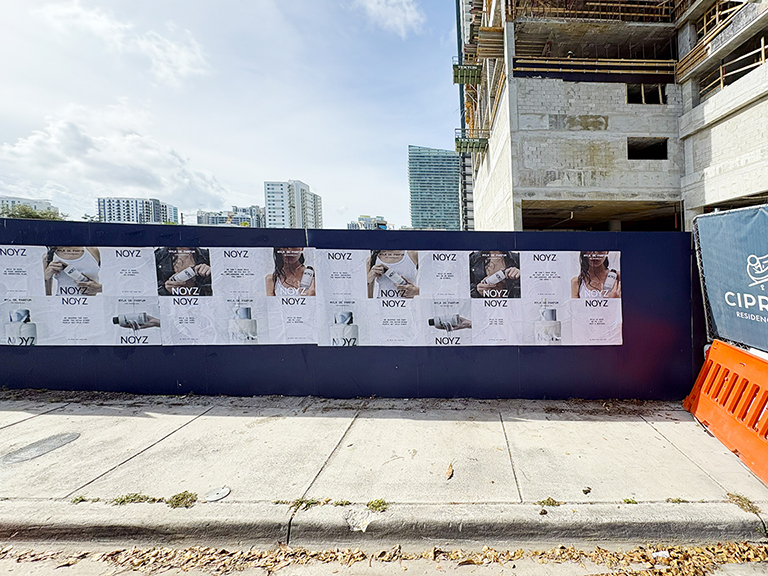
When people search for a streets agency, they are usually done waiting. They have sat through enough digital campaigns that delivered exposures but no conversation. No real attention. No people stopping to take photos or tell their friends. They want something that happens in the physical world, in neighborhoods where their audience actually lives, works, and spends money.
That is exactly what we do at American Guerrilla Marketing. We are a streets agency. We have been executing street-level marketing campaigns across New York City, Los Angeles, Chicago, Miami, Houston, Atlanta, and dozens of other markets since 2007. We understand how streets work, how communities respond to physical marketing, and what it takes to turn sidewalk moments into lasting brand memory.
This article breaks down what a streets agency actually does, how to evaluate one, and why AGM consistently outperforms the alternatives.
A streets agency specializes in marketing that happens at ground level. Not on screens. Not in feeds. In the real world, where your audience is walking to work, grabbing coffee, waiting for the train, or spending a Saturday afternoon in a park.
The term covers a wide range of tactics. Some streets agencies focus heavily on flyering and postering. Others specialize in brand ambassador programs and experiential activations. The best ones do all of it and know when to use each tool.
We run campaigns that include:
Street team distribution in high-foot-traffic corridors
Product sampling at transit hubs, parks, and event venues
Lifestyle photography and social content capture during activations
Each of these tactics serves a different purpose, and the right mix depends entirely on your brand, your audience, and what you are trying to accomplish.
Why Brands Choose Street Marketing in 2025
Digital advertising costs keep rising. Engagement rates keep dropping. Consumers have learned to scroll past ads without registering them. Ad blockers are standard. Influencer fatigue is real.
Meanwhile, something interesting happens when a human being hands you a sample at the corner of Spring Street and Broadway in SoHo. You feel it. You smell it. You taste it. That multisensory moment is something no banner ad can replicate.
Street marketing also travels. People share what they see on Instagram, TikTok, and Twitter. A memorable sidewalk activation in the Meatpacking District gets photographed and posted by fifty people who were not the direct target. That organic amplification is built into how street campaigns work, and it cannot be bought through paid media.
Brands that choose to work with a streets agency in 2025 are not giving up on digital. They are adding a layer of physical presence that makes their digital work hit harder.
What AGM Does Differently
Most street marketing agencies are glorified staffing companies. They find people, put them in branded shirts, hand them flyers, and call it a campaign. We do not operate that way.
Every campaign we run starts with market strategy. Which neighborhoods hold your core audience? Which streets have the right foot traffic at the right time of day? Which activation format fits your product and your brand personality? Those answers shape every decision we make before we deploy a single team member.
Our staff are trained brand communicators, more than warm bodies. They know your product. They understand your talking points. They can hold a conversation, handle objections, and turn a casual passerby into a genuine lead or customer.
We also document everything. Every activation produces photo and video content that you can use across your own channels. The street moment becomes a content library. That multiplies the value of every dollar you spend with us.
Our Core Street Marketing Services
Service
Best For
Markets Available
Street Team Distribution
Mass reach, sampling, flyer drops
All major US cities
Brand Ambassador Programs
High-touch product introductions
Nationwide + Canada
Pop-Up Activations
Product launches, retail support
NYC, LA, Chicago, Miami
Guerrilla Projection
Night events, cultural moments
Major urban markets
Sampling Campaigns
CPG, food and beverage, beauty
50+ US markets
Stencil and Chalk Art
Buzz creation, social content
All markets
Markets We Work In
We run street campaigns in every major US market. Our home base is New York City, and we know every neighborhood from Bushwick to Astoria to Washington Heights. We understand which corners convert and which ones waste your budget.
But our reach goes far beyond New York. We have run campaigns in:
Los Angeles: Silver Lake, Echo Park, Venice Beach, Downtown LA, Koreatown
Chicago: Wicker Park, Logan Square, River North, Hyde Park
Miami: Wynwood, South Beach, Brickell, Little Havana
Atlanta: Old Fourth Ward, Ponce City Market area, Midtown, East Atlanta
Houston: Montrose, Midtown, EaDo, Greenway Plaza
Philadelphia: Northern Liberties, Fishtown, Center City
Boston: Allston, South End, Fenway, Cambridge
Austin: East 6th, South Congress, Downtown
Each city requires a different approach. What works in the pedestrian density of SoHo does not automatically translate to a sprawling city like Houston where foot traffic concentrates differently. We map that reality into every plan we build.
How We Plan a Street Campaign
Planning is where most street agencies cut corners. They grab a map, pick busy intersections, and send people out. We take a different approach.
Audience mapping. We start by understanding exactly who your customer is and where they spend their time. Not where they live on paper, but where they actually go during the day, in the evening, on weekends. That shapes our neighborhood selection and our timing.
Foot traffic analysis. We look at pedestrian counts, transit data, and local event calendars. We want to know when your audience is present in the highest concentration, and we schedule activations to match those windows.
Creative development. A street team in plain clothes handing out samples is one thing. A branded team with a distinctive visual presence, a clear message, and memorable materials is something entirely different. We help brands develop the creative assets that make street activations pop.
Team selection and training. We match our street teams to your brand. A luxury skincare company needs a different face than a music streaming platform. We recruit and train accordingly.
Reporting and documentation. After every activation, we deliver a full report with photos, video, distribution counts, exposures estimates, and qualitative observations from our teams. You never wonder what happened with your budget.
Street Teams vs. Other Activation Formats
Not every brand needs the same approach. Here is a quick breakdown of when to use each format.
Format
Strengths
Ideal Scenario
Street Teams
High volume, direct contact
Mass product launches, awareness campaigns
Pop-Up Experience
Immersive, shareable
Premium brands, product introductions
Sampling
Trial, conversion
Food, beverage, beauty, consumer goods
Guerrilla Projection
Drama, spectacle, press coverage
Cultural moments, drops, events
Ambassador Program
Authenticity, community trust
Lifestyle brands, long-term presence
The Measurable Impact of Street Activation
One complaint about street marketing is that it is hard to measure. We disagree. Modern street campaigns produce measurable data across multiple channels.
Direct distribution numbers are easy to track. We know how many samples we handed out, how many flyers went into hands, and how many people stopped for a conversation. Those are concrete metrics.
We also track secondary signals. Redemption codes distributed on street give you direct attribution data when customers visit your website or store. QR codes on printed materials give you scan rates and conversion paths. Unique phone numbers tied to campaigns give you call tracking.
Beyond the direct metrics, we look at social lift. When we activate in a neighborhood, we monitor branded hashtags and geo-tagged content. Brands consistently see organic social activity spike in the 24 to 48 hours following a street activation in a new market.
Combined, these signals give you a clear picture of what your street campaign actually accomplished. More than exposures. Actual behavior changes.
We measure everything.
Our post-campaign reports include distribution data, photo documentation, social monitoring, and qualitative feedback from our teams on the ground. You always know what you paid for.
Industries That Benefit Most from Street Marketing
Street campaigns work across industries, but some categories see particularly strong results.
Consumer packaged goods. Getting a product into someone’s hand at the right moment drives trial in a way that digital ads simply cannot. Sampling and street distribution remain the most powerful tools in CPG marketing for driving first purchase.
Food and beverage. From craft beverage launches to restaurant openings, street marketing puts your brand in front of people who are already out and already thinking about what to eat or drink.
Music and entertainment. Album drops, streaming platform campaigns, tour promotion, film releases. Every entertainment campaign benefits from physical presence in the cities where your audience concentrates.
Fashion and apparel. Streetwear brands live and die by cultural credibility. Being present in the right neighborhoods, with the right energy, is not optional for these brands. It is existential.
Tech and apps. Digital products need physical proof of existence. Street activations give apps and tech platforms the tangible presence that builds trust and drives downloads.
Health and wellness. From new supplement brands to fitness apps to mental health platforms, wellness brands that show up in parks, gyms, and community spaces build the kind of authentic connection that wellness audiences expect.
What to Look for When Hiring a Streets Agency
Not every agency that calls itself a streets agency has the depth to back it up. Here is what you should ask about before signing a contract.
Market footprint. Do they actually operate in the cities you need? Many small shops have solid local roots but thin networks elsewhere. Confirm they have real staff, more than contractors they will scramble to find when your campaign starts.
Training protocols. How do they train street teams? What is the onboarding process? How do they ensure brand consistency across multiple markets running at the same time?
Reporting standards. What do they deliver after a campaign? Photo proof? Video? Distribution tallies? Social monitoring? If they cannot answer this clearly, you will be guessing about results.
Creative capability. Can they help develop the materials your team will use, or do they just execute? The best agencies are partners in the creative process, more than execution vendors.
References and case studies. Who have they worked with? Can they show you examples of campaigns in your category? Do they have references you can actually call?
AGM vs. Other Streets Agencies
We think it is worth being direct about what separates us from the competition. A lot of agencies in this space offer similar services on paper. The difference shows up in execution.
We have been doing this since 2007. That means nearly two decades of learning what works in specific neighborhoods, specific seasons, and specific categories. We have made the mistakes so your campaign does not have to.
We have our own network of trained staff in every major market. We are not calling a temp agency when you book a campaign. Our people know our standards, know how we document, and know how to represent brands professionally in the field.
We are transparent about results. We over-report rather than under-report. If a campaign underperformed in a neighborhood, we tell you that. If something worked better than expected, we document it and help you understand why so we can replicate it.
We also care about the creative. A lot of execution-focused agencies treat the strategy as someone else’s problem. We help brands figure out more than where to show up, but how to show up in a way that makes people pay attention.
Case Study: Street Team Launch in Three Cities
A consumer beverage brand came to us ahead of a product launch. They had a distribution deal in New York, Los Angeles, and Chicago but no brand recognition in any of those markets. Their retail partners were waiting to see whether the product would move.
We built a three-city street team campaign that ran over four consecutive weekends. Our teams stationed themselves near key retail locations in relevant neighborhoods. In New York, we focused on spots in the Flatiron District, Park Slope, and Williamsburg. In Los Angeles, we hit Silverlake, Santa Monica, and the Fairfax corridor. In Chicago, we ran through Wicker Park and the South Loop.
Teams distributed samples and pointed recipients to the nearest retail location. We tracked with neighborhood-specific QR codes tied to a landing page. Over the campaign period, we distributed over 40,000 samples and drove a measurable lift in store sell-through at partnering retailers. The brand used our photo and video documentation to build out their social channels throughout the launch period.
Get Started with AGM Today
We are ready to build your street campaign. Whether you are launching a new product, entering a new city, or simply trying to earn attention in a crowded market, we have the tools, the people, and the experience to make it happen.
Your audience is already out there. We know how to reach them.
The Future of Street Marketing
Street marketing is not going anywhere. If anything, it is gaining relevance as digital channels get more saturated and more expensive. Consumers are craving authenticity. They want to encounter brands in the real world, more than on their phones.
We see brands investing more heavily in physical presence every year. Pop-up culture has gone mainstream. Sampling programs are getting more sophisticated. Guerrilla tactics are being used by brands that would never have considered them ten years ago.
The streets agency of the future is one that bridges physical and digital. Real-world moments that generate digital content. Ground-level activations that feed social channels. Distribution events that drive app downloads and online purchases. That is the model we have been building toward, and it is where the industry is heading.
If you want to be part of that future, start a conversation with us today.
Frequently Asked Questions
What exactly is a streets agency?
A streets agency is a marketing firm that specializes in ground-level, physical-world campaigns. This includes street teams, product sampling, pop-up activations, stenciling, projection campaigns, and guerrilla tactics that reach people in public spaces rather than through screens.
How is a streets agency different from a traditional ad agency?
Traditional ad agencies primarily build campaigns for media channels like TV, radio, digital, and print. A streets agency lives in the physical world. We put real people and real brand moments in front of your audience where they spend their time offline.
What markets does AGM operate in?
We run campaigns across the entire United States and Canada. Our strongest markets include New York, Los Angeles, Chicago, Miami, Atlanta, Houston, Philadelphia, Boston, Austin, Dallas, Seattle, and San Francisco. We have also executed campaigns in dozens of secondary markets.
How much does a street marketing campaign cost?
Campaign budgets vary significantly based on scope, market, duration, and activation format. Simple one-day activations in a single market can start around $5,000 to $10,000. Multi-city programs running over several weeks cost more. We build custom quotes based on your specific goals and budget parameters.
How long does it take to launch a campaign?
Simple campaigns can launch in two to three weeks from agreement. More complex multi-market programs with custom creative elements typically need four to six weeks of lead time. We always recommend building in enough runway to do the strategy and planning work correctly.
Can street marketing work alongside digital campaigns?
Yes, and it works better when the two channels support each other. Street activations drive immediate attention and conversation. Retargeting those audiences digitally extends the impact. Using unique redemption codes or QR codes on street materials ties physical distribution directly to digital conversion tracking.
How do you measure the results of a street campaign?
For more on this topic, see our guide to snipe advertising. We track distribution counts, document activations with photo and video, monitor social activity in target markets, and use redemption codes and QR scans to measure direct attribution. Post-campaign reports give you concrete data on what happened and what it produced.