Hiring the right event activation agency changes the trajectory of a product launch. The wrong one spends serious money creating a polished-looking event that nobody talks about after the lights go down. After two decades executing brand activations across New York City and 50+ U.S. markets, we know exactly where the difference is made – and it’s not in the concept deck.
American Guerrilla Marketing operates out of Industry City in Brooklyn, NY. We execute activations from the cobblestone blocks of the Meatpacking District to the waterfront at Brooklyn Bridge Park, from the side streets off Bedford Avenue in Williamsburg to the wide sidewalks of 6th Avenue in Midtown. We run campaigns in Los Angeles, Chicago, Miami, Atlanta, and every major American city. This guide explains how a serious event activation agency operates, what the planning process looks like from the inside, and what separates agencies that produce results from those that just produce events.
If you’re evaluating event activation agencies for a launch, a tour, or a community program, this is the framework that matters.
What an Event Activation Agency Does That Generic Marketing Agencies Don’t
Most marketing agencies can brief a creative team and produce assets for a campaign. A specialized event activation agency does something harder. It takes a brand strategy, translates it into a physical experience, and then executes that experience in the uncontrolled conditions of a public street or venue – with real people, real weather, and real logistics problems that no creative deck anticipates.
Strategy First, Always
Before we propose any format or location, we need to understand the brand goal at a specific level. What does this activation need to accomplish? Trial? Social content generation? Press attention? Category education for a new product? Each of those goals points toward a different type of activation, a different audience target, and a different success metric. An activation built to drive product trial looks nothing like one built to generate organic social content. We don’t skip this conversation, even when clients push to start on creative immediately.
Planning and Production Management
Once the strategy is clear, planning covers location identification, permit acquisition, build design and fabrication, staffing recruitment and training, logistics coordination, and content plan development. In New York, each step has specific complications. Permits may require Community Board notification with four to six week lead times. Build materials have to move through service elevators and freight zones. Staffing in a city this large requires screening for reliability as much as energy and brand fit. At AGM, planning is an operational discipline, not an afterthought.
Field Execution That Holds
Execution is where agencies separate themselves. It means having a day-of team that adapts when the 8 AM setup crew hits a problem at 9 AM. It means a field manager who makes decisions without calling the account director for every small issue. It means brand ambassadors who are genuinely briefed and genuinely engaged three hours into a shift, not just for the first thirty minutes. Our execution teams maintain direct communication with our operations base during every major activation. This isn’t extra – it’s basic operational competence.
The Event Activation Planning Process
The process from brief to execution follows a consistent structure, though the timeline and complexity vary by activation scale.
Phase 1: Objective and Audience Definition
The most important work happens before anything is designed or priced. We need a specific business objective (not “increase brand awareness” – something measurable), a target audience definition with geographic precision (not “adults 25-34” – something with neighborhood-level specificity in target markets), and a clear sense of what success looks like before execution begins. Without this foundation, activation design is guesswork. With it, every subsequent decision – location, format, staffing profile, documentation requirements – follows logically.
Phase 2: Location Scouting and Permit Strategy
Location selection is one of the highest-leverage decisions in event activation planning. The wrong location produces mediocre results from a brilliant concept. The right location amplifies a simple concept into an exceptional campaign. AGM scouts locations directly – our teams have walked the neighborhoods of every major U.S. market and know which locations produce the engagement quality that desk research can’t reveal.
Permitting runs concurrently with location scouting. In New York, outdoor activations require NYPD permits, DSNY coordination, and sometimes Community Board notification or Parks Department approval depending on location type. In other markets, requirements vary. We’ve navigated permitting in 50+ cities and know the lead times, the process owners, and the locations where permits are reliably obtainable versus where they’re consistently problematic.
Phase 3: Design, Fabrication, and Materials
For activations requiring custom physical elements – sampling stations, branded structures, pop-up environments, interactive installations – design and fabrication planning begins once locations and permits are confirmed. Designing before location confirmation is a common mistake that creates expensive redesign when the physical realities of the confirmed location don’t match the design assumptions.
Materials for brand ambassador programs – product samples, collateral, branded items – require production timelines that need to be built into the overall schedule realistically. Rush production is expensive and often produces lower quality. AGM’s production management tracks all material timelines against the activation date with buffer for unforeseen delays.
Phase 4: Staffing Recruitment and Training
Brand ambassadors are the brand, from the consumer’s perspective. A poorly trained or disengaged ambassador undermines even the most well-designed activation. Our brand ambassador agency services include dedicated recruitment for each campaign – we don’t pull from a generic pool of promotional staff, we recruit for specific brand fit, product knowledge capacity, and professional reliability.
Training covers: product knowledge in depth, brand story and messaging, engagement protocols for different consumer interaction types, documentation requirements (how to count, how to photograph, what GPS check-in looks like), and professional conduct standards for the specific activation environment. Training isn’t a 30-minute briefing – it’s a preparation process that gives ambassadors the confidence to represent a brand well under pressure.
Phase 5: Execution and Field Management
On activation days, AGM’s field management team is on-site for setup, activation, and breakdown. Field managers handle logistics problems, manage ambassador performance in real time, document the activation with GPS-tagged photography and video, and coordinate any in-day adjustments required by weather, permit conditions, or consumer engagement patterns. We do not manage urban activations from a distance.
Event Activation Formats AGM Executes
The right activation format depends on the campaign objective. Here’s how we think about the primary formats.
Street-Level Sampling Activations
Direct product sampling is the most direct trial-driving format in event activation. A trained ambassador, a well-placed sampling station, and a high-traffic location with the right consumer profile produces product trial at costs that compete favorably with digital advertising on a per-trial basis. AGM has executed sampling programs for food, beverage, personal care, and consumer tech brands across New York and national markets. Our sampling programs produce documented trial counts that give brands the data they need to calculate campaign ROI accurately.
Pop-Up Brand Environments
Pop-up activations create immersive brand environments in temporary spaces. They’re particularly effective for product launches, limited-edition releases, and brand story campaigns where depth of consumer engagement matters. A well-executed pop-up generates social content, press coverage, and direct consumer feedback that media campaigns can’t replicate. AGM has produced pop-up activations in New York, Los Angeles, Chicago, and other major markets for brands across categories.
Guerrilla Street Campaigns
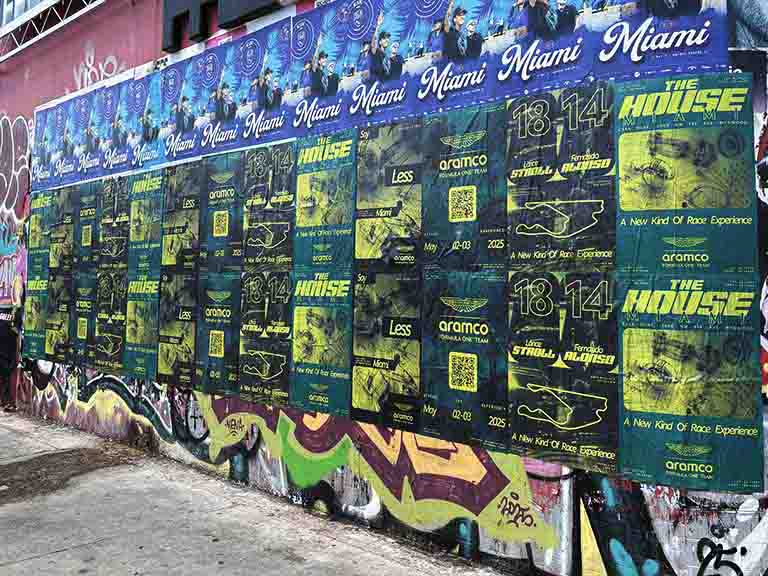
For objectives that don’t require a staffed footprint, guerrilla tactics create brand presence in urban environments efficiently. Wheatpasting campaigns, sidewalk stencils, and ambient installations build neighborhood-level brand presence at costs well below traditional outdoor advertising. These formats are particularly effective for entertainment launches, fashion brands, consumer apps, and any campaign targeting urban audiences where cultural relevance is essential to brand credibility.
Experiential Tours
Multi-market experiential marketing tours bring a consistent activation concept to multiple cities. They’re efficient for brands that need national reach with local presence – the activation is designed once, then adapted for each market’s permitting environment and audience profile. AGM manages multi-market tour logistics from planning through close-out, with consistent GPS-tracked documentation across all markets.
Mobile and Vehicle-Based Activations
Branded vehicles and LED billboard trucks bring the activation to consumers rather than requiring consumers to come to a fixed location. Mobile activations are particularly effective for event-adjacent campaigns where fixed permit locations are difficult to secure, and for reaching multiple geographic areas in a single campaign day. AGM operates mobile advertising units in major markets with GPS-tracked route documentation.
Measuring Event Activation Performance
Every event activation should be planned with measurement in mind from the start – not evaluated after the fact against metrics that weren’t defined in the original brief.
Direct Engagement Metrics
Contacts made, samples distributed, materials handed out, conversations completed – these direct counts are the foundation of event activation measurement. They produce the cost-per-engagement and cost-per-trial figures that make ROI calculations meaningful. AGM’s field teams log engagement counts in real time during activations.
GPS-Tagged Documentation
GPS-tagged photographs and timestamped video confirm that the activation ran at the planned locations during the planned time windows. This documentation is the proof-of-performance evidence brands need for internal reporting and for evaluating agency performance. AGM provides this documentation as a standard deliverable for every activation we execute.
Post-Campaign Sales and Awareness Tracking
For CPG brands, retail velocity comparisons between sampled and non-sampled markets in the weeks following an activation provide the most direct measure of business impact. For awareness-focused campaigns, survey-based tracking in campaign vs. control markets measures the awareness contribution independently of sales. These metrics require advance planning – comparison markets need to be identified before the campaign launches, not after.
How to Choose an Event Activation Agency
The event activation space has agencies that are genuinely good at this and agencies that produce expensive, undifferentiated work. Here’s how to tell the difference.
Ask About the Last Five Field Campaigns
Ask to see documented examples of actual executed campaigns – not renderings, not case study write-ups, but photographs and video of what happened in the field. A strong activation portfolio shows real environments, real consumer engagement, real field conditions. An agency that shows only polished concept decks and post-production photography is hiding the gap between what they promise and what they deliver.
Ask Who’s Actually On-Site
Many activation agencies design concepts and outsource execution to local vendors they’ve never worked with before. Ask directly: who is on-site on activation day? Are they your employees, vetted contractors, or unknown vendors? An agency that owns its field execution relationships delivers more consistent quality than one that manages at arm’s length.
Ask About Permitting Lead Times
An agency that can answer specific questions about permitting requirements in your target market – lead times, process owners, location restrictions, community board requirements – has real operational experience. One that gives vague answers or says they’ll figure it out is not equipped to execute your campaign without problems.
Ask for a Sample Documentation Report
Before signing, ask to see what a post-campaign documentation report looks like. GPS-tagged photos, timestamped video, engagement counts, and a narrative summary should be standard. An agency that can’t produce a sample is an agency that doesn’t document consistently – which means you won’t be able to prove your campaign ran.
What to Look for in an Event Activation Agency Contract
Contract terms with activation agencies reveal as much about how they work as their portfolio does. Here are the terms worth examining carefully before signing.
Scope of Services Specificity
Contracts that describe scope in general terms – “manage activation” or “provide field staff” – leave too much ambiguity about what’s actually included. Strong activation agency contracts define scope at a specific level: number of activation days, staffing count per day, permit coverage, documentation deliverables, geographic markets covered, and escalation protocols for day-of issues. Ambiguity in scope is where surprises and budget overruns hide. Require specificity before signing.
Documentation and Reporting Deliverables
The contract should specify exactly what documentation the agency will provide: minimum photo count with GPS tagging requirement, video documentation standards, engagement count logging methodology, and reporting timeline. “Post-campaign report” is not a sufficient specification. “GPS-tagged photographs of each activation location with timestamp, minimum 20 photos per activation day, engagement count log submitted within 48 hours of each activation day, and comprehensive campaign report submitted within 5 business days of campaign close” is a specification that will produce documentation you can actually use.
Performance Standards and Accountability
What happens if the agency doesn’t deliver what was promised? Contracts should include performance standards (minimum engagement rates, documentation delivery timelines) and remedies for non-performance. Agencies confident in their execution quality accept accountability provisions; those reluctant to commit to specific performance standards are communicating something about their confidence in delivering them.
Long-Term Agency Relationships vs. Project-by-Project Engagements
Brands face a recurring question in activation agency relationships: is it better to maintain a long-term agency relationship or to evaluate options project by project? Both models have merits, and the right choice depends on the brand’s campaign frequency and strategic continuity requirements.
The Long-Term Relationship Advantage
Agencies that have worked with a brand over multiple campaigns develop institutional knowledge – brand voice, product nuances, consumer response patterns, market-specific intelligence – that produces better outcomes on subsequent campaigns than agencies starting fresh. The learning curve investment in teaching an agency your brand is an investment that pays dividends over multiple campaigns when the relationship continues. For brands with recurring campaign needs, long-term agency relationships produce better per-campaign outcomes than constant re-evaluation.
When Project Evaluation Makes Sense
For brands with infrequent or highly variable campaign needs, evaluating agency options project by project ensures fit between the specific campaign requirements and the agency’s specific capabilities. A brand that runs one major activation per year in a different market each time benefits from evaluating market-specific expertise on each engagement rather than defaulting to a relationship built in different markets. AGM’s national footprint means we bring relevant local market knowledge to new market engagements rather than starting from scratch.
What does an event activation agency do?
An event activation agency plans, produces, and executes physical brand experiences – from pop-up activations and product sampling programs to brand installations and experiential events. They handle strategy, location scouting, permitting, fabrication, staffing, and post-campaign documentation. The goal is to create direct consumer engagement that moves behavior rather than passive advertising awareness.
What is the difference between an event activation agency and an event management company?
An event management company organizes events within existing venues – handling logistics, catering, AV, and vendor coordination. An event activation agency creates the brand experience itself – the physical structure, the consumer journey, the messaging environment, and the staffing that determines how consumers engage. They build what people interact with, not just the container it happens in. Many campaigns benefit from both working together.
How much does an event activation cost?
Event activation costs range significantly by scale. Single-market sampling activations start around $10,000-$25,000. Multi-day pop-up events in major markets run $30,000-$100,000. Multi-market experiential tours with custom fabrication typically range from $100,000-$300,000 or more. Costs include strategy, design, permitting, fabrication, staffing, and documentation. AGM provides detailed cost breakdowns for every engagement.
How far in advance should you book an event activation agency?
For simple activations, two to four weeks is workable. For pop-ups with custom fabrication, multi-market programs, or activations requiring community board permits in major markets like New York, six to twelve weeks is standard. Complex builds may need longer. Earlier engagement always produces better outcomes than last-minute planning – the best locations are booked first and permit processes respect calendar deadlines regardless of client urgency.
What makes a brand activation successful?
Successful brand activations have clear objectives defined before planning begins, locations chosen based on real knowledge of target consumer foot traffic, well-trained and genuinely enthusiastic brand ambassadors, documentation standards that prove the campaign ran as planned, and measurement against the specific outcomes the brand defined at the outset. Without any one of these elements, results are inconsistent.
Does AGM execute event activations outside New York?
What documentation does AGM provide after an event activation?
AGM provides GPS-tagged photographs, timestamped video documentation, engagement counts (contacts made, samples distributed, materials handed out), and a campaign summary report. This documentation provides the proof-of-performance evidence that brands need for internal reporting, ROI calculation, and future campaign planning.
What types of brands hire event activation agencies?
Consumer packaged goods brands, entertainment companies, fashion labels, tech product launches, food and beverage brands, nonprofits, and political organizations all hire event activation agencies. The format is most valuable for product launches, market entry programs, brand relaunches, and any campaign objective that requires direct consumer engagement – trial, advocacy, community presence – rather than passive media exposure.
Campaign Architect – American Guerrilla Marketing
Frequently Asked Questions
What does an event activation agency do?
An event activation agency plans, produces, and executes physical brand experiences – from pop-up activations and product sampling programs to brand installations and experiential events. They handle strategy, location scouting, permitting, fabrication, staffing, and post-campaign documentation. The goal is to create direct consumer engagement that moves behavior rather than passive awareness.
What is the difference between an event activation agency and an event management company?
An event management company organizes events within existing venues – handling logistics, catering, AV, and vendor coordination. An event activation agency creates the brand experience itself – the physical structure, the consumer journey, the messaging environment, and the staffing that determines how consumers engage. They build what people interact with, not just the container it happens in.
How much does an event activation cost?
Event activation costs range significantly by scale and complexity. Single-market sampling activations start around $10,000-$25,000. Multi-day pop-up events in major markets run $30,000-$100,000. Multi-market experiential tours with custom fabrication typically range from $100,000-$300,000 or more. Costs include strategy, design, permitting, fabrication, staffing, and documentation.
How far in advance should you book an event activation agency?
For simple activations, two to four weeks of lead time is workable. For pop-ups with custom fabrication, multi-market programs, or activations requiring community board permits in major markets like New York, six to twelve weeks is standard. Complex builds requiring fabrication may need longer. Earlier engagement always produces better outcomes than last-minute planning.
What makes a brand activation successful?
Successful brand activations have clear objectives defined before planning begins, locations chosen based on real knowledge of target consumer foot traffic patterns, well-trained and genuinely enthusiastic brand ambassadors, documentation standards that prove the campaign ran as planned, and measurement against the specific outcomes the brand defined at the outset.
Does AGM execute event activations outside New York?
Yes. AGM operates event activations across 50+ U.S. markets including Los Angeles, Chicago, Miami, Atlanta, Boston, Houston, Seattle, and more. All campaigns are GPS-tracked and fully documented regardless of market. Contact us at [email protected] or (646) 776-2770.
What documentation does AGM provide after an event activation?
AGM provides GPS-tagged photographs, timestamped video documentation, engagement counts (contacts made, samples distributed, materials handed out), and a campaign summary report. This documentation provides the proof-of-performance evidence that brands need for internal reporting and ROI calculation.
What types of brands hire event activation agencies?
Consumer packaged goods brands, entertainment companies, fashion labels, tech product launches, food and beverage brands, nonprofits, and political organizations all hire event activation agencies. The format is particularly valuable for product launches, market entry programs, brand relaunches, and any campaign objective that requires direct consumer engagement rather than passive media exposure.