
September 7, 2026
Campaigning Examples
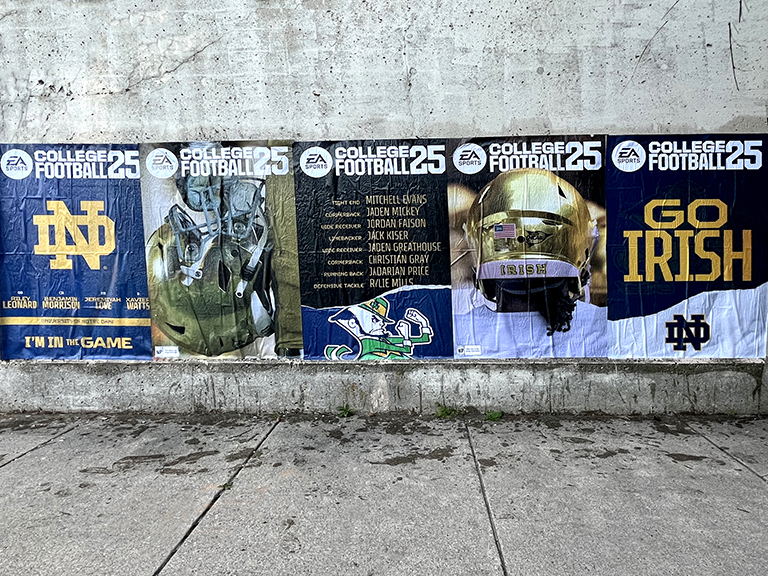
The best campaigns are not theoretical. They are executed in real places by teams who know what they are doing. Here are the campaigning examples that show what strong strategy looks like on the ground.
Looking at strong campaigning examples is one of the fastest ways to understand what actually works in marketing. You can read frameworks and strategies all day, but seeing a real campaign, what it did, why it worked, and what made it different, teaches you things that no abstract model can.
At American Guerrilla Marketing, we plan and execute campaigns across formats including street-level postering, experiential activations, sampling, murals, and grassroots outreach. We have worked with brands at every stage of growth, from startups trying to break into their first major market to running brands defending territory against rising competitors. The patterns that appear across successful campaigns are consistent and teachable.
This guide walks through strong campaigning examples across multiple formats and brand types. Each example illustrates a core principle that you can apply to your own planning.
Example 1: New CPG Brand Street Poster Launch
A new functional beverage brand was launching in New York City. The brand had distribution at Whole Foods, Erewhon, and a selection of health food stores across Manhattan and Brooklyn. The challenge: they were unknown. Shelves are full of drinks that look like they could be competitors. The brand needed to create enough street-level awareness that consumers would recognize the product when they saw it in stores.
The campaign we designed concentrated on a six-block radius around each of the major retail locations. We placed 24×36 street posters at eye level on construction boards, in community board approved locations, and at transit-adjacent spots where commuters moving toward those stores would see the brand before they walked in the door.
The creative led with the brand’s distinctive color and a single bold product claim. No paragraph of copy. No multiple messages. Just the name, the visual, and one reason to try it. Paired with in-store sampling events on weekend mornings when foot traffic was highest, the campaign drove measurable velocity increases at the target locations within four weeks.
Key principle from this example: Concentrate advertising spend around your actual points of sale. Awareness is only valuable if the consumer can act on it. Put your campaign between where your target consumer lives and where they can buy your product.
Example 2: Music Festival Brand Activation
An energy drink brand wanted to establish credibility in the music festival space. They had the budget for a larger national campaign, but they wanted to earn cultural credibility before going broad. The insight: festival culture is tight-knit and skeptical of brands that show up with obvious commercial intent but no genuine connection to the music community.
Instead of buying a logo on a stage banner, the brand built an actual activation inside a mid-size music festival in Austin. The activation was a charging station with comfortable seating, good lighting, and free phone charges. Branded, but genuinely useful. The energy drink was available at the activation, not forced on anyone, but available to anyone who sat down and needed to recharge.
People shared photos of the activation on social media not because they were asked to, but because it was actually useful and the design was good enough to be worth sharing. The brand received earned media coverage from festival bloggers and music journalists who were themselves using the charging station. The activation cost less than a single stage sponsorship would have and delivered significantly more authentic brand association.
Example 3: Grassroots Community Campaign for a Local Business
A gym opening its first location in Bed-Stuy, Brooklyn needed to build awareness in the neighborhood before its opening day. The brand did not have a big marketing budget. They had $8,000 and a clear target: people within a ten-minute walk of the gym who were already interested in fitness.
The campaign used three tactics. First, a postering push on the blocks immediately surrounding the gym, with creative that named the neighborhood explicitly. Not a generic gym poster but one that said this gym belongs here. Second, a street team stationed at the closest subway station during morning rush, handing out free class passes to people who stopped. Third, a partnership with the local coffee shop across the street, where the gym’s opening flyers were displayed and a first-month discount was offered to coffee shop customers.
By opening day, a significant portion of the neighborhood already knew the gym was coming. The first week of classes was sold out. The campaign cost $8,000 and generated enough membership sign-ups in the first month to pay for the entire marketing budget several times over.
Example 4: Film Release Urban Postering Campaign
An independent film studio releasing a limited-run art house film in New York and Los Angeles needed to drive awareness among an audience that rarely responds to conventional movie advertising. Art house film audiences are media-literate and resistant to obvious promotional efforts. They respond to work that feels culturally authentic.
The campaign used a combination of street postering and wheat paste installation in neighborhoods with high concentrations of the target audience. In New York, that meant placements in the West Village, Williamsburg, and the area around Lincoln Center and the Upper West Side. In Los Angeles, placements concentrated in Silver Lake, Los Feliz, and the Fairfax area.
The poster design itself was art-quality. The studio worked with a respected illustrator whose work the target audience would recognize. The poster became something people wanted to have, more than something they saw. That quality of creative drove social sharing from film critics and tastemakers who photographed the posters and posted them organically. The film outperformed box office projections at every opening-weekend location.
| Campaign Type | Brand Stage | Key Tactic | Core Result |
|---|---|---|---|
| CPG Launch | New brand | Radius OOH + in-store sampling | Velocity increase at target doors |
| Festival Activation | Growth brand | Useful experiential activation | Earned media + authentic association |
| Local Business Launch | Startup | Hyper-local OOH + street team + partnership | Sold-out opening week |
| Film Release | Running | Art-quality postering in curated neighborhoods | Beat box office projections |
| Brand Defense | Mature brand | Market saturation + community events | Held market share against challenger |
Example 5: Brand Defense Campaign Against a New Competitor
An running snack brand was seeing a new challenger enter their strongest market. The challenger was well-funded and running aggressive advertising. The running brand needed to defend their territory without getting into a spending war they could not win.
The strategy was to go deeper into the community relationships the running brand had spent years building. They partnered with local organizations, showed up at community events as a genuine contributor, and ran a street campaign in their stronghold neighborhoods that emphasized local roots and history. Where the challenger was spending on mass awareness, the running brand spent on community depth.
The challenger gained some ground but failed to displace the running brand in its core markets. The community relationships created a loyalty buffer that raw advertising spend could not easily overcome. The campaign reinforced the most important principle in long-term brand building: community relationships are a competitive moat.
Example 6: App Launch With Street Team and Digital Integration
A consumer technology startup launching a neighborhood-focused app needed to generate downloads in specific geographic areas. Traditional digital advertising for an app launch in a single city is expensive and often inefficient. The startup needed a smarter approach.
We ran a street team campaign in the target neighborhoods. Street team members were trained to demonstrate the app on their own phones and explain the value proposition in a natural conversation, not a scripted pitch. They worked the high-traffic pedestrian areas of the target neighborhoods during peak hours, Tuesday through Saturday, over a three-week period.
The street team was supported by geo-targeted digital ads that hit the same neighborhoods on the same days. Someone who walked past the street team and declined to download might see the app again that evening on Instagram because the geo-targeting was running in the exact same zone. Multiple touches from different directions drove a much higher conversion rate than either the street team or the digital campaign would have achieved alone.
The integration principle: The best campaigns today combine physical and digital presence. A street team that covers the same geography as a geo-targeted digital buy creates a multiplier effect. The physical interaction builds recall. The digital touch converts recall into action. Running them at the same time is far more effective than running them sequentially.
Example 7: Seasonal Campaign for a Retail Brand
A specialty outdoor retailer wanted to drive foot traffic to three New York City store locations during the pre-summer camping and hiking season. The target consumer: urban dwellers in their late 20s and early 30s who had recently discovered outdoor recreation and were beginning to invest in gear. These consumers were concentrated in specific neighborhoods, Park Slope, the West Village, Astoria, and they commuted via subway.
The campaign used two formats in combination. First, subway platform and car card advertising reaching the commuter routes most likely to carry the target demographic. Second, a neighborhood postering campaign in the target neighborhoods, placed specifically near the running routes, parks, and transit exits where the target consumer was most likely to be on weekend mornings.
The creative was simple and seasonal: bold product photography against a vibrant outdoor backdrop with a clear message about what the store offered and a mention of the nearest location. The campaign ran for six weeks, starting two weeks before the peak gear-buying window, and continued through the first three weekends of prime shopping season.
Foot traffic at the three stores increased measurably during the campaign period compared to the same period in the prior year. The stores also reported a higher proportion of first-time customers, which is a signal that the awareness campaign was reaching and converting new consumers rather than just reminding existing ones.
Example 8: Multi-City Coordinated Launch
A wellness brand launching a new product line needed simultaneous presence across five major US cities. The brand had a modest total budget that needed to stretch across New York, Los Angeles, Chicago, Austin, and Miami. Dividing that budget equally across five cities would produce minimal impact in each. We recommended a different approach.
We ranked the five cities by the brand’s distribution strength and the concentration of the target consumer. New York and Los Angeles were the top two on both metrics. The brand allocated 60 percent of the total campaign budget to those two markets, with the remaining 40 percent split among the other three. In New York and Los Angeles, the campaign created real density. In the other three cities, it created a meaningful presence without pretending to saturate markets where the brand was not yet fully distributed.
The launch exceeded sales targets in New York and Los Angeles. The other markets performed at expected levels. The strategic concentration of resources in the highest-potential markets produced results that an even spread across all five could never have matched.
What All Strong Campaigns Share
Looking across these campaigning examples, a set of consistent principles emerges. Every strong campaign we have seen or run shares the following characteristics.
First, they are specific. Generic campaigns that try to reach everyone reach no one effectively. Every strong campaign defines exactly who it is trying to reach, where those people are, and what message will move them. The specificity is what creates relevance, and relevance is what creates action.
Second, they concentrate resources. Thin coverage across a wide geography produces low frequency and low impact everywhere. Strong campaigns put enough resources in a defined area to create real density and the feeling of ubiquity. Three posters on three blocks is invisible. Thirty posters on three blocks is a campaign.
Third, they respect the consumer’s intelligence. The best campaigns do not over-explain. They do not try to say too many things at once. They make one relevant, credible point in a way that is visually compelling and easy to understand. Consumers encounter hundreds of advertising messages every day. The ones that land are the ones that respect the consumer’s limited attention and deliver their message efficiently.
Fourth, they build over time. Even the most successful campaigns in these examples built on a foundation of sustained effort. The CPG brand that created velocity at retail did it with consistent placement over weeks, not a single day of postering. The community relationships that protected the running snack brand were built over years. Strong campaigns invest in the process, more than the launch moment.
Example 9: Challenger Brand Disrupting a Crowded Category
A new personal care brand was entering the men’s grooming category. The category is crowded, dominated by heritage brands with enormous advertising budgets and retail shelf presence built over decades. The challenger had a genuinely better product and a brand identity that appealed to a younger, values-aligned consumer. The problem: nobody knew they existed.
Instead of competing across the full category, the brand chose to win in three specific cities where their target consumer was most concentrated: Brooklyn, East Austin, and Silver Lake in Los Angeles. In each city, the campaign ran a tight street-level execution focused on the zip codes with the highest concentration of men 22 to 35 who matched the brand’s lifestyle profile.
The creative leaned into the brand’s irreverence. Short copy. Bold graphics. Visual humor that the target consumer would understand and that the heritage brands would never produce. The street posters looked like they belonged in the neighborhoods they ran in. That context fit is what made the campaign work.
After six weeks of concentrated street presence in the target zones, the brand saw a significant uptick in online search volume for their brand name in all three cities. Retailers in those markets began receiving customer requests for the product. That organic pull was the proof point the brand needed to approach larger distributors. The street campaign created consumer demand that opened retail doors the brand could not have forced open with pitch decks alone.
Frequently Asked Questions
What makes a marketing campaign successful?
Successful campaigns clearly define their target audience, concentrate resources in high-relevance locations, maintain creative consistency, and invest in sustained presence over time. The most successful campaigns also respect the consumer’s intelligence by delivering simple, compelling messages rather than trying to communicate too many things at once.
What are examples of grassroots marketing campaigns?
Grassroots campaigns include street team activations in target neighborhoods, sampling at community events, postering in the blocks immediately surrounding a business or retail location, community event sponsorship, and partnerships with local businesses that serve the same target audience. The Bed-Stuy gym example above is a classic grassroots campaign structure.
What is the best format for a street advertising campaign?
The best format depends on your target audience, geography, and objectives. For most urban street advertising campaigns, 24×36 inch posters placed at eye level in high-foot-traffic locations provide the best combination of visual impact, print economy, and installation flexibility. Transit advertising reaches commuters. Park activations reach leisure-time consumers. Each format reaches a different
How much does a street marketing campaign cost?
A meaningful street campaign in a single neighborhood can start around $5,000 to $10,000 for print, installation, and documentation. Multi-neighborhood or multi-city campaigns with experiential elements can run from $25,000 to well over $100,000. The right budget is the one that creates enough density in your target area to generate actual frequency of exposure for your target consumer.
How long should a marketing campaign run?
Most marketing campaigns need at least four to eight weeks to generate measurable impact. A two-week burst rarely creates the sustained frequency that drives behavioral change. For brand-building campaigns, six to twelve months of consistent presence is more appropriate. For event-driven campaigns tied to a specific launch or season, shorter intensive campaigns with heavy front-loading can work we
Can small brands run effective campaigns?
Yes, and often small brands run the most efficient campaigns because they have to be selective. Concentrated local campaigns, grassroots community outreach, and hyper-targeted street advertising often produce better ROI for small brands than the mass-market approaches large brands use. The examples above include campaigns run on budgets as small as $8,000 that produced significant commercial resul
What is the difference between a campaign and ongoing advertising?
A campaign is a defined initiative with a specific objective, timeline, and budget. Ongoing advertising is a sustained presence without a specific launch objective. Most brands need both. Campaigns drive moments of peak awareness around launches, seasons, or events. Ongoing advertising maintains base-level brand salience between campaigns so that consumers are already familiar with the brand when

Ready to Run Your Campaign?
Call us or email us. We’ll tell you exactly what we can do in your market and what it costs.
Related Services
Explore similar advertising solutions offered by American Guerrilla Marketing.
American Guerrilla Marketing — Los Angeles
Street-level campaigns in Los Angeles and nationwide. Wheatpasting, LED trucks, street teams, and more.
(646) 776-2770
Related Articles
-
Street Poster Advertising Ottawa: A Complete Campaign Guide
September 17, 2026
-
Activation Marketing: How Brands Win at Street Level
September 13, 2026
-
Experiential Marketing Firms Chicago | American Guerrilla Marketing
September 12, 2026
-
Pop Up Experiential
September 12, 2026
-
Mobile Pop Up
September 12, 2026