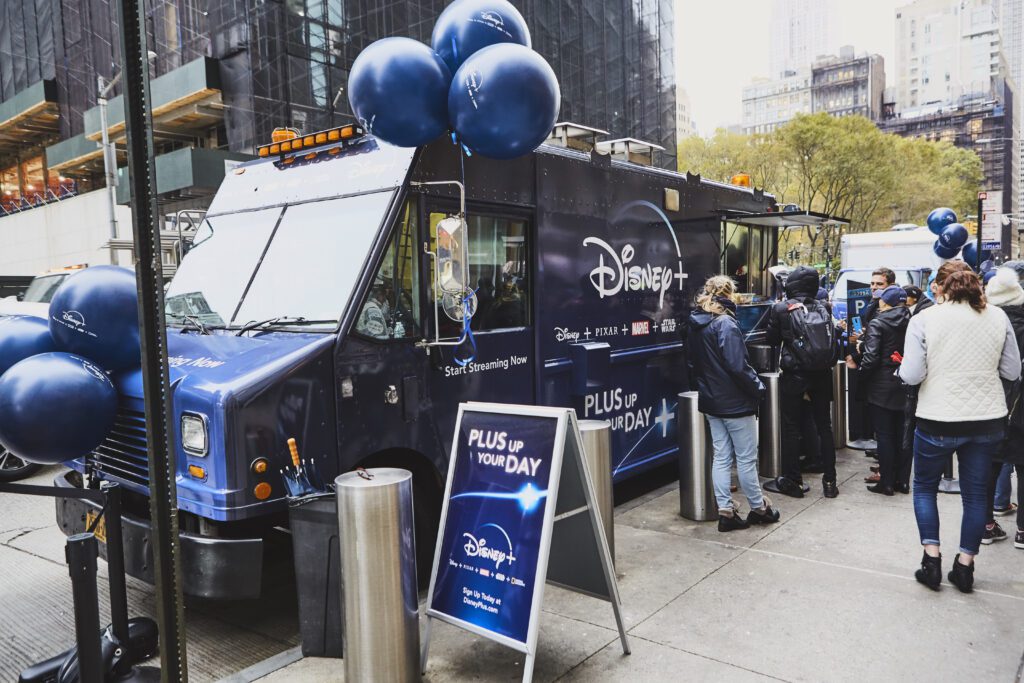
Most brands understand they need to show up somewhere other than a screen. What they don’t always know is who builds the thing they show up with. That’s where an activation design company comes in. These agencies don’t just coordinate events – they create the physical and experiential structures that put brands in front of real consumers, in real spaces, in ways that stick.
American Guerrilla Marketing has been designing and executing street-level and experiential activations since 2006. Our team at Industry City in Brooklyn, NY has built activations for consumer packaged goods brands, entertainment companies, fashion labels, tech firms, and nonprofits across 50+ U.S. markets. When brands want to exist somewhere other than a feed, we build that presence.
This guide breaks down what activation design companies actually do – how they work, what they build, what the process looks like, and how to choose the right partner for your campaign.
What Is Brand Activation Design?
Brand activation design is the process of creating physical or experiential touchpoints that let consumers interact with a brand directly. The goal is to move someone from awareness to engagement – and ideally to trial, purchase, or advocacy – through a designed encounter rather than passive media consumption.
The “design” component isn’t just aesthetic. It includes spatial design, consumer flow, messaging hierarchy, staffing protocols, and documentation strategy. A well-designed activation is engineered for specific outcomes – foot traffic conversion, product trial, social sharing, or press coverage – not just visual appeal.
The Difference Between Design and Execution
Some agencies design activations but outsource execution. Others execute but don’t own the design process. A full-service activation design company handles both – which matters because design decisions directly affect what’s executable in the field. A structure designed without knowledge of permitting requirements, foot traffic patterns, or weather risk creates problems during execution that no logistics team can fully solve.
Brand Activation vs. Event Marketing
These terms get used interchangeably, but they describe different scopes. Event marketing typically refers to branded presence at third-party events – a sponsor tent, a branded booth, a naming deal. Brand activation is the creation of a standalone experience built around the brand itself. The brand is the destination, not a presence within someone else’s destination. Activation design companies specialize in the latter.
Core Services an Activation Design Company Provides
The service mix varies by agency, but full-service activation design companies typically cover the following phases from concept through close-out.
Strategy and Concept Development
Before anything is built or booked, the activation needs a strategic foundation. What’s the goal – awareness, trial, social content, press? Who’s the target audience, and where do they physically exist? What’s the message, and how does it translate into a physical encounter? Strong concept work answers these questions before a dollar is spent on fabrication or permits. At AGM, strategy comes first in every engagement – we don’t design backward from a cool idea, we design forward from a defined objective.
Spatial and Structural Design
This is the physical design of the activation environment. It includes the footprint (how much space the activation occupies), the structural elements (tents, fabricated installations, pop-up buildings, vehicle wraps, branded furniture), and the consumer journey through the space. Good spatial design makes interactions feel natural and effortless. Bad spatial design creates bottlenecks, confusion, and missed engagement opportunities.
Location Scouting and Permitting
Where an activation happens matters as much as what it looks like. High-traffic intersections, transit hubs, event adjacent locations, and popular retail corridors all require different permits and have different foot traffic profiles. Activation design companies with real field experience know which locations are worth the permit cost, which require community board approval, and which look good on paper but underperform in practice. AGM scouts locations directly – our teams have walked the streets of every major U.S. market.
Fabrication and Production
For activations that require custom physical elements – branded structures, signage systems, sampling stations, interactive installations – the design company manages fabrication. This includes vendor selection, timeline management, quality control, and logistics to site. Some agencies fabricate in-house; others manage the process through trusted vendor networks. Either way, the activation company is accountable for what shows up on-site.
Staffing and Brand Ambassador Management
The people staffing an activation are the activation, from the consumer’s perspective. Brand ambassadors who are trained, enthusiastic, and on-message can rescue a mediocre physical setup. Untrained or disengaged staff undermine even the most beautiful build. Our brand ambassador agency services include recruiting, training, and managing field staff for every campaign we execute. Staffing is never an afterthought.
Documentation and Reporting
Every activation should produce evidence. GPS-tagged photos, timestamped video, engagement counts, samples distributed, and impression estimates are standard deliverables for professional activation companies. This documentation serves multiple purposes: it proves the campaign ran, it gives the brand content for internal reporting and social use, and it provides the data needed to optimize future campaigns.
Formats an Activation Design Company Typically Executes
Activation design companies work across a range of physical formats. Understanding the options helps brands make better decisions about what’s appropriate for their objectives and budget.
Street-Level Sampling Activations
Sampling is one of the oldest and most effective activation formats. A branded sampling station in a high-traffic location lets consumers try a product with zero friction. The design challenge is creating a setup that stops people, communicates the product quickly, and facilitates an experience that earns word-of-mouth. Our guerrilla marketing services include sampling programs across consumer categories – food, beverage, personal care, health, and more.
Pop-Up Retail and Brand Environments
Pop-ups create immersive brand environments in temporary spaces – vacant storefronts, event footprints, or purpose-built structures. They’re particularly effective for product launches, limited editions, and brand story campaigns where depth of experience matters more than breadth of reach. A well-executed pop-up can generate press coverage, social content, and direct sales in a single campaign window.
Guerrilla Installations
Not every activation needs a physical structure. Wheatpasting and poster campaigns, sidewalk stencils, and ambient installations create brand presence in urban environments without requiring a permitted footprint. These formats are particularly effective for building cultural relevance in specific neighborhoods or around specific events. AGM has been executing guerrilla installations in New York and across the country since 2006.
Experiential Tours
Multi-market tours bring an activation concept to multiple cities over weeks or months. They’re efficient for brands that need national reach with local presence – the activation is designed once, then adapted for each market’s permitting requirements and audience profile. Experiential marketing tours require strong logistics management and a field team that can execute consistently across markets.
Mobile and Vehicle-Based Activations
Branded vehicles – converted trucks, trailers, and custom-wrapped units – bring activations to audiences rather than requiring audiences to come to a fixed location. LED billboard trucks and branded vehicles create moving impressions across high-traffic routes. Vehicle-based activations are particularly effective for event adjacency campaigns where fixed permits are difficult to secure.
How to Evaluate an Activation Design Company
Not all activation agencies are equal. Some are strong at conceptual design but weak at field execution. Others are excellent operators but produce undifferentiated, generic experiences. Here’s what to look for when evaluating a partner.
Portfolio of Executed Work
Ask to see documented campaigns – not just renderings or concept decks, but photographs and video of what actually happened in the field. A strong activation portfolio shows real environments, real consumers engaging, and real documentation. It also shows a range of formats and challenges, demonstrating adaptability rather than a single playbook repeated across clients.
Market Coverage and Local Knowledge
An activation company that has only operated in one or two cities doesn’t have the local knowledge to execute nationally. Permitting processes, community sensitivities, foot traffic patterns, and preferred vendor relationships vary significantly by market. AGM operates in 50+ U.S. markets – that depth of local knowledge is a direct operational advantage.
In-House vs. Outsourced Execution
When an activation company outsources execution to local vendors they’ve never worked with before, quality control suffers. Ask directly: who will be on-site? Are they employees or contractors you’ve vetted? Who’s accountable if something goes wrong? Agencies that own their field execution relationships deliver more consistent results than those who manage at arm’s length.
Reporting and Documentation Standards
How does the agency document its work? GPS-tagged photos, timestamped video, and engagement counts are the minimum. Agencies that offer only a handful of photos and a summary email aren’t providing the evidence brands need to justify spend and optimize future campaigns. Ask to see a sample report before signing.
What Brand Activation Design Costs (And What It Buys)
Budget conversations are easier when both parties understand what the investment covers. Activation design costs vary significantly based on scale, fabrication requirements, market, and campaign duration.
Entry-Level Single-Market Activations
A well-designed single-day activation in one market – with professional staffing, branded materials, and proper documentation – typically runs $10,000-$30,000. This gets you a real campaign, not a table with a banner. It includes concept development, permitting, staffing, and a documented proof of performance.
Multi-Market and Touring Campaigns
Multi-market activations introduce per-market permitting costs, logistics complexity, and travel. Campaigns covering five to ten markets over four to eight weeks typically range from $75,000-$200,000 depending on fabrication requirements and sampling volume. The per-market unit economics improve with scale.
Custom Fabrication and Pop-Up Builds
Custom fabricated structures – unique pop-up environments, interactive installations, bespoke sampling vehicles – add significant cost but also significantly increase the activation’s visual and social impact. High-production pop-up builds can range from $150,000 to well over $500,000 for flagship experiences designed to drive substantial press and social coverage.
AGM’s Approach to Activation Design
At American Guerrilla Marketing, we build activations from a principle we’ve held since 2006: the street doesn’t lie. Whatever you put in front of real people in real environments reveals very quickly whether it’s working. That accountability shapes how we design.
We start every engagement with a clear objective – not “create a memorable experience” (which is unmeasurable) but “drive 2,000 product trials in the Williamsburg, Bushwick, and Lower East Side zip codes over three weekends.” Objectives that specific allow us to design activations that can actually be evaluated. We scout locations we know produce results. We staff with people we’ve vetted. We document everything because documentation is how we prove value – to our clients and to ourselves.
Frequently Asked Questions
What does an activation design company actually do?
An activation design company plans, builds, and executes physical brand experiences – from pop-up structures and sampling stations to street-level installations and event footprints. They handle concept development, fabrication, permitting, staffing, and post-campaign documentation.
How is an activation design company different from an event agency?
Event agencies typically manage logistics for existing venues – catering, AV, scheduling. Activation design companies create the brand experience itself: the physical structure, the consumer touchpoints, the messaging environment. They build what people interact with, not just the container it happens in.
What types of activations can a design company execute?
Common activation types include sampling stations, pop-up retail environments, brand installations, street-level guerrilla marketing, experiential tours, and live demonstrations. The format depends on the brand’s goals, budget, and target audience geography.
How long does it take to design and execute a brand activation?
Timeline depends on scale. A simple street sampling activation can launch in two to three weeks. A multi-market pop-up tour with custom fabrication typically requires six to twelve weeks of lead time for permits, build, and logistics.
What does an activation design company cost?
Costs range widely. Small single-market activations start around $10,000-$25,000. Multi-city touring activations with custom builds run $75,000-$250,000 or more. The investment includes design, fabrication, staffing, permitting, and reporting.
Does AGM handle activation design in-house?
Yes. AGM’s team manages every phase from concept through execution – strategy, design, permitting, staffing, and GPS-tracked documentation. We operate in 50+ U.S. markets from our base at Industry City, Brooklyn, NY.
What metrics do activation design companies track?
Key metrics include impressions (foot traffic estimates), direct engagements, samples distributed, social media mentions, earned media pickup, and cost-per-engagement. AGM provides GPS-tracked photos and timestamped documentation for every campaign.