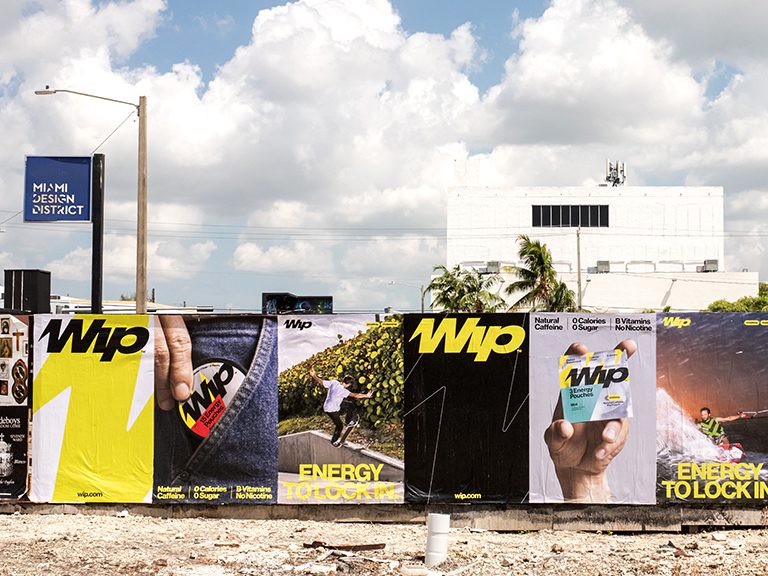
If you need to know the average size of a poster, the straightforward answer is 24×36 inches — that is the most widely used standard poster format across movie theaters, event promotion, retail environments, and street advertising campaigns. But “average” depends entirely on context. A concert venue puts up 18×24 posters on its walls. A movie theater lobby displays 27×40 one-sheets. An outdoor wheatpaste campaign uses 24×36 as a minimum and often goes larger. An academic conference poster is typically 36×48 or 48×48. An Olympic-style advertising banner on a building can be 10 feet wide and 30 feet tall.
At American Guerrilla Marketing, based in Brooklyn, New York, we execute wheatpaste poster campaigns across more than 50 North American markets. We deal with poster dimensions every day — from the 24×36 street poster that is the workhorse of a guerrilla marketing campaign to large-format paste-up installations that cover entire building walls. This guide covers every common poster size, from the smallest promotional format to the largest outdoor installation, with practical context from the field about when each size works and why.
This is not just a list of numbers. Understanding why specific poster sizes became standard, how viewing distance affects size selection, and how print production costs vary across sizes gives you the framework to make better decisions for your specific application — whether you are designing an event poster, planning a street advertising campaign, or producing academic research display materials.
The Most Common Poster Sizes: At a Glance
Before going into detail, here is a comprehensive reference table of standard poster sizes across different applications.
Small/Tabletop Format Posters
- 8.5 x 11 inches – US Letter size, minimum viable poster format for close-range display
- 11 x 14 inches – Small promotional poster, common in record stores and boutique retail
- 11 x 17 inches – Tabloid format, mini-poster scale, common for venue advertising and flyers
Standard Promotional Poster Sizes
- 18 x 24 inches – Half-sheet standard, the most popular event and venue poster size
- 20 x 30 inches – Between standard and large, used in retail and exhibition contexts
- 24 x 36 inches – Full-sheet standard, the most widely used poster format overall
- 27 x 40 inches – US movie poster (one-sheet), the theater industry standard
- 27 x 41 inches – International movie poster standard (one inch taller than US)
Large Format Poster Sizes
- 36 x 48 inches – Large promotional poster, conference and exhibition standard
- 48 x 72 inches – Extra-large format, retail and exhibition display
- 48 x 96 inches – Banner-scale, building entrance and large exhibition use
Outdoor Advertising Poster Standards
- 40 x 60 inches – Bus shelter one-sheet, premium transit advertising format
- 72 x 48 inches – 8-sheet outdoor bulletin, small-scale outdoor advertising
- 144 x 252 inches – 30-sheet billboard standard, large-format outdoor advertising
18 x 24 Inches: The Standard Event Poster Size
The 18×24 inch format is the most widely used poster size for event promotion. Concert venues, art galleries, theater companies, music festivals, and independent retailers use 18×24 as their default format because it hits the right balance of visibility, cost, and practicality.
Why 18×24 Became the Event Standard
The 18×24 format evolved as the standard event poster size because it is large enough to read the essential information — headline, date, venue, price — from across a room or from the other side of a bulletin board, while being small enough to produce cost-effectively in the quantities that most event promoters need. At 432 square inches of surface area, an 18×24 poster has enough visual real estate to display compelling artwork alongside the necessary event information without the layout feeling cramped.
Print costs for 18×24 posters are substantially lower than for larger formats. A print run of 500 18×24 posters on matte or gloss stock typically costs between $150 and $350 depending on the printer, stock, and finish. The same quantity at 24×36 typically costs $300 to $600. For event promoters working with modest budgets, the cost difference is significant.
When 18×24 Is the Right Choice
The 18×24 format works best for indoor venue display, bulletin board posting, and any application where the viewer will be within 6 to 10 feet of the poster. For outdoor display — posting on walls, hoardings, and exterior surfaces in a street campaign — 18×24 is typically the minimum size that creates sufficient visual impact at street distance. Our team uses 18×24 for high-density urban campaigns where maximum quantity coverage in a concentrated area outweighs the need for individual poster dominance at each site.
24 x 36 Inches: The Universal Standard Poster Format
The 24×36 inch format is the de facto standard across the widest range of poster applications. Movie studios use it (alongside the 27×40 theatrical format) for release materials. Concert promoters use it for venue and outdoor promotion. Brand campaigns use it as the standard format for wheatpaste street installations. Academic conferences use it for research display posters. Retail displays use it for product promotion materials. The 24×36 format’s dominance is earned by its performance across all of these contexts.
Physical Scale of a 24×36 Poster
At exactly 2 feet wide and 3 feet tall, a 24×36 poster is a genuinely substantial object. Held at arm’s length it spans most of a person’s field of view. Mounted on a wall it is visible and readable from 30 to 40 feet in a well-lit environment. On a street wall as part of a wheatpaste campaign, a single 24×36 poster is immediately visible to a pedestrian approaching from half a block away. When multiple 24×36 posters are tiled to cover a larger surface area — a technique our team uses regularly for prominent wall placements in cities like New York, Chicago, and Los Angeles — they create a visual presence that is impossible to ignore.
Production Specs for 24×36 Posters
For professional print quality at close viewing distance (under 6 feet), design files for 24×36 posters should be at 300 DPI at full size. For outdoor installation where viewing distances are typically 10 feet or more, 150 DPI at full size is sufficient and produces a smaller, more manageable file. The most common file formats for 24×36 poster production are PDF (preferred by most print shops), TIFF at full resolution, or high-resolution JPEG. Most professional printers require files set up with 0.125 inch bleed beyond the trim marks on all sides.
For wheatpaste campaigns, posters are typically printed on 60 to 80 lb uncoated bond or newsprint-weight stock. The lighter weight makes the poster more flexible and easier to apply, and the uncoated surface accepts paste more readily than coated stocks. Premium campaign posters may use 80 to 100 lb coated stock for superior image reproduction, particularly when the creative relies on fine detail or rich color that lighter stocks cannot render accurately.
27 x 40 Inches: The Movie Poster Standard
The 27×40 one-sheet is the format that most people think of when they think “poster.” This is the size that hangs in every movie theater lobby in North America and the format that defines the visual language of cinematic promotion. The 27×40 format is slightly wider relative to its height than the 24×36 (it has an aspect ratio of approximately 0.675:1 versus 0.667:1), which gives the design a slightly more cinematic feel appropriate to its primary application.
Why 27×40 for Movies?
The 27×40 format was standardized by the film industry in the early 20th century based on the dimensions of theater display cases in use at the time. The specific dimensions were set to fit the display hardware in theater lobbies and on exterior display boards. Once the standard was established, the entire infrastructure of film promotion — printers, display hardware, transit advertising, and international distribution — built around it, making it self-perpetuating. Today, the 27×40 format is deeply embedded in the international film industry supply chain and unlikely to change regardless of digital distribution trends.
Using Movie Poster Dimensions Outside Film
The 27×40 format is sometimes adopted by non-film brands that want to evoke the visual language and cultural associations of cinematic promotion. Limited edition art prints, music album promotion, and premium brand campaigns occasionally use the movie poster format precisely because its dimensions are instantly recognizable and carry specific cultural associations of quality and visual sophistication. Our team has executed campaigns using 27×40 posters in wheatpaste installations where the movie poster associations were a deliberate part of the creative strategy.
36 x 48 Inches: The Large Format Standard
The 36×48 inch format is the standard for applications that need maximum visual impact in a single poster. Academic conference display posters, trade show graphics, major event promotions, and premium retail display materials all commonly use this format. At 3 feet wide and 4 feet tall, a 36×48 poster is nearly the size of a small door — it commands attention in almost any environment.
When to Use 36×48
The 36×48 format is the right choice when you need a single poster to anchor a display space, when you are printing in smaller quantities where per-unit cost is less important than impact, and when the content requires more visual real estate to communicate effectively — detailed information, complex infographics, or large photography that needs to maintain its impact at poster scale. In street advertising applications, 36×48 is used at prominent locations where maximum visual dominance at a key site is the objective, rather than broad coverage across many sites.
Outdoor Advertising Poster Formats
Beyond standard promotional poster sizes, outdoor advertising has its own set of standardized formats that are worth understanding for any brand considering large-scale outdoor campaigns.
The 8-Sheet Outdoor Bulletin (72 x 48 Inches)
The 8-sheet outdoor bulletin, at 72 inches wide and 48 inches tall, is a common small-scale outdoor advertising format found at pedestrian-level locations, transit stations, and retail environments. It is called an “8-sheet” because it originally required eight sheets of printed paper to produce the full image. At 6 feet wide and 4 feet tall, the 8-sheet is the smallest traditional outdoor advertising format and the largest commonly used promotional poster format. It is highly visible at street level and produces strong impressions when placed at high-foot-traffic locations.
The 30-Sheet Billboard (144 x 252 Inches or 12 x 25 Feet)
The 30-sheet billboard is the traditional large-format outdoor advertising standard in North America. At 12 feet tall and 25 feet wide, it is designed to be read from moving vehicles and from significant distances. Modern billboards are typically printed using UV-stable vinyl with high-resolution digital printing rather than the paper sheet system that gave the format its name. This format is managed by outdoor advertising companies rather than by campaign agencies and requires direct rental relationships with billboard operators.
For billboard advertising campaigns in North American cities, our team coordinates with outdoor advertising specialists who manage these large-format placements. AGM’s direct execution capability covers the street-level and guerrilla formats; traditional billboard placements are handled through specialist OOH buying partners.
How to Choose the Right Poster Size for Your Campaign
Selecting the right poster size requires matching the format to the application. Here is a practical decision framework.
Consider Viewing Distance First
The single most important factor in poster size selection is the distance at which consumers will typically view the poster. Posters in indoor venues, on bulletin boards, or in retail environments are typically viewed from within 6 to 10 feet — 18×24 is adequate for these applications. Posters in street-level outdoor environments are typically viewed from 10 to 30 feet — 24×36 is the minimum for effective impact at these distances. Posters on prominent exterior walls or in large public spaces may be viewed from 50 feet or more — 36×48 or larger is appropriate.
Consider Production Quantity and Budget
Print costs scale with size. For high-quantity campaigns where cost-per-poster matters, 18×24 is significantly cheaper than 24×36 for equivalent quantity. For lower-quantity premium campaigns where individual poster impact is prioritized over coverage volume, 24×36 and 36×48 formats deliver better return on creative quality investment. Our team generally uses 24×36 for street campaigns because it provides the best balance of visual impact per poster against the cost of producing the quantities needed for comprehensive city coverage.
Consider the Content Requirements
Information-heavy designs — multiple images, detailed text, complex schedules — need more surface area than bold, graphic designs with minimal text. A concert poster with a single bold image and a one-line headline reads beautifully at 18×24. A festival poster with 20 acts, stage schedules, and sponsor logos requires 24×36 minimum and often more. Academic research posters with multiple data visualizations, methodology sections, and reference lists typically require 36×48 or 48×48 to present the information at a readable size.
Poster Size Comparison: Square Inches and Visual Comparison
Understanding the relative size of different poster formats helps in making production and design decisions. Here is a comparative breakdown.
An 8.5×11 poster has 93.5 square inches of surface area. An 11×17 tabloid poster has 187 square inches — twice the area of letter size. An 18×24 poster has 432 square inches — more than four times letter size. A 24×36 poster has 864 square inches — exactly double the 18×24. A 27×40 movie poster has 1,080 square inches. A 36×48 large format poster has 1,728 square inches — four times the area of an 18×24 and exactly double a 24×36.
In physical terms: if you tape together two sheets of standard copier paper side by side, you get roughly the size of an 11×17 tabloid. If you tape together two 11×17 sheets stacked vertically, you get close to an 18×24. Two 18×24 posters stacked vertically approximate a 24×36 (actually 18×48, but the scale is comparable). Four 18×24 posters arranged in a 2×2 grid approximate a 36×48.
This mental model for scaling is genuinely useful when working with designers who are creating materials without physical reference points. A designer who has never seen a 36×48 poster in person may not appreciate how much visual real estate it represents until it is expressed in terms of how many standard pieces of paper tile into it.
Frequently Asked Questions
Why 27×40 for Movies?
The 27×40 format was standardized by the film industry in the early 20th century based on the dimensions of theater display cases in use at the time. The specific dimensions were set to fit the display hardware in theater lobbies and on exterior display boards. Once the standard was established, the entire infrastructure of film promotion — printers, display hardware, transit advertising, and international distribution — built around it, making it self-perpetuating. Today, the 27×40 format is deeply embedded in the international film industry supply chain and unlikely to change regardless of digital distribution trends.
What is the most common poster size?
The most common poster size is 24×36 inches (2 feet by 3 feet). It is the standard format for movie posters, event posters, wheatpaste street campaigns, and general promotional posters. It is large enough to read easily from across a room or from a sidewalk, prints efficiently on large-format printers, and fits standard poster frames and display hardware.
What is the standard size for a movie poster?
The US standard movie poster is 27×40 inches (one sheet). This is the format used in movie theater lobbies and display cases across North America. The international standard is 27×41 inches, which is one inch taller than the US version. Some theatrical campaigns use 40×60 (bus stop) and 14×22 (half sheet) as supplementary formats for specific display locations.
What is a good size for an event poster?
18×24 inches is the most popular event poster size. It is large enough to be noticed from a distance in a venue or on a bulletin board, small enough to be produced cost-effectively, and easy to carry and display. 24×36 is used for higher-profile events or outdoor locations where greater visibility from a distance is needed. For premium events in larger venues, 24×36 is often the better choice for outdoor approaches.
What size poster is used for outdoor wheatpaste campaigns?
Outdoor wheatpaste street campaigns typically use 24×36 inches as the standard size. This format is large enough to be read from across a street, manageable for posting crews to handle in pairs, and cost-effective for campaigns requiring large quantities. Some campaigns use 18×24 for higher-density urban environments or 36×48 for prominent wall placements where maximum visual impact at a key site is the objective.
What DPI should a poster be for printing?
For close-viewing posters (18×24, 24×36) that will be seen from within 3 feet, 300 DPI is the professional standard. For large-format posters (36×48 and above) typically viewed from 10 feet or more, 100 to 150 DPI is acceptable because the viewing distance makes the lower resolution invisible to the naked eye. Street-level outdoor posters viewed from across the street can be printed at 72 to 100 DPI.
What is the difference between 18×24 and 24×36 posters?
Both are standard poster sizes with a 3:4 aspect ratio, but they serve different contexts. An 18×24 poster has 432 square inches of surface area and is appropriate for bulletin boards, indoor venues, and close-range display. A 24×36 poster has 864 square inches — exactly double — and is appropriate for street-level display, prominent wall placements, and venues where visibility from a greater distance is needed.
What is the largest standard poster size?
The largest commonly recognized standard poster size for promotional and event use is 36×48 inches (3 feet by 4 feet). Beyond this, formats are typically considered large-format prints or banners rather than posters. Outdoor advertising formats — 8-sheet bulletins (72×48 inches) and 30-sheet billboards (144×252 inches) — are not typically classified as posters despite using similar print technology.