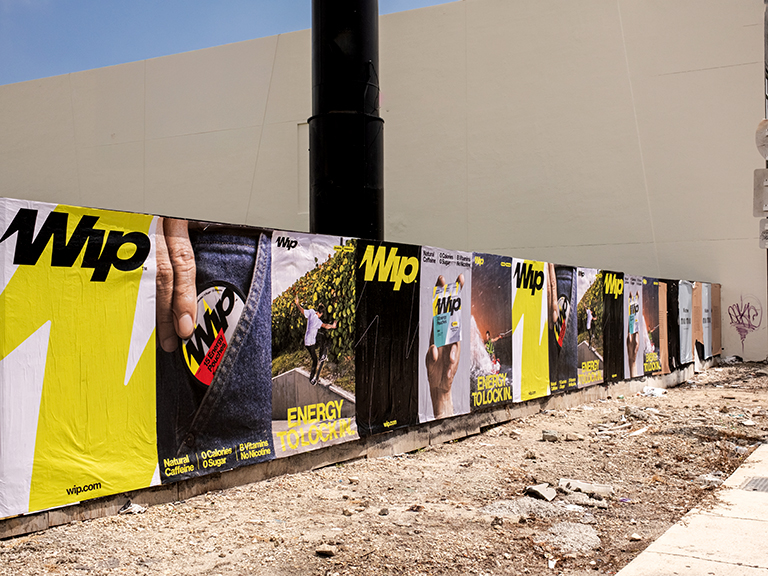
Average Poster Size: What Most Campaigns Actually Print
The phrase “average poster size” gets searched a lot, and for good reason, when you are planning a campaign and you have never ordered posters before, you want to understand the middle of the distribution before you start making decisions at the edges. Our team at American Guerrilla Marketing has planned and executed street poster campaigns across the country for years, and we have a clear picture of what average actually looks like across different campaign types, industries, and budgets.
This guide answers the question directly and then gives you the full context to make an informed decision for your specific situation. We break down average poster sizes by campaign type, industry, viewing context, and surface type, with exact measurements in both inches and centimeters, aspect ratios, and field notes from our installation crews. By the end you will understand more than what the average is, but why it is what it is, and whether average is actually right for your campaign.
If we had to give a single number to represent the average poster size across all professional street campaigns we run, it would fall between 18 x 24 inches (45.7 x 61.0 cm) and 24 x 36 inches (61.0 x 91.4 cm). These two formats represent the center of gravity for most professional outdoor poster work in the United States. Here is the breakdown:
18 x 24 inches (45.7 x 61.0 cm): The average size for volume-driven street campaigns, retail promotions, and mid-budget activations. This is the format that makes the most financial sense when a campaign needs 200 to 500+ units and the surfaces being targeted are standard street infrastructure (poles, boards, fencing).
24 x 36 inches (61.0 x 91.4 cm): The average size for impact-driven campaigns, premium street placements, construction hoarding, and any activation where visual dominance matters more than cost-per-unit efficiency. This is also the de facto standard for most wheatpaste campaigns.
For campaigns that include a snipe or flyer component, the average drops to 11 x 17 inches (27.9 x 43.2 cm), which is the historical average for concert and event flyers distributed in high-volume at street level. For entertainment industry campaigns that include lobby and frame placements, the average is 27 x 40 inches (68.6 x 101.6 cm), the standard one-sheet.
The average poster size is not arbitrary, it is the result of three converging forces that have shaped the outdoor advertising industry over many decades.
1. Surface Availability and Infrastructure
The physical environment dictates what sizes are practical. Utility poles in most American cities have face widths of 10 to 14 inches, which limits effective poster width to about 12 inches. Construction hoarding panels are typically 8 feet wide, which accommodates three 24 x 36 posters side-by-side. Bus shelter backlighted frames are engineered to hold 40 x 60 inch panels. The physical infrastructure of outdoor advertising created demand for specific sizes, and those sizes became the average because they fit the most surfaces efficiently.
2. Print Economics
Commercial offset printing economics favor sheet sizes that can be imposed (multiple copies of a poster on a single large press sheet) efficiently. The most common large-format press sheets are approximately 25 x 38 inches, 28 x 40 inches, and 40 x 60 inches. Poster sizes that cut efficiently from these press sheets, 11 x 17, 12 x 18, 18 x 24, 24 x 36, emerged as the most economical formats and therefore became the average. Non-standard sizes that do not cut efficiently from standard press sheets cost more and are ordered less frequently, which keeps them out of the average.
3. Viewer Behavior and Readability Thresholds
There is a practical minimum size at which a poster can communicate effectively to a pedestrian moving at normal walking speed. Our team has observed across many campaigns that 11 x 17 is about the minimum for meaningful outdoor communication. Below that size, say, 8.5 x 11 or smaller, the format works only for a viewer who is standing still and close. Above 24 x 36, the format starts to exceed what most street-level surface inventory can accommodate without tiling. The average poster size cluster of 11 x 17 through 24 x 36 represents the “readability sweet spot” for outdoor pedestrian advertising.
Average Poster Size vs. Optimal Poster Size
Average and optimal are not the same thing. The average reflects what most campaigns order, which is partly habit, partly economics, and partly the path of least resistance. The optimal size for your campaign depends on factors that are specific to your situation. Here is how we think about the difference:
When Average is Optimal
For most campaigns, especially first-time clients or campaigns with a general “raise awareness” objective, the average poster size is actually the right choice. The 18 x 24 and 24 x 36 formats are average precisely because they work well across a wide range of situations. If you do not have a specific surface constraint that pushes you toward a non-standard size, and if your budget is within the normal range for your market and campaign type, average is optimal.
When You Should Go Smaller Than Average
Go smaller than average (to 11 x 17 or 12 x 18) when your primary goal is geographic saturation and cost efficiency matters more than per-placement impact. If you are trying to make the brand feel omnipresent in a 10-block radius on a limited budget, volume beats size. A neighborhood with 500 11 x 17 posters will feel more saturated to residents than one with 100 24 x 36 placements at the same total budget.
When You Should Go Larger Than Average
Go larger than average (to 36 x 48 or 40 x 60) when you have identified a few key locations with large, blank surfaces and you want to create a “billboard moment” in the campaign. Premium corner walls, large blank building sides, and wide construction hoarding runs can accommodate oversized formats that punch well above their weight relative to the rest of the campaign. A single 36 x 48 hero placement at a key intersection can be seen by tens of thousands of people per day, the ROI on a single large-format placement in the right location can exceed the ROI of 200 smaller posters scattered across a neighborhood.
Average Poster Size in Different Markets
Market characteristics affect what average poster sizes work best. Dense urban markets with heavy foot traffic and small surface areas favor smaller formats in higher volume. Suburban and transitional markets with more open wall space and vehicle traffic favor larger formats.
Market Type
Avg Primary Format
Avg Volume
Key Surfaces
Dense urban core (Manhattan, downtown LA)
24 x 36 in (61×91 cm)
200-500 units
Construction hoarding, blank walls, utility infrastructure
Urban neighborhoods (Brooklyn, Silver Lake)
18 x 24 in (46×61 cm)
300-800 units
Poles, boards, commercial windows, alley walls
Suburban / mixed use
18 x 24 in (46×61 cm)
200-500 units
Retail boards, community bulletin boards, fencing
University / campus area
11 x 17 in (28×43 cm)
500-1,500 units
Bulletin boards, poles, campus infrastructure
Festival / event area
18 x 24 in (46×61 cm)
200-600 units
Vendor areas, temporary boards, perimeter fencing
Detailed Measurements: Average Poster Sizes in Inches and Centimeters
For designers and production teams who need exact numbers, here is a comprehensive reference of the average and near-average poster sizes with complete measurements:
Format Name
Width (in)
Height (in)
Width (cm)
Height (cm)
Area (sq in)
Aspect Ratio
Snipe / Letter
8.5
11
21.6
27.9
93.5
~11:14
Tabloid / Concert
11
17
27.9
43.2
187
11:17
Small Street
12
18
30.5
45.7
216
2:3
Mid Standard (B)
18
24
45.7
61.0
432
3:4
Mid-Large
20
30
50.8
76.2
600
2:3
Large Standard
24
36
61.0
91.4
864
2:3
One-Sheet
27
40
68.6
101.6
1080
27:40
Jumbo
36
48
91.4
121.9
1728
3:4
Transit Two-Sheet
40
60
101.6
152.4
2400
2:3
Average Poster Size and Paper Weight
The average poster size influences the right paper weight for a given application. Larger posters need stiffer stock to handle during installation without creasing or tearing. Here is the paper weight guidance our crews follow by format:
8.5 x 11 and 11 x 17: 60 lb uncoated text for exterior paste-up; 80 lb coated text for indoor applications. The lighter weight is fine at these sizes because the short dimension prevents the sheet from sagging or folding during handling.
12 x 18 and 18 x 24: 70 lb uncoated text for exterior; 80-100 lb coated for indoor. At 18 x 24, lighter stocks start to curl in humid conditions, which complicates paste-up. 70 lb is the practical minimum for outdoor use at this size.
24 x 36: 80 lb uncoated text is our standard for exterior paste work. At this size a lighter stock becomes difficult to handle without creasing, the sheet flexes too much when being positioned on the paste. For indoor framed applications, 100 lb coated or satin is appropriate.
27 x 40 and larger: 80-100 lb uncoated for exterior; 100 lb coated or cover stock for indoor framed installations. At 27 x 40 and above, cover weight stocks (minimum 65 lb cover) provide the rigidity needed to hold the poster flat in a frame without buckling.
How We Recommend Average Poster Size to Our Clients
When a client comes to us without a preformed view on poster size, we run through a short qualification framework to identify the right format. This is the conversation our team has:
Step 1: What is the campaign goal? Brand awareness through saturation = smaller format, higher volume. Visual impact at key locations = larger format, lower volume. Hybrid = two-tier approach with 24 x 36 hero and 18 x 24 secondary.
Step 2: What is the budget? At $1,500 for printing alone, you can print roughly 250 units at 18 x 24 or 100 units at 24 x 36. The budget determines volume, and volume determines which format delivers better exposures per dollar.
Step 3: What surfaces are available? We survey the target area, either with the client or from our existing market knowledge, and identify what surfaces are available and what size fits them best. A campaign targeting utility poles in a residential neighborhood almost always points toward 11 x 17. A campaign targeting construction hoarding in a business district points toward 24 x 36.
Step 4: What is the viewing context? Fast-moving foot traffic in a dense commercial corridor: 24 x 36 or larger. Slow-moving pedestrians in a residential neighborhood: 18 x 24 or 11 x 17. Mixed context with both: two-tier approach.
Average Poster Size and Artwork Design Implications
The average poster size affects how artwork should be designed, more than how it should be printed. Smaller average formats (11 x 17, 12 x 18) demand simpler layouts, one dominant image, one headline, minimal supporting text. The viewer does not have time at walking speed to process a complicated layout on a small surface. Larger average formats (24 x 36, 27 x 40) allow for more design complexity, multiple elements, supporting text, calls to action, because the viewer can process more information from farther away.
A common mistake our team sees is clients designing for a large format and scaling down to an average street size without simplifying the layout. A 24 x 36 design with four columns of text and six images will become illegible at 18 x 24 and unreadable at 11 x 17. The design needs to be rethought for each size, more than rescaled. Our rule of thumb: if you cannot read the headline at 100% zoom on a standard monitor, it will not work on the street at that size.
Frequently Asked Questions
What is the average size of a poster in inches?
The average poster size in professional street campaigns falls between 18 x 24 inches (45.7 x 61.0 cm) and 24 x 36 inches (61.0 x 91.4 cm). For music and event flyers, the average drops to 11 x 17 inches (27.9 x 43.2 cm). For theater and entertainment lobby installations, the average is 27 x 40 inches (68.6 x 101.6 cm).
What is the average size of a poster in centimeters?
The average poster size in centimeters is approximately 46 x 61 cm (18 x 24 in) for standard street campaigns and 61 x 91 cm (24 x 36 in) for large-format street campaigns. Concert flyers average approximately 28 x 43 cm (11 x 17 in). Movie and entertainment one-sheets average 69 x 102 cm (27 x 40 in).
Is 24 x 36 inches the average poster size?
The 24 x 36 inch (61.0 x 91.4 cm) format is the average for premium street campaigns and wheatpaste activations. For volume-driven campaigns where cost per unit is a primary concern, 18 x 24 inches (45.7 x 61.0 cm) is closer to the average. The “right” average depends on campaign type and objectives.
What is the average concert poster size?
The average concert poster size is 11 x 17 inches (27.9 x 43.2 cm). This format has been the standard for the music industry since the early days of printed concert promotion and remains the workhorse for independent and touring acts. For major label releases, the average often scales up to 24 x 36 for street placements.
How does average poster size compare to billboard size?
There is a substantial size gap between the largest average poster format (40 x 60 inches for transit) and the smallest billboard format. Standard bulletins (the most common billboard format) are 14 feet tall by 48 feet wide (168 x 576 inches or 426.7 x 1463.0 cm). Poster panels (30-sheet billboards) are 10 feet tall by 22 feet wide (120 x 264 inches or 304.8 x 670.6 cm). Posters and billboards ar
Does the average poster size vary by industry?
Yes, significantly. The music and entertainment industry gravitates toward 11 x 17 (for independent acts) and 24 x 36 (for label-backed campaigns). Consumer brands prefer 18 x 24 for its cost efficiency and wide distribution potential. Film studios use 27 x 40 for lobby installations. Retail and hospitality tend toward 18 x 24 or 24 x 36 depending on window dimensions. Political campaigns heavily
What happens if I print a non-average poster size?
Non-standard or non-average poster sizes can work well, but they typically cost more to produce (custom cutting fees, non-standard paper waste), take longer to print (special setup required), and may not fit standard frames or installation fixtures. The main advantage of a non-average size is that it stands out, a uniquely sized poster in a field of standard formats gets noticed. The cost is worth