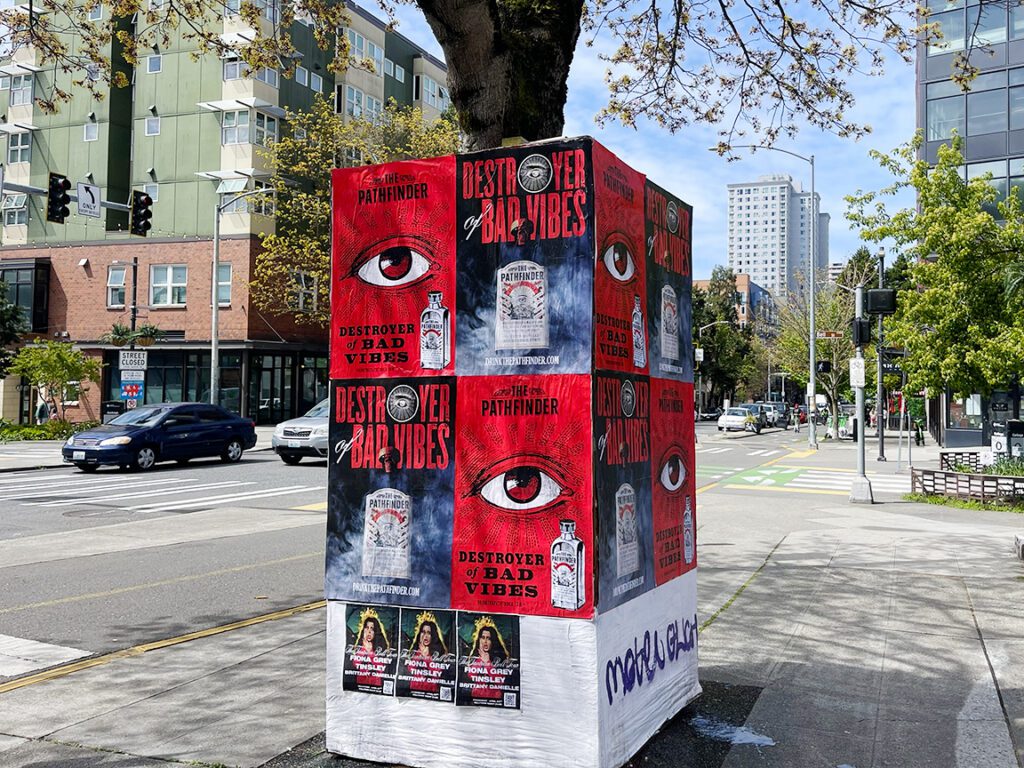
Choosing an ad agency for your CPG brand is one of the most consequential decisions you will make. The wrong agency burns budget on tactics that do not match how your buyers actually behave. The right agency understands the CPG purchase funnel and builds campaigns that work at every step of it.
We are American Guerrilla Marketing. We work with CPG brands on campaigns that combine street-level reach with digital amplification. We have worked with brands in food, beverage, personal care, and household products across dozens of markets. This guide covers what to look for in a CPG agency and how to evaluate your options honestly.
CPG advertising is not like B2B advertising. It is not like luxury advertising. It is not like direct response advertising. It has its own logic, its own purchase funnel, and its own creative demands.
CPG purchases are frequent, low-deliberation decisions made in physical and digital retail environments. The brand wins at the shelf when it has built enough memory in the buyer’s mind to win without a salesperson. The agency’s job is to build that memory efficiently and maintain it over time.
This requires agencies that understand:
The role of emotional brand associations in low-involvement purchase decisions
How to create category-level desire, more than brand-level preference
The relationship between digital advertising and physical retail performance
How to work with retailers, brokers, and distributors as part of a broader marketing network
The difference between building a brand and driving short-term promotional volume
Most general advertising agencies do not think in these terms. They apply frameworks designed for considered purchases or direct response campaigns to a category where neither framework is appropriate. The result is advertising that looks good in presentations and performs poorly in stores.
Types of Agencies That Work for CPG Brands
Not all agencies are equal for CPG. Here is a breakdown of the types you will encounter and what each does well:
Agency Type
Strengths for CPG
Limitations
Full-Service CPG Specialist
Deep category knowledge, retail marketing integration, brand architecture
Often disconnected from consumer-facing brand campaigns
Integrated Boutique
Strategy + execution across channels, flexible engagement
Capacity limits at larger scale
The best setup for most mid-size CPG brands is an integrated boutique with genuine CPG expertise, supplemented by specialist partners for specific capabilities. This gives you strategic coherence without the overhead of a massive holding company agency.
The best CPG agencies know the difference between brand advertising and promotional advertising. They build both. They know when to use each. They do not treat every campaign as a direct response opportunity.
What to Look for in a CPG Ad Agency
When you are evaluating agencies, here are the specific questions to ask and the answers to look for:
Do they have real CPG case studies?
Not “we worked with a food brand.” Specific campaigns, specific objectives, specific results. What category? What retailer? What was the baseline and what happened after the campaign? Vague case studies signal a lack of genuine category experience.
Do they understand retail distribution dynamics?
Most CPG brands sell through retail channels. An agency that understands your retail relationships, your shelf positioning, and your distribution goals is far more valuable than one that treats marketing as a purely consumer-facing exercise. They should know how advertising affects retail velocity and how retail velocity affects your negotiations with buyers.
Can they think in brand and promotion at the same time?
Brand advertising builds long-term equity. Promotional advertising drives short-term volume. CPG brands need both. An agency that only thinks promotionally erodes your brand. An agency that only thinks in brand terms will frustrate you when you need to move product in Q4. You want an agency that manages the tension between both objectives.
How do they approach creative testing?
CPG creative requires testing across multiple formats, messages, and creative executions. An agency that presents one campaign direction and expects it to run without testing is taking risks with your budget. The right agency builds testing into the process from the start.
What is their street-level and physical world capability?
Digital is not the only channel for CPG brand building. Sampling, event activation, street marketing, and out-of-home advertising all play important roles. An agency that is purely digital is leaving significant CPG marketing opportunities on the table.
Why Street Marketing Matters for CPG Brands
We built our practice around street marketing because we believe in the power of physical brand presence. For CPG brands, this belief is grounded in evidence.
Sampling drives trial at a rate that no digital tactic matches. When someone tastes your product, they have a direct, unmediated experience of it. That experience creates a purchase intention that digital advertising can only approximate. We run sampling programs that put CPG products in the hands of the right people at the right time in the right locations.
Street presence builds brand salience in the neighborhoods adjacent to key retail distribution. When consumers see your brand in the environment they move through every day, that brand becomes part of their world. It occupies mental real estate that competing brands have to fight to dislodge.
Event activation creates brand stories. A great product activation at a food market, a music festival, or a neighborhood event generates social content, direct trial, and community goodwill that digital advertising cannot manufacture. These experiences become the reference points that shape how people talk about your brand.
CPG brands that pair strong digital campaigns with physical world presence consistently outperform brands that run digital-only strategies. The combination creates reinforcing exposures across multiple sensory channels. That reinforcement builds brand memory faster and more durably.
How We Work With CPG Brands
Our CPG practice is built around integrated campaigns that connect street-level tactics to measurable business outcomes.
We start with your distribution footprint. Where are you sold? What neighborhoods, what cities, what retail channels? This geographic picture shapes every element of the campaign that follows.
We then map the consumer process in those markets. Where does your target buyer spend time before they shop? What communities, events, and physical spaces do they move through? Where are the moments of natural product relevance in their lives?
From that map, we build a campaign that reaches your buyer at multiple points before they reach the shelf. Postering and stencil work in their neighborhood. Sampling at the farmers market they visit on Saturday mornings. Digital content on the platforms they use during the week. Event presence at the cultural moments they attend.
The result is a brand that feels like it belongs in their life. When they see it at the shelf, it is already familiar. The purchase decision is easy because the brand has done all the persuasion work before the shelf moment arrives.
Matching Agency Type to Campaign Stage
Different stages of a CPG brand’s growth require different agency relationships. Here is how we think about the match:
Launch stage. Street marketing, sampling, and local digital campaigns. Focus on creating trial and generating the first wave of advocacy. Budget efficiency matters most. You need agencies that can deliver high impact per dollar spent, not agencies with prestigious pitch decks.
Growth stage. Broader digital campaigns paired with continued street-level presence. Begin building brand equity alongside trial generation. Creator partnerships amplify reach. Retailer co-marketing programs accelerate shelf performance.
Expansion stage. Multi-city campaigns, national digital presence, and market-by-market activation planning. You need an agency that can manage complexity across markets without losing the local relevance that made your brand work in your home market.
Maturity stage. Brand maintenance, competitive defense, and market share protection. Agencies that manage long-term brand equity and navigate category disruption from emerging competitors.
Red Flags When Evaluating CPG Agencies
These are the signals that tell you an agency is wrong for your CPG brand:
They lead with exposures and reach without connecting those metrics to retail outcomes
Their case studies are all digital and none involve physical retail performance
They cannot name the key retailers in your distribution channel without being told
They present a single creative direction without a testing framework
They cannot explain the difference between brand building and trade promotion
They treat all social platforms the same without platform-specific creative strategy
Their senior team members have no CPG category experience
Questions to Ask in an Agency Pitch
Agency pitches are performances. The agency prepares a presentation designed to win your business. Your job is to ask questions that get past the performance and reveal the substance beneath it.
Here are the questions we recommend asking in every CPG agency pitch:
“Show me a campaign where the objective was not met and explain what you learned.” Every agency has failures. Agencies that claim otherwise are either dishonest or have not done enough work to fail. How an agency responds to this question reveals more about their culture and their client relationships than any case study they prepared in advance.
“Who will actually be working on our account day to day?” Senior agency talent wins pitches. Junior agency talent often runs the accounts. Ask specifically which team members will be managing your account after the contract is signed. Ask to meet them during the pitch process. The team that presents is not always the team that delivers.
“How do you measure success for a brand at our stage?” A sophisticated agency will answer this question differently for a launch-stage brand versus a growth-stage brand versus a market leader. If they give you the same metrics regardless of your situation, they are not thinking specifically about your challenges.
“What is your creative testing process?” An agency that runs one creative direction without testing is gambling with your budget. Ask specifically how they test creative hypotheses, how quickly they read test results, and how they decide which creative to scale.
“How do you work with retail partners and shopper marketing teams?” If you sell through retail channels, your advertising strategy should connect to your retail strategy. An agency that has no idea how to work with retailer co-marketing programs or trade funds is missing a major component of CPG marketing.
The Integration Advantage: Why Physical and Digital Must Work Together
The CPG brands that win long-term do not treat digital and physical marketing as separate programs. They integrate them into a single consumer experience that reaches buyers at multiple touchpoints across their daily lives.
Consider how a consumer moves through a day. They wake up and check social media. They commute and see street-level advertising. They shop at a store where their physical environment includes displays and in-store promotions. They return home and see digital ads in the evening. Each of these touchpoints is an opportunity to reinforce the same brand impression.
When those touchpoints deliver a consistent message, the cumulative effect on brand memory is much stronger than any single channel could achieve. We design campaigns that use street-level activation to create physical anchors for the brand impression that digital advertising builds. A consumer who has seen your brand on a poster in their neighborhood and on their Instagram feed trusts it in a way that a consumer who has only seen digital ads does not.
This integration also creates content. A street activation generates social media posts. A sampling event generates reviews and testimonials. A mural generates photography that circulates on local community pages and neighborhood apps. The physical world creates the raw material for digital content. The digital amplification extends the reach of physical activations. Neither channel works as well in isolation as both work together.
We build this integration into every CPG campaign we manage. We map the physical world presence and the digital campaign to the same consumer process. We time deployments to reinforce each other. And we measure the combined effect, more than the individual channel performance.
Frequently Asked Questions
How much should a CPG brand spend on advertising?
>Industry benchmarks for CPG advertising spend range from eight to fifteen percent of revenue for growth-stage brands and five to ten percent for more mature brands. Emerging brands breaking into new markets often spend higher as a percentage of revenue during the launch and trial-building phase. The right number depends on your category, your competitive set, and your distribution goals. > > >
Should a small CPG brand use a big agency or a boutique?
>For most CPG brands under $10 million in revenue, a boutique with genuine CPG experience outperforms a large holding company agency. You get more senior attention, more strategic flexibility, and more accountability for results. Large agencies tend to staff smaller accounts with junior teams. A boutique treats your account as significant regardless of budget. > > >
What is the most important thing a CPG agency should understand?
>The relationship between brand memory and purchase behavior. CPG purchases happen at moments of low deliberation. The brands that win are the ones that have built strong, positive memory associations before the purchase moment. An agency that understands this builds campaigns to create those associations, more than to generate clicks or exposures. > > >
How does street marketing fit into a CPG advertising strategy?
>Street marketing creates physical brand presence in the environments where your consumers live. It drives sampling and trial, builds neighborhood-level brand familiarity, and creates social content through experiential moments. For CPG brands with retail distribution, street marketing near key store locations is one of the highest-efficiency tactics available. > > >
How long does it take to see results from CPG advertising?
>Short-term promotional advertising can show results within weeks. Brand-building advertising typically requires three to six months before measurable brand equity shifts are visible. Retail velocity improvements from brand advertising often appear in the three to nine month window. Patience is required. Brands that chase short-term results exclusively erode their long-term equity. > > >
What channels are most effective for CPG advertising right now?
>Short-form social video on TikTok and Instagram, creator partnerships, connected TV, and street-level sampling and activation are the highest-efficiency channels for most CPG brands right now. Retail media networks are growing in importance for brands with major retail distribution relationships. The optimal mix depends on your category, your budget, and your distribution footprint. > > >
>The primary signal is retail velocity. Are you selling more product per store per week in markets where you are advertising heavily? Secondary signals include brand awareness lift, social engagement, and direct consumer feedback. An agency that cannot connect their work to retail outcomes is missing the most important metric in CPG marketing. > > >