Concert Promotion Example: How to Promote a Show That Sells Out
The best concert promotion examples are not the ones with the biggest budgets. They are the ones that reached the right audience in the right place at the right moment.
Concert promotion is one of those fields where the mythology runs well ahead of the reality. The campaigns people remember — the ones that generated viral attention or filled 10,000-seat venues — are almost always the result of years of audience building and significant resources applied at the right moment. They are not representative of how most concerts get marketed and filled.
This article covers concert promotion examples that reflect how shows actually get filled: with disciplined street-level tactics, precise audience targeting, and consistent execution over the weeks before the event. These are approaches AGM has used or observed working consistently across major US markets. They are practical, not glamorous.
Example 1: Neighborhood Poster Campaign for a 400-Capacity Club Show
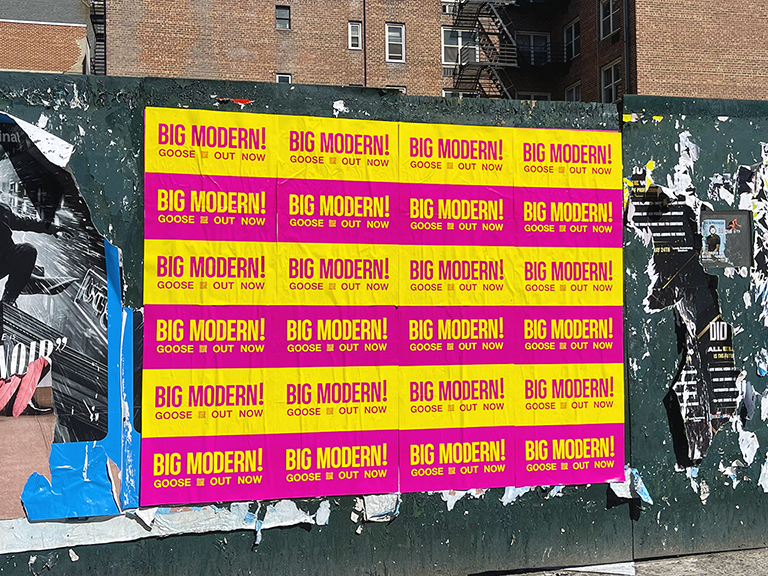
A 400-capacity club show for a mid-tier artist with a dedicated regional following used a focused poster campaign as its primary marketing tool. The approach: 500 posters printed at 24 x 36 inches with the artist’s current project visual identity, placed across a 20-block radius from the venue over three placement days in the two weeks before the show.
The placement strategy was deliberate rather than broad. Rather than distributing across the entire borough, the team concentrated in the six blocks immediately around the venue — where bars, restaurants, record shops, and other venues created maximum placement opportunity — and then extended into three neighborhoods where the target audience was known to concentrate based on the demographic pattern of previous shows at the same venue.
The show reached 85% capacity before the final week and sold out four days before the show date. Ticket sales velocity data showed the largest single-day spike in the 48-hour window after the initial poster placements went up, suggesting the campaign was reaching the right audience in the right locations. Post-show venue debrief confirmed the pattern: multiple ticket buyers that week mentioned seeing the posters in specific neighborhoods as the prompt that moved them from awareness to purchase.
What made this work: Concentration over coverage. 500 posters in a targeted area produced better results than the same 500 posters spread across a full market. The placement team’s knowledge of the venue’s neighborhood and the audience’s movement patterns allowed them to put materials exactly where the right people would see them repeatedly — and repetition is how a poster campaign builds attendance intent. A person who sees the same poster in three different places they go in a week has a qualitatively different awareness than a person who sees it once.
Example 2: Street Team Distribution for a Festival-Affiliated Show
A promoter bringing a series of artists to a 1,500-capacity venue in Chicago as an official preview event for a major annual festival used street team distribution as the primary marketing tactic. The show was positioned as the official warm-up for the festival — which meant the street team’s job was to reach confirmed festival ticket holders and convert their existing enthusiasm into a ticket purchase for the preview event.
The team identified where confirmed festival ticket holders were physically concentrated in Chicago: the neighborhoods from which previous ticket buyer data showed the highest purchase concentration, the bars and restaurants in those neighborhoods that had hosted festival-related gatherings in prior years, and the record stores and lifestyle retail shops where that audience shopped. The street team worked these locations for four consecutive Saturdays in the six weeks before the show, distributing a premium handbill with show information and a time-limited ticket discount code specific to each week’s distribution run.
The unique weekly discount codes allowed precise measurement of which distribution days drove the most ticket conversions. Week two produced the highest conversion rate by a significant margin — traced in post-campaign analysis to a specific Saturday afternoon when the team was working a neighborhood record store simultaneously hosting an in-store event that drew the exact target audience in concentrated numbers. The lesson: the right venue at the right time matters as much as the right neighborhood.
Example 3: Multi-City Campaign for a Regional Tour
A touring artist playing eight cities over three weeks used a coordinated poster and street team campaign in each market in the two weeks before each show. The visual identity was consistent across all markets. The execution was locally sourced: local teams, local placement expertise, and local knowledge of the relevant neighborhoods in each city.
The coordinating team managed print production centrally, shipping materials to local coordinators on a rolling schedule timed to the tour’s route. Each market received materials two weeks before the show date. Local coordinators received a target neighborhood list but were given discretion to add placements based on their market knowledge. That combination — centralized identity, decentralized local execution — produced both visual consistency across the tour and market-specific precision in placement.
Market
Venue Capacity
Tactics Used
Show Result
New York
1,200
Poster campaign + street team + social content
Sold out 3 days before show
Los Angeles
900
Poster campaign + street team
92% capacity
Chicago
700
Poster campaign + street team
Sold out 1 week before show
Atlanta
600
Poster campaign only
78% capacity
Houston
500
Street team only
81% capacity
The pattern from this tour illustrated a consistent finding: markets where both poster campaigns and street team distribution ran simultaneously outperformed markets where only one tactic was used. The markets using only a poster campaign (Atlanta) or only street team distribution (Houston) performed respectably but below the markets where both ran together. The tactics are not redundant — they reach the target audience through different channels and at different moments, and the combination produces more than either achieves alone.
Example 4: Pre-Show Activation for a Platform-Sponsored Concert
A streaming platform sponsoring a free concert in New York City used a pre-show activation as the primary market-building tactic for the event. The activation: a branded step van parked at three different high-traffic locations in the two weeks before the show, staffed by brand ambassadors offering free product samples, show-exclusive merchandise, and a listening station featuring the performing artists’ catalogs.
The step van served multiple simultaneous functions. It generated awareness of the show among passersby who engaged with the activation and received show information. It generated social content from consumers who photographed the vehicle and posted it with event hashtags. It provided the platform with field-level documentation of the campaign reaching consumers in specific geographic locations. And it created a brand moment for engaging consumers that extended the platform’s relationship with them beyond a single digital ad exposure.
Platform-sponsored concert note: The value of a sponsored concert campaign is not just the event. It is the six weeks of brand-building activity before the event, the event itself as a brand moment, and the post-show content that extends the campaign’s reach across social channels afterward. The concert is the anchor. The marketing around it is where the brand value accumulates week by week.
Example 5: Grassroots Promotion for an Independent Artist
An independent artist self-funding a 250-capacity show in Philadelphia used a grassroots approach with a $2,000 total marketing budget. The approach: 300 posters at 18 x 24 inches placed personally by the artist and two friends over two Saturday afternoons, concentrated in the three neighborhoods where the artist’s existing local fanbase lived and went out, plus 500 handbills distributed at four shows at comparable venues in the three weeks before the event.
The artist’s direct involvement in placement created social content that felt authentic and built genuine pre-show engagement. Followers in those neighborhoods shared posts featuring places they recognized. The handbill distribution at other shows reached the core audience in the physical environment where they were most receptive: already at a live music show, already in a mindset to engage with upcoming events, and holding a well-designed piece of marketing material that felt worth keeping.
The show sold out two days before the event. The artist identified the handbill distribution at other shows as the highest-converting channel — estimating that at least 40 attendees mentioned receiving a handbill at a prior show as what prompted them to buy a ticket. The poster campaign drove broad awareness in the neighborhoods and generated social content. The in-venue handbill distribution drove direct conversions among people who were already showing up to comparable shows.
What These Examples Share
Across all five examples, campaigns that performed at the highest level had the same characteristics: precise audience targeting in specific physical locations rather than broad coverage, consistent visual identity across all materials in all locations, a combination of awareness-building and direct-contact tactics rather than relying on a single approach, and systematic documentation that produced secondary social content extending the campaign’s reach beyond the direct placements.
None required exceptional budgets. The most expensive example involved a streaming platform with substantial resources, but the same principles applied at the grassroots level with $2,000 produced a sold-out show. Targeting discipline, execution consistency, and the combination of physical and digital amplification are what these examples have in common — and those are elements any promoter at any budget level can control.
The consistent failure mode across concert promotion campaigns that underperform is not doing too little — it is doing the wrong things in the wrong places. A large poster run in neighborhoods where the target audience does not concentrate, a street team working areas with high foot traffic but low audience relevance, or digital ads targeted too broadly all produce activity without producing ticket sales velocity. The examples here worked because the targeting was right before the tactics were chosen, not because the budget was large enough to compensate for poor targeting.
Street-Level Concert Marketing: How AGM Executes
American Guerrilla Marketing has executed street-level concert marketing campaigns for artists, labels, promoters, and streaming platforms across major US markets including New York, Los Angeles, Chicago, Miami, Philadelphia, Boston, Washington DC, Atlanta, Seattle, and Denver. Our experience spans venue sizes from 100-capacity club shows to 20,000-seat arena events, and genres from hip-hop and R&B to indie rock, electronic, country, and jazz.
Our concert marketing campaigns operate on three core principles. First, audience-first targeting: every tactic we use, from poster placement to street team routing, is designed around where the target audience actually concentrates in each market, not where general foot traffic is highest. Second, documentation as a deliverable: every poster campaign, street team day, and pre-show activation we run produces photo documentation that feeds the artist’s and venue’s social channels, creating secondary reach that extends the campaign well beyond its direct footprint. Third, timeline discipline: we build production timelines that are achievable, confirm vendor commitments before confirming campaign timelines with clients, and maintain the production schedules that keep campaigns from compressing into the final week before the show.
The most common mistake we see in concert marketing is starting too late. An artist announces a show six weeks out. The design process takes two weeks. Poster printing takes another two weeks. The campaign has two weeks to run before the show, which is enough to drive the final 20% of ticket sales but not enough to build the broad awareness that fills the early and middle of the venue’s capacity before relying on last-minute urgency to close out the remaining seats. Start the campaign eight to ten weeks before the show for any venue over 500 capacity, and you have the full timeline to work with.
Concert Marketing Tactics by Budget Level
Concert marketing budgets range from under $1,000 for a self-promoted club show to $100,000 or more for a major venue release event. Understanding what each budget level supports, and what trade-offs it requires, is essential for building a campaign that is achievable rather than aspirational.
Under $3,000: Grassroots Campaign
At under $3,000, a concert marketing campaign focuses on two tactics: a focused poster run in the target neighborhood and social content from the artist’s existing channels. Print 300 to 500 posters at 24 x 36 inches, concentrating placement in the three to five blocks around the venue and the two or three neighborhoods where the target audience lives. Supplement with in-venue promotion at comparable shows at the same or similar venues in the weeks before the event. The social content should document the poster placements — photos of the artist placing posters in their neighborhood consistently outperform generic announcement graphics on engagement.
$3,000 to $10,000: Full Street Campaign
At $3,000 to $10,000, the concert marketing campaign can expand to a larger poster run, two or three street team distribution days, and targeted paid social promotion in the final two weeks. The poster run covers a wider geographic footprint including additional neighborhoods outside the immediate venue area. The street team days concentrate on the highest-value locations: record stores, comparable venues, and the commercial blocks where the target audience shops and eats. Paid social amplification uses the poster documentation and artist-specific content to target users matching the show’s audience demographics in the venue’s geographic area.
$10,000 and Above: Full-Channel Campaign
At $10,000 and above, the concert marketing campaign can incorporate a pre-show experiential activation, multiple poster run phases, sustained street team distribution, coordinated local press outreach, and a broader paid media program. The pre-show activation — a listening station, branded vehicle stop, or immersive installation — creates the brand experience depth that pure awareness campaigns cannot produce. At this budget level, the campaign can build genuine anticipation rather than just awareness, converting the target audience from people who know about the show to people who are excited about the show before they buy a ticket.
Measuring Concert Marketing Campaign Performance
The primary metric for concert marketing is ticket sales velocity: how many tickets are selling per day or per week during the campaign period, and whether that velocity changes when specific tactics launch. Secondary metrics include social engagement on campaign content, street team distribution counts, and poster placement documentation quality.
Track ticket sales daily from the moment they go on sale. Record the specific dates when each marketing tactic launches. If ticket sales velocity accelerates in the days after a poster campaign goes up, that campaign contributed to sales. If velocity does not change when the street team runs, either the distribution locations were wrong, the materials were inadequate, or the audience was already fully bought in and the street team was not reaching new potential ticket buyers. This kind of tactic-by-tactic velocity analysis builds a dataset of what actually works for a specific artist in a specific market that improves every subsequent campaign.
Building the Long-Term Artist Marketing Relationship
Concert marketing is not a one-time event; it is a repeated practice that improves with each campaign cycle. Every show a promoter or artist runs is an opportunity to test tactics, measure what worked, and build the local market knowledge that makes subsequent campaigns more effective. The artists and promoters who are most consistent at filling their venues are typically not the ones with the largest marketing budgets — they are the ones who have been running campaigns in the same markets long enough to know exactly which poster boards, which street team locations, and which neighborhood concentrations produce ticket sales for their specific audience.
Building that knowledge requires treating concert marketing as a trackable discipline rather than an intuitive art form. Record where posters were placed and when. Note which days the street team ran and in which locations. Track ticket sales velocity daily and correlate it with the specific days when tactics launched. After three or four campaigns in the same market, this data reveals patterns: which location types consistently drive velocity spikes, which neighborhoods produce the strongest conversion rates, which timing windows are most efficient for each tactic type.
The artists and management teams who invest in this tracking capability build a compounding advantage over time. Their fourth campaign in a market is substantially more efficient than their first because they are not re-discovering what works from scratch. They are refining an approach that is already calibrated to their specific audience in their specific market. That calibration compounds: each campaign produces better results per dollar spent than the previous one, because the targeting and timing are progressively more precise.
American Guerrilla Marketing maintains market-level performance data from all the concert and entertainment campaigns we execute. When we bring a client into a new market for the first time, we are not guessing about which locations and which tactics will work for their audience profile. We are drawing on documented performance data from comparable campaigns in that market. That institutional knowledge shortens the learning curve and produces better first-campaign results than a team building their market knowledge from scratch would produce.
Frequently Asked Questions
What makes a concert promotion campaign successful?
Precise audience targeting in specific physical locations, consistent visual identity, a combination of awareness and direct-contact tactics, and systematic documentation that creates secondary social content are the consistent characteristics of successful concert promotion campaigns. Budget helps but is secondary to targeting discipline.
What is the best concert promotion example for a small show?
A focused poster campaign in the target neighborhoods combined with handbill distribution at similar shows at nearby venues is the most proven approach for small shows under 500 capacity. Both tactics concentrate resources on the most likely ticket buyers rather than spreading thin across a broad market.
How many posters should I print for a concert?
For a 300-500 capacity show, 300 to 500 posters at 24 x 36 inches covering the target neighborhood is a reasonable starting point. For a 1,000-2,000 capacity show, plan 1,000 to 2,000 posters across two placement rounds. The right quantity depends on the size of the target area and the placement density you need to achieve.
How do I measure whether concert promotion is working?
Track daily ticket sales velocity from the moment tickets go on sale. Note the specific dates when each tactic launches. If sales velocity accelerates after a tactic launches, that tactic contributed to sales. The most useful data is your own historical sales velocity from similar shows in similar markets.
How far in advance should concert promotion start?
Start street-level concert promotion no later than four weeks before the show for shows over 500 capacity. For shows over 1,000 capacity in markets where the artist has limited existing audience, start six to eight weeks out. Allow two weeks for print production from design approval.
Can in-venue promotion be as effective as outdoor poster campaigns?
For shows at venues with consistent programming and existing audience loyalty, in-venue promotion at other shows consistently converts at higher rates per dollar than outdoor campaigns because it reaches people who are already attending live music and are predisposed to purchase tickets for upcoming shows. Use both if budget allows; prioritize in-venue if budget is limited.