Event Marketing Trucks: Formats, Costs, and How to Run Them Right (2025)
A well-deployed event marketing truck is one of the most efficient formats in experiential marketing: a self-contained brand environment that goes to the consumer instead of waiting for them to come to it. Here is how to use them effectively.
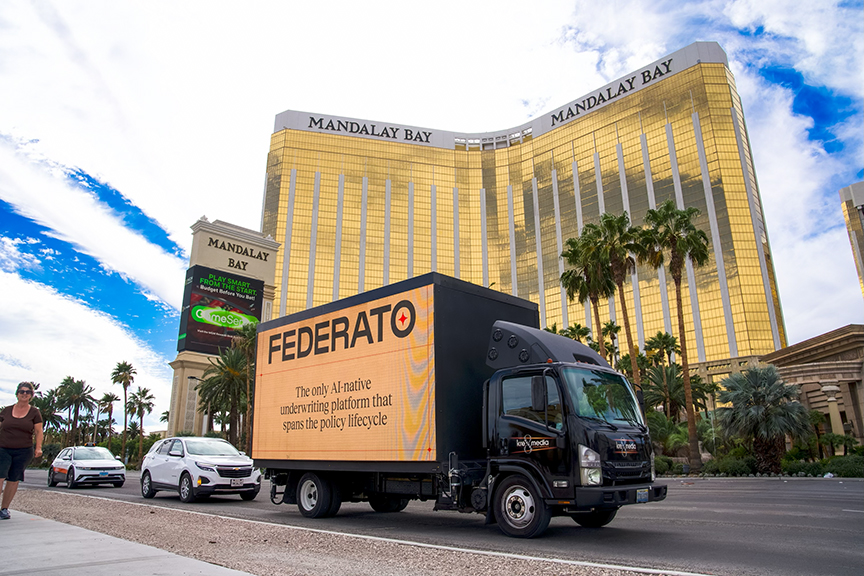
Event marketing trucks are branded mobile platforms that bring the brand’s activation directly to consumers in the locations where they actually are — transit hubs, retail corridors, parks, festivals, office districts, and neighborhoods. The truck is a self-contained brand environment: it carries the product, the staff, the presentation, and often the branded experience elements that make the activation more than a drive-by sample handoff.
The format’s fundamental advantage over fixed activations is flexibility. An event marketing truck can move through multiple neighborhoods in a single day, be in a different city next week, and adjust its deployment schedule based on real-time data about where the target consumer is concentrated. That mobility makes it one of the most efficient vehicles for multi-market sampling and touring brand programs.
The term covers a range of vehicle formats, each suited to different program types and product categories.
Wrapped Step Vans
A step van with a full-color brand wrap is the most common and most cost-effective event marketing truck format. The wrap makes the vehicle a mobile billboard while it is en route between locations, and the vehicle’s interior can be configured for product storage, staff transport, and basic distribution. Step vans are the right format for street-level sampling programs where the vehicle is primarily a staging and transport asset rather than a consumer-facing attraction.
Custom Converted Trailers
Converted trailers allow for full interior customization: product display, brand installation elements, serving stations, refrigeration, digital screens, and any other program elements that require a custom-built interior. The trailer is the more premium format when the vehicle itself is part of the consumer-facing experience rather than just a deployment asset. A well-converted trailer can serve as a complete pop-up brand experience that deploys wherever there is a tow vehicle and appropriate space.
Food and Beverage Mobile Units
For food, beverage, and health product brands, a food truck or mobile kitchen format allows product preparation and serving from the vehicle, creating the freshness and customization elements that a cooler-and-cups sampling setup cannot. The mobile kitchen format also attracts attention from food culture audiences who seek out interesting food trucks, creating an organic discovery dynamic that standard brand trucks do not generate.
Double-Decker Activations
A double-decker bus or truck converted into a two-level brand environment is the highest-production event marketing truck format. The visual presence of a full double-decker in an urban environment creates attention from a distance. The two-level interior allows for distinct activation zones — product trial below, brand experience above, or any other combination that serves the activation concept. This format is appropriate for flagship market activations that require strong visual presence and production scale.
Vehicle Type
Best Use Case
Daily Consumer Contacts
Cost Level
Wrapped step van
Street sampling, multi-stop programs
200 – 800
Low – Medium
Custom converted trailer
Pop-up brand experience, premium programs
100 – 500
Medium – High
Mobile kitchen / food truck
F&B brands, culinary sampling
150 – 600
Medium
Double-decker activation
Flagship market, high-visibility programs
300 – 1,000+
High
Route Planning and Location Selection
The productivity of an event marketing truck program depends more on route and location planning than on any other single variable. A beautifully branded truck parked in the wrong location with light foot traffic will underperform against a simple cart at the right intersection during peak hours.
Location selection for event marketing trucks considers: pedestrian traffic volume at specific hours, demographic composition of that traffic relative to the target consumer, competitive clutter from other brand activities at the same locations, access and parking logistics for the vehicle, and any relevant local restrictions on commercial vehicle deployment in specific areas.
We build activation routes from consumer movement data and direct location intelligence, not from general assumptions about where people are. For a brand targeting young professional women in New York between 25 and 35, the route is different than for a brand targeting families with children. The data tells us where each of those audiences is concentrated, at what hours, and on which days — and that is where the truck goes.
The two most common route planning mistakes in event marketing truck programs: placing the truck where the brand team has visibility (their own office neighborhood, familiar tourist corridors) rather than where the target consumer is concentrated; and running the same route every day without adjusting for performance data. Both produce avoidable underperformance. We review location performance data daily on multi-day programs and adjust routes based on actual engagement rates, not theoretical traffic estimates.
Staffing Event Marketing Trucks
The staff on an event marketing truck are the activation. The vehicle is the platform. A beautifully wrapped truck staffed by people who cannot lead a productive 60-second brand conversation produces brand visibility but not brand engagement. The investment in staff training for a truck program is as important as the investment in the vehicle wrap.
Our truck staffing approach: hire for energy, warmth, and conversational ability first, brand knowledge second (which can be trained). Train on the brand’s story, the product’s specific qualities, the interaction protocol that drives conversion, and how to maintain consistent energy across an eight-hour deployment day. Brief daily to reinforce the protocol and address what happened the previous day. Monitor in real time and provide coaching when performance drops.
Truck programs typically run two to four staff per vehicle depending on the program format. High-volume sampling programs need more hands for distribution. Programs with a demonstrated product experience need staff who can slow down and have the 90-second conversation that moves the needle on purchase intent.
Tour Programming and Multi-Market Deployments
Event marketing trucks are particularly effective for touring brand programs that move through multiple markets in sequence. A 12-city summer tour with a converted trailer, spending 3-4 days in each market, can reach hundreds of thousands of consumers with direct product contact while generating content and media coverage in each market that extends the campaign’s reach beyond the physical program.
Multi-market touring programs require: a logistics plan for vehicle transport between markets, pre-arranged parking permissions in each market, local staffing in each market (traveling with the same crew for weeks at a time creates burnout and turnover), market-specific location planning that uses local knowledge in each city, and a consolidated reporting structure that documents the program’s performance across all markets for the post-tour summary.
Planning a Multi-Day Event Marketing Truck Program
A single-day event marketing truck deployment tests the concept. A multi-day program builds the brand presence that changes consumer behavior. Understanding what a multi-day truck program requires in planning, operations, and management helps in building the program that actually delivers on its objectives.
Daily Route Planning and Adjustment
A multi-day truck program should not run the same route every day unless the data confirms that route is consistently productive. Daily performance data — contacts per hour by location, conversion rate per interaction, content generated per stop — should be reviewed each evening and used to adjust the next day’s route. Locations that underperformed should be either replaced or tested at a different time window. Locations that overperformed should be prioritized in subsequent days if the target consumer audience in that location has not yet been fully saturated.
Route adjustment based on real-time performance data is one of the most significant advantages of a mobile truck program over a fixed-location activation. A fixed activation is locked into its location for its full run duration. A truck program can move to where the program is working best, dramatically improving overall program efficiency.
Staff Rotation and Consistency
Multi-day truck programs face a specific staffing challenge: the same staff working consecutive long days lose energy and engagement quality over time. We build rotation schedules into multi-day programs that keep any individual staff member in a high-intensity consumer-facing role for no more than 5 consecutive hours before a meaningful break. We also plan for one or two days off per week in longer programs to prevent cumulative fatigue from degrading program quality in the back half of the run.
Staff replacement mid-program is a quality risk. Whenever possible, we recruit slightly more staff than the minimum needed and run parallel training before the program begins, so that replacements are available from a pool of already-trained people rather than having to onboard new staff under program pressure.
Mechanical Reliability
A vehicle that breaks down on program day loses activation hours that cannot be recovered. We include mechanical contingency planning in every truck program: a pre-program inspection and maintenance service, a relationship with a local mechanic in each market who can respond quickly to minor issues, and a contingency plan for what happens if the vehicle is out of service for a day — which may include a temporary fixed-location setup using program materials from the vehicle combined with alternate transportation for the staff.
Event marketing truck programs are used across a wide range of consumer categories. Each category has specific format requirements and deployment considerations.
Food and Beverage
Food and beverage brands are the most natural category for event marketing truck programs. The format allows fresh product serving in the field, immediate tasting context, and the temperature and freshness standards that pre-packaged samples cannot always match. A premium coffee brand that serves fresh-brewed coffee from a branded mobile kitchen unit creates a qualitatively different trial experience than one that distributes pre-packaged cold brew from a cooler. The fresh preparation context communicates quality and care at the point of trial in a way that packaged samples cannot.
Consumer Packaged Goods
CPG brands use truck programs for product sampling at scale across multiple markets. The truck provides the physical staging area for sample distribution, the storage for product inventory, and the branded presence that contextualizes the sample for the consumer. For CPG programs, the truck is primarily a logistics and branding asset rather than the experience itself — the experience is the 60-to-90-second interaction between the brand ambassador and the consumer.
Health and Wellness
Health and wellness brands benefit from deployment in locations strongly associated with wellness lifestyle: outside gyms and fitness studios, at farmer’s markets, near running routes and cycling paths, and at wellness events. The deployment context reinforces the brand’s positioning before any staff member speaks, which makes the subsequent product conversation more efficient and more persuasive.
Measuring Event Marketing Truck Program Performance
Truck program performance measurement requires a standardized data collection system that works in the field. Every staff shift should produce a daily count log: total contacts (consumers who engaged with the program), samples distributed (where applicable), full conversion conversations (staff-documented interactions where the consumer engaged for 60+ seconds and expressed genuine interest), and data captures (where the program includes a digital opt-in element). These daily counts aggregate into program totals that allow performance comparison across locations, days, markets, and staff configurations.
Post-program reporting should present the data in a format that connects to the program’s stated objectives. If the objective was generating 10,000 qualified trial interactions in Chicago and Los Angeles, the report should show how many qualified trial interactions occurred in each market, what the cost-per-interaction was, and how the market-level performance compared to expectations. If the objective was generating content for digital amplification, the report should document the content volume, quality, and estimated reach from the program’s social sharing data.
Event Marketing Truck ROI: How to Calculate the Value
Calculating the ROI of an event marketing truck program requires a clear-eyed accounting of all the value the program generates, not just the direct contacts it produces. The multi-dimensional value of a well-deployed truck program typically exceeds the narrow calculation that most brands use when evaluating this format.
Direct contact value: total qualified contacts (consumers who engaged in a genuine 60+ second brand interaction) multiplied by the value of a qualified brand contact in your category. For product sampling programs with a defined post-trial purchase intent rate, this calculation ties directly to expected new customer acquisition. For awareness programs, it ties to the equivalent cost of reaching the same number of target consumers through paid media channels at a comparable engagement depth.
Mobile billboard value: the vehicle’s transit exposure — the number of target consumers who saw the branded vehicle in motion during deployment days — valued at the equivalent cost-per-view of out-of-home media in the same geographic corridors. For programs running in high-traffic urban corridors, this value adds meaningfully to the direct contact calculation.
Content value: the estimated reach of organic consumer content generated by the program, valued at the equivalent cost-per-reach of paid social advertising in the same demographic. High-performing truck programs in visually interesting formats can generate significant organic content from consumers photographing and sharing the vehicle and their brand interactions.
Combined, these three value streams typically produce a total program value that exceeds the program cost by a margin that justifies the format for brands whose consumer concentration and product category support the truck program approach.
Event Marketing Truck Programs: The Staff Is the Brand
In event marketing truck programs, the staff are the primary brand communication vehicle. The truck provides the physical presence and the staging area. The staff creates the brand experience. The best-wrapped truck in the country, staffed by people who cannot have a genuine product conversation, will produce contact counts but not conversion. The modestly produced truck with exceptionally well-trained staff who can create a genuine 90-second brand moment will produce conversion at rates that justify the program investment.
This principle — that staff quality determines program outcomes more than production quality in direct-interaction formats — is especially true in truck programs because the interaction surface area per consumer is limited. There is no immersive environment to carry the brand communication when the consumer is standing on a sidewalk with a sample cup in their hand. The environment is whatever is around them in the street. The brand experience is entirely created by the staff member in front of them. Every element of that interaction — the eye contact, the opening, the conversation, the product story, the close — is the program.
This reality should drive investment priorities in truck program planning. Staff selection and training is not a fixed cost to be minimized — it is the program’s primary creative investment. The 2-hour training session on the morning of the event is not sufficient preparation for the experience the brand needs to deliver. The thorough training process that takes 3 to 4 hours and covers brand story, product knowledge, interaction protocol, and role-play practice is what produces the conversion rate improvement that makes the program investment worthwhile.
Vehicle Wrap as Brand Communication
The vehicle wrap is often treated primarily as a branding application — putting the logo and key visuals on a vehicle. But a well-designed vehicle wrap is a brand communication that works at three distinct distances: long-range visibility (from 50+ feet, the brand should be clearly identifiable and the color palette clearly communicated), mid-range engagement (from 10 to 50 feet, the vehicle should communicate the brand’s positioning and energy), and close range (from 0 to 10 feet, where the consumer is physically approaching and making a decision about whether to engage, the wrap should provide inviting, specific brand communication that supports the staff’s opening interaction).
Designing the wrap for all three distances requires understanding how the consumer’s visual focus changes as they approach. The large-scale elements that work at long distance (a bold colorway, a clear brand name) are different from the mid-range elements (a compelling visual or a specific brand statement) and the close-range elements (a specific product or offer that the approaching consumer can read as a reason to engage). Most vehicle wraps are designed primarily for the long-distance view, which means they lose their communication power precisely when the consumer is closest and most likely to engage.
Making Experiential Programs Work for Your Brand’s Specific Situation
Every brand faces a unique combination of objectives, consumer targets, market conditions, and budget constraints. The principles discussed throughout this article apply universally, but their specific application requires calibration to your brand’s unique situation. Here is a framework for that calibration.
Start with an honest assessment of your brand’s current consumer relationship. Are you building awareness from near-zero, converting aware non-trialists, deepening loyalty among existing customers, or defending against competitive encroachment? The answer determines which experiential format is most efficient: awareness programs need scale and content generation, trial conversion programs need context precision and conversation quality, loyalty programs need community creation and exclusivity, and competitive defense programs need direct product comparison and quality demonstration.
Then assess your current live consumer touchpoint quality. Where does your brand currently have direct physical encounters with consumers? How good are those encounters? Are they creating genuine brand exposures or simply processing consumers transactionally? The most efficient starting point for experiential investment is almost always improving the quality of existing touchpoints before creating new ones. A brand that has poor quality encounters at its existing touchpoints will create poor quality encounters at new ones unless the design discipline that determines quality is applied consistently across all of them.
Finally, build the measurement infrastructure before the first program runs. Define success with specificity. Establish baselines against which success will be measured. Specify the data that will be collected and how it will be collected during the program. Identify the analysis that will connect the data to the success definition after the program ends. This measurement discipline is the difference between a program that teaches you something and a program that just happens. The program that teaches you something produces compounding value — each program generates learning that makes the next one better. The program that just happens produces no such compounding effect.
AGM is a full-service experiential marketing and brand activation agency headquartered in New York, operating nationally. We bring the strategy, creative, production, staffing, content, and measurement capabilities that experiential programs require to every market we serve. The best time to start the conversation about your brand’s experiential program is before the next product launch, the next market entry, or the next competitive challenge puts you in a position where the program needs to happen faster than it should be planned. Contact us to discuss what the right program looks like for your brand’s specific objectives.
Working With AGM on Your Experiential Marketing Program
AGM has spent years building the field capability, market knowledge, and production infrastructure that produces experiential marketing programs that actually work. Our approach starts from the consumer and the objective, not from a preferred format or a standard program template.
When we engage with a new program brief, we spend the first phase asking the questions that most agencies skip: what specifically do we need to change in the consumer’s behavior or belief, and what is the specific encounter design most likely to produce that change for this consumer in this market? The answers to these questions drive every decision that follows — the format, the location, the physical design, the staffing approach, the content strategy, and the measurement framework.
We produce complete post-program reports that connect every program’s activity data to the specific objectives set before the program launched. We measure what changed, not just what happened. We deliver honest analysis of what worked and what would be done differently, because the brands we work with use that analysis to make every subsequent program better than the last.
Our primary markets are New York, Los Angeles, Chicago, Miami, and Austin, with national program execution capability across the United States. Our programs span formats from street-level sampling operations with conversation protocols to large-scale immersive installations to multi-market touring programs. We are a full-service partner from brief development through post-program reporting.
If you are planning an experiential marketing program — whether you are running your first activation or your fiftieth — we would be glad to have a conversation about your specific objectives and what the right approach looks like for your brand. The conversation starts with your brief. The clearer and more specific that brief is, the more useful the conversation will be. We can also help you develop the brief if you are still in the objective-clarification stage. Either way, the right time to start is before the pressure of an imminent launch date compresses the planning window.
Key Takeaways for Brands Evaluating This Program Type
Regardless of the specific program format, scale, or market, the brands that consistently produce strong experiential marketing outcomes share a few foundational practices that are worth summarizing as actionable takeaways.
Define the outcome before the format. The format should serve the objective, not the other way around. Every program decision — venue, staffing, content strategy, timing — should be evaluated against whether it serves the specific outcome the program was designed to produce. When decisions are made for reasons unrelated to the program objective (the venue was available, the format is one the agency knows well, the timing was convenient), program quality suffers.
Invest in staff quality as a primary creative decision. The physical environment is the context. The staff are the experience. In every direct interaction program, the conversion rate is determined primarily by the quality of the human encounter, not the production quality of the environment. Under-investing in staff selection and training while over-investing in physical production is the most common budget allocation mistake in experiential marketing. The correction is treating the staff brief with the same rigor and investment as the production brief.
Design content before designing the environment. Specify the hero photograph. Specify the 30-second video clip. Specify the social-first moments. Then evaluate the physical design against these content specifications before fabrication begins. Content that is designed into the activation from the start is more specific, more visually compelling, and more useful across more channels than content that is improvised on the activation day.
Measure outcomes, not just activities. Attendance counts, contacts made, samples distributed — these are activity metrics. Brand consideration lift, purchase conversion rate, content reach, retail velocity improvement — these are outcome metrics. The program that produces high activity and low outcomes is failing. The measurement infrastructure to distinguish between the two requires pre-program baselines and post-program outcome measurement that most brands do not currently have in place for their experiential programs. Building this infrastructure is the most valuable investment available for brands that want to improve their experiential marketing ROI over time.
Frequently Asked Questions
What are event marketing trucks?
Event marketing trucks are branded vehicles — wrapped trucks, custom trailers, retrofitted step vans, or purpose-built mobile units — that serve as mobile activation platforms for brand sampling, demonstration, product distribution, and experiential marketing programs. They bring the brand directly to consumers in high-traffic locations.
What types of brands use event marketing trucks?
Food and beverage brands, consumer packaged goods, health and beauty products, entertainment brands, and retail companies use event marketing trucks for sampling tours, product launches, market entry programs, and touring activation campaigns across multiple markets.
What does a fully deployed event marketing truck program cost?
A single-market, single-vehicle deployment for 1-5 days typically runs $15,000 to $50,000 including vehicle rental or lease, wrap, staffing, product, and logistics management. Multi-market touring programs with custom-built vehicles run significantly higher depending on the vehicle investment and tour duration.
How does AGM manage event marketing truck programs?
AGM handles program strategy, route planning and location selection, vehicle sourcing and wrap design, staff recruitment and training, day-of logistics management, and post-program reporting for event marketing truck deployments.