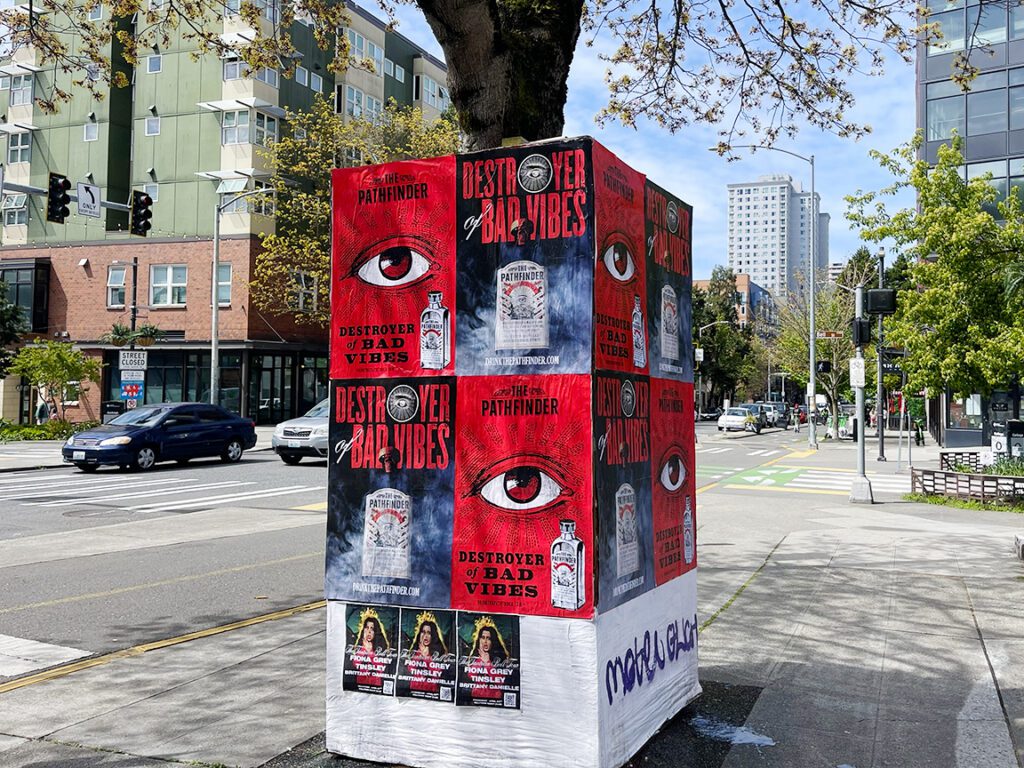
The college market is one of the most commercially significant and simultaneously most difficult demographics to reach in modern marketing. Students are forming their first independent brand relationships, but they are also the most sophisticated advertising audience alive. They grew up inside digital advertising. They filter it reflexively. They respond to it with skepticism that brands have spent decades trying and largely failing to overcome through purely digital means.
A college advertising agency that understands this dynamic builds campaigns that operate in the physical, social spaces where students actually live rather than in the digital channels where they have learned to tune brands out. At American Guerrilla Marketing, based at Industry City in Brooklyn, our team specializes in exactly this kind of ground-level college marketing. We deploy student brand ambassadors, execute product sampling programs, place wheatpaste art in campus neighborhoods, and run LED truck routes on campus-adjacent streets.
This article explains what a specialist college advertising agency brings to campus marketing, the tactics that work most effectively with the student demographic, and how to evaluate whether your current approach is missing the opportunity.
What Makes the College Market Different
The college market has characteristics that make it unlike any other demographic target:
First-time independence: Students are forming brand preferences for the first time without parental defaults. The coffee brand, the snack brand, the personal care brand, the financial services provider, the app they use every day: all of these are being chosen independently for the first time. The brands that earn trial during this period often keep customers for years.
Geographic concentration: Unlike most demographic segments scattered across a general population, college students are concentrated in highly specific geographic areas for a predictable period. A brand with good campus marketing can reach the majority of a target campus’s student population in a relatively confined space and time.
Social concentration: Students are embedded in dense social networks where brand experiences spread rapidly through word-of-mouth. When a product earns enthusiastic adoption by a visible student social group, it can spread through a campus community with extraordinary speed.
Formative brand relationships: Research consistently shows that brand preferences formed in young adulthood are more durable than those formed later. Students who develop genuine brand loyalty during college carry that loyalty into their adult consumer life. The lifetime value implications are significant.
Why Specialized College Advertising Agencies Outperform General Agencies
General advertising agencies rarely have the operational infrastructure or cultural knowledge to run effective college campaigns. Here is what specialist college advertising agencies bring:
Academic calendar intelligence: Knowing that Back to School is dramatically more valuable than midterm season, that the first week of class is qualitatively different from week eight, and that specific campus events create concentrated engagement windows requires the kind of calendar-specific intelligence that only comes from sustained focus on the category.
Campus access knowledge: Understanding which campuses have open commercial access, which require student organization partnerships, and which are best served through off-campus adjacent activation requires school-by-school knowledge that general agencies do not maintain.
Student ambassador infrastructure: Running effective campus ambassador programs requires networks of vetted student talent at target schools, management systems for distributed student teams, training frameworks appropriate for student employees, and compensation structures that motivate genuine enthusiasm. Building this from scratch for each client is inefficient. Agencies that maintain this infrastructure deliver it at a fraction of the cost of building it independently.
Student culture fluency: What creative resonates with college students, what brands they trust and why, what language and references work and which ones signal inauthenticity: these are learnings that accumulate through sustained immersion in the category. General agencies executing occasional college campaigns cannot replicate this expertise.
The College Advertising Agency Tactical Toolkit
An effective college advertising agency deploys multiple tactics coordinated for maximum impact. Here is the toolkit our team uses:
Student Ambassador Programs: The centerpiece of most sustained college marketing strategies. Actual students representing brands to their peers create the peer-recommendation dynamic that is most influential with the college demographic. We recruit, train, manage, and report on ambassador programs across multiple campuses simultaneously.
Product Sampling: Getting the product directly into students’ hands during their most receptive moments. Dining hall approaches, student union corridors, class change crossings, and campus-adjacent commercial areas are high-value sampling locations. We manage sampling logistics including supply, staffing, timing, and opt-in collection.
Campus Neighborhood OOH: Wheatpasted art in campus residential and commercial neighborhoods, sidewalk stencils at high-traffic pedestrian locations, and LED truck routes on campus-adjacent streets create ambient brand presence in the physical environment students inhabit.
Event Marketing: Presence at campus events including sporting events, concerts, club fairs, and orientation activities creates brand encounters in high-energy, socially concentrated contexts. We identify the events with the strongest audience alignment for each client brand and design activation approaches specific to each event type.
Campus-Adjacent Venue Programs: The coffee shops, bars, restaurants, and social venues students use regularly are excellent brand presence locations that often require no campus access at all. We build programs at these venues that reach students in their off-campus social lives.
Building a Multi-Campus College Advertising Strategy
For brands with national reach and student audience targets, multi-campus campaigns are the most efficient way to achieve scale. Our team manages these campaigns from centralized coordination, handling:
Campus selection: Identifying the schools where the brand’s target student demographic is most concentrated and where access and activation conditions are most favorable. We research each campus specifically rather than selecting by school size alone.
Ambassador recruitment at each school: Identifying and recruiting student ambassadors with the right profile at each target campus. We maintain candidate networks at schools we activate regularly and build new networks at schools where we are activating for the first time.
Creative and material production: Producing all physical materials, including posters, sample packaging, branded merchandise, and digital assets, to a consistent standard across all activated campuses. Local adaptation where appropriate, brand consistency everywhere.
Activation scheduling and coordination: Coordinating activation timing to align with the academic calendar at each school (which varies by institution and region) and with any school-specific events that create promotional opportunities.
Consolidated reporting: Aggregating performance data from all campuses into a unified client report that gives a complete picture of campaign reach and effectiveness across the full program.
What to Look for in a College Advertising Agency
When evaluating college advertising agencies, here are the criteria that matter:
Existing campus networks: Do they have ambassador talent at the schools you want to activate? Building from scratch at every school is slow and expensive.
Physical activation experience: Do they actually execute on-the-ground campus campaigns, or do they manage digital media buys and call it college marketing? Physical presence is what drives results with this demographic.
Measurement discipline: Do they agree to clear metrics before campaigns launch and report against them honestly? College marketing results should be measurable, not anecdotal.
Cultural currency: Do they actually understand what is happening in student culture? An agency that is perpetually three years behind what students actually care about will produce creative that misses the mark consistently.
What does a college advertising agency do?
A college advertising agency designs and executes marketing campaigns specifically targeting the college student demographic. This includes strategy, creative development, campus ambassador program management, product sampling logistics, guerrilla marketing installations near campuses, event marketing, and multi-campus campaign coordination. The focus is on reaching 18-to-24-year-old students in their actual campus environment.
What makes a good college advertising agency?
The best college advertising agencies combine deep understanding of student culture and behavior with strong operational capacity to execute at scale across multiple campuses simultaneously. They maintain relationships with student networks at target schools, have established processes for recruiting and managing student ambassador programs, and measure campaign performance against clear metrics.
Why should brands hire a specialized college advertising agency rather than a general agency?
College marketing requires specific knowledge that general agencies rarely have: the academic calendar’s effect on student receptivity, how to recruit and manage student ambassadors, which campus locations generate the highest student traffic, how to navigate campus access policies, and what kind of creative resonates with a demographic that is highly sophisticated at filtering advertising.
What campuses does AGM work with?
Our team works at universities across the United States, from flagship state schools to private universities, liberal arts colleges, and urban commuter campuses. We select and activate at the specific schools that align with each client’s target demographic and geographic priorities.
How does AGM differ from traditional digital college marketing?
Our specialty is physical, ground-level marketing that operates in the real-world spaces where students actually live. While digital marketing is important, it increasingly struggles to break through with the college demographic. Our street-level campaigns using student ambassadors, product sampling, guerrilla installations near campus, and event presence create the peer-level encounters that students respond to.
Can AGM handle national college campaigns across many schools?
Yes. We manage national college campaigns across dozens to hundreds of campuses from centralized coordination. We handle ambassador recruitment and management, creative and material production, logistics coordination, and campaign reporting across all schools. Clients work with one account team rather than coordinating with many individual campus vendors.
How do we get started with a college advertising campaign?
Campaign Architect – American Guerrilla Marketing
Frequently Asked Questions
What does a college advertising agency do?
A college advertising agency designs and executes marketing campaigns specifically targeting the college student demographic. This includes strategy, creative development, campus ambassador program management, product sampling logistics, guerrilla marketing installations near campuses, event marketing, and multi-campus campaign coordination. The focus is on reaching 18-to-24-year-old students in their actual campus environment.
What makes a good college advertising agency?
The best college advertising agencies combine deep understanding of student culture and behavior with strong operational capacity to execute at scale across multiple campuses simultaneously. They maintain relationships with student networks at target schools, have established processes for recruiting and managing student ambassador programs, and measure campaign performance against clear metrics.
Why should brands hire a specialized college advertising agency rather than a general agency?
College marketing requires specific knowledge that general agencies rarely have: the academic calendar’s effect on student receptivity, how to recruit and manage student ambassadors, which campus locations generate the highest student traffic, how to navigate campus access policies, and what kind of creative resonates with a demographic that is highly sophisticated at filtering advertising.
What campuses does AGM work with?
Our team works at universities across the United States, from flagship state schools to private universities, liberal arts colleges, and urban commuter campuses. We select and activate at the specific schools that align with each client’s target demographic and geographic priorities.
How does AGM differ from traditional digital college marketing?
Our specialty is physical, ground-level marketing that operates in the real-world spaces where students actually live. While digital marketing is important, it increasingly struggles to break through with the college demographic. Our street-level campaigns using student ambassadors, product sampling, guerrilla installations near campus, and event presence create the peer-level encounters that students respond to.
Can AGM handle national college campaigns across many schools?
Yes. We manage national college campaigns across dozens to hundreds of campuses from centralized coordination. We handle ambassador recruitment and management, creative and material production, logistics coordination, and campaign reporting across all schools. Clients work with one account team rather than coordinating with many individual campus vendors.
How do we get started with a college advertising campaign?
Contact our team at [email protected] or (646) 776-2770. We’ll discuss your brand, target student profile, geographic priorities, and campaign goals. From there we develop a campaign proposal with recommended tactics, campus selection, timeline, and budget. Most campaigns can launch within four to eight weeks of kickoff.
How early should a brand start planning?
For most campaigns, the smart move is to start planning at least two to four weeks before the launch window so production, routing, staffing, and reporting are all lined up.
What makes one market perform better than another?
Market fit depends on audience density, neighborhood behavior, route efficiency, and whether the creative belongs in that setting. The busiest city is not always the best city.
Can AGM bundle this with other services?
Yes. AGM often combines this work with supporting formats so the campaign has stronger repetition and cleaner reporting across the whole run.
How does AGM quote pages like this?
We quote from official rate cards where they apply, then scope the remaining production, staffing, and routing details to the actual job.