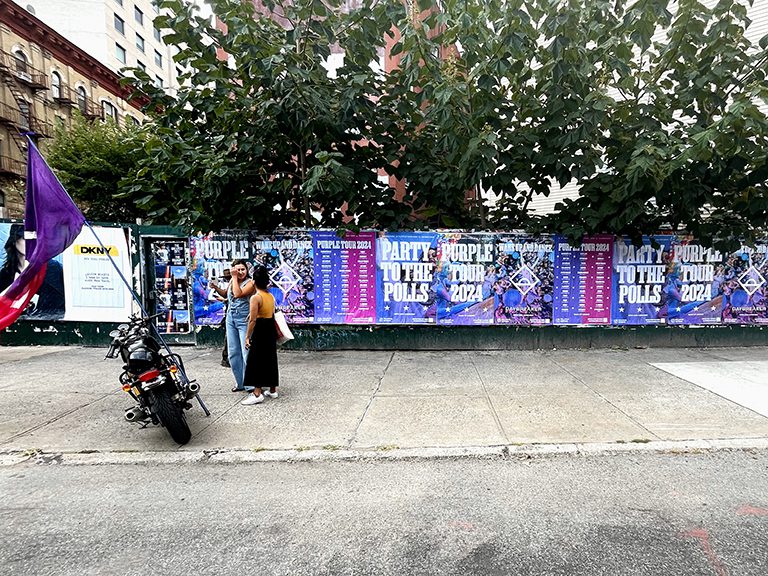
Festival audiences are not randomly distributed across a city. They concentrate in specific neighborhoods, travel through specific transit corridors, and gather in specific spaces before and after events. Festival OOH advertising takes advantage of that concentration to reach a highly targeted cultural audience with physical advertising that appears in exactly the right places at exactly the right times. Done well, it is one of the most precise demographic targeting tools available for brands trying to reach the festival-going audience.
American Guerrilla Marketing executes festival OOH advertising campaigns that are designed around actual audience geography rather than generic traffic data. We deploy LED billboard trucks, poster campaigns, and sidewalk stencils in the specific locations where festival audiences move, stay, and gather. This guide covers the strategy and execution of effective festival OOH advertising campaigns for brands, festival organizers, and sponsors.
The Festival OOH Advertising Geography
Every major festival has a specific geographic footprint that extends well beyond the festival venue itself. Understanding this footprint is the foundation of effective festival OOH advertising placement strategy.
The immediate venue approach zone covers the streets, transit corridors, and parking areas in the immediate vicinity of the festival grounds. This is the highest-fan-concentration zone during festival hours, and advertising here reaches the maximum possible audience in a compact physical area. LED trucks, sidewalk stencils, and ambassador programs all work at high impact in this zone.
The hotel and accommodation zone covers the areas where out-of-town festival attendees stay: the hotel corridors, the neighborhoods around festival-adjacent accommodations, and the transit routes between those areas and the festival grounds. Advertising in this zone reaches attendees during the quiet moments between festival sessions, when they are resting, eating, and planning the next day.
The festival neighborhood zone covers the bars, restaurants, and public spaces in the surrounding area where festival culture extends beyond the official event footprint. Pre-party venues, post-show gatherings, and the general commercial environment of a festival host neighborhood all carry the festival audience before and after each festival day.
The broader cultural geography covers the arts districts, music neighborhoods, and creative community spaces associated with the festival’s cultural community in the host city. Advertising in these areas in the weeks before the festival reaches the target audience in their daily environment, building awareness and ticket urgency among people who are genuinely part of the cultural world the festival represents.
Pre-Festival OOH for Ticket Sales
The weeks before a festival are the window for OOH advertising that drives ticket sales. In this period, poster campaigns in arts districts and music neighborhoods, LED trucks routed through cultural community spaces, and sidewalk stencils in areas with high target demographic concentration build awareness and urgency among potential attendees.
The visual design of pre-festival OOH needs to communicate both the festival’s identity and the need to act: the festival is happening, this is when, this is what it is, and here is how to get tickets. The artistic quality of the creative matters in festival contexts where the audience is visually sophisticated and will make quick judgments about the festival’s cultural credibility based on how well-designed its advertising is.
Festival Day and Weekend OOH
During the festival itself, OOH advertising serves a different function: it reinforces the festival’s presence in the host city, captures any remaining ticket buying by people who see the festival happening around them, and creates brand exposures for both official sponsors and non-official brands that want to reach the concentrated festival audience.
LED trucks on festival days are positioned near the main entrance gates, at transit stops serving the festival, and in the festival’s surrounding neighborhood. Their visual impact in the festival-adjacent public space creates additional brand exposures for people arriving and departing, and captures the attention of people in the surrounding area who may not be attending but who are part of the festival’s ambient audience.
Aesthetic Alignment With Festival Culture
Festival OOH advertising creative needs to pass a cultural credibility test that does not apply to generic event advertising. Festival audiences are visually sophisticated and will notice immediately if the advertising around a culturally significant festival looks like it came from a generic event marketing template. Designs that fit the festival’s visual identity, use imagery that speaks to the specific cultural world the festival inhabits, and deploy creative approaches that demonstrate genuine cultural engagement create much stronger exposures than generic promotional creative in these environments.
We advise clients on creative direction for festival OOH as part of our campaign strategy process. For clients whose existing creative assets are not well-adapted for festival cultural contexts, we identify the adjustments that can bring the creative into alignment without requiring a full redesign. The goal is advertising that feels like it belongs in the cultural environment of the festival rather than advertising that was simply placed near it.
Measuring Festival OOH Advertising Results
Festival OOH advertising measurement covers estimated reach based on pedestrian traffic data at placement locations and festival attendance, photo documentation of all placements, social media monitoring for organic content featuring OOH elements, and for ticket sales campaigns, tracking of ticket purchase activity during the OOH campaign window.
Post-festival brand recall surveys among attendees can also capture the impact of OOH elements on brand awareness within the festival audience. Festivalgoers who encountered OOH advertising in the approach zone, in their accommodation neighborhood, or in the surrounding festival community have had multiple exposures to the brand across the festival experience, and recall surveys capture the cumulative effect of that exposure.
Frequently Asked Questions
What is festival OOH advertising?
Festival OOH advertising is out-of-home advertising deployed in and around music, arts, and cultural festival venues. It includes LED billboard trucks near festival entrances, poster campaigns in festival host neighborhoods, sidewalk stencils on approach routes, and any other physical advertising placed in public spaces surrounding festival events.
Where is festival OOH advertising most effective?
Festival OOH advertising is most effective on the main approach routes to festival venues, near transit stops and parking areas, in the neighborhoods where festival audiences stay and gather, and in the arts or music districts associated with the festival’s cultural community.
How does festival OOH advertising differ from standard event OOH?
Festival OOH advertising needs to appear in locations that matter to the festival audience, in a visual style that fits the festival’s aesthetic, and with messaging that speaks to the festival culture rather than using generic event promotion language.
Can festival OOH advertising drive ticket sales?
Yes. Pre-festival OOH in the neighborhoods where the festival audience lives and travels can drive ticket sales by building awareness and urgency among potential attendees who have not yet bought tickets.
How early should festival OOH advertising begin?
Festival OOH advertising for ticket sales should begin three to six weeks before the festival. LED trucks and festival-day advertising should be deployed during the festival weekend itself.
Does festival OOH advertising require festival organizer approval?
OOH advertising in public spaces surrounding festival venues does not require festival organizer approval. On-site advertising within the festival footprint typically does. Our team advises on which placements require permissions and handles any necessary coordination.
What creative direction works best for festival OOH advertising?
Festival OOH advertising should match the aesthetic sensibility of the festival’s audience: high-quality visual design, imagery that fits the cultural context, and messaging that speaks the language of the festival community.
How early should a brand start planning?
For most campaigns, the smart move is to start planning at least two to four weeks before the launch window so production, routing, staffing, and reporting are all lined up.
What makes one market perform better than another?
Market fit depends on audience density, neighborhood behavior, route efficiency, and whether the creative belongs in that setting. The busiest city is not always the best city.
Can AGM bundle this with other services?
Yes. AGM often combines this work with supporting formats so the campaign has stronger repetition and cleaner reporting across the whole run.
How does AGM quote pages like this?
For more on this, explore our experiential marketing.
For more on this, explore our street team activations.
We quote from official rate cards where they apply, then scope the remaining production, staffing, and routing details to the actual job.