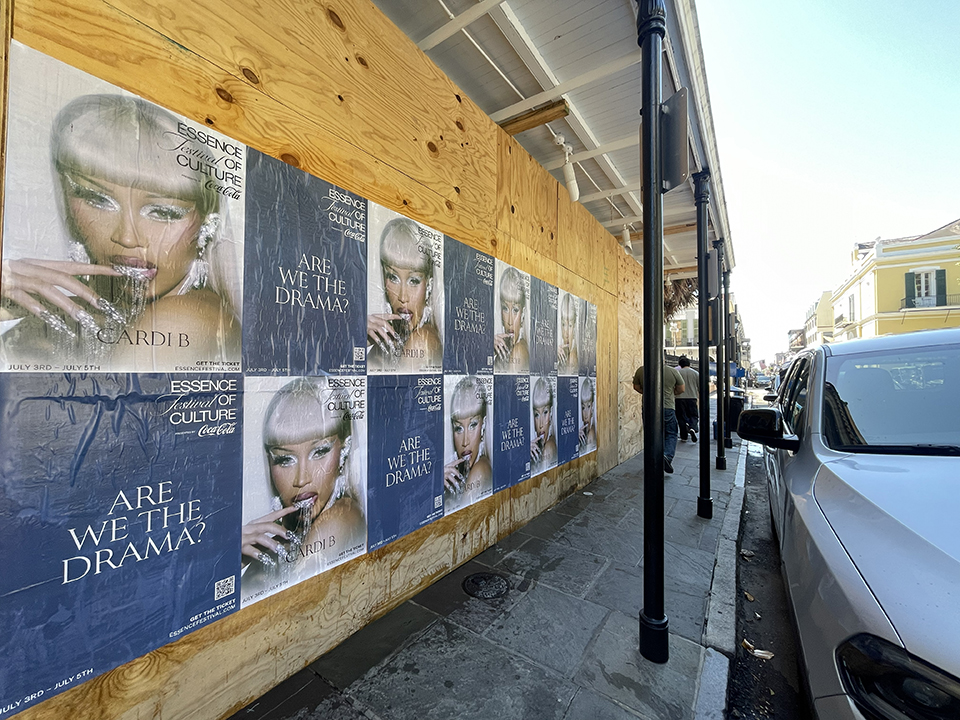
Long before streaming algorithms and social media feeds, music and arts festivals communicated their existence through posters: on walls, on telephone poles, in record shop windows, and in the corridors of arts buildings where the festival community gathered. That tradition has not ended. It has evolved. Today’s festival poster campaign operates alongside digital advertising rather than replacing it, but the cultural function of the poster in the music and arts community remains what it has always been: physical proof that this event is real, significant, and part of the cultural world that this community cares about.
American Guerrilla Marketing executes wheatpasted poster campaigns for festivals across the country. Our work covers site selection, production management, installation, and documentation for festival poster campaigns in major cultural markets. We know which walls matter in which cities, which neighborhoods carry credibility in music and arts communities, and how to execute installations that look as good as the posters themselves. This guide covers the strategy and execution of effective festival poster campaigns.
Why Festival Poster Campaigns Still Matter
The persistence of poster culture in music and festival marketing is not nostalgia. It is practical intelligence. Posters appear in the physical environment where music fans and arts audiences actually live and move, in a format that is not filtered by algorithms, blocked by ad-blocking software, or scrolled past in two seconds. A well-placed poster in the right neighborhood encounters the target audience repeatedly over the three to five weeks it is on the wall, creating multiple exposures that build cumulative awareness far more effectively than a single digital ad view.
The cultural signaling function of festival posters is equally important. A festival with a strong poster presence in the neighborhoods where the music community concentrates signals that it is a genuine cultural event with real community roots. A festival that is only visible through digital channels signals the opposite. For festivals trying to establish cultural legitimacy or maintain it across years, the poster campaign is a credibility investment as much as an advertising spend.
The collector culture around festival posters also extends their reach beyond the street. Rare or well-designed festival posters are photographed and shared on social media, preserved and displayed by fans, and in some cases sold and traded as cultural objects. A festival poster campaign that produces genuinely beautiful objects, not just functional promotional graphics, extends its life and its reach far beyond the initial placement window.
Site Selection: The Most Important Decision in Festival Poster Campaigns
The location of festival posters matters more than almost any other variable in the campaign’s effectiveness. A high-quality poster in the wrong location reaches the wrong audience. A well-placed poster in the right location reaches the festival’s actual target audience with maximum frequency and impact.
The right locations for festival poster campaigns are the walls that the festival’s target community actually sees: the approved posting walls near music venues where the target audience attends shows, the walls in arts districts where the visual art community gathers, the corridors between transit stations and the neighborhoods where festival-going people live. These locations differ by city and by festival type, and getting them right requires genuine local knowledge of the cultural geography of each market.
Our team has executed festival poster campaigns in major cultural markets across the country and maintains ongoing knowledge of which walls carry the most weight in each city’s music and arts communities. This knowledge is one of the most valuable things we bring to a festival poster campaign engagement.
Production Quality for Festival Poster Campaigns
Festival audiences notice print quality. The arts and music communities that attend major cultural festivals are more visually sophisticated than average consumers, and they will notice the difference between a poster printed on appropriate stock at a quality level that does justice to the design, and a poster that was sent to the cheapest available printer without regard for how it looks in the physical environment.
We work with festival poster clients to ensure that print files are correctly prepared for large-format production, that the print quality specification fits the design and the audience’s expectations, and that the paper stock and finish are appropriate for outdoor posting conditions while maintaining the visual quality the campaign requires. A poster that is perfectly installed but poorly printed fails the campaign despite the quality of the site selection and installation work.
Installation Standards for Festival Poster Campaigns
The installation quality of a festival poster campaign is visible to everyone who sees it, and poor installation undermines even the best-designed, best-printed campaign. Posters that are poorly aligned, unevenly applied, peeling at the edges, or placed sloppily on walls that are still wet from rain signal carelessness that reflects badly on the festival itself.
Our installation crews are trained to meet specific quality standards for wheatpaste application: proper surface preparation, appropriate paste application, precise poster alignment, and the final touches that give a well-executed paste-up the clean, professional appearance that differentiates it from amateur work. Installation documentation photographs verify that these standards are met for every placement in every market.
Timing the Festival Poster Campaign
The timing of a festival poster campaign should follow the festival’s ticket sales lifecycle. An initial awareness wave, placed three to five weeks before the festival, establishes the festival’s presence in the community and drives early ticket purchases from the most dedicated audience segments. A second wave, placed in the week or two before the festival, creates urgency and captures the mid-range buyers who were aware but had not yet committed. A final placement on posting walls visible to festival approach routes captures the day-of audience that makes last-minute decisions.
This phased approach creates a campaign narrative of escalating presence rather than one static push. The audience sees the campaign building as the festival approaches, which mirrors the natural excitement building of anticipating an event they are looking forward to.
Festival Poster Campaigns Across Multiple Cities
For festivals drawing audiences from beyond a single city, or for touring festivals that visit multiple markets, poster campaigns need to run across all relevant markets simultaneously. A festival attendee traveling from Chicago to attend a New York festival was probably first exposed to the festival through their home market. Poster campaigns in the home markets of out-of-town attendees are part of the full attendance-driving strategy.
Our national production and installation network handles festival poster campaigns in major markets across the country. Centralized production management from our Brooklyn headquarters coordinates materials delivery to local installation crews in each market, ensuring consistent quality and timing across all cities in the campaign.
Frequently Asked Questions
Why do music festivals use poster campaigns?
Festival poster campaigns tap into the long tradition of poster culture in music and arts communities. A well-designed, well-placed poster in a music or arts neighborhood communicates cultural legitimacy in a way that digital advertising cannot. Festival posters are also cultural objects in themselves, collected and shared by fans.
What makes a great festival poster campaign?
A great festival poster campaign combines strong design quality, strategic site selection in culturally relevant locations, appropriate production quality for the audience, proper installation technique, and timing that creates the right amount of advance awareness without losing momentum before the festival opens.
Where should festival posters be placed?
Festival posters should be placed on approved posting walls in music and arts neighborhoods, near music venues and record shops, at transit stops serving the festival audience demographic, in arts district commercial corridors, and near college campuses when the festival attracts younger audiences.
How far in advance should festival poster campaigns begin?
Festival poster campaigns typically begin three to five weeks before the festival opens. An initial wave builds general awareness; a second wave in the week before the festival creates urgency.
What size should festival poster campaign materials be?
Festival posters are most memorable at large format: 24×36 inches or larger for single-sheet applications. Larger format creates more visual impact from a distance and communicates the significance of the event more effectively than standard-size posters.
Does AGM handle both design and installation for festival poster campaigns?
We handle installation, site selection, and production management. For design, we work with the festival’s or brand’s creative team to ensure files are print-ready and appropriately sized for large-format production.
Can festival poster campaigns run across multiple cities?
Yes. Our national production and installation network covers major cultural markets across the country for multi-city festival poster campaigns.
How early should a brand start planning?
For most campaigns, the smart move is to start planning at least two to four weeks before the launch window so production, routing, staffing, and reporting are all lined up.
What makes one market perform better than another?
Market fit depends on audience density, neighborhood behavior, route efficiency, and whether the creative belongs in that setting. The busiest city is not always the best city.
Can AGM bundle this with other services?
Yes. AGM often combines this work with supporting formats so the campaign has stronger repetition and cleaner reporting across the whole run.
How does AGM quote pages like this?
For more on this, explore our experiential marketing.
For more on this, explore our street team activations.
We quote from official rate cards where they apply, then scope the remaining production, staffing, and routing details to the actual job.