Canada is a large country with five major urban markets that each require their own strategic approach. Toronto, Montreal, Vancouver, Ottawa, and Calgary have different street cultures, different demographic compositions, different languages, and different visual environments. Running a Canadian poster campaign that actually works means understanding these differences rather than treating Canada as a single homogeneous market.
Our team at American Guerrilla Marketing has been executing poster campaigns across Canada for years, working alongside our core New York City operations and international programs. We have vetted crew networks, approved surface access, and market-specific knowledge in each of Canada’s major cities. This guide covers what a Canadian poster campaign looks like when it’s done correctly, which cities and neighborhoods we cover, and how we manage multi-city deployments from a single campaign brief.
Why Street Poster Advertising Works in Canadian Cities
Canadian cities, particularly their major urban cores, have strong pedestrian cultures and active street art communities that create genuine receptivity to outdoor poster campaigns. Toronto’s Queen West and Kensington corridors, Montreal’s Plateau and Mile End, and Vancouver’s Commercial Drive and Gastown all have well-documented histories of street poster culture that makes wheatpaste advertising feel native rather than intrusive.
Less Competition Than US Markets
Canadian cities, even Toronto, have significantly less street poster competition than comparable US markets. A well-executed wheatpaste campaign in Toronto’s Kensington Market stands out more clearly than a comparable campaign in Brooklyn or Chicago, where the poster environment is far more saturated. This lower competition translates to better visual presence and longer installation longevity for campaigns running in Canadian markets.
Strong Social Documentation Culture
Canada’s urban populations are highly active on social media, and street art and outdoor advertising documentation is a genuine subcultural interest in Toronto, Montreal, and Vancouver. Strong campaign creative in the right neighborhoods gets photographed and shared organically, extending the campaign’s reach beyond the immediate installation audience.
Cost Efficiency Compared With Traditional Canadian OOH
Traditional out-of-home advertising in Canadian cities, particularly transit shelter networks and billboard inventory, is expensive and increasingly dominated by digital formats. Street poster campaigns deliver genuine neighborhood-level presence at a fraction of the cost of traditional OOH, making them particularly valuable for brands with regional or targeted demographic objectives that don’t require mass-market saturation.
Canadian Cities: Where We Run Campaigns
Here’s how we approach each of Canada’s major urban markets for poster and street advertising campaigns.
Toronto: Canada’s Largest Market
Toronto is our most active Canadian market. The city’s dense cultural neighborhoods, strong pedestrian culture, and socially engaged consumer base make it ideal for street poster work. We operate in Queen Street West, Kensington Market, the Distillery District, Ossington, College Street, and the downtown core. Toronto poster campaigns generate strong organic social documentation due to the city’s active Instagram and TikTok communities that follow urban culture closely.
The supporting keyword for this blog mentions poster campaigns in Toronto specifically. Toronto poster campaign costs are comparable to mid-tier US urban markets, making the city an efficient entry point for brands new to Canadian advertising. A focused Kensington Market wheatpaste deployment typically generates 40,000 to 80,000 weekly exposures at a fraction of the cost of transit shelter or billboard placements in the same area.
Montreal: Canada’s Creative Capital
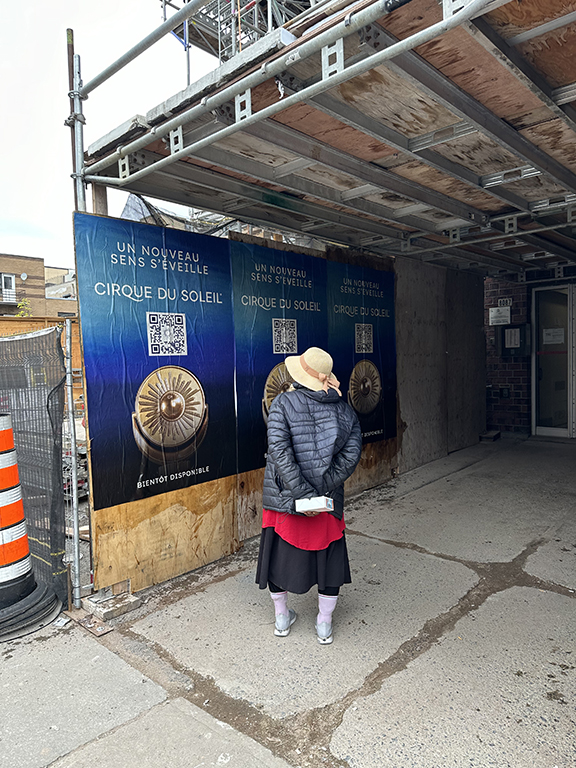
Montreal has the most active street art culture in Canada. The Plateau-Mont-Royal, Mile End, and Rosemont neighborhoods are densely covered with murals, wheat posters, and street installations that document the city’s creative identity. Campaigns here need to be visually strong. Montreal’s audience notices quality and ignores mediocrity. The bilingual requirement for Quebec campaigns adds a creative step, but properly localized French-language creative generates significantly stronger results than English-only campaigns in this market.
Vancouver: West Coast Aesthetic
Vancouver’s poster campaign environment is concentrated in the Commercial Drive, Main Street, Gastown, and Chinatown neighborhoods. The West Coast visual aesthetic values clean design and environmental consciousness, which shapes the creative approach for campaigns targeting Vancouver’s consumer base. Vancouver also has a significant student population at UBC and SFU that creates strong campus-adjacent market opportunities.
Ottawa: The Capital
Ottawa’s Glebe, ByWard Market, and Westboro corridors support solid poster programs for brands targeting the national capital’s professional government and tech worker demographic. The city’s lower poster saturation than Toronto makes installations more visible and longer-lasting. Ottawa campaigns often run at lower cost per impression than comparable Toronto programs due to the reduced competitive environment.
Calgary and Edmonton: The West
Calgary’s Kensington neighborhood, 17th Avenue, and the Beltline district support street poster campaigns for brands targeting Alberta’s oil and gas professional class alongside a growing young professional population. Edmonton’s Whyte Avenue and the Strathcona neighborhood are the primary zones for cultural and youth-oriented campaigns in Alberta’s capital.
Nationwide Canada Poster Campaign: How It Works
Coordinating a national Canada poster campaign requires operational infrastructure that most single-market agencies don’t have. Here’s how we manage multi-city Canadian deployments.
Unified Brief, Multiple Markets
We start every multi-city Canadian campaign with a single unified brief that covers the campaign objectives, target audience, creative approach, and timeline across all cities. From that brief, we develop market-specific execution plans for each city, accounting for local neighborhood selection, surface availability, language requirements, and crew logistics. The client manages one relationship with one team. We coordinate everything else.
Production and Print Logistics
Print production for Canadian campaigns is coordinated from our Brooklyn base with delivery timed to arrive at each city’s crew location before deployment. For campaigns requiring French-language materials in Montreal or bilingual materials in Ottawa, we manage separate print runs for each language version. Rush production is available when campaign timelines are tight.
Coordinated Overnight Deployment
Multi-city Canadian campaigns deploy within the same 48-hour window wherever possible. This creates genuine national presence, with the brand appearing simultaneously in Toronto, Ottawa, Montreal, and Vancouver, which generates stronger earned media and social discussion than staggered deployments. Our crew network across Canada’s major cities makes same-window deployment operationally feasible for campaigns that are properly planned.
Unified Reporting
Post-campaign reporting for national Canadian programs covers all cities in a single wrap document, with market-specific breakdowns for each deployment zone. Clients get geo-tagged installation photography, footfall-based impression estimates by city, and organic social documentation monitoring in a single report rather than city-by-city summaries from different vendors.
Poster Campaign Toronto: Specific Neighborhood Strategy
For clients focused on Toronto specifically, here’s a more granular view of how we approach the city’s key poster campaign zones.
Queen West and Ossington
The Queen West strip and its Ossington offshoot represent Toronto’s highest-value poster environment for brands targeting creative professionals and cultural consumers. Approved surfaces along Queen West, the side streets of Ossington, and the adjacent Trinity Bellwoods area generate strong organic social documentation due to the neighborhood’s active creative community. Campaigns here typically run two to four weeks before turnover.
Kensington Market
Kensington’s compact, walkable grid and permanent outdoor market character create an ideal environment for wheatpaste. The neighborhood’s walls are active and well-documented by Toronto’s street art community. Creative quality is critical here. Kensington’s audience is visually sophisticated and quick to dismiss campaigns that feel generic or corporate.
College Street and the Annex
The College Street corridor between Bathurst and Ossington, and the Annex neighborhood running north of Bloor Street, reach a mix of University of Toronto students, academics, and long-term neighborhood residents. These are well-educated, culturally engaged audiences that respond well to substantive creative rather than pure impact advertising.
Distillery District
The Distillery’s premium heritage environment makes it an unusual but effective location for poster campaigns targeting design-conscious consumers. The cobblestone streets and selected visual environment mean that campaign creative needs to be particularly strong. Weak creative looks worse in the Distillery than it would in a less selected environment.
Canadian Poster Campaign Creative: What Works Nationally vs. What Works Locally
Running a national Canadian poster program requires decisions about creative consistency vs. local adaptation. Here’s how we think about this question for different campaign scenarios.
National Creative Consistency
For brand awareness campaigns where the goal is to build a consistent national impression, a single English creative running across Toronto, Ottawa, Vancouver, and Calgary with a French version for Montreal is often the right approach. The cost and complexity of significant local creative adaptation doesn’t pay off when the campaign objective is broad awareness rather than neighborhood-specific cultural integration.
Market-Specific Adaptation
For campaigns where cultural resonance matters, particularly in Montreal, Kensington Market Toronto, or Vancouver’s Commercial Drive, local creative variants add measurable value. Montreal’s street art culture and Francophone identity respond significantly better to creative that’s been genuinely adapted for the market rather than simply translated. We provide creative consultation on when local adaptation is worth the investment compared with when a single adapted national execution is sufficient.
Language Requirements in Practice
The practical language question for national Canadian campaigns is: where is French-language creative required compared with optional? In Quebec, consumer-facing campaigns require French as the primary language under Bill 101. In bilingual markets like Ottawa’s National Capital Region, French-language creative is strongly recommended for government-sector campaigns and optional but beneficial for broader consumer campaigns. In English-dominant Canadian cities outside Quebec, English-only creative is appropriate for most consumer brand campaigns.
Integrating Poster Campaigns with Street Marketing in Canada
Poster campaigns in Canada work best as part of integrated street-level programs. Here’s how we combine poster work with other formats for stronger national campaign results.
Posters and Street Teams
A brand ambassador presence in the same neighborhoods as an active wheatpaste campaign creates a layered brand encounter: the target consumer sees the poster on their morning walk, then interacts with a street team member on their lunch break. The combination generates meaningfully stronger recall than either format alone. We coordinate poster and street team deployments to overlap in timing and location for maximum combined impact.
Posters and Sidewalk Stencils
Combining sidewalk stencils with poster installations creates coverage at multiple sightlines. Pedestrians encounter the brand at eye level on walls and again on the ground at their feet. The two formats together create the impression of deeper campaign saturation than either alone.
Posters and LED Trucks
Our LED billboard trucks operating in Canadian cities add mobile coverage that extends the campaign’s reach beyond the fixed installation zones. Routes can be programmed to pass through the same neighborhoods as the wheatpaste campaign, reinforcing brand messages across different physical contexts.
Production Specifications for Canadian Outdoor Poster Campaigns
Canada’s climate varies dramatically by region and season, and this variation affects outdoor poster production specifications more than most clients initially expect. Here’s how we approach production for Canadian campaigns.
Climate-Appropriate Materials
Toronto and Ottawa campaigns running between November and April encounter temperatures that can drop below -20 degrees Celsius. Standard poster stocks and paste formulations that work in temperate US markets fail in these conditions. We use cold-weather paste formulations with lower viscosity that maintain adhesion at freezing temperatures, and paper stocks with higher tensile strength that resist the cracking and peeling that standard stock experiences in freeze-thaw cycling. Campaigns running in Vancouver’s mild, wet Pacific Northwest climate use different weatherproofing specifications than those running in Alberta’s dry, cold interior.
Summer Campaign Specifications
Canadian summers, particularly in Ontario and Quebec, can bring high heat and humidity that affects outdoor materials differently than the cold-weather concerns. Summer campaigns use paper stocks and inks that maintain color fidelity under UV exposure and resist humidity-induced degradation. Toronto’s hot, humid summer weather is harder on outdoor materials than most US cities outside of the Southeast, and our production specs for Toronto summer campaigns reflect that.
Print Production Timeline for National Programs
National Canadian campaigns require coordinated print production that accounts for both English and French language versions in applicable markets. Standard production timeline for a national program is ten to fourteen business days from approved artwork to delivered materials in each city. Rush production for compressed timelines is available at additional cost. We stage materials at crew locations in each city to minimize delivery logistics on the day of deployment.
FAQ: Canadian Poster Campaigns
What Canadian cities do you run poster campaigns in?
We run poster campaigns in Toronto, Ottawa, Montreal, Vancouver, Calgary, Edmonton, and other major Canadian cities. Our Canadian operations include vetted crew networks and approved surface access in each market, with the ability to coordinate simultaneous multi-city deployments from a single campaign brief.
What is wheatpasting and why do you use it for Canadian campaigns?
Wheatpasting is a street poster installation method that uses a paste-based adhesive to affix large-format prints to outdoor surfaces. We use it because it creates durable, weather-resistant installations that blend naturally into Canadian cities’ visual environments, particularly in cultural neighborhoods where street art culture is active. It’s cost-effective, fast to deploy, and generates strong organic social documentation in Canada’s photographically active urban communities.
How do you handle bilingual poster campaigns in Canada?
For campaigns in Quebec (Montreal) or bilingual markets like Ottawa, we develop both English and French creative versions. In Montreal, French is the primary language for consumer-facing campaigns. In Ottawa, bilingual creative is often appropriate for the full campaign footprint. We provide translation coordination as part of our Canadian campaign planning service.
What size posters do you use for Canadian street campaigns?
We use a range of formats depending on available surfaces. The standard large-format street poster is 40×60 inches, with multi-sheet composites for larger wall sections. Dense saturation campaigns use A2 and A3 formats to maximize surface coverage within a neighborhood.
Can you coordinate Canadian and US poster campaigns simultaneously?
Yes. We regularly run North American campaigns that include both US and Canadian cities within the same deployment window. Unified production, coordinated crew scheduling, and single-point reporting make cross-border campaign management straightforward for clients.
What does a national Canada poster campaign cost?
A focused single-city poster campaign in Canada typically starts at $6,000 to $10,000 for production and installation. National multi-city programs covering Toronto, Ottawa, Montreal, and Vancouver typically run $25,000 to custom quote depending on city count, site volume, and duration. We provide detailed scope-specific pricing for each campaign.