The IAAPA Expo is the world’s largest trade show for the global attractions industry. Held each November at the Orange County Convention Center in Orlando, Florida, it brings together over 40,000 professionals from the theme park, amusement, waterpark, family entertainment center, and related sectors for five days of product demonstrations, industry sessions, and the purchasing conversations that drive billions in attractions industry capital expenditure annually. For brands selling into this market, IAAPA Expo is the event that matters. At American Guerrilla Marketing, we build street-level campaigns that give attractions industry brands full-week presence throughout the Orlando convention zone, reaching the IAAPA audience at every touchpoint outside the official expo floor.
The IAAPA Audience: What Makes It Worth the Investment
The IAAPA Expo concentrates a buying audience that is not easily reached at any other moment of the year. Theme park executives, amusement park owners, FEC operators, resort activity directors, and the purchasing managers who control equipment, technology, and service contracts for major attractions facilities all attend IAAPA with specific buying objectives. Many IAAPA attendees arrive with shortlists, active RFPs, and scheduled meetings with vendors. The competition for their attention during expo week is intense, which is precisely why street-level brand presence outside the official perimeter provides a meaningful advantage.
The Repeat Buyer Dynamic
Attractions industry purchasing is repeat and relational. A theme park operator who buys a new ride system, a ticketing platform, or a food service solution will be back in the market again in two to five years. Vendors who maintain consistent IAAPA presence build the kind of long-term brand recognition that shortens evaluation cycles and creates preference before the formal buying process begins. Brands that miss IAAPA years leave that recognition-building to their other exhibitors.
The International Dimension
IAAPA draws attendees from over 100 countries. The international buyer contingent represents attractions industry procurement from Europe, Asia, Latin America, and the Middle East, segments of the market that may be difficult to reach through US-centric marketing programs. IAAPA week concentrates these international buyers in Orlando for a predictable, intensive contact window. Street-level campaigns that create a memorable brand impression during this window invest in awareness that persists across geographies after the expo ends.
IAAPA Marketing Zones in Orlando
The IAAPA Expo’s Orlando geography concentrates attendee activity in a corridor along International Drive and the Orange County Convention Center campus.
Orange County Convention Center Perimeter
The OCCC is the largest convention center in the United States, and during IAAPA it fills every hall with the global attractions industry. The immediate perimeter of the OCCC, including the approaches from International Drive, the Convention Way corridor, and the pedestrian areas adjacent to the convention’s multiple entrance points, carries the full IAAPA audience multiple times daily. Wheatpaste installations on appropriate surfaces in this zone, LED truck routes through the campus perimeter, and brand ambassador programs at key entry and exit points create maximum convention-week concentration.
International Drive Hotel District
International Drive is Orlando’s primary convention accommodation corridor. Dozens of hotels from budget to full-service convention properties line I-Drive from the OCCC south toward the Sand Lake Road intersection. During IAAPA week, the hotels lining this stretch are at capacity with expo attendees. Morning departure and evening return windows create concentrated foot and vehicle traffic on I-Drive that LED truck routes, ambassador programs at hotel entrances, and wheatpaste installations all use effectively.
Sand Lake Road Restaurant Corridor
Sand Lake Road’s restaurant district, known locally as Restaurant Row, is where IAAPA attendees congregate for business dinners, client entertaining, and informal networking throughout the convention week. Evening foot traffic here during IAAPA is dominated by attractions industry professionals, making it one of the highest-value evening activation zones for brands selling into this market. Ambassador programs at restaurant entrances during peak dinner hours and ambient brand presence near the highest-traffic restaurant addresses create consistent brand contact with the decision-maker tier during their most socially receptive moments.
Convention Transportation Corridors
IAAPA attendees move between hotels, the convention center, and evening venues primarily by rideshare, shuttle bus, and hotel transport. The pickup and drop-off areas for these transportation modes at major convention hotels create concentrated, predictable audience windows. Brand ambassador programs at shuttle stops and rideshare waiting zones capture the IAAPA audience in the brief waiting moments between destinations.
IAAPA Marketing Format Playbook
LED Billboard Trucks
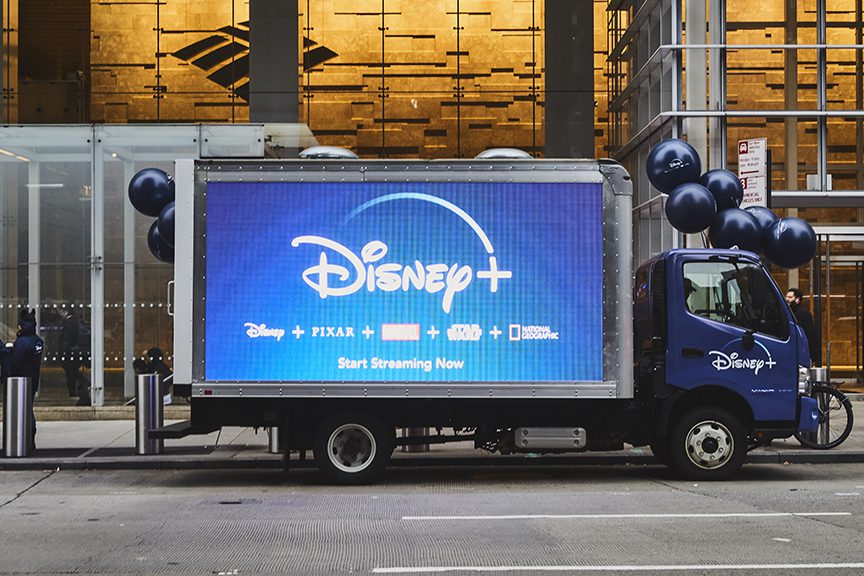
LED billboard trucks on IAAPA marketing routes cover the full International Drive corridor and OCCC perimeter in a single deployment, reaching every segment of the convention audience throughout the conference day. Morning routes concentrate on the hotel-to-convention commute corridor. Evening routes focus on the I-Drive restaurant district during peak dinner traffic. We program IAAPA-specific content that speaks directly to the attractions industry context: equipment categories, featured products, booth locations for brands that also have expo floor presence, and event invitations for brand-hosted activities during the week.
Brand Ambassador Programs
Brand ambassador programs at IAAPA require talent who can engage credibly with attractions industry professionals. Our IAAPA ambassador briefs focus on the specific value proposition relevant to the convention audience, the key product categories that the brand serves, and the specific types of attractions facilities where the brand delivers the most value. Ambassadors carry materials that create a genuine interaction anchor: product specifications, case study summaries, event invitations, or samples where applicable.
IAAPA ambassador programs work particularly well at the expo’s morning coffee windows, when attendees are transitioning from hotel to convention and have a brief moment of attention before the day’s meetings begin. This window is consistently underserved by official expo marketing, which does not begin until the attendee is inside the hall.
Wheatpasting and Poster Campaigns
Wheatpaste campaigns in the OCCC area and along International Drive create static brand presence that accumulates exposures throughout the full convention week. B2B wheatpaste creative for IAAPA should communicate clearly: the brand’s product category, a key benefit relevant to attractions industry buyers, and a clear next action (booth number, website, event invitation). The IAAPA audience processes large volumes of vendor information during expo week, and creative that communicates its message in three seconds or less performs best in this environment.
Sidewalk Activations
Sidewalk stencils near the OCCC entrance areas and at high-traffic pedestrian intersections on the I-Drive corridor create ground-level brand touchpoints that are genuinely unavoidable for attendees making the convention walk on foot. As directional elements pointing toward a brand’s booth location or hosted event, sidewalk formats provide practical utility alongside brand visibility.
Complementing Expo Floor Presence with Street-Level Campaigns
Most IAAPA vendors run both official expo floor presence and street-level outside campaigns. The two work together rather than substituting for each other. The expo floor delivers in-depth product demonstrations and scheduled buyer meetings. The street-level campaign delivers broad awareness across the entire convention audience, including the segment that never visits your specific booth during the show.
For brands with expo floor presence, street-level campaigns serve three specific functions:
- Pre-booth awareness: Attendees who see your brand on the street before they enter the hall arrive at your booth with prior recognition rather than encountering you for the first time.
- Traffic driving: LED trucks and ambassador programs pointing toward a booth location or brand-hosted event increase floor traffic above what the booth location alone generates.
- After-hours presence: The expo floor closes at 5pm or 6pm. Street-level campaigns continue to deliver brand exposures through the entire evening social circuit, keeping the brand top of mind during the relationship-building hours when business conversations happen informally.
For brands without expo floor presence, street-level campaigns provide convention-week awareness at a fraction of floor space costs, creating the impression of full IAAPA participation without the exhibitor investment.
IAAPA Campaign Planning Timeline
IAAPA Expo takes place in mid-November. Campaign planning should begin by September:
- August/September: Initial brief, format selection, Orlando location research, budget confirmation
- September/October: Creative development, location scouting, talent sourcing, LED truck scheduling
- October: Creative production, ambassador briefing, logistics finalization
- Early November: Campaign installation, talent deployment preparation
- Convention week (November): Full campaign in market
- Post-IAAPA: Documentation report, impression data, performance summary
Planning Your Convention Campaign Timeline
Convention marketing campaigns work best when they are planned against the full timeline: 8 to 12 weeks before the show for the most complex programs, 4 to 6 weeks for ambassador-only or outdoor-only programs. The earlier the planning begins, the more options are available for every element of the campaign.
The pre-show window (6 to 8 weeks out) is when pre-show meeting outreach campaigns should launch. Personalized outreach to registered attendees using the specific conference or show context achieves significantly higher response rates than generic outreach because the timing is immediately relevant to the recipient’s known upcoming plans. We build pre-show outreach sequences for clients as part of convention marketing engagements, segmenting by target buyer persona and show registration data where available.
Production of printed materials for wheatpaste campaigns and stencil programs requires 3 to 4 weeks from design approval to installation. LED truck route planning and driver coordination requires 1 to 2 weeks. Ambassador team recruitment and briefing requires 3 to 4 weeks for shows with specific professional audience requirements. Running all of these in parallel against the show date requires a planning timeline that starts at least 6 weeks before the first deployment day.
We provide campaign timeline planning as part of the proposal process: every proposal includes a production and deployment timeline that shows exactly what happens when, what deliverables are required from the client, and what our team is responsible for executing at each stage. This timeline planning prevents the last-minute scrambles that degrade campaign quality and limit creative options.
Working With American Guerrilla Marketing
Our team at American Guerrilla Marketing is based at Industry City in Brooklyn. We have been running street-level marketing campaigns for brands across every major consumer category for years. Our field operations experience spans New York, Los Angeles, Chicago, Miami, Austin, San Francisco, and dozens of other markets. That operational depth is what we bring to every client engagement, alongside the creative and strategic work that makes campaigns worth executing.
Our engagement process is straightforward. We start with a discovery call where we learn your brand, your audience, your market, and your campaign objectives. We turn that understanding into a campaign proposal with specific tactics, deployment plans, a timeline, and investment. Once approved, we handle every aspect of production and field management from start to finish. You receive documentation from every deployment day and a post-campaign report at close.
We work with brands at a wide range of budgets and campaign scales. A focused street team program in one neighborhood is as important to us as a multi-city multi-format program. Every campaign we run reflects the same standard of planning, execution, and documentation regardless of scale.
Frequently Asked Questions
What is IAAPA marketing?
IAAPA marketing refers to brand campaigns targeting the attractions industry professionals, theme park operators, amusement facility buyers, and entertainment technology vendors who attend the IAAPA Expo. It includes official expo presence as well as street-level campaigns outside the convention perimeter that intercept attendees at hotels, restaurants, and transportation corridors.
Where is IAAPA Expo held and what are the best marketing locations?
IAAPA Expo is held annually at the Orange County Convention Center in Orlando, Florida. Best marketing locations include the OCCC perimeter, the International Drive corridor, the convention hotel cluster, and restaurant zones on Sand Lake Road that attract IAAPA attendees during evening hours.
What types of companies should market at IAAPA?
Theme park operators, amusement equipment manufacturers, family entertainment center suppliers, waterpark technology vendors, ticketing and access control companies, food service suppliers for attractions, safety equipment vendors, and any company selling products or services to the global attractions industry benefit from IAAPA marketing.
How do brands market at IAAPA without a booth?
Brands run street-level campaigns along International Drive, deploy brand ambassador teams at convention hotels, execute wheatpaste campaigns near the OCCC, and run LED billboard trucks through the convention hotel and restaurant district during IAAPA week.
How much does IAAPA marketing cost?
IAAPA street-level marketing campaigns typically run custom quote to $40,000 USD depending on format mix, duration, and geographic scope. This represents strong value relative to expo floor space costs, which run several thousand dollars per square meter before booth build and staffing.
When should brands start planning IAAPA marketing?
IAAPA Expo takes place in mid-November. We recommend starting campaign planning in August or September. Orlando convention inventory for IAAPA week is competitive. Eight to ten weeks of lead time from completed brief to first installation is standard.
What makes IAAPA marketing different from other trade show campaigns?
IAAPA draws decision-makers from every segment of the global attractions industry. Theme park operators, FEC owners, resort activity managers, and entertainment facility buyers all attend, often with specific purchasing mandates and tight IAAPA-week schedules. Street-level campaigns that intercept this audience during transit windows are particularly efficient.