The HIMSS Global Health Conference and Exhibition is the single most important gathering in healthcare information technology. Each year, it draws tens of thousands of health system executives, hospital CIOs, clinical informatics leaders, and healthcare technology vendors to one city for a week of sessions, product demonstrations, and the high-stakes conversations that drive billion-dollar healthcare IT purchasing decisions. For brands serving the health system market, HIMSS marketing is not optional. It is the event where the entire buying community assembles in one place, and the brands that show up with genuine presence win a disproportionate share of the buying conversations that follow. At American Guerrilla Marketing, we build and execute street-level campaigns that give healthcare technology brands convention-week presence at every touchpoint outside the official HIMSS perimeter.
The HIMSS Audience: Why It Demands Serious Marketing Investment
The HIMSS attendee is not a casual conference-goer. Hospital CIOs, chief medical information officers, revenue cycle directors, and IT directors from health systems responsible for hundreds of millions in technology spending make up the core of the HIMSS audience. These are not people who respond to generic brand messaging. They are sophisticated buyers who have been through extensive vendor evaluation cycles and who use HIMSS specifically to narrow their vendor shortlists and schedule the conversations that lead to contracts.
The Buying Cycle Concentration Effect
Healthcare IT purchasing decisions are slow. Enterprise software evaluation cycles for EHR platforms, revenue cycle systems, and health data infrastructure can run twelve to eighteen months. HIMSS compresses this extended process into a single week where buyers and vendors meet face to face, often for the first time in a relationship that started through digital channels. A brand that achieves strong awareness during HIMSS week enters those face-to-face conversations with a recognition advantage that can meaningfully shorten the sales cycle.
The Peer Influence Dynamic
HIMSS operates on peer credibility. Health system executives trust their peers far more than they trust vendor marketing. A brand that is visibly present throughout HIMSS week, discussed in hallway conversations, and appearing on the streets outside the convention benefits from the implied social proof of an established market player. Absence from HIMSS is itself a signal that buyers notice. Presence, done well, is a signal that compounds over multiple years of conference attendance.
HIMSS Marketing Locations and Geography
HIMSS rotates between convention cities, most commonly Las Vegas, Chicago, and other major convention markets. The specific geography changes by year, but the campaign framework stays consistent across markets: target the convention center perimeter, the conference hotel cluster, and the restaurant and social venue district where HIMSS attendees spend their evenings.
Convention Center Campus and Perimeter
The convention center hosting HIMSS is the hub of all attendee activity during the day. Every attendee passes through its entrances, exits, shuttle stops, and pedestrian approaches multiple times daily. Wheatpaste installations on available surfaces in the immediate convention perimeter, brand ambassador programs at key entry and exit points, and LED truck routes through the campus area create maximum concentration of exposures for the full HIMSS audience.
Conference Hotel District
HIMSS attendees spread across a cluster of conference hotels within a short distance of the convention center. Hotel lobby areas, the pedestrian routes between major hotels and the convention, and the shuttle pickup and drop-off zones are all high-value activation points. Brand ambassador programs deployed at conference hotel entrances during morning departure (7am to 9am) and evening return (5pm to 7pm) windows capture the full conference audience during their daily commute cycles.
Restaurant and Social Venue District
HIMSS evenings are where the real business conversations happen. The conference’s executive dinner circuit, vendor-hosted cocktail events, and informal networking at the best restaurants in the convention city concentrate the highest-value HIMSS audience in a social, relationship-building context. Ambient brand presence near confirmed HIMSS evening event venues, LED truck routes through the dinner district during peak arrival and departure windows, and ambassador programs at bar and lounge locations all reach the decision-maker audience in its most engaged state.
Airport and Transportation Hubs
HIMSS draws attendees from across the country and internationally. The convention city airport during peak HIMSS arrival days (typically Sunday and Monday) and departure days (Thursday) concentrates the entire conference audience in a captive, low-competition advertising environment. Wheatpaste near airport transportation zones and brand ambassador programs at baggage claim areas or ground transportation corridors create a first or last impression for the full conference cohort.
HIMSS Marketing Format Playbook
Healthcare IT buyers respond to specific types of brand communication. Our format recommendations for HIMSS campaigns reflect this audience’s professional context and information-processing approach.
Brand Ambassador Programs
Brand ambassador programs at HIMSS are purpose-built for B2B contact quality. Unlike consumer-facing ambassador programs that prioritize volume and reach, HIMSS ambassador programs prioritize the quality and relevance of each interaction. Our ambassadors carry conference-specific materials: resource guides relevant to the HIMSS agenda, meeting request cards, event invitations to brand-hosted dinners or demonstrations, and branded items with practical use during a week-long conference.
Ambassador deployment at HIMSS concentrates on specific locations and windows: morning coffee queues outside the convention, shuttle waiting areas, and the lunch corridor outside the exhibition hall during the midday break. These are the moments when the HIMSS audience is not in a session or on the exhibit floor and is most available for brief, genuine brand contact.
LED Billboard Trucks
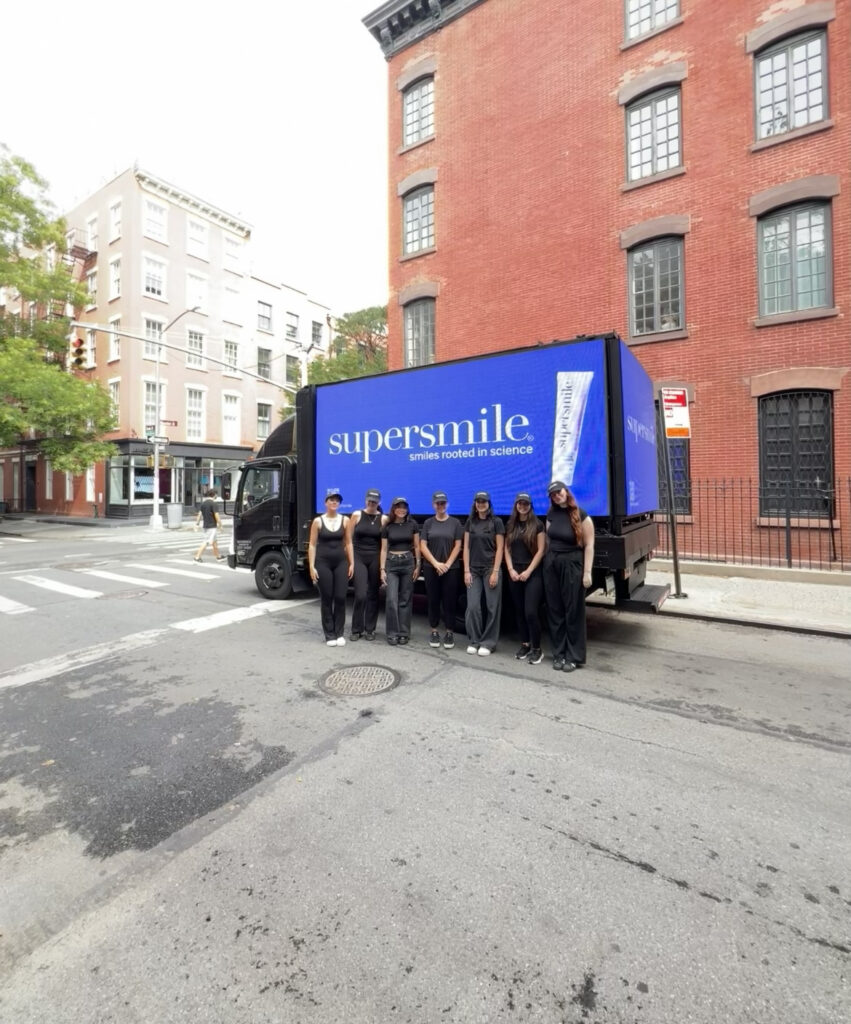
LED billboard trucks running the convention hotel-to-convention-center corridor during peak morning and evening transit windows deliver moving brand exposures to the full HIMSS attendee population regardless of their specific hotel or session schedule. We program healthcare-specific messaging for HIMSS LED campaigns: clear product category identification, a specific call to action tied to the brand’s HIMSS presence, and creative that communicates in the language of the healthcare IT professional rather than generic marketing vocabulary.
Wheatpasting in Convention Districts
Wheatpaste campaigns in the convention city’s SoMa equivalent, whether that is the block surrounding the Las Vegas Convention Center, the McCormick Place approaches in Chicago, or the Orange County Convention Center area in Orlando, create static brand presence that accumulates exposures over the full conference week. B2B wheatpaste creative for HIMSS should lead with a clear value proposition that the target audience immediately recognizes as relevant: the specific problem the brand solves, the specific health system role it addresses, or the specific HIMSS session theme it connects to.
Ambient Brand Presence
Ambient formats near the HIMSS convention create brand moments that complement the official event experience without requiring official participation. Branded coffee stations near hotel lobbies, charging stations at pedestrian waiting areas, and other utility-based ambient activations create genuine value for the HIMSS audience while maintaining brand visibility throughout the conference day.
HIMSS Marketing for Healthcare IT Vendors: The Strategic Case
The healthcare IT market has specific dynamics that make HIMSS marketing particularly valuable for vendors at specific growth stages.
Market Entry and Category Awareness
New entrants to the healthcare IT market face an awareness deficit against established vendors who have attended HIMSS for years. Street-level campaign presence during HIMSS creates a first impression for the new entrant across the full conference audience, giving the brand a chance to earn name recognition before the sales conversation begins. Even health system buyers who do not actively seek out new vendors at HIMSS will encounter a well-executed street campaign and file the brand name for later evaluation.
Competitive Displacement
For established vendors competing with an incumbent, HIMSS marketing serves a displacement function. Buyers who are actively evaluating alternatives to their current platform make HIMSS a research opportunity. A well-executed campaign that maintains brand visibility throughout the conference keeps the challenger brand present in the buyer’s awareness during the evaluation period that overlaps with conference week.
Account-Based Targeting at Scale
HIMSS attendee lists are relatively predictable year over year. Health system IT departments send consistent delegations, and the health system names attached to conference badges are often publicly known. For vendors running account-based marketing programs, HIMSS street campaigns can be combined with account-specific hospitality, event invitations, and targeted digital advertising to the same health system organizations to create a multi-channel saturation effect during the conference week.
HIMSS Campaign Timeline
HIMSS takes place in late March or early April in most years. Campaign planning should begin in November or December:
- November/December: Campaign brief, format selection, city-specific location research, budget confirmation
- January: Creative development, location scouting, talent sourcing, LED truck scheduling
- February: Creative production, ambassador briefing, logistics finalization
- March (pre-conference): Installation preparation, digital pre-campaign launch
- Conference week: Full campaign deployment, real-time monitoring
- Post-HIMSS: Documentation report, lead follow-through, performance analysis
Frequently Asked Questions
What is HIMSS marketing?
HIMSS marketing refers to brand campaigns designed to reach the healthcare IT professionals, hospital executives, health system decision-makers, and medical technology buyers who attend the HIMSS Global Health Conference and Exhibition. It includes official conference marketing as well as street-level campaigns that intercept attendees outside the official event perimeter.
How do healthcare brands market at HIMSS without a booth?
Healthcare brands run street-level campaigns around the convention venue, deploy brand ambassador teams at conference hotels, execute wheatpaste campaigns on available surfaces near the event, and run LED billboard trucks on the primary attendee commute corridors during HIMSS week.
Where is HIMSS held and what are the best marketing locations?
HIMSS rotates between major convention cities including Las Vegas, Chicago, Orlando, and others. Best marketing locations are always concentrated around the convention center campus, conference hotel district, and restaurant zones that HIMSS attendees congregate in during evening hours.
What types of brands benefit from HIMSS marketing?
Healthcare IT vendors, EHR platforms, hospital supply companies, medical device companies, health data analytics firms, telemedicine platforms, revenue cycle management companies, and professional services firms serving health systems all benefit from HIMSS marketing campaigns.
How much does HIMSS marketing cost?
HIMSS street-level marketing campaigns typically run $15,000 to $50,000 USD depending on format, scale, and convention city. This compares favorably to HIMSS exhibitor floor space costs, which can exceed $50,000 before booth build, staffing, and logistics are added.
When should brands start planning HIMSS marketing?
HIMSS typically takes place in March or April. We recommend starting campaign planning in November or December of the prior year. Convention city inventory for HIMSS week books quickly. Ten to twelve weeks of lead time from completed brief to campaign launch is standard.
How is HIMSS marketing different from other medical conference campaigns?
HIMSS draws a highly specific audience of healthcare technology decision-makers: CIOs, CMIOs, informaticists, and IT directors from health systems of all sizes. The audience concentration and decision-making authority of HIMSS attendees makes street-level targeting unusually high-value compared to general healthcare conferences.