Mexico City is not a soft market. CDMX runs at a pace and cultural density that rewards brands willing to show up physically, visibly, and with something to say. For US brands entering or expanding in Mexico, experiential marketing in Mexico City is the fastest path to genuine consumer attention, and the most direct way to signal that your brand is serious about the market. At American Guerrilla Marketing, we have planned and executed street-level brand activations in CDMX’s top colonias, working through our established operator network to deliver campaigns that match the city’s energy without getting lost in it.
Why CDMX Demands a Different Activation Playbook
Mexico City has a population of over nine million in the city proper, with greater metropolitan CDMX reaching 21 million. But population density alone does not explain what makes experiential marketing in Mexico City different. The city is organized into distinct colonias, each with its own demographic character, foot-traffic pattern, visual culture, and consumer behavior. A campaign that performs well in the Roma Norte coffee shop corridor will land differently in the corporate towers of Santa Fe. A brand that shows up in Polanco needs to look a certain way. Condesa has its own rhythm.
US brands that treat CDMX as a single undifferentiated market miss the point entirely. The colonias are the unit of planning. And that planning has to account for when people move through specific neighborhoods, what surfaces carry visual weight, which blocks deliver the highest foot traffic, and what kind of brand presence feels native compared with imported. Our team maps all of this before a campaign launches.
The CDMX Consumer is Visually Literate
Mexico City has a long tradition of street art, muralism, and public visual culture. Residents in Roma Norte, Condesa, Juarez, and Centro Historico see and evaluate outdoor brand presence the way a New Yorker evaluates creative in SoHo. If it is generic, it disappears. If it is executed with craft, it gets photographed and shared. This visual sophistication is an asset for brands willing to invest in quality creative, and a project risk for brands that phone it in.
Foot Traffic Peaks Are Predictable
CDMX has defined movement rhythms. Saturday morning in Condesa and Roma Norte is the single highest foot-traffic window for street-level campaigns targeting creative and consumer audiences. Friday evening in Polanco draws upscale dining crowds. Weekday lunch windows around Reforma capture the professional commuter segment. Our scheduling accounts for these patterns to maximize impression volume per installation.
Core Formats for Experiential Marketing in CDMX
Not all formats work equally across all CDMX neighborhoods. Our team has tested what actually delivers in each colonia and built a format framework around what moves audiences to action.
Wheatpasting and Poster Campaigns
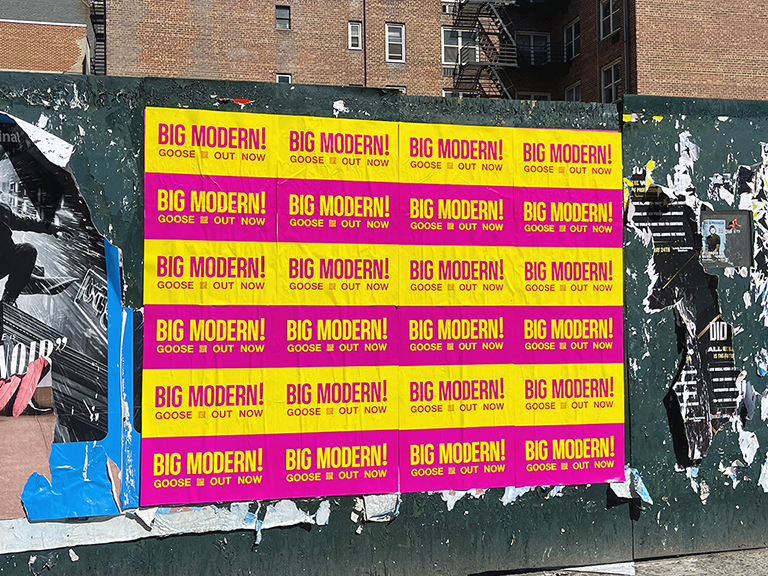
Wheatpasting is one of the highest-impact formats available in Mexico City. The city’s building stock in Roma Norte, Condesa, Juarez, Doctores, and Centro Historico provides abundant large-format vertical surfaces. A well-designed wheatpaste goes up at scale overnight, creating the morning reveal effect that generates immediate street attention. We work with local installation crews who know which surfaces are appropriate, which require coordination with property owners, and how to execute cleanly without visible seams or misaligned panels.
Poster campaigns at standard and double-sheet scale work well in higher-traffic corridors and near metro exits, where dwell time is short but volume is high. We design campaigns to function at both scales so a single visual system can run across multiple format sizes.
Street Teams and Brand Ambassadors
Brand ambassador programs in CDMX require Spanish-fluent talent with genuine familiarity with each neighborhood’s culture. A street team that looks out of place in Condesa is worse than no street team at all. We source local talent through our operator network, brief them on brand voice and campaign objectives, and deploy them during the specific windows when the target audience is most active in each zone.
Street teams in Mexico City work best as a complement to static formats. They create a human layer that makes a poster campaign feel alive and gives passersby a point of conversation rather than just a visual impression.
Ambient Marketing and Environmental Installations
Ambient formats take many shapes in CDMX. In Condesa and Roma Norte, branded park benches, café sidewalk moments, and neighborhood-specific placements generate curiosity-driven engagement. In Centro Historico, large-scale environmental presence plays well given the high tourist and local pedestrian volume. Projection advertising on building facades works in select locations for evening campaigns and creates a moment-in-time spectacle that drives social sharing.
The key with ambient formats in CDMX is integration, not interruption. The best activations feel like they belong to the neighborhood even when they are distinctly branded.
Sidewalk-Level Presence
Sidewalk stencils and chalk activations work well in select CDMX neighborhoods where foot-traffic density justifies the format. These formats create a ground-level discovery moment and work effectively as directional elements that guide pedestrians toward a pop-up or event location.
Neighborhood-by-Neighborhood Activation Guide
Successful guerrilla marketing in Mexico City starts with neighborhood selection. Our team has built detailed profiles of CDMX’s key colonias based on audience demographics, foot traffic data, surface availability, and campaign performance history.
Roma Norte
Roma Norte is CDMX’s creative and culinary center. The colonia draws young professionals, international visitors, designers, architects, and the city’s food and beverage media crowd. Álvaro Obregón, Orizaba, Sonora, and the streets surrounding Parque México are the highest-traffic corridors. Saturday morning is the activation peak. Wheatpaste, street teams, and café-level ambient formats all perform well here. This neighborhood rewards creative risk-taking over corporate polish.
Condesa
Condesa is Roma Norte’s calmer, more residential neighbor. The audience skews slightly older, more established, and more design-conscious. Amsterdam Avenue, the loop around Parque México, and the restaurant corridor on Tamaulipas are the key arteries. Campaigns here need to feel considered rather than disruptive. Refined wheatpaste creative and subtler ambient formats outperform aggressive street-team approaches.
Polanco
Polanco is Mexico City’s luxury district. Presidente Masaryk Avenue is lined with high-end retail, flagship restaurants, and five-star hotels. The audience is affluent, bilingual, and brand-literate. Activations in Polanco need to match the neighborhood’s aesthetic standard. Brand ambassador programs that feel premium, high-quality print materials, and polished pop-up formats work here. This is not the neighborhood for rough-edged guerrilla aesthetics.
Reforma Corridor
Paseo de la Reforma is Mexico City’s iconic boulevard, running from Chapultepec through Cuauhtémoc toward Centro. It carries heavy commuter, tourist, and business traffic throughout the week. Large-format wheatpaste campaigns in the blocks adjacent to Reforma create scale impression that complements colonia-level activations in Roma Norte and Condesa. The Reforma corridor functions as the connecting tissue between CDMX’s premium audience neighborhoods.
Juarez
Colonia Juarez has emerged as one of CDMX’s most dynamic creative neighborhoods. The bar and restaurant scene around Genova and Amberes streets, combined with a dense concentration of studios, agencies, and fashion brands, creates a receptive audience for culturally aware brand activations. Wheatpasting here reaches an audience that actively engages with street-level creative.
Santa Fe
Santa Fe is CDMX’s corporate campus district. The audience is primarily business decision-makers, finance professionals, and the executive class. Street-level consumer formats are less effective here than at professional touchpoints, but targeted brand presence near office towers, hotel entrances, and business event venues can reach a valuable B2B audience. This neighborhood works best as part of a multi-zone campaign rather than as a standalone focus.
Planning a CDMX Experiential Campaign: Our Process
When a US brand brings us a Mexico City brief, we run a structured planning process before any creative goes up.
Audience and Objective Mapping
We start by understanding who the campaign needs to reach and what it needs to accomplish. Consumer awareness, retail traffic, event promotion, and product launch each require different geographic targeting, format selection, and timing. We map the colonia mix based on where the target audience lives, works, eats, and moves.
Location Scouting and Surface Inventory
Our CDMX operator network has pre-scouted surface inventory across the key colonias. For new campaigns, we supplement with fresh scouting to identify surfaces that match the creative format, offer maximum visibility, and present no logistical complications. We document every location with GPS coordinates and photography before installation approval.
Creative Format Development
CDMX audiences respond to creative that feels culturally aware without being culturally appropriative. We advise clients on format, scale, messaging hierarchy, and visual approach based on the specific neighborhoods where the campaign will run. A creative system that works in Brooklyn or Los Angeles may need adjustment for the CDMX visual environment.
Installation, Documentation, and Reporting
Our installation crews execute campaigns overnight where appropriate, capturing GPS-tagged photography at each location. We provide a post-campaign report with location-by-location documentation, impression estimates, and performance notes. US clients receive the same proof-of-posting accountability standard we apply to every domestic campaign.
Ready to Launch Your Campaign?
What Makes CDMX Activations Different from US Campaigns
US brands entering Mexico City often assume that what worked in New York, Los Angeles, or Chicago will translate directly to CDMX. It usually does not, and the gap is not just language. It is pace, visual culture, neighborhood logic, and the way physical space is used for public life.
The Public Space Orientation
CDMX residents use public space more actively than most US cities. Sidewalks, parks, plazas, and neighborhood streets are social infrastructure. This means street-level activations encounter audiences who are already engaged with the public environment, not rushing from car to building. The dwell time per impression is higher, which is a significant advantage for formats that reward visual attention.
The Social Sharing Dynamic
Mexico City’s creative class is highly active on Instagram and TikTok, and they actively document interesting things they see on the street. A well-executed wheatpaste campaign or ambient activation in Roma Norte or Condesa can generate organic social content far beyond what paid placement would achieve. We design campaigns with this sharing dynamic in mind, creating visuals and moments worth photographing.
Timing and Seasonality
CDMX has its own calendar of peak activity periods. December is high-season for consumer spending and street activity. Semana Santa brings significant population movement. The spring fashion and design season in Roma Norte creates concentrated creative-industry audience presence. We build campaign timing around these peaks rather than ignoring them.
Combining Formats for Multi-Layer CDMX Campaigns
The most effective experiential marketing campaigns in Mexico City layer multiple formats across multiple colonias to create a presence that feels citywide rather than isolated. A typical multi-layer campaign might include:
- Wheatpaste installations across Roma Norte, Condesa, and Juarez for broad creative-audience coverage
- Street teams in Polanco and Reforma corridor during peak professional traffic windows
- Ambient placements in Condesa park areas during weekend morning peaks
- Projection activation at a selected Centro Historico location for a one-night high-impact moment
This type of campaign creates multiple consumer touchpoints across different audience contexts, building recognition and recall through repetition across formats. It also generates more diverse organic social content, as different formats appeal to different documentation styles.
US Brand Entry Strategy in CDMX
For US brands entering Mexico City for the first time, we recommend a phased approach. A focused launch campaign in one or two colonias with a clear audience profile allows the brand to establish presence and test messaging before committing to citywide scale. Roma Norte and Condesa together make a strong first market, reaching the creative and consumer audience that drives cultural trend adoption in CDMX.
Subsequent campaign phases can expand into Polanco for the premium audience, Reforma corridor for broad impression scale, and Juarez for fashion and design category relevance. We build media plans that allow US brands to enter CDMX intelligently and scale based on performance rather than guesswork.
Working with Our CDMX Operator Network
American Guerrilla Marketing does not parachute into Mexico City and figure it out from scratch. We operate through a network of established local operators who have existing relationships with property owners, installation crews, and neighborhood institutions. This network is what allows us to deliver the same accountability standard in CDMX that our domestic clients expect. Location photography, GPS documentation, and campaign reporting come standard with every international activation we execute.
What is experiential marketing in Mexico City?
Experiential marketing in Mexico City means creating live, physical brand moments that put audiences inside the campaign rather than in front of it. In CDMX, this ranges from street-level activations in Roma Norte and Condesa to large-format brand experiences in Polanco and Santa Fe.
Which neighborhoods in CDMX work best for brand activations?
Roma Norte and Condesa attract the highest concentration of creative professionals and international consumers. Polanco draws luxury and finance audiences. Santa Fe targets corporate decision-makers. Each colonia requires a different activation format and timing strategy.
How much does an experiential marketing campaign in Mexico City cost?
Costs vary widely by format, duration, and neighborhood. A focused street-team activation in one colonia typically runs $3,000 to $8,000 USD. Multi-neighborhood campaigns with wheatpasting, street teams, and ambient elements range from custom quote to $35,000 USD depending on scale and flight length.
Can US brands run experiential campaigns in CDMX without a local office?
Yes. American Guerrilla Marketing operates through an established operator network in Mexico City. We handle location site approvals, production logistics, installation crews, and photo documentation. US brands coordinate through our Brooklyn office and we execute on the ground in CDMX.
How far in advance should I book a Mexico City brand activation?
Plan 6 to 10 weeks out for most campaigns. High-traffic periods around major CDMX events, holiday weeks, and fashion season require additional lead time. We recommend contacting our team at [email protected] as early as possible to secure prime locations and production slots.
What types of experiential marketing work best in CDMX?
Wheatpasting performs strongly across Roma Norte, Condesa, and Juarez. Street teams work well in Reforma corridor and Polanco. Ambient and projection-based activations draw attention in Centro Historico and Condesa parks. The best campaigns combine two or three formats for layered coverage.
Does American Guerrilla Marketing handle experiential marketing outside the US?
Yes. AGM coordinates campaigns in Mexico City and other Latin American markets through our international operator network. We provide the same GPS-documented proof of posting and campaign reporting that our US clients receive.
Related: Wheatpasting & Poster Campaigns | Guerrilla Marketing Services | Sidewalk Stencils | LED Billboard Trucks | Brand Ambassador Agency
Ready to Launch Your Campaign?
Millie Phillips
Industry City, Brooklyn, NY 11232
Campaign Architect , American Guerrilla Marketing
Email: [email protected]
Office: (646) 776-2770
Official Wheatpaste Pricing
We only quote from AGM’s published rate cards or from a custom scope tied to the actual market, route, staffing plan, and production load.
- 24×36 wheatpaste campaign, 100 posters: $4,500
- 24×36 wheatpaste campaign, 200 posters: $5,500
- 48×72 wheatpaste campaign, 100 posters: $10,500
- 48×72 wheatpaste campaign, 200 posters: $13,500
- Optional maintenance for the final two weeks of a monthly run: $3,500
If your campaign needs a different city mix, custom fabrication, or rush timing, contact AGM for a quote built from the same rate-card logic.
How AGM scopes Experiential Marketing Mexico City: Brand Activations in CDMX
Every wheatpaste deployment plan starts with the same field questions. Where will the audience actually see the work, how long will the message stay in view, what kind of crew does the job need, and what proof will the client want after the run is live. We scope those answers before we talk about volume. That keeps the program grounded in real conditions instead of broad theory. For experiential marketing mexico city: brand activations in cdmx, the planning work matters because one weak choice at the start can waste the whole run. A strong route, a realistic install pace, and a clean recap process are what make the campaign feel sharp in the street instead of rushed.
What changes performance in the field
Performance usually comes down to placement, timing, and repetition. The best campaigns do not chase every possible block. They pick the blocks, venues, walls, stations, storefronts, or pedestrian paths that line up with the right audience behavior. We watch how people move through a neighborhood, what side of the street they face, how long they dwell, and what else is competing for attention. For experiential marketing mexico city: brand activations in cdmx, that means the visible details, sightline, lighting, install condition, and recap quality all matter. Good field work looks obvious after the fact, but it only feels obvious because the plan was tight before the crew ever rolled.
Budget and timing without guesswork
AGM does not pad numbers with vague ranges. We tie budgets to rate cards where a public rate exists, then fill in the rest with real production needs, staffing, route density, timing, and market conditions. That keeps the conversation honest. On experiential marketing mexico city: brand activations in cdmx jobs, timing is often shaped by access windows, weather, production lead time, and how much documentation the client wants back. If a project is simple, the schedule stays simple. If it has many neighborhoods, many surfaces, or several city teams moving at once, the schedule expands because the work on the ground expands. That is a normal operations decision, not filler.
How we document results
Clients do not just need the work done. They need to know where it landed, how it looked, and whether the rollout matched the brief. Our recap process is built around timestamped photos, neighborhood notes, route summaries, and clear proof of completion. On experiential marketing mexico city: brand activations in cdmx work, recap quality often decides whether a client books the next run. Clean reporting also helps the next wave because the team can see what held up, what drew the strongest response, and which placements deserve a second pass. The recap is not an afterthought. It is part of the product.
Common mistakes brands make with Experiential Marketing Mexico City: Brand Activations in CDMX
The most common mistake is chasing surface area without enough planning. Brands sometimes assume that more units or more neighborhoods always means better results. In practice, sloppy spread kills recall. Another mistake is forcing creative that is too dense for the setting. Street work needs clear hierarchy, strong contrast, and a message that makes sense at the distance where the audience sees it. A third mistake is underestimating production details. The stock, finish, weather window, shift timing, and recap expectations all shape the outcome. Strong campaigns respect the boring details because the boring details decide whether the visible work looks premium.
Why this topic matters to AGM clients
Clients hire AGM because they need people who understand street conditions, not just ad concepts. Experiential Marketing Mexico City: Brand Activations in CDMX is valuable when it turns a broad brand idea into something that holds up in a real place, in front of moving people, with real constraints. That is where execution matters. A page like this should leave you with a clear sense of what the work involves, what can go wrong, and what a disciplined rollout looks like. If the campaign needs city selection, route design, crew planning, printing, fabrication, staffing, reporting, or a combined package, AGM can scope it from one operating plan instead of handing the job off across five vendors.
Frequently Asked Questions About Experiential Marketing Mexico City: Brand Activations in CDMX
How early should a brand start planning?
For most campaigns, the smart move is to start planning at least two to four weeks before the launch window so production, routing, staffing, and reporting are all lined up.
What makes one market perform better than another?
Market fit depends on audience density, neighborhood behavior, route efficiency, and whether the creative belongs in that setting. The busiest city is not always the best city.
Can AGM bundle this with other services?
Yes. AGM often combines this work with supporting formats so the campaign has stronger repetition and cleaner reporting across the whole run.
How does AGM quote pages like this?
We quote from official rate cards where they apply, then scope the remaining production, staffing, and routing details to the actual job.
Frequently Asked Questions