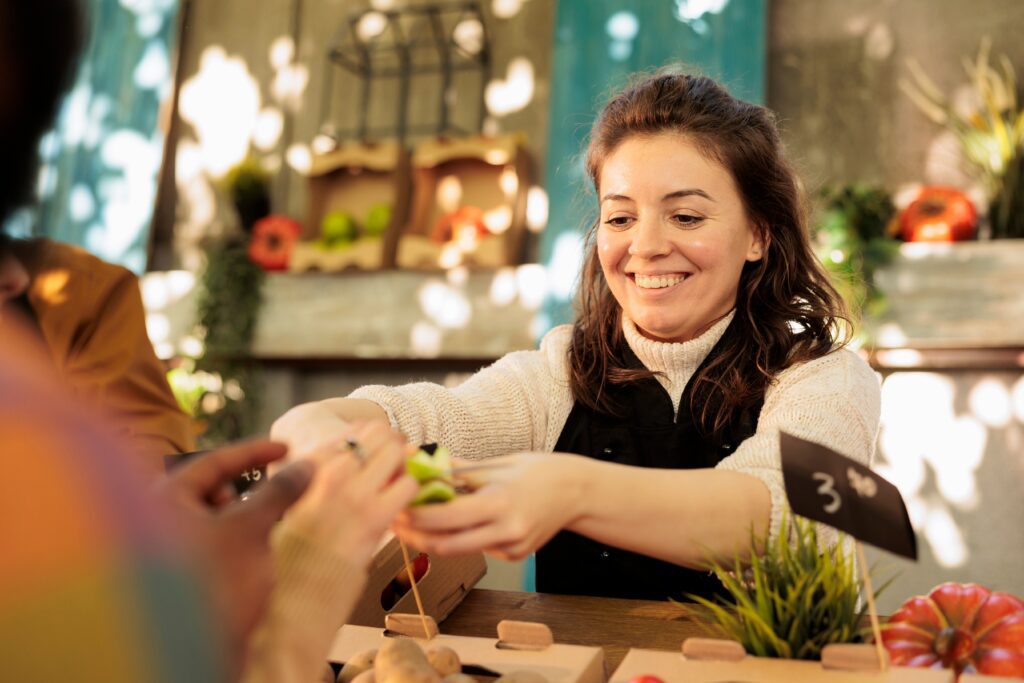
CPG product sampling is the most direct conversion mechanism in consumer goods marketing. Everything else, digital advertising, out-of-home placements, influencer content, builds awareness and intent. Product sampling turns that intent into experience. When a consumer tries a product and it delivers on the promise the brand has been making through every other channel, the relationship moves from awareness to preference in a single moment. That moment is worth more than any amount of awareness advertising alone can create.
We are American Guerrilla Marketing. We plan and execute CPG product sampling programs for food, beverage, personal care, and household products brands across the United States. We have sampled products in farmers markets, grocery stores, fitness studios, campuses, outdoor events, transit hubs, and neighborhood environments in markets from New York to Los Angeles to Miami. We know what makes a sampling program generate genuine trial and what makes it generate politely accepted samples that get thrown away within a block. This guide is built from that field experience.
Product sampling works because it solves the consumer’s fundamental barrier to purchasing a new product: uncertainty about whether it is worth spending money on. No amount of advertising eliminates that uncertainty as effectively as personal experience. A consumer who has tasted a food product, used a beauty product, or experienced a beverage is in a qualitatively different relationship with that product than a consumer who has only seen advertising for it.
The mechanism is simple. Trial reduces perceived risk. Reduced perceived risk increases purchase likelihood. A consumer who liked the sample has strong reason to purchase. A consumer who was neutral has a foundation for consideration that advertising alone could not build. Even a consumer who did not love the product has learned something accurate about their fit with the brand, which is better than wasting advertising dollars on a consumer who will never convert.
The challenge is in the execution. Bad sampling programs, poorly designed, poorly located, poorly staffed, convert at low rates and create poor brand exposures rather than positive ones. Excellent sampling programs, strategically designed and professionally executed, are among the highest-ROI marketing investments available in CPG.
AGM Field Note: We measure the success of CPG product sampling programs by conversion rate from sample to purchase intention, not by the volume of samples distributed. A program that distributes 10,000 samples and converts 5% to purchase intent is outperforming a program that distributes 50,000 samples and converts 1%. Volume of distribution without conversion quality is just giving product away. We optimize for quality of the trial moment, which drives conversion, not for the number of samples handed to uninterested consumers.
The Anatomy of an Effective CPG Sampling Program
Effective CPG product sampling programs share a set of structural characteristics that separate them from ineffective ones. Here is what they have in common.
Strategic Location Selection
The location of a CPG sampling program determines who tries the product and in what context. A beverage sampled at the exit of a gym reaches consumers who just finished a workout and are in the exact mindset where a functional beverage is most relevant. The same beverage sampled in the middle of a shopping mall concourse reaches an undifferentiated crowd in a context where the product’s specific benefit is not activated. Location determines context. Context determines receptivity. Receptivity determines conversion.
We spend significant time on location strategy before any sampling program launches. We identify the specific environments where the target consumer is most likely to be in the right mental state to receive the product positively. We then select locations within those environments that offer the highest density of the right audience during the deployment windows.
Properly Prepared Demo Specialists
The person who hands a consumer a sample is the human face of the brand at the moment of first product experience. A demo specialist who is enthusiastic, knowledgeable, and able to present the product’s key benefit in a sentence or two creates a positive brand impression even before the consumer tastes the product. A demo specialist who is disengaged, scripted, or unable to answer basic questions undermines the product experience before it happens.
We train all demo specialists on the product, the key messages, the target consumer, and how to create a genuine interaction rather than a transactional handoff. Standard product demo rates run from $389.99 per six-hour shift for a standard specialist to $589.99 for a premium demo host with deeper talking points and stronger interactive skills.
The Sample Itself
The sample must represent the product accurately and positively. A food product sample that is served at the wrong temperature, prepared incorrectly, or in a portion size so small that the consumer cannot actually assess the product is a wasted sample. A sample that delivers the full product experience at its best, prepared correctly, presented attractively, in a portion that allows genuine assessment, is the foundation of a conversion.
We review sampling protocols for every CPG program we run. Temperature management. Storage. Preparation timing. Serving format. We treat the sample as seriously as we treat a plate of food in a restaurant, because the consumer’s first experience of the product is at least as consequential as the first experience of a restaurant dish.
A Clear, Simple Conversion Path
After a positive sample experience, the consumer should have an obvious, easy path to purchase or to next engagement with the brand. A coupon for their next purchase. A QR code to the brand’s online store. Information about where the product is available locally. The conversion moment, when the consumer’s positive experience is highest, is brief. Make the next step clear, simple, and immediately accessible.
Documentation and Data Capture
Every CPG sampling program should capture data that allows the brand to evaluate what worked and optimize future programs. Consumer feedback. Purchase intent statements. Data on which locations and time windows produced the best conversion quality. Digital conversion data from QR codes or promotional codes. We build data capture into every sampling program we execute.
Sampling Location Type
Best CPG Category Fit
Conversion Environment
Grocery store in-store
All food and beverage categories
Highest: consumer is actively shopping
Farmers market
Natural, organic, artisan food/beverage
Very high: consumer is in discovery mode
Fitness studio / gym exit
Performance nutrition, functional beverages, health foods
High: activated context for relevant products
Urban park (weekend)
Beverages, snacks, lifestyle food/beverage
High: relaxed, open, social state
College campus
Beverages, snacks, convenience food
Medium-high: frequent purchase category
Transit hub
Grab-and-go beverages and snacks
Medium: time-constrained but high volume
Types of CPG Product Sampling Programs
Not all CPG sampling programs look the same. The right structure depends on the product, the target consumer, the campaign objectives, and the budget. Here are the main program types we execute.
In-Store Demonstration and Sampling
Sampling conducted inside retail grocery and specialty food stores, typically at a demonstration station near the product’s shelf location or in the specialty food area. This is the classic CPG sampling format and it delivers the highest direct conversion because the consumer is already in the purchasing environment. When they like the sample, the product is within arm’s reach. We execute in-store sampling programs in major grocery chains, specialty food stores, natural grocery chains, and club stores across the country.
Field Sampling at Events and Markets
Sampling conducted at outdoor events, farmers markets, food festivals, and other gatherings where the target consumer is concentrated. Field sampling reaches consumers who are in an exploratory, discovery mindset and who are often specifically seeking new food and beverage experiences. This is a higher-engagement, lower-immediate-conversion format than in-store sampling, but it generates stronger brand exposures and more durable positive associations.
Mobile Sampling via Cargo Bikes
A cargo bicycle outfitted with branded exterior panels and a product storage compartment, operated by a brand ambassador who distributes samples along planned routes through target areas. This format brings the sample to the consumer rather than waiting for the consumer to come to the sample. It is particularly effective in parks, greenways, markets, and campus environments where fixed sampling tables cannot be positioned.
Direct-to-Consumer Sampling Programs
Sampling programs that distribute product directly to target consumer households, through partnerships, subscription box integrations, or direct mail. These programs reach consumers at home, which changes the consumption context and the conversion timeline. We advise on field execution components of D2C sampling programs and manage the brand ambassador elements of sampling events that accompany D2C distribution programs.
AGM Field Note: The highest-converting CPG sampling programs we have run share a common structure: the right product, in the right place, with the right team, at the right moment. All four variables have to be right simultaneously. A great product in the wrong location with a disengaged team converts poorly. A mediocre product in the perfect location with a great team also converts poorly. The combination of all four variables is what creates programs that move the needle on trial and purchase intent in ways that advertising alone never matches.
CPG Sampling for New Product Launches
Product sampling is particularly valuable for CPG brands launching new products into competitive categories. The challenge in a new launch is getting the product into the hands of consumers who would never pick it up off a shelf without some prior experience or recommendation. Sampling solves that problem directly by making the first experience free, frictionless, and memorable.
We structure launch sampling programs to hit the highest-value environments and the highest-density windows for the target consumer in the launch market, typically starting in the brand’s strongest existing markets before expanding. The launch sampling program generates the initial trial base that creates the word-of-mouth and social sharing that amplifies every other marketing channel the brand is running.
For a CPG launch, we recommend pairing in-store sampling in the retail environments where the product is stocked with field sampling in the outdoor and community environments where the target consumer is most active. The combination reaches the consumer both at the point of purchase and in their daily life, reinforcing the product’s presence from multiple directions simultaneously.
CPG Sampling for Legacy Products Entering New Markets
Legacy CPG products that are well-known in their home markets often need sampling programs when they expand into new geographic markets or new demographic segments. A brand that is the market leader in the Southeast may be unknown in the Pacific Northwest. A brand that dominates the 35-to-50 age group may need to introduce itself to Gen Z consumers who have never encountered it.
In both scenarios, sampling serves as the most efficient introduction mechanism. It gets the product into the hands of a new audience in a way that no amount of digital advertising or out-of-home placement can replicate. A consumer who has tried a new-to-them product that they like becomes an advocate in ways that a consumer who has only seen advertising for that product does not.
Frequently Asked Questions About CPG Product Sampling
How many samples should we plan for a CPG sampling program?
Sample volume depends on the program scope, the distribution rate at each location, and the duration of the program. We plan sample quantities based on expected engagement rates at each deployment location and build in contingency for higher-than-expected traffic. We always recommend having more samples available than the minimum projection suggests. Running out of samples ends the program early and misses the opportunity at the highest-traffic moments.
What is the ideal sample size for a CPG food product?
The sample should be large enough for the consumer to genuinely assess the product’s flavor, texture, and overall quality. For most solid food products, a half to full serving size is the minimum for genuine assessment. Samples that are too small leave the consumer without enough information to form a meaningful positive impression. We work with each brand to determine the right sample portion for their specific product and category.
Do you handle sample production and packaging as well as distribution?
We are a field execution agency. We manage the sampling deployment, the demo specialists, the field management, and the reporting. Sample production and packaging are typically handled by the brand or by specialized sampling pack producers. We coordinate the logistics of getting samples from wherever they are produced to our field deployment locations, and we ensure they are stored and handled appropriately throughout the program.
What markets do you execute CPG sampling in?
We execute in all major U.S. markets including New York, Chicago, Los Angeles, Miami, Boston, Washington DC, Philadelphia, Atlanta, Dallas, Houston, San Francisco, Seattle, and dozens of secondary markets. For national launch programs, we coordinate simultaneous sampling in multiple markets through our field management network.
How do you handle perishable product sampling?
Perishable product sampling requires careful temperature management, appropriate storage equipment, and rigorous protocols for how long product can be out of temperature-controlled conditions. We build temperature management protocols into every perishable sampling program and our field teams are trained on food safety standards for sample handling. We do not cut corners on perishable product management because the cost of a sampling experience that is undermined by a product quality issue is significant.
Can CPG sampling be combined with data collection?
Yes. We regularly integrate data collection, consumer feedback surveys, purchase intent statements, and digital engagement prompts into CPG sampling programs. The moment immediately after a positive sample experience is one of the highest-receptivity windows for consumer feedback and for digital opt-in. A QR code survey, a sweepstakes entry, or a coupon for their next purchase all convert at higher rates in the seconds immediately following a positive trial than at any other point in the consumer process. We build data capture into sampling programs as a standard component.
What is the minimum duration for a CPG sampling program to be meaningful?
A single-day event sampling program can be effective for events with very high target audience concentration. For ongoing market development programs, we recommend a minimum of four to six weeks of consistent sampling presence in the target market to build sufficient trial volume and generate meaningful word-of-mouth. Sampling programs that run for only a day or two in standard retail or field environments produce insufficient trial volume to move category metrics.
How do you measure the ROI of a CPG sampling program?
The cleanest measurement is scan data from retail partners that shows sales velocity in the period following sampling versus baseline. Secondary metrics include purchase intent data captured at the sampling event, coupon redemption rates, and QR code engagement. For programs without retail integration, we measure through consumer feedback quality, observed engagement depth at sampling encounters, and digital conversion from any digital touchpoints in the sampling experience. We build measurement approaches based on what data is available for each specific program.
Launch Your CPG Product Sampling Program
We execute CPG sampling programs that deliver genuine consumer trial and measurable brand impact. We know the difference between sampling programs that move product and ones that move samples. We build the former and we are happy to explain exactly how we approach it for your specific product, your target market, and your campaign objectives.
How American Guerrilla Marketing Approaches This Work
We are a New York-based guerrilla marketing agency with national reach. We plan every program around a clear objective and a specific target audience. We execute with trained, briefed, supervised teams. We report honestly on what we delivered. And we build long-term relationships with clients who want a marketing partner that treats their budget as seriously as they do.
Our pricing structure is transparent. Street team members run from $389.99 to $589.99 per six-hour shift depending on tier. Brand ambassadors run the same range. Product demonstration specialists run the same range. We do not hide fees or build surprise add-ons into program invoices. We tell you what the program costs upfront based on the specific scope you need.
We operate in all major U.S. markets and have executed programs across more than forty cities. Our primary strength is in New York, Chicago, Los Angeles, Miami, Boston, Washington DC, Philadelphia, Atlanta, and San Francisco. In each of these markets, we have established rider relationships, retailer relationships, event access protocols, and local market knowledge that materially improves the quality and efficiency of program execution compared to a national agency deploying generic teams to unfamiliar markets.
We are honest about what field marketing can and cannot do. It is not a replacement for advertising. It is not a shortcut to brand building. It is a powerful complement to other marketing channels when it is strategically designed, professionally executed, and measured honestly. We do our best work when clients treat us as strategic partners, bring us into campaign planning early, give us honest briefs, and evaluate performance against realistic expectations for what field marketing programs deliver.
If you are looking for a field marketing partner who will tell you what you need to hear rather than what you want to hear, who will build a program that fits your budget and serves your objectives, and who will execute that program at a professional standard in the field, we are that partner. Call us and let’s have a direct conversation about your brand, your market, and what we can build together.
Building a Program That Delivers in the Real World
The gap between a field marketing program that delivers genuine results and one that generates an expensive activity report with nothing to show for it comes down to three variables: strategic clarity in the brief, professional quality in the execution, and honest accountability in the reporting. When all three are present, field marketing programs create meaningful, measurable brand outcomes. When any of the three is missing, the budget gets spent without proportional returns.
We start every program engagement with a strategic conversation, not a price negotiation. We need to understand the brand deeply enough to make genuinely useful strategic recommendations. That means understanding the product, the target consumer, the competitive environment the brand operates in, the specific market we are activating in, and the specific outcome the client needs the program to produce. Without that understanding, we can execute tactics competently but we cannot build a program that is strategically sound.
Professional execution is what we are known for and what we protect as the foundation of every client relationship we have. Our field teams are trained, briefed, supervised, and held to clear performance standards. We do not deploy teams without field management. We do not finalize programs without creative review. We do not accept sample quality that does not represent the brand accurately. We do not allow route drift without field supervisor intervention. These standards exist because field marketing quality is the only thing that determines whether a program generates genuine consumer impact or generates the appearance of activity.
Honest reporting is the accountability mechanism that makes the whole system function. We deliver reports that tell clients what actually happened: where the program was strong, where it was weak, what we did to address problems when they arose, and what we recommend for the next program cycle based on what we learned. We do not optimize our reports for optics. We optimize them for usefulness. A client who gets an honest, useful report from a program that underperformed in specific areas can make better decisions with that information than a client who gets a glowing report that conceals what went wrong.
Field Marketing Program Economics: Getting Value from Your Investment
Field marketing programs are an investment, and like any investment, they require a clear-eyed view of what they return relative to what they cost. Here is how we think about the economics of field marketing across the main program types we execute.
Street team programs generate a specific type of value: direct, human-scale brand encounters with the target consumer in the physical environments where they spend their time. The cost of a six-hour shift with a trained, briefed, supervised street team member running from $389.99 at the standard tier to $589.99 at the premium tier reflects the cost of a professional who represents your brand competently in every interaction they conduct during that shift. The return on that investment is the number and quality of direct brand encounters generated during the shift and the downstream brand recognition and purchase consideration that those encounters produce over time.
Sampling programs generate a different type of value: direct product trial among the target consumer in contextually appropriate environments. The cost of a sampling program includes specialist staffing, sample production and logistics, equipment, field management, and reporting. The return is measured in trial volume, purchase intent lift, retailer velocity data, and long-term brand adoption among the consumers who had a positive first product experience. For brands with genuinely strong products, the ROI on well-executed sampling programs is among the highest in the marketing mix.
Mobile advertising programs, including billboard bikes, LED display bikes, and vehicle-based advertising, generate the value of brand presence in premium access environments. The cost reflects the unique access value of the format: being in Central Park, on the Lakefront Trail, at a major outdoor market is not the same as being on a commercial street. The premium access environment is what the format delivers and what justifies the investment relative to static or vehicle-restricted formats.
Across all program types, the most reliable way to maximize return on investment is to be specific about the objective, design the program specifically to achieve that objective, execute at a professional standard, and measure against the specific outcome the program was designed to produce. Generic programs generate generic results. Specifically designed, professionally executed programs generate the specific outcomes they were built for.
Common Questions We Get from Brands Starting Field Marketing Programs
We have introductory conversations with brands evaluating field marketing programs every week. Here are the questions we hear most often and the honest answers we give.
“How much does a field marketing program cost?” It depends entirely on the scope. A two-person street team for one week in one market is a modest investment. A twenty-city sampling program with twenty specialists per market and full field management is a significant one. We size programs based on objectives and build budgets based on the specific scope required to achieve them. We do not have a standard package price because no two programs are the same.
“How do I know if field marketing will work for my brand?” We evaluate fit based on the brand, the product, the target consumer, and the specific objective. For consumer brands with genuinely strong products targeting specific urban demographics in environments where field marketing operates effectively, it almost always works when it is executed at quality. For brands where the fit is less clear, we say so and recommend whether a test program or a different approach makes more sense.
“How do you ensure the team represents our brand appropriately?” Through recruitment based on genuine product-audience fit, thorough pre-deployment training, active field management throughout every shift, and honest performance reporting that holds teams and supervisors accountable for quality. We have multiple layers of accountability built into every program precisely because brand representation quality is the non-negotiable foundation of field marketing value.
“What if we are not happy with the results?” We have a direct conversation about it. We review the program data together, assess what worked and what did not, and make a recommendation about how to adjust the next program cycle to address the shortcomings of the current one. We do not tell clients that disappointing results are an inherent limitation of the format. We assess whether the issue was strategic, creative, or executional and address it specifically in the next program design.
Next Steps: Building Your Program with AGM
Field marketing programs start with a conversation. Call us at (646) 776-2770 or email [email protected] and we will schedule a direct discussion about your brand, your target market, your campaign objectives, and your timeline. We will ask specific questions about the program you need and give you honest answers about what the right approach looks like for your situation.
From that initial conversation, we build a program recommendation that reflects genuine strategic thinking about how to achieve your specific objective in your specific market with your specific target consumer. We do not deliver a one-size-fits-all proposal and invite you to pick the package that is closest to what you need. We design programs from the ground up based on what each client’s situation actually requires.
Our production timelines are realistic. We tell you what we need from you at each stage of production and when we need it. We tell you what the program will cost before we begin. We execute to the plan we have agreed to and we communicate transparently when real-world conditions require any adjustment to that plan. We deliver the program report within five business days of the final deployment day.
We are a team of people who care about field marketing done right. Not because it is a job, but because we have seen what well-executed guerrilla and field marketing programs accomplish for the brands we represent and we take pride in being the team that delivers those results. We invite you to experience that difference directly. Call us today.