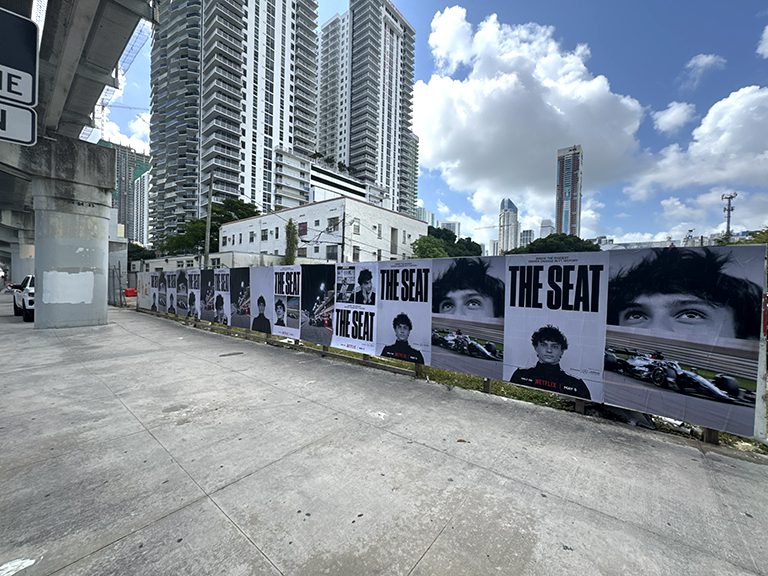
Wheatpaste is an adhesive made from wheat starch and water, and it has bonded printed paper to walls in cities for longer than most advertising formats have existed.
Wheatpaste is an adhesive made by cooking wheat flour or wheat starch with water until the mixture thickens into a sticky, semi-translucent paste. It is used to apply printed paper posters to outdoor surfaces including brick, concrete, plywood, and painted metal. The name is literal: paste made from wheat.
In the context of street marketing and outdoor advertising, wheatpaste is the primary adhesive for what is commonly called wheat pasting, paste-up advertising, or street postering. Printed posters are applied to wall surfaces using wheatpaste as the bonding agent. The result, when executed properly, is a poster that lies completely flat against the surface, bonds to it through mechanical and chemical adhesion, and weathers outdoor conditions for weeks without peeling.
American Guerrilla Marketing has been executing wheatpaste campaigns professionally for over a decade. We have pasted posters in January cold in Chicago and August heat in Miami, on construction barriers in Williamsburg and painted brick in the Arts District of Los Angeles. We know this material from every angle, and this piece lays out what wheatpaste actually is, how it works as an adhesive, and what makes it effective as a commercial street advertising medium.
Wheatpaste works because of the physical and chemical properties of starch. Wheat flour and wheat starch are both primarily composed of amylose and amylopectin, the two molecular components of starch. When starch granules are suspended in water and heated, they absorb water, swell, and rupture. The contents of the granules, the amylose and amylopectin chains, are released into the water and form an entangled network of polymer molecules. This network is what gives cooked starch its viscosity and adhesive properties.
When wheatpaste is applied to a porous surface like brick or unsealed wood, the starch polymer chains penetrate the small pores and channels in the surface material. As the water in the paste evaporates, the polymer network contracts and locks the paste into those microscopic channels. This is called a mechanical bond: the adhesive is physically interlocked with the surface rather than just sitting on top of it.
When a paper poster is applied to a paste-coated surface and the top coat of paste is applied over the face of the paper, the same process happens through the paper’s fiber structure. The paste penetrates the paper, and as it dries from both sides simultaneously, it creates a continuous adhesive matrix that spans from the wall surface through the paper to the dried paste film on the poster’s face. The poster becomes part of this composite system rather than just a separate layer sitting on top.
Adding PVA (polyvinyl acetate) glue to wheatpaste changes the chemistry in a beneficial way for outdoor applications. PVA is a synthetic polymer that forms a flexible, water-resistant film when dried. Incorporating PVA into the paste mixture adds polymer chains with much higher water resistance than starch provides alone. The dried paste-PVA film is significantly more resistant to re-wetting from rain and humidity, which is why outdoor professional campaigns use PVA-enhanced paste rather than straight wheat starch paste.
The Difference Between Wheat Flour and Wheat Starch
Both wheat flour and wheat starch are used to make wheatpaste, but they are not identical in their performance as adhesives.
All-purpose wheat flour contains starch, proteins (gluten-forming proteins including glutenin and gliadin), and small amounts of fat and fiber from the wheat bran. The protein content of flour means that when you cook flour-based paste, the protein denatures and creates a slightly cloudy, matte adhesive. This works well for most applications and is the cheapest and most universally available ingredient for making wheatpaste.
Pure wheat starch contains almost exclusively the starch fraction of the wheat grain, with the protein, fat, and fiber components removed. When cooked, wheat starch forms a clearer, more translucent paste with higher adhesive strength per unit weight than flour-based paste. It also has a slightly lower viscosity at the same concentration, which can make it easier to apply evenly with a brush or roller.
For small personal projects and test runs, all-purpose flour is perfectly adequate. For professional outdoor campaigns where maximum adhesion and weather resistance matter, wheat starch is the preferred base ingredient. Wheat starch is widely available at Asian grocery stores, restaurant supply outlets, and some grocery stores in the baking section.
Property
Flour-Based Paste
Wheat Starch Paste
Wheat Starch + PVA
Base adhesion
Good
Better
Best
Appearance when dry
Matte, slightly cloudy
Clear to slightly matte
Clear, slight sheen
Weather resistance
Low to Medium
Medium
High
Working time
Good
Good
Good
Cost
Very Low
Low
Low to Medium
Availability
Any grocery store
Specialty stores or online
Specialty stores + craft store
Best for
Personal projects, indoor use
Standard outdoor campaigns
Professional outdoor campaigns
Historical Use of Wheatpaste in Advertising
Wheatpaste has been used as an adhesive for paper for thousands of years. Ancient Egyptian papyrus documents used starch-based adhesives. Medieval bookbinders used wheat-based paste as a primary adhesive in manuscript binding. The application of wheatpaste to outdoor advertising on urban surfaces emerged as soon as there were urban surfaces worth advertising on and printed materials to affix to them.
In the 19th century, commercial billposting became a formal industry in American and European cities. Theater companies, patent medicine sellers, political campaigns, and retail businesses plastered city surfaces with printed broadsides and handbills. The adhesive was wheatpaste, sometimes combined with other available adhesives, applied to whatever surfaces would hold a poster in view of the public.
By the 1880s, professional billposting organizations had formed in major American cities. Companies negotiated exclusive rights to post on specific surfaces and managed the logistics of large-scale outdoor advertising campaigns. These operations were the direct ancestors of modern outdoor advertising companies. The billboards along American highways today descended from the organized billposting operations of the 19th century, and wheatpaste was the adhesive that built that industry.
In the 20th century, wheatpaste-applied street postering became closely associated with subcultural and underground communication. Punk and hardcore show flyers. Political organizing and activist messaging. Independent music promotion. Underground cultural events. The low cost and accessibility of wheatpaste made it the medium of choice for any group that needed to reach an audience in physical space without a commercial advertising budget.
From the 1980s forward, commercial brands began adopting street postering as a deliberate marketing strategy. What had been a subcultural communication medium became a tool for brands seeking cultural credibility with urban audiences. The format’s association with authenticity and street culture made it attractive for brands trying to reach audiences that were increasingly resistant to conventional advertising.
Today wheatpaste street campaigns run at professional scale for major brands across every consumer category, while simultaneously remaining a tool for independent artists, musicians, and community organizations. The adhesive itself has not changed. The sophistication of the campaigns using it has.
What Wheatpaste Looks Like and How It Behaves
Freshly cooked wheatpaste is a warm, thick, slightly translucent gel. The color ranges from white to pale cream depending on the starch or flour used. The consistency is similar to a thick cream sauce or loose yogurt: viscous enough to coat a brush and not drip freely, but fluid enough to spread across a surface evenly with a brush or roller.
As wheatpaste cools after cooking, it continues to thicken. Fresh paste taken off heat and allowed to cool to room temperature over 30 to 60 minutes will be noticeably thicker than the hot paste. Chilling in a refrigerator produces a firm gel that needs to be thinned with water before use. Working paste is typically maintained at room temperature and stirred regularly to keep it consistent during an installation.
When applied to a surface and allowed to cure, wheatpaste dries to a hard, slightly matte film. It loses all tackiness. Properly dried paste is transparent to slightly amber in color and has a subtle sheen, less than gloss but more than completely flat. On the face of a poster, the top coat of paste that was applied during installation appears as a slight surface texture when viewed at an angle in certain light conditions.
Once dried, wheatpaste is no longer water-soluble at room temperature without sustained application of water. Light rain does not immediately re-activate properly cured paste. Heavy or prolonged rain can weaken the paste bond at edges and corners if the paste has not had sufficient time to cure before the rain arrives. This is why installation timing relative to rain forecast matters for outdoor campaigns.
The paste remains permanently removable with sufficient water application and mechanical action (scraping). This means wheatpaste posters are not chemically aggressive to surfaces and do not require harsh solvents for removal when the campaign is complete. This property makes wheatpaste acceptable on a wide range of outdoor surfaces that would not tolerate more aggressive adhesives.
Wheatpaste in Commercial Street Advertising: How It Works in Practice
In a commercial street advertising context, wheatpaste is the adhesive that makes large-format poster campaigns viable at scale in urban environments. Here is how it functions in the full campaign workflow.
Surface Preparation
The effectiveness of wheatpaste depends heavily on the surface it is applied to. Porous surfaces like unsealed brick, rough concrete, and absorbent plywood create the strongest mechanical bonds because the paste penetrates deeply into the surface material. Smooth surfaces like polished concrete, glass, or coated metal have fewer surface features for the paste to grip and produce weaker bonds.
Pre-wetting a porous surface with clean water before applying paste is a standard professional practice. On dry brick or concrete, the surface material pulls water out of the paste extremely quickly, causing the adhesive to skin over before it can bond to the paper. A pre-wet surface gives the paste additional working time and improves penetration depth, both of which improve final bond strength.
Application: Base Coat, Position, Press, Top Coat
The full application sequence for a professional wheatpaste installation involves four distinct steps. First, a base coat of paste is applied to the wall surface in the target area. Second, the poster is positioned against the paste-coated wall and pressed flat from the center outward to eliminate air pockets. Third, a top coat of paste is applied over the entire face of the positioned poster. Fourth, all edges and corners are sealed with additional paste applied with a detail brush.
The top coat step is the one that most clearly distinguishes professional wheatpaste installation from amateur application. Applying paste over the face of the paper saturates the paper from both sides, creating the continuous adhesive matrix that gives a properly applied paste-up its characteristic bonded quality. Posters applied with base coat only, without a top coat, exhibit surface adhesion at best and typically begin lifting at edges within days.
Curing and Campaign Duration
Wheatpaste reaches working strength within two to four hours of application under normal temperature and humidity conditions. Full cure develops over 12 to 24 hours. During the curing window, the poster is vulnerable to rain, temperature extremes, and mechanical disturbance. After full cure, a properly applied wheatpaste poster on a good surface withstands normal weather conditions and remains in place for two to six weeks depending on surface conditions, weather exposure, and local poster turnover rate.
AGM Field Note: Two to Six Weeks Is a Range, Not a Guarantee
Campaign duration depends on surface quality, weather exposure, and how actively the location is turned over by new poster campaigns from other parties. A poster on the back side of a construction barrier with some overhead protection in a neighborhood with low poster turnover may look perfect after six weeks. A poster on a fully exposed wall on a high-turnover corridor in Bushwick during a rainy month may last two weeks. We factor in all of these variables when planning campaign schedules and refresh timelines.
Wheatpaste Versus Other Outdoor Advertising Adhesives
Wheatpaste is not the only adhesive option for outdoor poster advertising. Here is how it compares to the alternatives and why it remains the standard for professional street campaigns.
Standard wallpaper paste (methylcellulose): Methylcellulose-based wallpaper paste has similar application properties to wheatpaste and somewhat better water resistance in fully cured form. It is more expensive than wheat starch and less culturally associated with street advertising. Some professional operations use it or a combination of wheat starch paste and methylcellulose. The end results are similar.
PVA glue used straight: Straight PVA can bond paper to surfaces but is significantly more expensive than wheat starch and has a very fast working time, which makes it difficult to use for positioning large-format posters. The combination of wheat starch paste and PVA captures the advantages of both: the extended working time and penetration of the starch paste plus the water resistance of the PVA film.
Spray adhesives: Spray adhesives are impractical for outdoor campaigns because they require precise application in dry conditions, do not penetrate surfaces, and fail under UV exposure and temperature cycling. Not a viable option for outdoor poster campaigns at any meaningful scale.
Double-sided tape: Works for very short-term indoor applications. Fails completely outdoors in any weather and on any surface with texture. Not appropriate for outdoor poster campaigns.
Acrylic medium (gel medium): Some street artists use clear acrylic gel medium as a paste-up adhesive. It is significantly more expensive than wheat starch paste and has a faster working time. The results in terms of bond strength and weather resistance are comparable to starch-PVA paste. Not cost-effective for commercial campaigns with high placement volumes.
Wheatpaste, specifically wheat starch paste enhanced with PVA, remains the standard for professional outdoor street poster campaigns because it combines adequate bond strength, good weather resistance, long working time, manageable cost, and the visual quality (flat, matte, bonded-looking) that defines the aesthetic of the format.
What Makes Wheatpaste Effective as a Street Marketing Medium
The effectiveness of wheatpaste as a street marketing adhesive goes beyond its technical adhesive properties. The format’s cultural position, visual characteristics, and audience interaction patterns all contribute to its value as a commercial advertising medium.
Visual Integration with the Urban Environment
A properly applied wheatpaste poster integrates visually with its surface in a way that tape-mounted or frame-mounted posters do not. The flat, fully bonded appearance reads as part of the wall rather than an object placed against it. This visual integration gives wheatpaste advertising a cultural authenticity that other outdoor formats lack. The poster feels like it belongs in the environment rather than being placed there by a media buy.
Physical Presence Over Time
A street poster that has been in place for three weeks has built up three weeks of exposure to the people who walk past it daily. Unlike digital advertising, which disappears the moment the budget runs out, a physical placement continues working as long as it is on the wall. The cumulative exposure from a poster someone walks past five days a week for four weeks is difficult to replicate through any digital channel at a comparable cost per contact.
Bypasses Digital Ad Fatigue
Audiences who have developed strong resistance to digital advertising, whether through ad blockers, banner blindness, or simple habit, encounter wheatpaste posters in their physical environment without any filtering mechanism. The message reaches the viewer unmediated. This is increasingly valuable as digital advertising effectiveness per dollar declines in saturated markets.
Drives Social Amplification
Strong creative executed at street scale generates organic social content. People photograph posters in their neighborhood and share those photos. A brand whose poster appears in someone’s Instagram story or TikTok video extends the campaign’s reach beyond the physical placement. The wheatpaste medium has a visual character, particularly the layered, urban-textural appearance of paste-up advertising on brick and construction barriers, that reads as compelling social content in a way that a photograph of a billboard does not.
Wheatpaste Versus Other Outdoor Advertising Formats
Understanding where wheatpaste advertising sits relative to other outdoor advertising formats helps brands allocate budgets and set expectations correctly. Here is how wheatpaste compares to the main alternatives across the dimensions that matter most for campaign planning.
Wheatpaste vs. Traditional Billboards
Billboards are purchased placements on permanent structures in fixed locations at fixed prices. The audience they reach is whatever passes the structure, which may or may not be the target audience. Wheatpaste campaigns are placed specifically in neighborhoods where the target audience concentrates. Billboards offer longer guaranteed duration (30-day contracts are standard) at much higher cost per location. Wheatpaste placements offer significantly lower cost per placement with targeted geographic selection at the tradeoff of shorter natural duration. For brands trying to establish street-level cultural presence rather than maximum reach, wheatpaste outperforms billboards on every metric that matters.
Wheatpaste vs. Vinyl Posters and Banners
Vinyl banners and coroplast signs are rigid, weather-resistant, and reusable. They require mounting hardware and permission from surface owners. They do not have the visual integration with the urban environment that wheatpaste offers, and they do not participate in street culture in the same way. Vinyl is appropriate for long-term semi-permanent signage where the brand controls the surface and duration is the primary requirement. Wheatpaste is appropriate for campaign-scale, culturally embedded street advertising where visual integration with the urban environment and audience-targeted neighborhood placement are the priority.
Wheatpaste vs. Digital Out-of-Home
Digital out-of-home screens offer dynamic content, precise scheduling, and the ability to update messaging without reprinting. They require infrastructure, power, and are concentrated at high-cost premium locations rather than distributed across target neighborhoods. The cost per placement on digital out-of-home in major markets is typically five to fifteen times higher than comparable wheatpaste placements. Wheatpaste offers broader geographic distribution, neighborhood-level audience targeting, and a visual format that integrates with urban culture in a way digital screens do not. The two formats serve different roles in an outdoor advertising mix.
Wheatpaste vs. Wallpaper Paste
Wallpaper paste, typically made from methylcellulose rather than wheat starch, has similar application properties to wheatpaste and somewhat better water resistance in fully cured form. Both are effective adhesives for paper-to-wall applications. Wheatpaste made from wheat starch is cheaper and more universally available. Methylcellulose wallpaper paste is more water-resistant when fully cured but requires longer to reach that level of cure. Many professional operations use a combination of wheat starch paste and methylcellulose or PVA to balance working time, adhesion, and weather resistance. For most outdoor campaign applications, the practical difference is minimal when either is used with PVA enhancement.
Wheatpaste Campaigns and Social Media Amplification
One of the most significant and underappreciated aspects of wheatpaste advertising is how consistently it generates organic social content. This amplification effect transforms the economics of the format in ways that most media channel comparisons miss.
When someone in Bushwick walks past a bold, well-executed poster and photographs it to post to their Instagram story, they are extending the campaign’s reach into their entire social network. That extension is free. It does not require additional media budget. And the organic social post carries a form of credibility that paid digital advertising never achieves: it is a real person voluntarily sharing something they found interesting enough to stop and photograph in their neighborhood.
Strong creative in the right neighborhood generates this kind of amplification reliably. We have seen campaigns in active postering neighborhoods generate dozens of organic social posts from a single high-visibility placement in the first week. Those posts reach audiences the physical placement never directly touched, in the digital channels where those audiences also spend time. The total campaign reach, when organic amplification is counted, is consistently higher than the physical placement count alone suggests.
Planning for social amplification means designing the poster to be photograph-worthy as well as campaign-effective. Does it look compelling in an Instagram frame? Does the wall context add something to the composition? Does it tell enough of a story visually that someone scrolling a feed would stop and engage with the post? These questions are part of how we brief clients on campaign creative for high-visibility paste-up placements.
AGM Field Note: Wheatpaste Is Simple Material, Complicated Medium
The ingredients are basic. The effect is not. Once paper, paste, wall texture, and neighborhood context come together, the result behaves like media, design, and street presence at the same time. That is why brands keep coming back to it.
Why the Definition Matters for Brands
For a brand team, defining wheatpaste clearly matters because it shapes expectations. If you think wheatpaste is only an art-school craft project, you will underestimate how operational the work becomes at campaign scale. If you think it is just cheap outdoor media, you will miss the cultural layer that gives it power. The real answer sits in the middle.
Wheatpaste is a production method, a street format, and a cultural signal. The production method is straightforward: paper plus adhesive plus wall. The street format is more strategic: repeated visual placements in neighborhoods where your audience already spends time. The cultural signal is what makes the same poster feel more embedded and less disposable than many other forms of outdoor advertising.
Why People Still Use It
People still use wheatpaste because it solves several problems at once. It scales from one sheet to a citywide run. It works with printed art, photography, typography, or illustration. It places the message directly inside the physical world where people move, eat, shop, and go out. And it creates a kind of rough, tangible presence that polished ad formats often cannot match.
For artists, that means access to public visibility. For promoters, it means scene communication. For brands, it means a format that can feel closer to culture than standard paid media when it is handled well.
Where Wheatpaste Fits in the Outdoor Mix
Wheatpaste sits between handcrafted street communication and structured outdoor advertising. It is more tactile and flexible than a billboard buy. It is more repeatable and scalable than one-off hand-painted work. It is strong when you want neighborhood-level saturation without the distance and polish of larger-format media.
That middle position is exactly why so many entertainment, fashion, beverage, and consumer brands use it for launches. The format can move fast, look culturally aware, and give the campaign a physical footprint in the places where early adopters actually hang out.
Frequently Asked Questions
What exactly is wheatpaste made of?
Wheatpaste is made by cooking wheat starch or all-purpose flour with water until the starch granules rupture and the mixture thickens into an adhesive gel. Professional outdoor formulas add PVA (polyvinyl acetate) glue to the cooled paste for improved weather resistance. The result is a thick, sticky liquid that bonds paper to porous surfaces through mechanical penetration and dries to a hard, weather-resistant film.
Is wheatpaste safe for outdoor surfaces?
Wheatpaste is non-toxic, water-based, and does not contain solvents or chemically aggressive compounds. It does not damage most outdoor surfaces and is removable with water and mechanical action. It is one of the least aggressive adhesives used in outdoor advertising and is widely considered acceptable on surfaces that tolerate paper and water exposure. Avoid applying to surfaces with damage that would be worsened by moisture.
How is wheatpaste different from regular glue?
Regular craft glue (PVA) is a synthetic polymer adhesive designed for a wide range of materials. Wheatpaste is a natural starch-based adhesive specifically effective for bonding paper to porous surfaces. The starch’s ability to penetrate the microscopic pores of brick, concrete, and wood and form a mechanical bond makes it particularly effective for outdoor paper applications. Most professional outdoor wheatpaste formulas combine starch paste with a portion of PVA to get the benefits of both.
How long does wheatpaste hold a poster to a wall?
A professionally applied wheatpaste poster on a good surface typically stays in place for two to six weeks outdoors. The actual duration depends on weather exposure, surface porosity, and local poster turnover in the area. Protected surfaces and dry weather extend campaign life. Fully exposed surfaces and wet weather seasons tend to shorten it. Adding PVA to the paste formula extends weather resistance and tends to push campaign duration toward the longer end of that range.
Can wheatpaste be used on any surface?
Wheatpaste works best on porous surfaces that allow the adhesive to penetrate and form a mechanical bond: brick, concrete, plywood, uncoated wood, and existing stable poster layers. It does not bond effectively to smooth, non-porous surfaces like glass, polished metal, or silicone-coated materials. Surfaces with loose or flaking paint provide poor adhesion because the bond is only as strong as the weakest layer. A surface stability check before applying paste prevents wasted materials at poor locations.
How does wheatpaste compare to other street postering adhesives?
Wheat starch paste enhanced with PVA is the professional standard for outdoor street poster campaigns because it combines adequate bond strength, long working time, good weather resistance, low cost, and the visual characteristics (flat, matte, fully bonded appearance) that define the aesthetic of the format. Alternatives like methylcellulose wallpaper paste and acrylic gel medium produce similar results at higher cost. Tape, spray adhesive, and standard craft glue are not viable for outdoor wheatpaste campaigns at scale.
How do you remove wheatpaste from a surface?
Fresh or recently applied wheatpaste is removed easily with water and a sponge. Fully cured paste requires soaking the area with hot water and allowing the moisture to penetrate the dried adhesive layer before scraping with a plastic putty knife or stiff brush. Multiple soak-and-scrape cycles are sometimes needed for thick paste builds or old, well-cured layers. Steam cleaning accelerates the process on stubborn applications.
Does wheatpaste work in cold weather?
Wheatpaste works in cold weather with adjustments. Cold temperatures slow the curing process significantly, which actually extends the working time for installation but also means the paste remains vulnerable to disturbance longer. Below approximately 28 degrees Fahrenheit, paste may freeze before curing, which disrupts the bond formation. Professional cold-weather formulas use additives that lower the freezing point and maintain paste workability at low temperatures. Schedule cold-weather installs during the warmest part of the day when possible.
What kinds of brands use wheatpaste advertising campaigns?
Wheatpaste advertising campaigns are used across fashion, music, consumer packaged goods, tech and startups, streaming and entertainment, events, and retail. The format is particularly effective for brands targeting 18-to-35 year old urban audiences who spend time in the neighborhoods where wheatpaste campaigns run. Both emerging brands building initial awareness and established brands maintaining cultural presence in urban markets use the format.
Why does a professionally applied wheatpaste poster look so flat and bonded?
The flat, fully-bonded appearance of a professional paste-up comes from the double-sided saturation technique: paste is applied to the wall first (base coat), the poster is pressed into it, and then paste is applied over the face of the poster (top coat). The paste saturates the paper from both sides, creating a continuous adhesive matrix from wall surface through paper to the outer paste film. This through-saturation eliminates surface tension differences that cause bubbling and peeling. The result looks like the poster grew out of the wall rather than being attached to it.