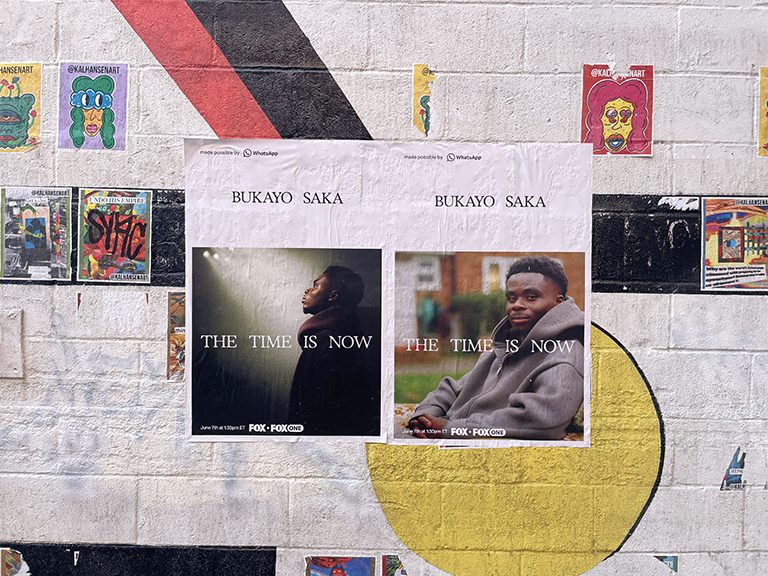
Viral advertising campaigns are built through a specific sequence of strategic decisions, not discovered by accident after the fact.
Most brands approach viral advertising by building something they like and hoping it spreads. Some get lucky. Most do not. The ones that consistently produce campaigns with genuine organic amplification treat virality as an engineering problem, not a creative lottery. They make specific decisions at each stage of the campaign-building process that create conditions where sharing is the natural response.
We have been building guerrilla and integrated campaigns from New York City since our founding, with executions across every major US market. This is our framework for building viral advertising campaigns: what we decide, when we decide it, and why those decisions determine whether a campaign spreads or sits.
Before any creative work starts, we define four things with precision: the target sharer, the sharing motivation, the seeding network, and the spread objective. Notice that “the message” is not first on this list. The message matters, but it matters within the context of who is sharing it and why. Building the message first and then asking how to distribute it is backwards for campaigns designed to spread virally.
Defining the Target Sharer
Every campaign has a target audience. For viral campaigns, we go one level deeper: we identify the specific subset of that audience who has the network and motivation to share. These are the people who see something first and tell their networks about it. They may not be the largest segment of the target audience. They are the most influential segment in terms of organic amplification.
Characteristics of strong target sharers: they are active and credible in the communities you are targeting, they share regularly (not occasionally), they are identified as taste-makers or connectors by the people around them, and they have genuine reasons to care about the brand or topic, not just general engagement habits.
Identifying the Sharing Motivation
Why will the target sharer share this? The answer cannot be “because the ad is good.” It has to be more specific: “because sharing it signals to their network that they are connected to a certain cultural scene,” or “because it makes them look like they discovered something first,” or “because it expresses a value or identity position they want their network to see.”
If we cannot answer this question specifically and honestly in the strategic brief, the creative work that follows will not generate sharing. We have killed many promising campaigns at the brief stage because we could not satisfactorily answer the sharing motivation question. Killing them there is far better than building them all the way to launch and watching them land flat.
Mapping the Seeding Network
Who are the 50-200 people or accounts who will see the campaign first and have the credibility to kick off the sharing wave? We map these seeding nodes before creative work begins, because the seeding network shape sometimes informs the creative concept. A campaign designed to seed into sneaker culture looks different from a campaign designed to seed into the food media world, even if the brand message is the same.
AGM Field Note: We maintain active seeding network maps for New York City, Los Angeles, Chicago, Miami, Austin, and six other major markets. Each map is organized by content category: streetwear, food and beverage, music, fitness, beauty, and others. When a new campaign brief comes in, we match the seeding network to the target audience within the first week. This is pre-production work, not launch-week work.
Stage 2: Format Selection
Format selection for viral campaigns is a strategic decision, not a production decision. The format determines the physical or digital reality of the campaign, and that reality determines the sharing mechanics available to the audience. Here is how we think through format selection.
Real-World vs. Digital
Real-world formats (murals, installations, stunts, ambient placements) carry a sharing authenticity premium because they exist in physical space. When someone photographs a real-world campaign element and shares it, their network receives that content as a genuine discovery. Digital-first formats are faster to produce and distribute but compete in a more crowded attention environment and rarely carry the same authenticity signal.
For campaigns where brand credibility and authenticity are important to the objective, we strongly prefer real-world formats with digital amplification built on top. For campaigns where speed and scale are the primary variables, digital-first with a real-world accent piece is often the more practical choice.
Shareability by Format Type
Format
Shareability Score
Production Lead Time
Ideal Campaign Objective
Neighborhood Mural
Very High
2-4 weeks
Brand awareness, cultural entry
Street Stunt
Very High
3-6 weeks
Launch moment, PR coverage
Interactive Installation
High
4-8 weeks
UGC, brand experience
Ambient Placement
High
2-3 weeks
Surprise, conversation
Short-Form Video
High (platform-dependent)
1-2 weeks
Broad digital reach
Poster Saturation
Medium
1-2 weeks
Hype building, launch countdown
Multi-Format Campaigns
The strongest viral advertising campaigns use multiple formats working together across a defined timeline. A typical structure we use: a teaser phase with ambient placements and targeted seeding to key accounts (days 1-5), a launch event or major installation that creates a concentrated media moment (day 6-7), and an amplification phase with digital content built from the launch documentation (days 8-21).
Each phase feeds the next. The teaser phase builds anticipation and gives the seeding network something to speculate about. The launch phase creates a concentrated moment of content generation and press coverage. The amplification phase extends reach using the organic content and media coverage from the launch as raw material for paid and owned distribution.
Stage 3: Creative Development
With strategy defined and format selected, creative development has clear constraints to work within. The concept must: (1) work within the selected format, (2) deliver the identified sharing motivation to the target sharer, (3) be specific enough to speak directly to the seeding network’s cultural context, and (4) create enough intrigue or surprise to generate the initial sharing impulse.
The Concept Test
Before any production work begins, we run every concept through a simple test with 5-10 people who match the target sharer profile. We show them the concept and ask three questions: Would you share this? Why or why not? What would you say when you shared it? The answers to these questions tell us more about viral potential than any internal creative review.
If fewer than three of the five testers say they would share it, and we cannot identify a specific structural reason for the low share intention that we can fix in the concept, we go back to the brief. A concept that does not generate share intention in the target sharer profile will not generate sharing in the wild. Testing is not optional.
Visual Hook Development
The visual hook is the element of the campaign that stops someone mid-scroll, mid-stride, or mid-conversation and makes them look. For street campaigns, the visual hook is usually the primary creative element of the installation or mural. For digital campaigns, it is the first frame of the video or the dominant element of the image.
We test visual hooks in isolation from the rest of the creative before full production. A hook that needs context to work is not a strong enough hook. The hook has to work in under two seconds, before anyone has read a word of copy or understood the full concept. If it does not stop attention in two seconds, the rest of the creative never gets seen.
Stage 4: Production
Production for viral campaigns has a few specific requirements that differ from standard advertising production.
Built-In Documentation
Every viral campaign needs a documentation strategy that is built into the production plan, not added as an afterthought. For street campaigns, this means a dedicated photography and video crew present during installation and during the first 48 hours of public exposure. Their job is to capture the work from the angles that make it most shareable and to document authentic reactions from passersby. This documentation becomes the campaign’s digital content library.
Format Adaptation
Physical campaign documentation needs to be adapted for each digital platform immediately. A mural photograph needs to be available in environment format for Twitter, portrait format for Instagram Stories and TikTok, and square format for Instagram feed. A stunt video needs to be cut at 15 seconds for Instagram Reels, 60 seconds for YouTube, and 30 seconds for TikTok. Having all formats ready before launch eliminates the 12-24 hour delay that kills sharing momentum.
Speed of Execution
Campaigns that require long production cycles lose the element of surprise that drives the highest-velocity sharing. When a campaign is visible in the world, competitors see it, the press sees it, and the audience attention window starts. Production speed, particularly for the execution and documentation phases, is a competitive advantage. We prioritize production teams who can execute and document at high quality without extended timelines.
Stage 5: Launch and Seeding
Launch is not a single moment. It is a sequence of moments spread across a defined time window, each designed to trigger a specific type of sharing or coverage behavior.
The Seeding Phase
Seeding happens before any public announcement. We deliver the campaign content to the top-priority seeding nodes 24-48 hours before any public launch. These nodes have time to authentically engage with the content, prepare their own share, and be ready to post when the public launch happens. Their posts, arriving with apparent simultaneity, create the impression of organic discovery at scale rather than coordinated distribution.
The Launch Window
For physical campaigns, the launch window is when the installation is complete and the seeding network posts start going live. We coordinate the timing of seeding posts to cluster within a 2-4 hour window on the launch day. This creates a concentration of content that signals to platform algorithms that there is a coordinated wave of interest, which triggers algorithmic distribution to a broader audience.
The Amplification Phase
Once organic sharing is confirmed and the Share Multiplier is above 1.5x, we activate the amplification budget. Paid media at this stage is deployed specifically behind the highest-performing organic content, not behind separate paid assets. We are amplifying what is already working, not trying to manufacture traction with a different approach.
AGM Field Note: We have a 48-hour amplification decision window on every campaign. If organic sharing is tracking above target at 48 hours, we deploy amplification budget. If it is tracking below target, we hold and diagnose before spending. Deploying amplification behind underperforming content wastes budget and extends reach to an audience that will not convert because the organic signals were not there to begin with.
Stage 6: Measurement and Reporting
Measurement for viral campaigns requires tracking behaviors, not just outcomes. The reporting structure we use covers five dimensions:
Share Multiplier: Organic reach divided by paid reach, tracked daily
Share Velocity: Number of shares in first 6, 12, 24, and 48 hours
Coverage Volume: Number of media placements (earned, not paid)
Sentiment Ratio: Positive or neutral conversation as a percentage of total conversation
Seeding Conversion Rate: Percentage of seeding contacts who shared, and their downstream reach
We produce a 48-hour performance report on every campaign, a 7-day performance report, and a final campaign report at 30 days. The 30-day report includes final organic reach, total earned media value, and a comparison against the campaign’s pre-launch benchmarks.
Fabrication, documentation setup, format adaptation
Production-ready assets
Launch and Seeding
Week 6-7
Seeding outreach, public launch, amplification decision
Live campaign
Measurement
Week 7-10
Daily tracking, 48hr report, 7-day report, final report
Campaign performance report
Market-by-Market Execution: How Campaign Structure Adapts
A viral advertising campaign that works in New York does not automatically work in Los Angeles, Chicago, or Miami without adaptation. Each market has its own community structures, cultural references, geographic characteristics, and seeding networks. Campaigns that are built centrally and executed identically across markets underperform compared to campaigns that are built with a consistent strategic framework but adapted in execution for each market’s specific character.
New York City
New York campaigns benefit from extraordinarily high pedestrian density and a culture that is unusually attuned to street-level creative. The density means that a single strong installation can reach thousands of relevant consumers without any paid media support. The cultural attunement means that the creative bar is high: New Yorkers encounter more creative work on the street than the population of most US cities encounters in a year, and they are correspondingly harder to impress. Campaigns in New York have to be genuinely excellent. Good is not enough.
Neighborhood specificity is critical in New York in a way it is not in most other markets. A campaign placed in Williamsburg reaches a fundamentally different audience than the same campaign placed in the Financial District or Washington Heights. We do not treat New York as a single market; we treat each neighborhood cluster as its own activation environment with its own character and its own seeding network.
Los Angeles
Los Angeles campaigns face a different set of structural conditions. The city is car-centric rather than pedestrian-centric, which limits the natural exposure that comes from street-level campaigns in walkable markets. The neighborhoods that do generate strong pedestrian traffic, Abbot Kinney, the Fairfax corridor, Melrose Ave, and the Arts District downtown, are where we concentrate activation. In car-heavy corridors, we use formats optimized for vehicle-speed viewing rather than pedestrian viewing: larger creative, simpler messaging, higher-impact visuals.
The LA creative industry is heavily concentrated in specific neighborhoods and communities that are extremely well-networked socially. A well-placed campaign in the Arts District that seeds into the design and creative community can generate national coverage through industry publications and podcasts in ways that are harder to achieve in other markets. For brands targeting the creative industry, LA often punches above its foot traffic numbers in terms of earned media output.
Chicago
Chicago’s campaign environment is shaped by strong neighborhood identity, a walkable urban core, and a creative community centered primarily in Wicker Park, Bucktown, and Pilsen. Summer months are dramatically more productive than winter months for outdoor campaigns. We account for this seasonality in campaign planning and typically recommend concentrating outdoor campaign spend between May and October in the Chicago market.
Miami
Miami’s Wynwood neighborhood is one of the highest-density street art environments in the United States and generates enormous volume of organic social sharing year-round. The concentration of art tourism and creative culture in Wynwood makes it one of the most efficient markets for mural campaigns from a sharing-per-dollar perspective. Art Basel weekend in early December represents the single highest-impact activation window in the Miami market, with global creative industry attention concentrated in the city for one week.
Integrating Digital and Physical for Maximum Viral Reach
The most effective viral advertising campaigns we build in 2024 and 2025 are neither purely physical nor purely digital. They are physical campaigns with integrated digital amplification layers that create a closed loop between street-level presence and online engagement. Here is how that integration works in practice.
Physical Triggers for Digital Behavior
Every physical campaign element should include a mechanism that bridges the physical experience to digital engagement. QR codes embedded in murals that link to exclusive content. Location-specific hashtags printed or painted into the installation. AR triggers that activate a digital experience when the physical campaign is photographed with a specific app. These bridging mechanisms convert passive eyewitness exposure into active digital engagement that can be tracked, measured, and amplified.
Digital Reinforcement of Physical Presence
Paid digital advertising targeted to the geographic area of a physical installation reinforces the brand presence for the audience that encountered the physical campaign. When someone walks past a mural and then sees a social ad for the same brand in the same visual language that evening, the reinforcement effect is significantly stronger than either channel alone. We build geo-targeted digital retargeting into every physical campaign as a standard amplification layer.
Rapid Deployment Campaigns: Executing When Speed Matters
Not every viral campaign has six to eight weeks of pre-production time. Competitive moments, cultural events, and breaking news create campaign opportunities that close in days rather than weeks. We have built rapid deployment capability specifically to operate in these windows without sacrificing the structural elements that create sharing behavior.
What Changes in a Rapid Timeline
In a rapid deployment, the concept selection criterion shifts. We look for concepts that are logistically simple and creatively strong. A single-market mural campaign with a highly relevant concept can be executed from brief to installation in 7-10 days if the wall access, artist, and materials align quickly. A multi-market campaign with complex production elements cannot be compressed to that timeline without significant quality compromise. Rapid deployment means choosing execution simplicity in service of timing relevance.
Seeding in a rapid deployment campaign happens concurrently with production rather than after it is complete. We brief seeding contacts on the campaign while it is still being produced, ensuring they are ready to post within hours of launch rather than needing 24-48 hours of lead time. This concurrent seeding approach requires more trust with the seeding network than a standard seeding approach, which is another reason why maintaining active relationships with that network between campaigns is operationally valuable.
Cultural Moment Campaigns
Cultural moments, major events, cultural conversations, or breaking cultural news, create concentrated periods of high audience attention that campaigns can tap into for amplification. A brand that moves fast enough to place relevant creative in the market during a major cultural moment gets amplification from the broader conversation happening around that moment. The window is narrow. In most cases, a cultural moment campaign needs to be live within 24-48 hours of the moment it is responding to. After 72 hours, the conversation has moved on and the campaign feels retrospective rather than timely.
We maintain pre-built production templates for rapid deployment in each of our primary markets. These templates cover the most common rapid-execution formats: street-level posters, social video, and single-site installations. When a cultural moment creates a campaign opportunity, we can move from creative concept to execution readiness in 48 hours using these templates as a production foundation.
The Brief Template We Use for Every Viral Campaign
A campaign brief for a viral advertising campaign looks different from a standard creative brief. Here are the eight questions our brief template requires answers to before any creative development begins. Each question targets a specific structural element of campaign virality.
Who is the target sharer (not just the target consumer)? Identify the specific subset of the target audience who has the network reach and sharing motivation to kick off organic amplification.
What sharing motivation will this campaign activate? Name the specific reason someone in the target sharer profile will share this. Discovery, identity, entertainment, social currency, values expression. Pick one primary and name it precisely.
What are the first 50 seeding targets? List the specific accounts or individuals who will see this before public launch and explain why each one is the right first audience for this campaign.
What format and why? Identify the format and explain specifically why it is the most shareable choice for this audience and objective, not just the most convenient.
What is the visual hook in three words or fewer? If you cannot name the visual hook briefly, the concept does not have one yet.
What is the intrigue or tension element? What question does the campaign raise that the audience will want to answer or discuss?
What is the amplification trigger? What Share Multiplier threshold will trigger deployment of the amplification budget, and what is the timing window for that decision?
How is success defined in numbers? Name the Share Multiplier target, the earned media reach target, and the seeding conversion rate target before launch, not after.
These eight questions produce a brief that gives creative teams specific constraints to work within rather than open-ended direction that leads to work designed to please internal decision-makers rather than to generate sharing. The brief is the most important document in a viral campaign. The creative and the execution are built from it.
Frequently Asked Questions
How long does it take to build a viral advertising campaign?
From brief to launch, a full viral advertising campaign takes six to eight weeks. This includes strategic brief development, format selection, creative development, concept testing, production, and seeding preparation. Shorter timelines are possible for simpler campaign concepts, but compressing the brief and testing stages significantly increases the risk of launching something that does not spread.
What is the minimum budget for a viral advertising campaign?
A single-market campaign with one primary format and a focused seeding strategy is priced based on the specific services selected. Multi-market campaigns or campaigns with multiple formats scale proportionally. The most important budget allocation decision is ensuring seeding gets funded before any amplification spend, not the reverse.
How do you select locations for viral street campaigns?
Location selection combines pedestrian traffic data, demographic analysis, cultural alignment with the target audience, and operational factors like wall availability and access. For campaigns targeting specific communities, cultural alignment is the dominant factor. A mural placed in a neighborhood that does not have cultural connection to the target audience will not be shared by that audience, regardless of traffic volume.
What is campaign seeding and why does it matter?
Seeding is the deliberate process of getting the campaign in front of a pre-selected set of high-influence accounts before public launch. It matters because organic sharing almost always starts with a small number of high-credibility posts that generate social proof. Without seeding, the campaign launches into a vacuum and depends on the algorithm to find the right first audience. With seeding, you control who sees it first and build the social proof that triggers broader organic distribution.
Should paid media be part of a viral campaign?
Yes, but in a supporting role. Paid media in a viral campaign serves two functions: seeding precision targeting and organic amplification once sharing has been confirmed. Paid media as the primary distribution mechanism is not a viral campaign; it is a paid campaign with aspirations. The distinction matters because paid reach does not carry the social proof and authenticity that organic sharing creates.
How do you know if a viral campaign is working?
We watch three numbers in the first 48 hours: Share Multiplier (organic reach divided by paid reach, target above 1.5x), share velocity (shares per hour in the first 24 hours compared to the seeded base), and sentiment ratio (percentage of positive or neutral conversation). If all three are tracking above target at 48 hours, the campaign is working. If any are significantly below target, we diagnose before amplifying.
What makes a viral advertising campaign different from a standard ad campaign?
The primary difference is the design intention. A standard campaign is designed to deliver a message to an audience. A viral campaign is designed to get that audience to deliver the message to their own networks. This shifts every creative and strategic decision: who you target first (sharers, not just buyers), what creative elements you prioritize (sharing motivation, not just message clarity), and how you measure success (organic amplification rate, not just impression volume).
Yes, but the format and seeding strategy look different. B2B viral campaigns tend to spread through professional networks and industry media rather than consumer social platforms. LinkedIn is the primary sharing platform. Industry publications and newsletters are the primary seeding targets. The sharing motivations are professional identity signals rather than consumer lifestyle signals. The structural framework is the same; the execution is adapted to a professional context.