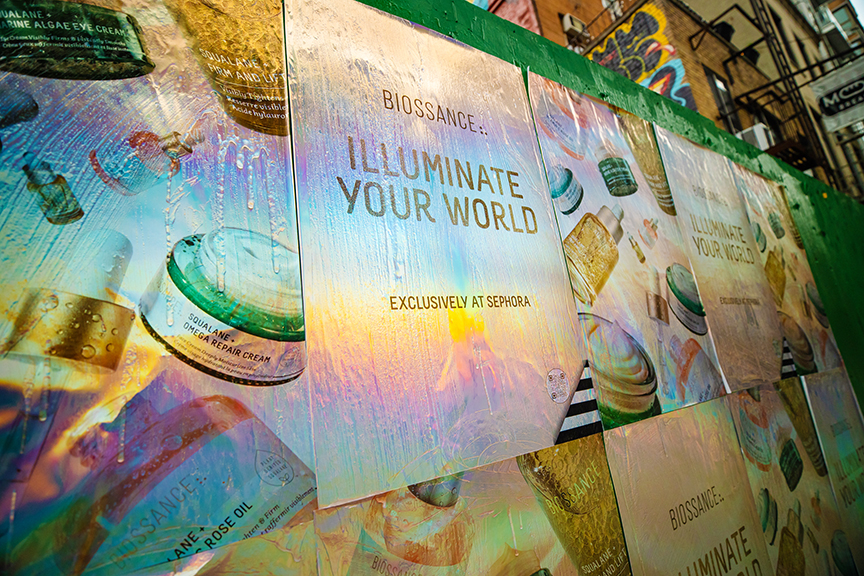
Street Marketing NYC: How Campaigns Actually Work in New York City
New York street marketing is not one thing. It changes block by block, borough by borough. Here is how we navigate it.
New York City is the most complex street marketing environment in the United States. It is also the most rewarding. Nowhere else in the country gives you the density, the neighborhood diversity, and the cultural media multiplier that New York does. A well-executed campaign in the right Manhattan or Brooklyn neighborhood does more than reach the people on the street. It enters the city’s cultural conversation in a way that reaches far beyond the geography of the installation itself.
We have been running street marketing campaigns in New York for years. We know the difference between a SoHo stencil placement on a Saturday afternoon and a Lower East Side poster run on a Thursday night. We know which Brooklyn walls photograph well enough to generate organic social sharing from foot traffic and which ones disappear into the visual noise of the surrounding environment. We know when to run a mural campaign in Long Island City and when to run a street team at Union Square.
This guide is a neighborhood-by-neighborhood breakdown of how street marketing works in New York, what formats perform best in each zone, and what makes the difference between a campaign that is seen and a campaign that is remembered. It is built from field experience, not from data sheets.
Why New York City Is Different as a Street Marketing Market
Street marketing in New York operates at a scale and intensity that does not exist anywhere else in the United States. The city’s pedestrian density means that a single well-placed stencil on a high-traffic sidewalk will be seen by more people in a single morning than the same stencil would reach in a week in a medium-density market. The flip side is that the city’s visual noise level is also higher. More stimuli compete for attention. The creative and placement standards have to be higher to cut through.
New York is also a global media market. What happens on its streets is documented and distributed to audiences around the world in a way that is not true of any other American city to the same degree. A campaign that earns coverage in a New York culture or advertising publication reaches readers and viewers who are not in New York. That media multiplier is part of why national brands treat New York as their primary or flagship street marketing market even when their product is available and their audience is present everywhere.
Manhattan Street Marketing: Zone by Zone
Manhattan’s street marketing environment is segmented by neighborhood identity, and that identity changes dramatically from block to block in a way that requires specific targeting decisions for every campaign.
SoHo and Nolita
SoHo is the highest-value zone in Manhattan for fashion, streetwear, beauty, and premium consumer goods brands. The pedestrian traffic on Broadway between Houston and Canal, on Prince Street from Lafayette to West Broadway, and on Spring Street from Broadway to Hudson brings a heavy concentration of fashion-engaged, brand-aware consumers who are actively in a shopping and discovery mindset. They are looking for new things. A strong brand placement in SoHo is found, not forced.
Stenciling in SoHo works best on the approaches to flagship retail: the sidewalks in front of the Prince Street corridor’s retail strip, the Spring Street approach to the heart of the cast-iron district, and the blocks around West Broadway between Spring and Houston. Mural advertising works exceptionally well in SoHo because the neighborhood is already a pedestrian photography destination. Walls here generate ongoing organic social media posts from tourists, fashion content creators, and neighborhood regulars who photograph the area as part of their daily presence.
Lower East Side
The Lower East Side is New York’s music, nightlife, and independent culture hub. The concentration of venues, bars, independent shops, and music-adjacent cultural spaces between Orchard Street and Clinton Street, from Houston down to Delancey, creates a specific kind of audience: young, creative, entertainment-engaged, and highly resistant to conventional advertising. Street marketing works here precisely because it is not conventional. A stencil on Rivington Street or a poster in a Ludlow Street bar bathroom reaches this audience in a register they respect.
Meatpacking District
The Meatpacking District is the best zone in Manhattan for evening and nighttime street marketing formats. The nightlife, hotel, and entertainment concentration on Gansevoort and Little West 12th Streets generates dense evening foot traffic from a demographic that skews toward fashion, entertainment, and brand-aware young professionals. Projection advertising on the building facades on Washington and Gansevoort runs here with exceptional impact because the architecture and the ambient lighting create ideal projection conditions.
Midtown: Venue Approaches
The blocks surrounding Madison Square Garden on 7th and 8th Avenues between 31st and 34th Streets are among the most event-driven street marketing territories in the city. When Madison Square Garden has a show, the approach routes between Penn Station and the arena handle tens of thousands of entertainment consumers within a two-hour window. Stenciling those approaches in the 24 to 48 hours before a major show ensures that the brand is present for exactly the right audience at exactly the right moment.
Brooklyn Street Marketing: Borough Deep Dive
Brooklyn has surpassed Manhattan as the primary market for certain categories of street marketing. Music, streetwear, food and beverage, independent arts, and fitness brands all find their most receptive and most culturally credible audiences in specific Brooklyn neighborhoods.
Williamsburg
Williamsburg is the densest concentration of music, arts, and independent retail culture in Brooklyn. The Bedford Avenue corridor between North 7th and Metropolitan Avenue is the spine of the neighborhood’s commercial and cultural life. Stenciling on Bedford and the cross streets reaches an audience that is walking, not driving, specifically to engage with the neighborhood’s restaurants, bars, venues, and shops. The waterfront on Kent Avenue carries foot traffic from the park, which adds an outdoor-culture dimension to the demographics.
Mural advertising in Williamsburg generates enormous organic photography. The neighborhood’s visual identity is defined by large-format art and brand murals, and photographers including tourists, locals, and content creators document those walls constantly. A well-placed mural in Williamsburg between North 3rd and North 7th Streets can accumulate thousands of organic social posts over its lifespan.
Bushwick and Ridgewood
The Bushwick corridor along Flushing Avenue and the cross streets between Knickerbocker and Wyckoff Avenues carries a younger, more arts-oriented demographic than Williamsburg. The Bushwick Collective and the surrounding mural culture create a visual environment where brand murals fit naturally rather than interrupting. For brands targeting creative professionals, artists, and the music community, Bushwick placements reach deep into those demographics in a way that mainstream Manhattan placements do not.
DUMBO
DUMBO’s position between the Brooklyn and Manhattan Bridges creates a tourist and residential audience that is consistently high-income and heavily oriented toward design, architecture, and premium consumer brands. The cobblestone streets and the views of the bridges make DUMBO one of the most photographed neighborhoods in Brooklyn. Installations here, particularly on the Washington Street corridor that frames the Manhattan Bridge view, generate organic photography from both tourists and local photographers.
NYC Neighborhood
Primary Audience
Best Format
Peak Traffic Time
SoHo, Manhattan
Fashion, premium retail, influencer
Mural, stencil, street team
Sat-Sun 12-6 PM
Lower East Side, Manhattan
Music, nightlife, creative
Poster, stencil, street team
Thu-Sat 8 PM onward
Meatpacking District, Manhattan
Entertainment, fashion, nightlife
Projection, mural, stencil
Fri-Sat evenings
MSG/Penn Station, Midtown
Entertainment consumers
Stencil, poster
Pre-show, event nights
Williamsburg, Brooklyn
Music, arts, independent retail
Mural, stencil, street team, poster
Sat-Sun all day
Bushwick, Brooklyn
Arts, creative, younger demographic
Mural, stencil
Weekend evenings
DUMBO, Brooklyn
Premium consumer, design-oriented
Mural, stencil
Sat-Sun all day
Queens and the Bronx for Street Marketing
Queens is an underutilized street marketing market relative to Manhattan and Brooklyn, which creates opportunity for brands that want genuine community presence without the higher costs and visual noise of the more competed neighborhoods. Long Island City on the Queens side of the Queensboro Bridge has a growing creative and residential community and warehouse-scale building walls that are ideal for mural campaigns reaching both the neighborhood’s residents and the thousands of commuters crossing the Pulaski Bridge and the 59th Street Bridge daily.
The Bronx carries the highest concentration of hip-hop and urban culture audiences in the five boroughs. For music brands, especially those operating in rap, reggaeton, and urban genres, Bronx street marketing in the Grand Concourse and Fordham Road corridors reaches an audience that is deeply embedded in the culture the brand wants to connect with. The density of those corridors and the strength of community identity in the Bronx make authentic street presence there carry significant cultural weight.
Borough insight: The boroughs outside Manhattan are often the better choice for brands that need genuine community engagement rather than mass impression count. In Williamsburg or DUMBO, your brand is competing with dozens of other brands for the attention of a sophisticated, ad-aware audience. In Long Island City or the South Bronx, your brand may be the only one investing in that community, which amplifies the signal significantly.
Timing Street Marketing to NYC Events and Seasons
New York’s event calendar creates recurring high-value windows for street marketing across the entire year. The brands that plan campaigns around these windows get dramatically more reach per dollar than brands running campaigns in neutral periods without a major event driving audience concentration.
The fall concert season from September through November drives massive foot traffic through the MSG and Barclays Center approach corridors. The Brooklyn Hip Hop Festival in July concentrates the culture-connected music audience in Fort Greene. New York Fashion Week in February and September brings the global fashion press and buyer community into the Meatpacking District and SoHo. The Governors Ball in June on Randall’s Island drives tens of thousands of music fans across the triborough bridge approaches. Each of these windows is an opportunity for street marketing to reach a pre-qualified, highly engaged audience at a moment of peak cultural attention.
How We Run NYC Street Marketing Campaigns
Every New York campaign we run starts with a site visit. We do not plan from maps and databases. We walk the proposed zones, check the actual surface conditions, assess the sightlines, time the foot traffic at the specific hour the campaign will be most active, and identify any field challenges before they become production problems.
Our field crew for New York overnight runs is experienced and consistent. The same people who scouted the surface earlier in the week are the people installing on it overnight. There is no quality gap between the planning and the execution because the same team runs both.
Every installation is photographed before the team leaves the location. Photo documentation goes into a location-tagged report that the client receives within 24 hours of the field run. That documentation is standard, not optional, on every campaign we run in New York.
Our standard: We never accept payment for placements we did not complete. If a location is inaccessible the night of the run, we either find an equivalent replacement in the same zone or we credit that placement against the next campaign run. Our clients know exactly what they got and where it is. No ambiguity in our reporting.
Aligning NYC Street Marketing to the Event Calendar
New York City has one of the densest event calendars in the world, and aligning street marketing campaigns to those events is one of the highest-use timing decisions available to any brand operating in the city. The right event draws the right audience to a specific geography on a specific date. A campaign timed to that event and deployed in that geography reaches a pre-qualified audience at peak engagement.
Fashion Week in February and September is the premier event for fashion, beauty, and luxury brands. The audience flows through the Lincoln Center area on the Upper West Side and through the Milk Studios zone in the Meatpacking District. Street marketing campaigns in those corridors during Fashion Week reach the buyers, editors, influencers, and brand managers who shape the fashion industry’s opinion of brands for the following season.
New York Comic Con in October at the Javits Center draws 200,000 attendees over four days plus a secondary audience of entertainment industry professionals, media, and social creators who gather in Hell’s Kitchen and Midtown West during the event week. For entertainment, streaming, gaming, and consumer technology brands, that audience concentration creates a street marketing opportunity that does not exist at any other point in the year at that scale and with that demographic precision.
The New York City Marathon in November creates a citywide audience moment with particularly strong coverage in Brooklyn, where the race runs through Williamsburg, Park Slope, and Bay Ridge before crossing into Manhattan. Brands that want to reach runners, fitness consumers, and the enormous spectator crowd that lines the marathon route have a one-day window that exceeds almost any other single-day pedestrian audience event in the city.
NYC Pride in June occupies the stretch of Fifth Avenue from 52nd Street to Greenwich Village and spills into the West Village neighborhood. For brands targeting the LGBTQ+ community and their allies, the Pride month window in June offers both event-specific reach and sustained neighborhood activation in the West Village and Chelsea, where the community concentration is highest throughout the month.
NYC Event
Timing
Primary Geography
Best Brand Categories
Fashion Week
Feb, Sep
Meatpacking, Midtown, SoHo
Fashion, beauty, luxury
New York Comic Con
Oct
Hell’s Kitchen, Javits Center area
Entertainment, gaming, tech
NYC Marathon
Nov
Brooklyn, Harlem, First Ave
Fitness, food, consumer goods
NYC Pride
Jun
Fifth Ave, West Village, Chelsea
Lifestyle, fashion, spirits
Brooklyn Nets / Knicks season
Oct to Apr
Barclays Center, MSG approach routes
Sports, entertainment, food
Borough-by-Borough Budget Guide for NYC Street Marketing
Campaign costs in New York vary by borough. Manhattan carries the highest costs across most format types because of competition for wall inventory and the premium associated with Manhattan addresses. Brooklyn is competitive with specific neighborhoods like Williamsburg commanding strong premium, while other Brooklyn neighborhoods offer significantly better value at equivalent or higher demographic quality. Queens and the Bronx offer the best value for brands whose target audience is concentrated in those boroughs.
Manhattan (SoHo, Meatpacking, Harlem): Contact AGM for a custom quote on stencil and poster campaigns in Manhattan neighborhoods
Brooklyn (Williamsburg, Bushwick): Contact AGM for a custom quote on campaigns in Brooklyn’s primary creative neighborhoods
Brooklyn (Flatbush, Crown Heights, Bed-Stuy): Contact AGM for a custom quote on coverage in Brooklyn emerging market neighborhoods
Queens (Astoria, LIC, Jackson Heights): Contact AGM for a custom quote on coverage in community-focused Queens neighborhoods
The Bronx (Fordham, South Bronx arts district): Contact AGM for a custom quote on coverage in the Bronx arts district
Multi-borough campaigns that span three or more of these zones require proportionally larger budgets but also produce significantly stronger brand presence in the full target geography. Brands that commit to multi-borough coverage are building a New York identity rather than a neighborhood-specific one, and the recognition that creates compounds across the city’s networked social culture.
AGM Field Note: The Bronx is the most underserved guerrilla marketing geography in New York. The South Bronx arts and music community is one of the most culturally generative in the city, and the surface availability in that area is excellent compared to saturated Manhattan and Williamsburg corridors. Brands that want to reach that community authentically and efficiently should be looking at Grand Concourse and Fordham Road as primary targeting zones.
Frequently Asked Questions
What is street marketing in NYC?
Street marketing in NYC is the practice of placing brand messages directly in the urban environment using unconventional formats: sidewalk stencils, murals, projection advertising, poster campaigns, and street team activations. New York’s density and neighborhood diversity make it one of the strongest street marketing markets in the world.
How is street marketing in NYC different from other cities?
New York’s extreme pedestrian density, its distinct neighborhood cultures, and its status as a global media capital make street marketing here more impactful and more complex than in other markets. A campaign in New York gets seen by more people per placement, but it also needs to be more specifically matched to the neighborhood it is placed in to reach the right sub-audience.
What is the best format for street marketing in NYC?
The best format depends on the campaign goal. For event activations and launch campaigns: sidewalk stenciling on approach routes. For brand authority and long-term presence: mural advertising in high-foot-traffic neighborhoods. For high-impact PR moments: projection advertising at night. For direct engagement: street teams at events and markets.
Where does street marketing work best in Manhattan?
The strongest Manhattan street marketing zones are SoHo (fashion and retail), the Lower East Side (music and nightlife), the Meatpacking District (fashion and entertainment), Midtown around major venues and transit hubs, and the approach routes to Madison Square Garden and Penn Station. Each zone has a distinct audience and demographic profile.
Does AGM run street marketing in Brooklyn?
Yes. Brooklyn is one of our most active markets within the five boroughs. We run stencil, poster, mural, and street team campaigns in Williamsburg, Bushwick, DUMBO, Park Slope, Crown Heights, Bed-Stuy, and other Brooklyn neighborhoods. Each neighborhood has a specific community character that determines the right format and the right creative approach.
How do you target specific demographics with street marketing in NYC?
We target demographics by neighborhood selection and event timing. Different NYC neighborhoods have dramatically different demographic profiles. A brand targeting creative professionals goes to Williamsburg, Bushwick, and the Lower East Side. A brand targeting luxury consumers goes to the Upper East Side and the Meatpacking District. Event timing places the campaign in front of a pre-qualified audience at peak engagement moments.
How much does street marketing in NYC cost?
NYC street marketing costs vary by format and scale. Stencil campaigns start at $2,855 for 5 stencils. Poster campaigns start at $4,500 for 100 standard posters (24×36). Street team activations start at $389.99 per 6-hour shift (5-day minimum). Mural installations are quoted by project. Projection campaigns start at $6,500 per projector per night. Multi-format campaigns are quoted per scope.
Does AGM provide post-campaign reporting for NYC street marketing?
Yes. We provide GPS-documented photo reports for every installation, impression estimates based on location foot traffic data, and social amplification tracking where applicable. Clients receive the full documentation package within 24 hours of each field deployment.