Root Advertising: Building Brand Presence from the Ground Up
Root advertising plants your brand in the communities where your audience actually lives. It grows from there, through genuine relationships and consistent presence, into the kind of brand loyalty that no media buy can manufacture.
Some brands announce themselves to the world through massive launch campaigns and hope the market catches up. Others plant themselves in the communities where their audience lives, build real relationships, and let those roots grow into something that sustains the brand through competitive markets and shifting trends. Root advertising is the strategy for the second approach.
We have worked with brands that tried the announcement approach and found that it created awareness without loyalty: people knew the brand existed but did not feel any particular pull toward it. And we have worked with brands that invested in community-level root advertising from the beginning, building genuine presence in specific neighborhoods and communities, and watched as that investment compounded into a customer base that defends the brand, recommends it to others, and stays loyal through product changes and competitive pressure.
This guide is about how root advertising works, what its tactics look like in practice, and how to build a program that creates genuine community roots rather than just community-themed marketing.
The Root Advertising Principle: Depth Before Breadth
The foundational principle of root advertising is that depth of community engagement is more valuable than breadth of reach when building a brand that will last. This contradicts the standard media planning logic, which optimizes for impression volume and reach. Root advertising optimizes for relationship depth and advocacy quality instead.
The logic is straightforward. A brand that has 10,000 genuine community advocates in the right neighborhoods has a sales and marketing asset that generates ongoing revenue with minimal additional investment. Those advocates recommend the brand, defend it in social conversations, and bring new customers through their personal networks. Each advocate is a self-sustaining node in the brand’s distribution network.
A brand that has 10 million vague exposures from a broadcast campaign has something completely different: awareness without relationship. Those 10 million people know the brand exists. Most of them have no particular reason to choose it over a competitor, recommend it to anyone, or remain loyal when a competitive option appears. Awareness without relationship is the most perishable form of brand asset there is.
Root advertising invests in building relationships, more than awareness. It takes longer. It requires genuine community engagement rather than just community-targeting. But the brand asset it creates is far more durable than anything a broadcast campaign can produce.
The Tactics of Root Advertising
Sustained Neighborhood Presence
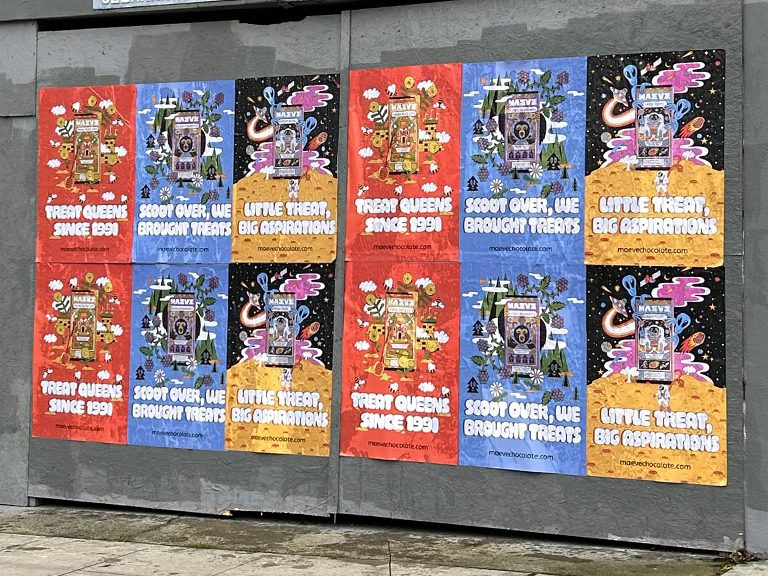
Root advertising begins with a sustained physical presence in the specific neighborhoods where the target community is concentrated. This is not a one-time event or a short-run campaign. It is a consistent, ongoing brand visibility that becomes part of the neighborhood’s visual and cultural environment over time.
The forms this presence takes vary by brand and neighborhood: rotating poster campaigns on key blocks, a regular presence at the neighborhood farmers market, a recurring sponsorship of a local community event, a long-term partnership with a neighborhood venue or retailer. The specific form matters less than the consistency and the genuine fit between the brand’s presence and the neighborhood’s culture.
Hyper-Local Ambassador Programs
Ambassador programs for root advertising differ from standard ambassador programs in a critical way: the ambassadors are from and of the community they are serving. They are not external representatives sent into a neighborhood. They are community members who use and believe in the brand and are supported in sharing that genuine enthusiasm with their neighbors and social networks.
This distinction matters enormously for community credibility. A community can distinguish between a genuine member sharing something they believe in and an outside representative performing community membership for commercial purposes. The former creates trust. The latter triggers exactly the kind of skepticism that root advertising is designed to overcome.
Local Business and Venue Partnerships
Partnerships with businesses and venues that are already running and trusted in the target community give a brand access to existing trust networks. The community’s trust in the local business extends to the brand the business endorses or features. A craft beverage brand that is exclusively available at a beloved neighborhood wine shop is positioned as a neighborhood brand from day one, with the credibility of the wine shop’s running community relationship.
The right partnerships are chosen based on authentic alignment, more than location or foot traffic. A brand that forces a partnership with a business that has no genuine reason to endorse it creates a disconnect that community members will notice. The partnership must feel natural because it is based on genuine shared values or complementary positioning.
Community Event Integration
Integrating into existing community events rather than creating brand-owned events is often more effective for root advertising because the community is already gathered and already in a trust-forward social mode. Sponsoring and genuinely participating in a neighborhood block party, a local market, a community sports event, or a neighborhood arts opening positions the brand as a community participant rather than a commercial visitor.
The distinction between participating and visiting matters. A brand that shows up at a community event with a booth, samples the product, and leaves when the event ends has visited. A brand that shows up, contributes something of genuine value to the event beyond its own promotional interest, and builds relationships with the community organizers and regulars over multiple events has participated. The root advertising outcome only comes from participation, not from visitation.
Root Advertising Tactic
Community Credibility Built
Time to Build
Organic Spread
Sustained street presence
Medium
4-12 weeks
Medium
Local ambassador program
Very High
8-20 weeks
Very High
Business/venue partnerships
Very High
4-8 weeks
High
Community event integration
High
Per event
High
Community content creation
High
Ongoing
High
Root Advertising in Urban Neighborhoods
Urban neighborhoods are the most valuable context for root advertising programs because they have the social infrastructure, cultural specificity, and geographic concentration that make community-level brand building both feasible and impactful.
In New York, neighborhoods like Harlem, Williamsburg, Jackson Heights, and the South Bronx each have distinct community identities, running social gathering points, and strong internal social networks through which community-endorsed brands spread organically. A brand that builds genuine roots in any of these neighborhoods has access to a community trust network that reaches thousands of highly engaged consumers.
In Los Angeles, communities in Compton, Boyle Heights, Leimert Park, and Inglewood have strong community identities and social networks that function similarly. The scale of the communities is different from New York because of LA’s geographic distribution, but the social dynamics of community endorsement and organic spread work the same way.
In Chicago, neighborhoods including Pilsen, Bronzeville, and Logan Square have active community networks and a strong tradition of community-based economic activity that creates natural partnership opportunities for brands pursuing root advertising strategies.
The patience requirement: Root advertising requires patience that most marketing programs do not have to exercise. The results are real and they compound significantly over time. But they are not fast. A brand that commits to a root advertising program for three months and expects broadcast-style awareness results will be disappointed. A brand that commits for twelve months and measures community advocacy depth rather than impression volume will see results that justify continued and expanded investment.
Measuring the Impact of Root Advertising
Measuring root advertising requires different metrics than conventional advertising campaigns. The relevant outcomes are community relationships and advocacy quality, not impression counts and click-through rates.
The metrics we track for root advertising programs include community partnership depth (the number and quality of running local business and organization relationships), ambassador network size and activity, organic social mentions from community members, community press coverage, local sales velocity in the target neighborhoods relative to control areas, and net promoter scores within the target communities.
These metrics capture what root advertising actually creates: community advocacy and brand loyalty. They require a longer measurement window than conventional ad metrics because the outcomes develop over months rather than days. But they tell a more accurate story about the long-term brand asset that root advertising builds, and they provide the evidence for continued investment that the patience the program requires has been warranted.
The brand that roots wins the neighborhood: In competitive consumer categories, the brand that is genuinely part of a community’s identity has a significant and durable competitive advantage over brands that are known but not rooted. Root advertising is the strategy for building that identity at the community level. It is the long game. For brands with a realistic ten to twenty-year perspective, it is the most important game to play.
How Root Advertising Scales
Root advertising scales by replicating the community model in progressively more communities. The process starts with one or two neighborhoods in one city, where the brand invests deeply in building genuine community relationships. Those neighborhoods become the proof of concept and the template for expansion.
The community relationships built in early markets also provide strategic intelligence for subsequent ones: which tactics work, which partnerships produce the most advocacy, which ambassador profiles connect most strongly with the target community. That intelligence improves the program in each successive market.
At the national scale, a brand with genuine community roots in fifty or one hundred neighborhoods across twenty cities has built a community network that functions as a distributed sales and marketing system. The community advocates in each neighborhood are doing ongoing brand promotion work without any incremental brand investment beyond maintaining the community relationships that motivate their advocacy.
That network is the most valuable brand asset that root advertising creates, and it is one that no amount of broadcast media spending can replicate. It is built one neighborhood at a time, one community relationship at a time, over years of genuine engagement. That is the work of root advertising, and it is the work worth doing.
Root Advertising Tactics by City
Root advertising takes different forms in different cities because the community structures, the neighborhood geographies, and the audience behaviors that define community belonging vary significantly by market. The same root advertising principles apply everywhere, but their tactical expression has to be adapted to each city’s specific characteristics.
New York City
In New York, root advertising is neighborhood advertising. The city’s borough and neighborhood structure creates a collection of distinct communities with strong local identities. Williamsburg is not the same community as Harlem, which is not the same community as Jackson Heights, which is not the same community as the South Bronx. A root advertising program in New York selects two or three neighborhoods that align with the target audience and builds genuine physical and social presence in those neighborhoods before expanding to others.
The tactics that work for building community roots in New York include sustained poster presence on the high-frequency routes that neighborhood residents use every day, partnerships with neighborhood businesses that are genuine community anchors, brand ambassador presence at local events that the community organizes rather than events the brand creates, and murals on walls that are already part of the neighborhood’s visual identity.
Los Angeles
In Los Angeles, community is built around specific lifestyle nodes rather than geographic neighborhoods in the New York sense. The Fairfax District is a community of streetwear culture. Venice is a community of boardwalk culture and beachside wellness. The Arts District is a community of creative professionals and design. Effective root advertising in Los Angeles picks the lifestyle node that matches the brand and builds presence in the physical and social spaces where that community gathers: the specific shops, the coffee shops with the right vibe, the walls on the right blocks.
Chicago
Chicago’s community structure combines strong ethnic neighborhood identity with specific demographic zones that make target community selection relatively precise. Wicker Park and Logan Square for the young creative professional audience. Pilsen for the Latin American community with strong arts engagement. Hyde Park for the academic and intellectual community. Bronzeville for the Black community with deep cultural roots. Each of these neighborhoods has its own community infrastructure, its own gathering points, and its own gatekeepers whose endorsement is the entry requirement for genuine community acceptance.
Building Local Business Partnerships for Root Advertising
Local business partnerships are one of the highest-use tools in a root advertising program. An independent coffee shop that has served the same neighborhood for ten years is more deeply embedded in the community fabric than any advertising format can achieve in a campaign window. When that coffee shop becomes a brand partner, the brand inherits a portion of the community trust that the coffee shop has built over a decade.
Effective local business partnerships in root advertising programs typically include three elements: physical brand presence in the partner’s space, mutual promotion through the partner’s own community channels, and genuine value exchange that benefits the partner rather than just exploiting their community relationships. A brand that offers a coffee shop a meaningful benefit in exchange for placement and promotion is building a partnership. A brand that asks for the placement and promotion without offering anything meaningful in return is treating the coffee shop as an advertising vendor, and the community will sense the difference.
We help clients identify and approach local business partners in target neighborhoods. The identification process looks at foot traffic at the location, the demographic composition of the partner’s regular customers, the partner’s existing community relationships and social media presence, and the cultural credibility of the partnership from the target audience’s perspective. Not every local business that has the right foot traffic has the right cultural fit, and a partnership with the wrong cultural association can work against the root advertising goal.
Partner Type
Best For
Community Trust Level
Partnership Value
Independent coffee shops
Creative, young professional audiences
Very High
Daily exposure, trusted context
Independent record stores
Music community, cultural tastemakers
Very High
Cultural credibility, tastemaker access
Skate and streetwear shops
Street culture, youth audiences
High
Community anchor, street credibility
Community gyms and studios
Health, wellness, lifestyle brands
High
Loyal regular customers, daily touchpoints
Community-run event spaces
Entertainment, arts, culture brands
High
Captive engaged audience, event context
AGM Field Note: The best local business partnerships we have facilitated started with the brand genuinely patronizing the business before asking for anything. Our team has walked into shops, had coffee, attended events, and built real familiarity before any brand conversation happened. That approach produces partnerships that feel authentic because they are authentic, and communities can always tell the difference.
Root Advertising and Event Marketing
Events are among the most powerful triggers for root advertising activation. When a brand has built genuine community roots in a neighborhood, an event in that neighborhood becomes a moment to consolidate and deepen those roots rather than starting fresh with a new audience. The community members who have encountered the brand through its sustained neighborhood presence arrive at the event already familiar with it, and the event interaction deepens that familiarity into something closer to loyalty.
We plan event-adjacent root advertising deployments to maximize the connection between pre-event community presence and event-day engagement. A brand that has been running a poster campaign on the streets of a neighborhood for four weeks before the neighborhood’s annual street fair arrives at that fair with a built-in head start. The community members have already seen the brand in their environment. The fair is where they meet it face to face.
Street team deployments at community events are the root advertising tactic that closes the loop between physical presence and personal relationship. A trained team at a neighborhood block party, a local music event, or a community market creates direct one-to-one brand encounters that transform awareness into relationship. The product sample, the conversation, the branded item that goes home with someone who has already seen the brand on their morning walk to the subway creates a layered brand experience that no single tactic can produce alone.
Frequently Asked Questions About Root Advertising
Frequently Asked Questions
What is root advertising?
Root advertising is a community-first advertising strategy that builds brand presence at the neighborhood and community level before expanding to broader markets. It focuses on creating genuine local roots for a brand in specific communities through sustained presence, local partnerships, and direct consumer engagement rather than mass media exposure.
How is root advertising different from mainstream advertising?
Mainstream advertising reaches audiences through mass media and paid placements. Root advertising builds brand presence in specific communities through direct engagement, local partnerships, and sustained street-level presence. Root advertising sacrifices broad reach for deep community credibility that scales more durably over time.
What are the key tactics in root advertising?
Key root advertising tactics include sustained street-level poster campaigns in target neighborhoods, brand ambassador programs at community gathering points, partnerships with local businesses and community organizations, sampling and demonstration programs at neighborhood events, and community content creation that features real neighborhood settings and residents.
Which brands benefit most from root advertising?
Brands in food and beverage, fashion, music, fitness, wellness, beauty, and consumer goods categories benefit most from root advertising because their audiences are concentrated in specific communities and their purchase decisions are heavily influenced by community norms and peer recommendation.
How long does root advertising take to produce results?
Root advertising produces its most significant results over a period of three to twelve months. The initial community presence builds awareness and familiarity in weeks. The conversion from familiarity to advocacy takes sustained engagement over months.
Yes, and the combination is often more effective than either approach alone. Guerrilla marketing creates high-impact awareness moments. Root advertising sustains community presence between those moments and converts awareness into loyalty. Together, they create a complete community brand presence.
How does root advertising scale from neighborhood to national?
Root advertising scales by replicating the community model in progressively more communities. A brand that builds genuine roots in three neighborhoods in one city can scale by applying the same model to new neighborhoods and new cities. The community relationships in early markets serve as templates and proof of concept for subsequent markets.
Contact American Guerrilla Marketing at (646) 776-2770 or [email protected]. We plan and execute community-level advertising programs in cities across the US and will help you identify the right communities for your brand and build the right program for each one.