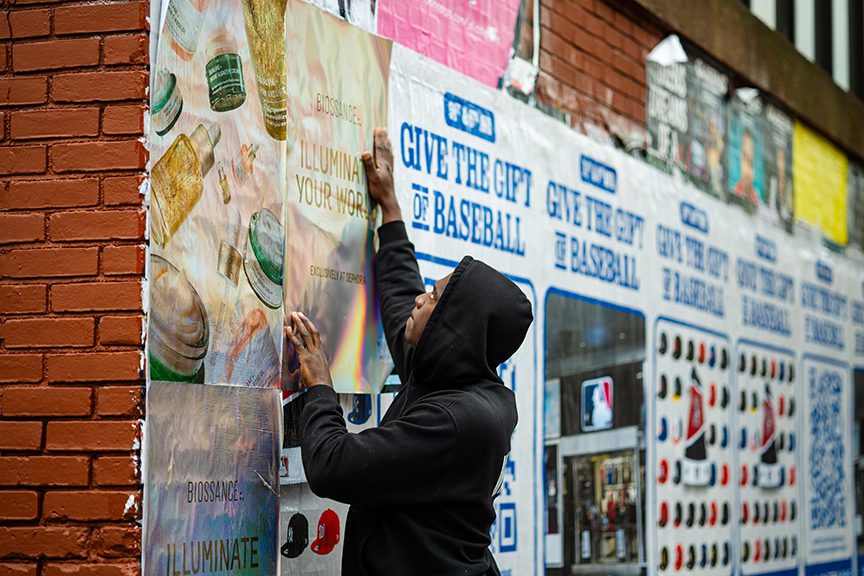
Paris is one of the world’s great street marketing cities, and the brands that succeed there earn it through genuine cultural intelligence, not just a media budget.
Paris is one of the great street marketing cities in the world. The visual culture is dense. The pedestrian life is rich and layered. The neighborhoods are highly differentiated with distinct aesthetic sensibilities, community cultures, and demographic profiles that change from one arrondissement to the next. For brands looking to make an impact in Paris through street-level marketing, understanding the city’s specific culture is the foundation of any serious campaign.
We work with brands on campaigns that span American and international markets. For brands building presence in Paris, we bring our strategic and creative expertise together with local partners who know the arrondissements, the cultural scenes, and the specific contexts where street marketing creates genuine impact. This guide covers what street marketing in Paris looks like, which neighborhoods matter most for specific brand categories, and what brands need to do to execute at the quality that the Paris market demands.
Street Marketing in Paris: What Makes It Different
Street marketing in Paris operates within a specific cultural context that differs significantly from American or British approaches. The Parisian street culture has strong aesthetic sensibilities. Campaigns that feel bold and direct in New York can feel tonally wrong in the French capital. Getting that cultural calibration right is not optional. It is the foundation of effective street marketing in the city.
The Parisian audience is sophisticated and visually literate. People who walk through Le Marais or Canal Saint-Martin on a daily basis are accustomed to high-quality public art, carefully designed storefronts, and a visual environment that prizes craft and authenticity over loudness. A campaign that arrives in this environment with the blunt-force approach of a Times Square billboard will generate the wrong kind of attention. A campaign that arrives with genuine visual quality and cultural awareness becomes part of the city’s fabric.
The city’s affichage sauvage tradition, the culture of informal and semi-formal street posting that dates back well over a century, creates a context where bold poster campaigns feel native rather than intrusive. Paris walls have been covered in broadsheets, political posters, art notices, and event announcements for generations. A brand that understands and works within that tradition can place itself in a lineage that feels culturally appropriate. A brand that treats the walls as a generic advertising surface without that historical awareness will produce work that reads as cheap and careless even if the production quality is high.
Paris Neighborhoods: Where Street Marketing Creates Real Impact
Arrondissement / Area
Character
Best Campaign Types
Key Streets
Le Marais (3e & 4e)
Fashion, art, LGBTQ+ community, galleries
Fashion, lifestyle, art, events
Rue de Bretagne, Rue des Archives
Canal Saint-Martin (10e)
Young creatives, indie culture, cafes
Music, food and beverage, streetwear
Quai de Valmy, Rue Beaurepaire
Bastille (11e)
Nightlife, music, diverse and young
Entertainment, beverage, events
Rue de la Roquette, Rue Oberkampf
Montmartre (18e)
Artists, bohemian heritage, tourist traffic
Art, tourism-adjacent brands, experiential
Rue des Abbesses, Place du Tertre
Pigalle / South Pigalle (9e)
Creative nightlife, boutique hotels, dining
Premium lifestyle, hospitality, fashion
Rue Frochot, Rue Victor Masse
Oberkampf (11e)
Alternative culture, bars, murals
Music, streetwear, food and beverage
Rue Oberkampf, Rue Saint-Maur
Belleville (20e)
Diverse community, street art, studios
Art, music, brand campaigns with cultural depth
Rue de Belleville, Rue Denoyez
Saint-Germain-des-Pres (6e)
Intellectual, literary, upmarket
Premium brands, publishing, luxury-adjacent
Rue de Buci, Boulevard Saint-Germain
The Arrondissement System and Why It Matters for Campaign Strategy
Paris is divided into 20 arrondissements, each with its own character, demographic profile, and cultural identity. Understanding the distinctions is not academic. It is the difference between placing a campaign where it generates genuine brand resonance and placing it where it gets ignored or generates the wrong reaction.
Le Marais (3rd and 4th arrondissements) is home to the fashion, art, and gallery scene with a young, culturally engaged demographic. It is the most densely photographed neighborhood in Paris outside of the tourist zones, and a strong campaign here generates organic social content continuously. The narrow streets and dense ground-floor retail create concentrated foot traffic with high dwell times at individual surfaces.
Canal Saint-Martin in the 10th has become where the young creative class concentrated after Marais prices rose over the past decade. The canal-side promenade creates a natural advertising corridor where pedestrians move slowly and engage with their visual environment. The audience skews creative industry, music, and arts, with a strong preference for brands that feel independently minded rather than corporate.
The Bastille area in the 11th is dense with music venues, bars, and a nightlife-oriented audience. Campaigns here benefit from the evening energy and foot traffic that peaks in ways different from the daytime shopping corridors of Marais or Saint-Germain. Late-night postering in Bastille reaches an audience that encounters it fresh the following morning during the neighborhood’s genuine pedestrian rush.
Belleville in the 20th has developed one of the most active street art ecosystems in Paris. Rue Denoyez has become a permanent open-air gallery. Brands that integrate authentically with this environment can achieve lasting visual presence alongside work by artists with genuine international reputations. The audience here values cultural authenticity above almost any other quality.
AGM Field Note: The most common mistake American brands make in Paris is choosing neighborhoods based on name recognition rather than audience fit. Saint-Germain is the most famous neighborhood to non-Parisians, but its street marketing efficiency depends entirely on whether your brand belongs in an upmarket literary context. For most consumer brands targeting the under-40 Parisian creative class, Canal Saint-Martin and Oberkampf deliver significantly better return on placement investment.
Street Marketing Formats That Work in Paris
Affichage Sauvage: The Poster Tradition
Paris has a long tradition of informal street postering. The city’s visual vocabulary includes poster-covered walls, kiosks, and street furniture that have been part of the urban aesthetic for over a century. Bold, well-designed poster campaigns that engage with this tradition feel native to Paris. The design language needs to be calibrated to Parisian visual standards, which tend toward typographic sophistication and restrained color rather than the high-saturation bold formats that work in New York. That said, strong design reads across cultural contexts, and a genuinely striking campaign will land in Paris regardless of its country of origin if the visual quality is real.
Our Paris poster campaigns are produced using materials appropriate for the city’s climate and surface conditions. The moisture levels and temperature range are different from New York or Los Angeles, and the adhesive formulas our Paris-based partners use reflect those specific environmental conditions. Surface selection follows the same principles we apply everywhere: we identify surfaces where the poster will be seen by the right audience at the right distance with the right dwell time.
Street Art Integration and Mural Programs
Paris has a thriving street art culture concentrated in Belleville, Oberkampf, and the 13th arrondissement’s South Paris mural project along Avenue de Choisy and Boulevard Vincent Auriol. Brands that engage authentically with that culture through commissioned murals and genuine artist partnerships build brand relationships that transactional advertising cannot create.
The key word is authenticity. Parisian street art communities are discerning and tight-knit. A brand that approaches them with a commercial brief and a take-it-or-leave-it attitude will find the door closed. A brand that approaches with respect, creative latitude, and a genuine interest in the artist’s vision rather than simply their distribution surface will find willing partners and community goodwill that outlasts the physical installation. We have the relationships to broker these conversations correctly.
Event and Cultural Activation
Paris’s cultural calendar is dense with events that provide activation opportunities for brands with the right cultural fit. Fashion Week concentrates a global creative audience in the city twice a year, in January and October. The FIAC art fair in October brings international collectors and art world professionals. Music festivals including We Love Green, Rock en Seine, and the Solidays festival create concentrated summer audiences. Neighborhood cultural events and gallery openings create smaller, highly engaged community moments throughout the year.
Street marketing activation around these events reaches the audiences already engaged and moving through the city in a heightened cultural mode. A brand that shows up with a quality street presence during Paris Fashion Week reaches not just the Parisian audience but the international press, buyers, and influencers who fill the city during those windows and carry the brand image back to their home markets. The global reach multiplier for well-executed Paris Fashion Week street activations is substantial.
Sampling and Product Engagement
Paris’s public spaces and market culture provide excellent sampling opportunities. The city’s covered markets, outdoor food markets at Place de la Bastille, the Marche d’Aligre, and the organic markets along boulevard Raspail create environments where product sampling reaches genuinely engaged consumers who are already in a food-discovery mindset. For beverage, food, and personal care brands, these market environments provide access to exactly the quality-conscious consumer that premium products need to reach for trial conversion.
American Guerrilla Marketing and Paris Campaigns
We approach Paris campaigns with a combination of our strategic and creative expertise and the local knowledge of trusted partners who understand the specific cultural dynamics of each neighborhood. Our strategic approach for Paris campaigns follows the same fundamentals we apply in American markets: audience clarity, location precision, creative quality, and measurement discipline.
The tactical application is informed by French cultural context at every step. The neighborhoods we target, the visual language we use, the events we build around, and the local voices we engage are all chosen with specific Paris knowledge rather than generic urban marketing assumptions. A campaign that simply reproduces what worked in Brooklyn without Parisian adaptation will underperform against one designed specifically for the French market.
We work with brands entering the French market for the first time, brands with existing French presence seeking to build urban street credibility, and international brands using Paris as a global brand-building platform where the visual impact generates international media coverage and social content. Each of these scenarios requires a different strategic approach, and we build each campaign from that specific brief rather than applying a standard Paris template.
AGM Field Note: For brands launching into the French market for the first time, we strongly recommend running a Paris campaign before any national French rollout. Paris opinion-forming communities set the cultural context within which French consumers in other cities encounter a brand. A brand that has earned Paris street credibility arrives in Lyon, Bordeaux, and Marseille with a cultural currency that a brand unknown in Paris does not have. The sequencing matters.
Paris as a Global Brand-Building Platform
One of the most compelling reasons to invest in street marketing in Paris is the global reach of content generated there. A striking brand installation on a Paris street generates international social media attention in a way that a comparable installation in most other cities does not. The visual cachet of Paris as a backdrop gives brand content produced there a global appetite that amplifies campaign reach far beyond the local market.
Fashion brands, luxury brands, and lifestyle brands have long understood this dynamic. A Paris campaign generates content that travels globally. An installation photographed against a Haussmann boulevard, a brand moment in Le Marais, a striking poster on a Belleville wall. These images carry a cultural currency that creates global brand exposures from a single local activation. The earned media value of a well-executed Paris street campaign, measured in organic social sharing and international press pickup, typically exceeds the direct local impression value by a significant multiple.
We have seen Paris street marketing campaigns generate international media coverage that would cost orders of magnitude more to achieve through conventional paid advertising. The global appetite for Paris content as a backdrop creates a reach multiplier that makes well-executed Paris campaigns extraordinarily efficient for brands with international audiences and global brand-building ambitions.
French Market Cultural Intelligence: What Brands Need to Understand
Several cultural dynamics specific to France affect how street marketing campaigns should be designed and executed in the Paris market.
Language. French consumers respond more warmly to campaigns that communicate in French, even when the brand is international and the audience speaks English. A campaign that arrives in Paris in English-only creative signals a lack of investment in French market understanding. We work with French copywriters and cultural advisors on all Paris campaign creative to ensure language quality and cultural resonance that the target French audience will recognize as genuine rather than translated.
Anti-commercial sensibility. Parisian consumers have a pronounced aesthetic preference for brands that do not feel aggressively commercial. Campaigns that feel like they are trying too hard to sell generate resistance rather than curiosity. The best Paris street campaigns communicate a brand’s values and aesthetic vision with restraint. The brand statement is made through the quality and appropriateness of the creative, not through the loudness of the call to action.
Neighborhood identity and community respect. Each Paris neighborhood has a strong community identity and a degree of protectiveness about its character. Campaigns that feel like they understand and respect the specific neighborhood where they appear are received more warmly than campaigns that could be placed anywhere in the city without losing meaning. The specificity of placement, the quality of the visual contribution to the neighborhood’s environment, and the evidence of genuine engagement rather than generic coverage all matter to Parisian consumers.
Historical and cultural context awareness. Paris is a city saturated with cultural and historical reference. Campaigns that demonstrate awareness of that context, whether through visual language, location choices, or timing relative to cultural events, read as culturally intelligent. Campaigns that ignore the context read as culturally oblivious, and that obliviousness undermines brand credibility with the very audience these campaigns are trying to reach.
The Logistics of Paris Street Marketing Campaigns
Practical logistics for Paris campaigns differ from American market logistics in several important ways. Understanding these differences before the campaign brief is finalized saves significant time and prevents the most common operational failures.
Paris has a dense public space environment with multiple entities managing different types of surfaces. Construction sites, storefront shutters, kiosks, and privately owned walls each have different access dynamics. Our Paris partners maintain running location relationships that make high-quality surface access possible. Brands without these existing relationships will find themselves limited to lower-quality surfaces in less-trafficked locations, and the visual quality of the campaign will reflect that limitation.
Print production in France needs to meet specific quality standards to perform well in the Paris market. We work with Paris-based production facilities that understand the visual standards and material requirements for the French outdoor environment. Import logistics for print materials produced outside France create delays and quality risks that sourcing production locally eliminates.
Timing relative to Paris’s cultural calendar is more important in this market than in most American cities. Campaign windows that align with Fashion Week, FIAC, major festival periods, and the summer vacation season require specific planning. Paris empties significantly in August, and campaigns timed to that month will underperform expectations based on normal-month foot traffic data. We factor these calendar dynamics into campaign timing recommendations for every Paris brief.
Measuring Paris Street Marketing Campaign Performance
Campaign measurement for Paris follows the same framework we use in American markets, adapted for French market data availability and social media network characteristics.
Social media monitoring tracks organic content generated in the target neighborhoods during and after the campaign period. French Instagram and TikTok usage in the target demographic is high enough that a genuinely strong Paris campaign will generate significant organic content that is quantifiable through social listening tools.
Brand search volume in France tracks the awareness-to-interest conversion that street campaigns generate. When a street campaign is creating genuine attention, branded search volume increases in the target markets during and after the campaign window. We track this signal for Paris campaigns by isolating French market search data.
For brands with French retail distribution, sales velocity correlation with campaign geography provides the most direct commercial signal. We work with clients to structure this analysis before the campaign launches so the data collection is in place when the campaign runs.
International media monitoring captures the global amplification effect of Paris campaigns. When international fashion, lifestyle, or cultural media covers or references a Paris street activation, that coverage extends campaign reach far beyond the local market impact and is itself a meaningful measure of the campaign’s success as a global brand-building investment.
How to Brief Us on a Paris Street Marketing Campaign
A Paris campaign brief should include the target audience within the French market, the neighborhoods and city zones most relevant to that audience, the campaign timing relative to Paris’s cultural calendar, the creative direction including language requirements, and the relationship between the Paris activation and any broader European or global brand-building strategy.
The more clearly the brief defines what success looks like for the Paris campaign specifically, the more precisely we can design the campaign to deliver against that definition. A campaign designed to build luxury brand credentials in the French fashion market is structured differently from a campaign designed to launch a consumer food brand in Paris ahead of grocery distribution rollout. We start every Paris brief by understanding which of those scenarios we are actually working within.
Campaign Type
Primary Neighborhoods
Key Timing
Main Measurement Signal
Fashion brand launch
Le Marais, SoPi, Saint-Germain
Fashion Week windows (Jan, Oct)
International press pickup, social sharing
Consumer food or beverage brand
Canal Saint-Martin, Bastille, Marais
Spring and autumn (avoid August)
Retail velocity, social sharing
Music or entertainment brand
Oberkampf, Belleville, Bastille
Around release dates, festival periods
Organic social content, stream/sales lift
Luxury or premium brand
Saint-Germain, Le Marais, Pigalle
Fashion Week, FIAC, autumn
Brand perception, press, organic content
Technology or app brand
Canal Saint-Martin, Sentier (2e), Marais
Product launch windows
App downloads in France, brand search
Building a Paris Campaign That Earns Its Place
The difference between a Paris campaign that lands and one that gets ignored is almost always the same thing: the brand either earned its presence or it did not. Paris audiences have sophisticated cultural antennae and they apply them to advertising as readily as they apply them to art, fashion, and food. A campaign that feels like it belongs in the neighborhood where it appears, that respects the visual vocabulary of the space and the community using it, generates the warm reception that becomes organic sharing and earned press. A campaign that feels imposed generates indifference or friction.
Earning your place in a Paris neighborhood means doing the research before you do the creative. It means walking the specific blocks where you plan to place. It means understanding what the walls look like, what other brands have placed there and how those placements were received, what the community’s visual standards are. This is the intelligence-gathering phase that most brands skip because it does not show up on the brief template. We do not skip it. Our Paris partners walk target locations before every campaign we plan in the city.
The design language of a Paris campaign needs to reflect this research. The visual register of a Marais campaign is different from the visual register of an Oberkampf campaign. The Marais audience is accustomed to high-fashion visual language and international luxury brand aesthetics. The Oberkampf audience responds to independent, craft-conscious, slightly irreverent visual communication. Getting that calibration right is the difference between a campaign that feels native and one that reads as generic.
Language quality is the final test. French copy that is obviously machine-translated or adapted from English idioms reads poorly to Parisian eyes and undermines the entire cultural intelligence effort of the campaign. We work with French copywriters who understand both the brand’s communication goals and the specific cultural register of the target neighborhood. The investment in quality French copy is small relative to the total campaign budget and its impact on campaign reception is disproportionate. Do not compromise on this.
Frequently Asked Questions
Can AGM execute street marketing campaigns in Paris from New York?
Yes. We manage Paris campaigns through a combination of our strategic and creative work in New York and trusted Paris-based partners who handle the local logistics, surface relationships, crew management, and on-the-ground execution. The partnership model gives clients the benefit of our strategic expertise and our Paris partners’ local knowledge without requiring the client to manage two separate agency relationships.
What are the most effective street marketing neighborhoods in Paris?
For creative and fashion brands: Le Marais and Canal Saint-Martin. For music and alternative culture brands: Oberkampf and Belleville. For premium lifestyle and luxury-adjacent brands: Saint-Germain-des-Pres and South Pigalle. For art and culture brands: Belleville and Montmartre. The right neighborhood depends entirely on the specific target audience and the brand’s cultural positioning.
Does AGM produce French-language creative for Paris campaigns?
We strongly recommend French-language creative for Paris campaigns and work with French copywriters and cultural advisors to ensure language quality and cultural resonance. English-only creative in the Paris market signals a lack of local investment and underperforms against French-language work with comparable visual quality. We can develop French creative from scratch or adapt existing brand campaigns for the French market.
How does Paris Fashion Week affect street marketing campaigns?
Paris Fashion Week concentrates a global creative audience in the city twice a year, in January and October. Brands that run street marketing campaigns timed to Fashion Week reach the international press, buyers, and cultural influencers who fill the city during those periods in addition to the resident Parisian audience. A striking street activation during Fashion Week can generate global social content and international media coverage that extends the campaign’s reach far beyond the local Paris audience alone.
What budget do I need for a Paris street marketing campaign?
Paris campaigns are quoted based on specific scope including partner logistics, production, and strategic oversight. Contact AGM to discuss requirements and scope for a detailed budget.
Can Paris street marketing support a brand launch in the French market?
Yes. Street marketing is an excellent launch strategy for brands entering the French market because it creates physical brand presence and neighborhood credibility quickly and efficiently. A concentrated launch campaign in the Paris neighborhoods where the target audience is most concentrated can establish meaningful brand recognition before the brand has any retail presence in the city, which then supports retail conversations and press coverage as the launch expands.
Is the Paris market different enough from New York to require a completely different approach?
The strategic fundamentals are the same: know your audience, select the right locations, create high-quality work, and measure what matters. The tactical execution differs in important ways. Visual language, cultural tone, language requirements, neighborhood selection logic, and timing relative to the Paris cultural calendar all require specific local knowledge. The brands that underperform in Paris are almost always the ones that assumed their New York campaign approach would transfer without adaptation.
Can AGM integrate a Paris campaign with a broader European strategy?
Yes. We help brands think through the sequencing of European market campaigns and can coordinate Paris activations with activity in London, Amsterdam, Berlin, and other European cities through our partner network. Paris is often the right starting point for European campaigns because of its cultural influence and the global amplification effect of Paris-generated content, and we can structure a multi-city European rollout that uses the Paris campaign as the foundation.
How does AGM measure the success of Paris street campaigns?
We track social media content generated in the target neighborhoods, brand search volume in France, international press pickup of campaign content, and for brands with French retail distribution, sales velocity during and after the campaign window. We establish measurement baselines before the campaign launches and compare against them during and after the campaign to produce a clear view of impact.