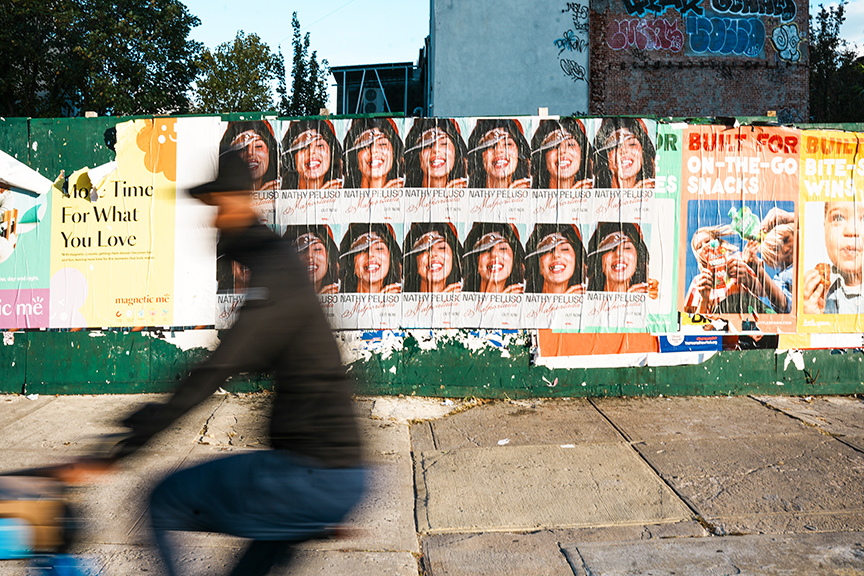
Paris is one of the most walkable major cities in the world, and that walkability is the foundation of its value for street-level brand campaigns. Pedestrians move through arrondissements at eye level with the built environment, which means a well-placed wheatpaste poster campaign or an activated street team reaches audiences in an attentive, unhurried state that no digital format can replicate. The city’s density of creative, fashion, music, and international audiences across its distinct neighborhoods makes Paris one of the highest-return markets for brands willing to execute at street level.
Our team has planned and executed guerrilla marketing campaigns across Paris for music labels, fashion brands, entertainment platforms, food and beverage groups, and technology companies. This guide covers the key campaign zones, the formats that perform in this market, the regulatory considerations that shape every deployment, and the planning framework we use to build campaigns that hold up to Parisian standards of creative quality.
If you are considering a Paris campaign, this guide will give you a working map of what to expect, where to focus, and how to structure a program that delivers measurable results rather than just street presence.
Why Paris Works for Guerrilla Marketing
Most global cities have one or two districts that drive creative culture. Paris has eight or ten, and they are distributed across the city in a way that lets a single campaign run multiple neighborhood activations without repeating its audience. The combination of tight walking geography, active public life, and deeply embedded visual culture makes Paris unusually receptive to street-level advertising formats.
The audiences that matter most for brand campaigns in Paris are concentrated in identifiable zones. Fashion-forward and international audiences cluster in Le Marais. Arts-engaged creatives anchor Oberkampf and Canal Saint-Martin. Music and youth demographics run through Belleville and the 20th. Tourist and mass-market traffic moves through Pigalle, Montmartre, and the corridors connecting the major transit hubs. Each zone requires its own creative approach and format selection.
Visual Culture and Street Art Heritage
Paris has a long history of street art and public visual communication that creates tolerance for high-quality outdoor brand campaigns. Audiences in neighborhoods like Oberkampf and Belleville are accustomed to bold, well-crafted imagery on building surfaces, which raises the bar for creative quality but also raises the potential return for campaigns that meet that bar.
Foot Traffic Density
Paris arrondissements generate foot traffic levels that rival New York City’s densest neighborhoods. The combination of metro ridership, tourist volume, and resident walkability patterns means a single wheat paste placement in a well-selected location generates thousands of impressions per day without any paid amplification. Our guerrilla marketing services are built to capitalize on that density with precise placement selection.
Key Campaign Zones in Paris
The best deployment zone for a Paris campaign depends on the target demographic, the campaign format, and the brand’s creative positioning. We assess all three variables before recommending a neighborhood map. The following breakdown reflects our operational experience across the city’s primary zones.
Oberkampf and Canal Saint-Martin
Oberkampf is the anchor zone for campaigns targeting Paris’s creative class. The streets between Oberkampf metro and Saint-Maur are dense with bars, independent retail, music venues, and studio spaces that attract a young, international, arts-engaged audience seven days a week. Canal Saint-Martin extends this audience north into an even more design-conscious demographic with strong purchasing power and high social media engagement.
Wheatpaste campaigns in Oberkampf perform best on building-facing surfaces along Rue de la Roquette, Avenue Parmentier, and the Oberkampf corridor itself. Brand ambassador activations work well around the Thursday and Friday night foot traffic peaks that the bar district generates.
Le Marais and Beaubourg
Le Marais is Paris’s most internationally recognized creative district and delivers a premium fashion and arts audience alongside significant tourist density. The streets around the Centre Pompidou and the Marais’ gallery corridor draw a demographic that responds to brand storytelling at a high sophistication level. Creative quality requirements are higher here than in most other Paris zones.
Belleville and the 20th Arrondissement
Belleville is where Paris’s music scene lives. Venues, rehearsal spaces, record shops, and the community that orbits them concentrate in the 20th and the surrounding streets. Music releases, streaming platform campaigns, and lifestyle brands with credibility positioning in music culture find their most receptive Paris audience in Belleville. Our poster campaign placements in this zone are typically supported by coordinated street team activations timed to weekend evening traffic.
Pigalle and South Montmartre
Pigalle has undergone significant gentrification and now hosts a mix of music venues, high-end bars, boutique retail, and streetwear shops that draw a fashion-forward audience distinct from the tourist traffic that dominates northern Montmartre. The corridor along Boulevard de Clichy and the streets running south toward the 9th arrondissement generate strong foot traffic from early evening through midnight on weekends.
Saint-Germain-des-Pres and the 6th
Saint-Germain delivers a more established, upscale audience profile with strong representation in publishing, fashion, and professional services. Campaigns for luxury brands, book releases, cultural institutions, and premium lifestyle products find a receptive audience in the 6th. The density of foot traffic is slightly lower than the creative districts but the audience quality is high and the visual environment is well-maintained, making creative quality critical.
Wheatpaste Poster Campaigns in Paris
Wheatpaste poster campaigns are the most widely deployed format for guerrilla marketing in Paris. The format works in this market for three reasons: the visual culture of the city is already attuned to large-format imagery on building surfaces, the format can be executed at speed when timing is tied to a release or event, and the cost-per-impression is significantly lower than traditional OOH formats in the same markets.
We execute wheatpaste placements on permitted private surfaces and licensed posting locations across Paris’s key corridors. Every surface is vetted before deployment. We do not place on protected historic surfaces or in zones where enforcement is active. Every placement is documented with geo-tagged photography delivered within 48 hours of installation. Full campaign reporting covers placement location, timestamp, and photographic verification for each piece.
Print Specifications for Paris
Paris poster campaigns typically run at A0 or double A0 formats for standard placements, with larger custom panels available for high-traffic wall surfaces. Print quality requirements are higher than in many U.S. markets because Parisian audiences apply more visual scrutiny to public imagery. We recommend matte or satin finishes over gloss to reduce reflectivity on outdoor surfaces, and print materials rated for minimum 30-day outdoor durability in Northern European weather conditions.
Street Team and Brand Ambassador Activations in Paris
Street team activations in Paris work best when anchored to specific pedestrian corridors and timed to match audience concentration patterns. We staff brand ambassador teams of two to forty people with GPS check-ins, photo documentation, and real-time reporting throughout each deployment. Teams are trained to engage in the primary language of the target audience, which in most Paris campaigns means bilingual French-English capability.
The most effective street team zones in Paris are the major transit entrances at Chatelet-Les Halles, Gare du Nord, and Republique, the pedestrian corridor along Rue de Rivoli, and the concentrated foot traffic outside the major venue clusters in Oberkampf, Belleville, and Pigalle. For music release campaigns, we coordinate team deployment to align with venue exit times and weekend evening pedestrian peaks.
Product Sampling in Paris
Product sampling programs in Paris require compliance with French regulations on commercial activity in public spaces. We research applicable permits for each program and build the permitting timeline into the campaign planning schedule. Sampling activations on private commercial property typically require written permission from the property operator. We handle surface and venue negotiations as part of campaign setup.
The Paris Regulatory Environment
Guerrilla marketing in Paris is legal when executed within the applicable framework. French municipal regulations govern commercial activity in public spaces, and the specific rules vary by arrondissement and surface type. The regulatory environment is manageable but requires professional knowledge to navigate without campaign interruption.
We research the applicable regulations for each format and location before executing any Paris campaign. Our approach ensures compliance without limiting campaign reach by identifying the correct surfaces and obtaining the necessary permissions at the planning stage rather than during execution. Every campaign we run in Paris operates on surfaces where we have confirmed rights to place.
Surface Permission Framework
Wheatpaste placements require written permission from the surface owner. We maintain relationships with surface owners across Paris’s primary campaign zones and handle permission documentation as a standard part of campaign setup. We do not execute placements on surfaces we do not have rights to, and we do not execute in protected historic zones where placements would be removed immediately by city enforcement.
Campaign Planning and Lead Times
A Paris guerrilla marketing campaign requires more lead time than a comparable U.S. campaign because of the international logistics, the surface permission process, and the import or local production coordination for print materials. We recommend a minimum of four to six weeks from brief to first installation for a single-format Paris campaign. Multi-format programs or campaigns tied to specific event dates require six to ten weeks.
Campaigns tied to fashion weeks, major music releases, or major international events in Paris should be planned with additional buffer. Those periods generate high demand for surface inventory and crew scheduling, and late briefs in those windows result in reduced placement options and compromised campaign positioning.
Brief to Installation Timeline
A typical Paris campaign timeline runs as follows: week one covers brief alignment and campaign architecture; weeks two and three cover creative production, surface permitting, and crew scheduling; week four covers shipping or local print coordination; weeks five and six cover installation, documentation, and reporting. Multi-format programs extend this timeline proportionally based on format complexity.
Creative Considerations for Paris
Paris audiences apply a higher level of visual scrutiny to public imagery than most markets. A campaign that would read as bold and effective in many U.S. cities will look ordinary or even cheap against Paris’s existing visual environment. We always recommend that clients elevate creative standards for Paris campaigns above what they would accept for a domestic U.S. program.
Language is a variable that many brands underestimate. French-language copy almost always outperforms English-only copy in campaigns targeting Paris residents rather than tourists. For campaigns with a resident-first objective, we recommend native French copywriting reviewed by someone with deep cultural fluency rather than direct translation from English originals. For tourist-focused campaigns near major landmarks and transit hubs, English-primary creative performs adequately.
Format Selection by Audience
The format selection for a Paris campaign should follow the audience profile rather than the brand’s domestic format preferences. A U.S. fashion brand that runs LED billboard trucks domestically may find that wheatpaste poster placements in Oberkampf and Belleville generate stronger brand impression quality in Paris because they fit the visual language of those neighborhoods. We advise on format selection based on local market knowledge rather than a one-size-fits-all approach.
Multi-Format Campaign Architecture in Paris
The most effective Paris campaigns combine two or three formats deployed in a coordinated sequence. A standard architecture pairs wheatpaste poster placements in two or three neighborhoods with street team activations at high-traffic pedestrian corridors, supported by mobile billboard deployment along major routes connecting the campaign zones.
The sequencing matters. Posters establish visual presence before the street team launches, so audiences encounter the brand in the physical environment before they interact with a brand representative. The mobile billboard provides coverage of the connective corridors between neighborhoods, extending reach into transit-using audiences who may not walk through the poster deployment zones on foot.
Event-Timed Campaigns
Paris generates several major annual events that create high-value campaign windows: Paris Fashion Week (twice annually), the Paris Marathon, major music festivals in the spring and summer months, and the concentrated tourist season from June through August. Campaigns timed to these windows require earlier planning but can achieve significantly higher impression density because the city’s already-high foot traffic is augmented by event attendance from domestic and international visitors.
Frequently Asked Questions
What is guerrilla marketing in Paris?
Guerrilla marketing in Paris refers to street-level brand campaigns executed across the city’s key neighborhoods, including wheatpaste poster placements, street team activations, and ambient installations in high-foot-traffic districts like Oberkampf, Le Marais, and Belleville.
What neighborhoods work best for guerrilla marketing in Paris?
Oberkampf and Canal Saint-Martin reach creative and arts-engaged demographics. Le Marais delivers premium fashion and international audiences. Belleville and the 20th arrondissement are strong for music, culture, and youth brands. Pigalle and South Montmartre attract campaigns targeting a fashion-forward nightlife audience.
Is guerrilla marketing legal in Paris?
Guerrilla marketing in Paris is legal when executed on permitted private surfaces or licensed posting locations. We secure surface permissions before every deployment and research applicable municipal regulations for each format and arrondissement.
How much does a Paris guerrilla marketing campaign cost?
Campaign costs depend on format mix, geographic scope, and duration. Wheatpaste campaigns in one or two Paris neighborhoods typically start in the $8,000 to $18,000 range. Multi-format programs scale from $20,000 to $60,000 and above. Contact our team for a custom quote based on your specific objectives and timeline.
How long does it take to plan a Paris guerrilla marketing campaign?
We recommend a minimum of four to six weeks from brief to first installation for Paris campaigns. Multi-format or event-tied programs should allow six to ten weeks to account for creative production, surface permitting, and crew scheduling.
Does American Guerrilla Marketing provide documentation for Paris campaigns?
Yes. Every placement is documented with geo-tagged photography and timestamped field reports delivered within 48 hours of installation. We provide full post-campaign reporting for client records and marketing review.