American Guerrilla Marketing

Nationwide serivce

Media planning, media buying, billboard advertising, & guerrilla marketing

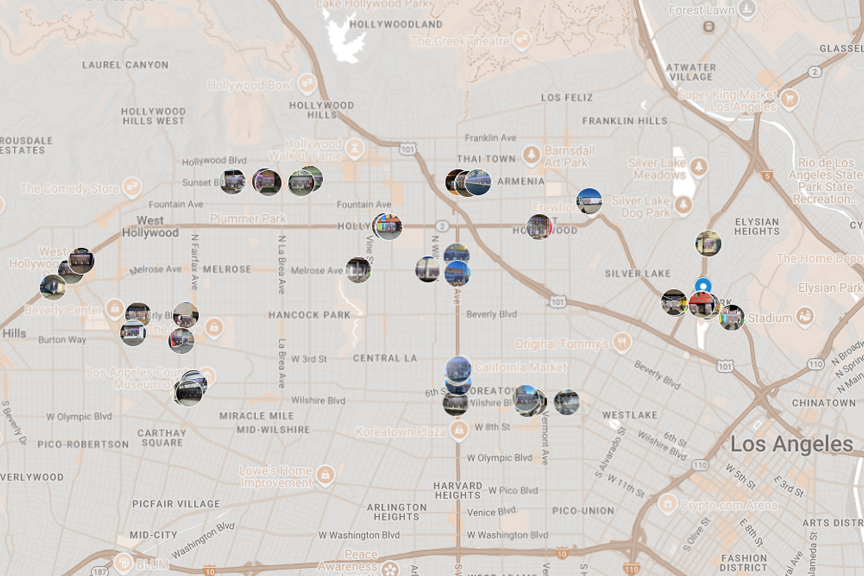
Guerrilla Activation Location Scouting

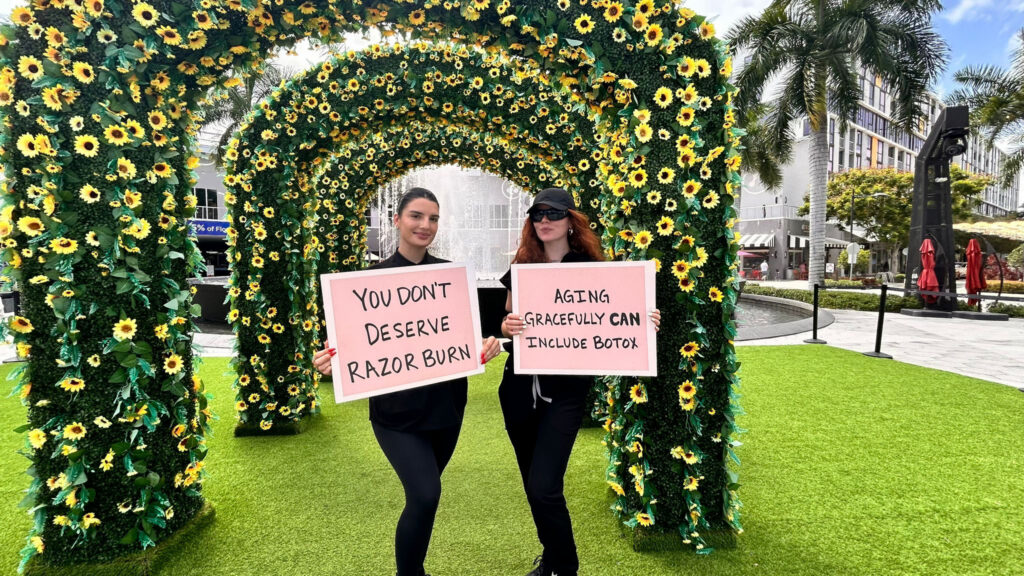
A brand stunt in the wrong plaza is a brand stunt nobody sees. We find the exact intersection, courtyard, or public space where your target audience concentrates, document the logistics, research the permits, and hand you a site that works.

Guerrilla Activation Location Scouting

What Activation Scouting Requires

A guerrilla activation is different from a static media placement. It occupies space. It requires an audience that will stop and engage rather than walk past. It needs enough physical room for the activation footprint plus the natural audience gathering that a successful stunt generates. And in most cities, it requires some level of permit or location clearance that takes time to research and time to obtain.

AGM’s Guerrilla Activation Scouting field operators work every major US market with the same firsthand confirmation methodology: visit the plaza or public space in person during the relevant hours, document foot traffic and crowd dwell patterns, confirm the permit landscape, and GPS-verify every candidate before making a Guerrilla Activation Scouting recommendation. Contact AGM to discuss your Guerrilla Activation Scouting objectives.


Real Streets, Real Intelligence

Guerrilla activation campaigns succeed or fail based on location selection — and location selection requires field intelligence gathered by operators who have actually walked the block, not a filtered list from an aggregated database.

How We Do It

Our guerrilla activation scouting process runs in four steps. First, we define the activation type and its spatial requirements: the footprint needed, the power and logistics infrastructure required, and the audience engagement model. Second, we identify candidate locations that match those requirements within the target geography — assessing foot traffic density, pedestrian sightlines, and logistical access for setup and teardown. Third, we document any permitting requirements and flag locations where activation is permissible without advance approval versus those that require coordination. Fourth, we deliver a ranked location set with traffic estimates, sightline documentation, and our recommended execution sequencing.

This service type is led by AGM field operators Marcus Webb and Darius Fontenot, who between them have scoped and executed guerrilla activation placements across more than 150 markets. No guerrilla activation location enters a client brief without an AGM operator having assessed it on-the-ground — walked, evaluated, and documented before the recommendation is made. That’s not a policy — it’s how this team works.

AGM’s Guerrilla Activation Scouting operators bring specialist knowledge to every public space assessment: plaza foot traffic volume at the relevant hours, sightline clearance for brand stunt visibility, crowd dwell behavior patterns, permit landscape awareness, and the logistical access requirements that determine whether an activation can operate at each candidate location.

The difference between an activation that generates content and one that fizzles out in an empty plaza often comes down entirely to site selection. Flatiron Plaza in Manhattan, the physical triangle where Broadway intersects 5th Avenue between 22nd and 23rd Streets, draws foot traffic that regularly exceeds 30,000 pedestrians per day. The block-and-a-half north on Broadway, less than 200 feet away, draws a fraction of that volume because the geometry changes. That is the kind of distinction our field scouts document, and it is the kind of distinction that determines whether an activation budget turns into brand content or a very expensive practice run.

Our activation scouting methodology combines manual foot traffic counting, space dimension measurement, power access documentation, demographic observation, permit pathway research, and competitive environment assessment into a ranked site scorecard that gives clients a defensible selection rather than a gut-feel choice.

AGM guerrilla activation scouting delivers site ranking scorecards, foot traffic count data, space dimension documentation, permit research summaries, and activation format recommendations. Delivered in 7 to 10 business days.

AGM’s Guerrilla Activation Scouting field operators work every major US market, and the intelligence they deliver is built from real on-foot visits to plazas and public spaces rather than filtered data. Our Guerrilla Activation Scouting reports are designed to be executable — based on verified locations and documented permit contexts. Contact the field team to brief us on your Guerrilla Activation Scouting engagement.

What We Evaluate at Every Candidate Site

Foot Traffic Counting Methodology

Our operators conduct timed manual counts at candidate sites during the time windows relevant to the campaign. A brand targeting the morning commute gets counts during the 7:30 to 9:30 a.m. window. A brand targeting the lunch and afternoon leisure crowd gets counts during the 11:30 a.m. to 2:30 p.m. window. Counts are conducted at least twice during each relevant window on different days of the week, because Monday foot traffic at a downtown plaza and Friday foot traffic at the same plaza can differ by a factor of two or more.

Count methodology: operators count pedestrians crossing a defined line on each of the four approaches to the site, record the count in five-minute intervals, and document the distribution by approach direction. This gives the client a directional flow map of the site, not just a total head count.

Pedestrian Approach Directions

Understanding which directions pedestrians approach a site from matters for activation placement and audience-facing orientation. An activation should ideally face the direction that the highest-volume pedestrian approach comes from. If the primary approach to Pershing Square in Los Angeles is from the subway exit at 5th and Hill, the activation should face that approach, not orient toward the parking structure on the south side where vehicle traffic enters but foot traffic is minimal.

Space Dimensions for Activation Footprint

Our operators measure the usable activation area at each candidate site, accounting for pedestrian throughways that cannot be blocked, permanent installations like benches and planters that constrain the space, and the setback from street traffic that safety and logistics require. The dimension report tells the experiential production team exactly what square footage they have to work with before they begin designing the build.

Permit Landscape Research

The permit landscape for public space activations varies significantly by city, by specific location, and by activation type. Some cities, notably New York City, have a tiered permit system where different park spaces and public plazas have different governing agencies and different application requirements. Times Square between 42nd and 47th Streets falls under Times Square Alliance jurisdiction. Bryant Park has its own management authority. City parks fall under the Parks Department. Private plazas that appear public fall under the property owner.

Our permit research identifies the specific governing body for each candidate site, the applicable permit application process, the required lead time, applicable fees, and any format restrictions. This research is delivered alongside the physical site assessment so clients have complete information before they select a location.

Power Access

Activations requiring electricity need a power source that is either built into the site infrastructure or brought in by the activation team. Some public plazas and event spaces have accessible power outlets built into their landscaping or seating infrastructure. Many do not, requiring a generator that adds logistics complexity, noise considerations, and cost. Our site assessment documents power access at each candidate location and notes any restrictions on generator use in the space.

Audience Demographic Match

Not all foot traffic serves the same campaign. Our operators observe the demographic composition of foot traffic at candidate sites during the relevant time windows: age range distribution, apparent lifestyle indicators, group composition (solo commuters vs. groups), and any specific demographic signals relevant to the campaign brief. This qualitative observation supplements the count data to ensure the site’s audience matches the campaign target.

Activation-friendly Spaces We Scout Regularly

Flatiron Plaza, New York City

The pedestrian plazas at the Flatiron Building on 5th Avenue and Broadway see some of the highest foot traffic volumes of any midblock public space in Manhattan. The north plaza, between 23rd and 24th Streets, has an open configuration that supports activations with a 20 to 30-foot footprint. Permitting runs through the NYC Department of Transportation for street-adjacent plaza spaces. The surrounding neighborhood draws a mix of tech workers, fashion industry professionals, and tourists, making it broadly useful for consumer brand activations.

Millennium Park, Chicago

Millennium Park in the Loop draws both Chicago residents and tourists throughout the year, with peak weekday foot traffic concentrated around Cloud Gate and the north side of the park toward Randolph Street. The park is governed by the Chicago Department of Cultural Affairs, which manages an event permit process with specific lead time requirements and format restrictions. Activations in Millennium Park benefit from exceptional social media shareability because the Cloud Gate sculpture background is internationally recognizable.

Pike Place Market, Seattle

The exterior public spaces around Pike Place Market at 1st and Pike in downtown Seattle draw a consistent mix of locals and visitors daily. The cobblestone approach streets, the Pike Street Hillclimb, and the plaza spaces along Western Avenue below the market are all activation-friendly in different formats. The market itself is managed by the Pike Place Market Preservation and Development Authority, with a permit process that distinguishes between activities on market premises and the adjacent public right-of-way managed by the city.

Pershing Square, Los Angeles

Pershing Square at 5th and Hill in downtown Los Angeles is a publicly managed green space with event infrastructure and transit adjacency to the Metro B and D lines. The space is managed by the City of LA Department of Recreation and Parks and the City of LA Bureau of Engineering. Activation formats here work well for campaigns targeting downtown DTLA workers, Metro commuters, and the growing residential population of downtown Los Angeles.

Ponce City Market, Atlanta

The exterior plaza at Ponce City Market along the Atlanta BeltLine at North Highland Avenue draws a consistent and predictably young, creative-professional audience. The BeltLine corridor itself is an activation-friendly environment for brand programs targeting Atlanta’s active and outdoor-lifestyle consumer segment. Ponce City Market is privately managed, with a separate event coordination process for activations on the property.

Seaport District, Boston

The Seaport District along Seaport Boulevard and Fan Pier Park in South Boston has become one of the most active brand activation zones in the city, driven by the concentration of tech and innovation companies in the surrounding office towers. Summer activations in the district benefit from the Harbor Walk adjacency and a consistent afternoon-through-evening audience of young professionals from the surrounding offices. Fan Pier Park is managed by Massport, with a specific event permit process.

The Pearl District, Portland

The Pearl District in Portland, particularly the Jamison Square area at NW 11th and Johnson, has a consistent pedestrian audience from the surrounding residential towers, Powell’s Books traffic, and the restaurant and gallery cluster on NW 13th. The neighborhood skews toward young urban professionals and is highly receptive to creative brand activations that fit the neighborhood’s design-forward identity.

The placement inventory for guerrilla activation scouting is maintained by AGM’s certified, licensed field experts — professionals whose surface assessments come from direct evaluation, not desk research.

Every surface in the guerrilla activation scouting placement inventory was assessed by a certified field expert — licensed professional operators who confirm access, evaluate conditions, and document what they find.

Find The Right Activation Space

    Award Winning Personalized Service

    You will get thoughtful, devoted, and individualized attention from our experienced, qualified, and professional personnel. Being one of the most illustrious agencies in Brooklyn, New York, American Guerrilla Marketing has been awarded the Best of Brooklyn title.

    Nationwide

    Industry City, Brooklyn, New York 11232

    American Guerrilla Marketing

    +1 (646) 776-2770

    [email protected]

    Telegram: @americanguerillamarketing

    Hours

    Mon - Fri: 9 AM - 5 PM

    Sat & Sun: Closed

    Automate your campaign with AGM’s Request for Proposal Builder.

    Automate your campaign with AGM’s Request for Proposal Builder. Simply answer a few quick questions about your campaign goals, markets, and timeline, and the system will generate a tailored presentation with recommended strategies, quantities, and pricing. Click the RFP Builder to instantly receive your customized proposal.

    Deliverables: The Activation Location Scouting Report

    Site Ranking Scorecard

    Each candidate site is scored against the campaign criteria: foot traffic volume and timing, pedestrian demographic match, space dimensions relative to activation footprint requirements, permit accessibility, power access, and competitive brand environment. Sites are ranked on the scorecard with a total score and a narrative recommendation. The top-ranked site is recommended with rationale, with backup selections clearly identified for contingency planning.

    Foot Traffic Count Data

    Count data from field observations at each candidate site, organized by time window and approach direction. The count data is presented in a format the client’s analytics team can work with for impression estimate calculations and ROI projection.

    Space Dimension Documentation

    Measured dimensions of the usable activation area at each site, with a simple diagram showing the activation footprint overlaid on the site plan. The diagram accounts for throughways, permanent obstacles, and setback requirements.

    Permit Research Summary

    The specific permit pathway for each candidate site: governing body, required application, estimated timeline, fee structure where published, and any format restrictions. This summary goes directly to the client’s legal or operations team for permit initiation.

    Activation Format Recommendations

    For each top-ranked site, a recommendation for the activation format or formats best suited to the physical environment: standing installation, interactive kiosk, street team deployment, product sampling, or stunt activation. Format recommendations account for the space dimensions, foot traffic patterns, and permit constraints at each specific site.

    Bar and Venue Scouting

    Bar and Venue Scouting

    The right venue reaches your audience when they are relaxed, social, and receptive. Finding that venue requires field research, not a Yelp search. We identify and vet the bars, restaurants, and nightlife spots that match your brand and your target audience.

    Learn More
    Building Projection Scouting

    Building Projection Scouting

    Projection media is technically demanding before it is creatively demanding. The geometry has to work. The ambient light has to cooperate. The wall has to take the image. We scout all of it before you book the equipment.

    Learn More

    All Scouting Services

    College Campus Reconnaissance

    College Campus Reconnaissance

    University campuses have their own geography, their own pedestrian logic, and their own advertising rules. Our field operators map it all before a single dollar goes into production.

    Learn More
    Corporate Campus Reconnaissance

    Corporate Campus Reconnaissance

    AGM scouts corporate campuses, office parks, and business districts to identify the pedestrian zones, commuter corridors, parking approaches, and surface inventory where guerrilla marketing campaigns reach employees, contractors, and visitors at their daily access points.

    Learn More
    Event and Festival Scouting

    Event and Festival Scouting

    The best opportunity to reach a defined audience in a concentrated geographic zone happens in the hours before and after a major event. We map the entire perimeter, document every approach route, and rank every activation zone before the crowd arrives.

    Learn More
    Guerrilla Activation Scouting

    Guerrilla Activation Scouting

    A brand stunt in the wrong plaza is a brand stunt nobody sees. We find the exact intersection, courtyard, or public space where your target audience concentrates, document the logistics, research the permits, and hand you a site that works.

    Learn More
    Mobile Billboard Route Scouting

    Mobile Billboard Route Scouting

    A billboard truck running the wrong corridor delivers impressions to an audience that was never the target. We map the routes that put your LED or static display in front of the specific people you need to reach, at the times they are actually there.

    Learn More
    Mural Location Scouting

    Mural Location Scouting

    A mural is a permanent statement. The wall you choose determines whether it gets seen by thousands daily or disappears behind a dumpster. We find the right wall before your production team touches a brush.

    Learn More
    Neighborhood Distribution Scouting

    Neighborhood Distribution Scouting

    Distribution campaigns fail when the neighborhood data is wrong. A door hanger campaign in the wrong building type, the wrong demographic zone, or a neighborhood with access barriers the crew was not briefed on burns print and labor on zero-return addresses. We fix that before the crew goes out.

    Learn More
    Pop-Up Location Scouting

    Pop-Up Location Scouting

    Actually, A mobile boutique parked in the wrong block is invisible to the audience you paid to reach. We find the locations where your pop-up will attract the people it needs, and document everything from loading access to permit requirements before you commit to a date.

    Learn More
    Street Advertising Location Scouting

    Street Advertising Location Scouting

    Snipe placements, sidewalk decals, and stencil campaigns all depend on knowing the specific poles, pavement, and intersections that your audience actually passes. We map that territory before your crew hits the street.

    Learn More
    Street Team Location Scouting

    Street Team Location Scouting

    Brand ambassadors are only as effective as the zone they are deployed in. We identify the intersections, transit stops, and venue approaches where your exact target demographic concentrates, count the traffic, and confirm the deployment makes sense before your team hits the street.

    Learn More
    Transit Adjacency Scouting

    Transit Adjacency Scouting

    Subway exits, bus stops, and train stations concentrate thousands of people at defined physical points on a predictable daily schedule. We map those points, document the surface inventory within reach, and profile the commuter audience by line, exit, and time window.

    Learn More
    Wheatpaste Location Scouting

    Wheatpaste Location Scouting

    A wheatpaste campaign lives or dies on wall selection. The wrong surface peels in 48 hours. The wrong neighborhood tears posters down before the paste dries. We find the walls that work, in the neighborhoods where posting belongs.

    Learn More

    What Brands Use AGM Guerrilla Activation Scouting For

    Consumer Brand Launches

    New product launches and brand entries into new markets use activation scouting to identify the highest-density pedestrian zones, optimal timing windows, and permit-clear footprints that allow physical brand presence without the logistical failures that sink inexperienced activations.

    Streetwear and Sneaker Drops

    Limited-release campaigns require precise activation location selection. Scouting identifies the specific blocks and corridors where the right audience is guaranteed to be present at install time — not just estimated through demographic data, but confirmed through on-foot observation.

    Food and Beverage Sampling Campaigns

    Sampling activations need locations with high foot traffic, low enforcement friction, accessible setup space, and the right audience match. We document all four conditions at every candidate location so the activation team arrives knowing exactly what to expect.

    Experiential and Pop-Up Campaigns

    Agencies executing experiential work for major brands use guerrilla scouting to pressure-test activation zones before committing production budgets. Field intelligence catches permit conflicts, surface limitations, and competitor placements that desk research never finds.

    Frequently Asked Questions About Guerrilla Activation Location Scouting

    Our operators conduct manual counts at fixed observation positions, counting pedestrians crossing defined threshold lines on all primary approaches to the site. Counts run in five-minute intervals for a minimum of two hours during each relevant time window. Data is recorded by approach direction so the client can understand not just total volume but the directional flow that should determine activation orientation and entrance positioning.

    The minimum viable footprint depends entirely on the activation format. A simple branded sampling station with two staff can operate in a 10 by 10-foot space. A standing installation with an interactive element needs at least 20 by 20 feet to accommodate both the install and the natural audience gather zone around it. Our site assessment documents the actual available footprint at each candidate location so the production team can design to the real constraint rather than an assumed space.

    Requirements vary significantly by city and by specific space. New York City permit applications through the Parks Department often require 30 to 60 days of lead time for non-commercial events and longer for commercial activations. Chicago’s permit process for public plaza activations typically requires 21 days. Some privately managed public spaces can move faster when the property management team is responsive. Our permit research documents the required lead time for each candidate site alongside the application process so campaign planning can account for the timeline from the start.

    Unpermitted activations in public spaces carry real legal and reputational risk. The specific risk level depends on the city, the specific space, the activation format, and the enforcement environment. Our scouting documents the permit requirements and observed enforcement patterns at each candidate site, giving the client an informed basis for their decision. We do not recommend against or in favor of specific risk positions; we give clients the facts and the context they need to make that decision themselves.

    Demographic assessment during foot traffic counts involves observing and recording: estimated age range distribution of passersby, group composition (solo, paired, family groups, work groups), dress and style as a socioeconomic and cultural indicator, and any specific demographic markers relevant to the campaign brief. This qualitative observation is conducted systematically during each count window at each site and documented in the report alongside the quantitative count data.

    Our activation scouting report includes climate and weather context for the target market and season as background information. For outdoor activations in weather-sensitive formats, the report notes covered or sheltered activation options at each candidate site, or flags sites where weather sensitivity is a significant operational risk. Weather contingency planning is ultimately the client’s responsibility, but the site information we provide should inform that planning from the start.

    Yes. Plaza and public space scouting for activations targeting employees of specific companies or corporate clusters is a specific use case we handle regularly. The approach routes from major office buildings to transit stops, the plazas between towers in business districts, and the outdoor seating areas adjacent to corporate campus cafeterias are all high-value activation environments for employee-targeted campaigns. Site selection for corporate-adjacent activations prioritizes the lunch-hour and after-work time windows when employee foot traffic is highest outside the building.

    Yes, and combining formats at the same site often maximizes the per-site investment. A brand stunt creates a moment of attention and audience gather. A street team positioned within the natural gather zone of the stunt converts that attention into direct engagement, distribution, or data collection. Our site scouting notes whether each candidate location supports combined format deployment based on the available space and the pedestrian flow patterns at the site.

    We scout activation sites in any market where the client’s audience warrants the investment. Secondary cities like Nashville, Austin, Denver, Minneapolis, and Portland have their own high-foot-traffic public spaces and plaza environments that are often more accessible, less expensive to permit, and less cluttered with competing brand activity than major metro equivalents. We have field operators in secondary markets across all regions of the country.

    Guerrilla Activation Scouting scouting reports deliver in 7 to 10 business days from confirmed brief receipt. Brief us as early as possible relative to the planned activation date because permit lead times in most cities add weeks to the overall timeline. Scouting the week before a planned activation date leaves no time for permit processing. Ideal timing is to begin scouting at least six to eight weeks before the planned activation, particularly for campaigns targeting permitted public spaces in major cities.

    AGM Scouting Coverage: All 50 States and D.C.

    AGM operates a national network of field operators. We have scouted campaigns in every U.S. state and the District of Columbia. Whether your campaign targets a dense urban core or a suburban retail corridor, we have operators who know the territory.

    No locations found

    American Guerrilla Marketing Blog Posts