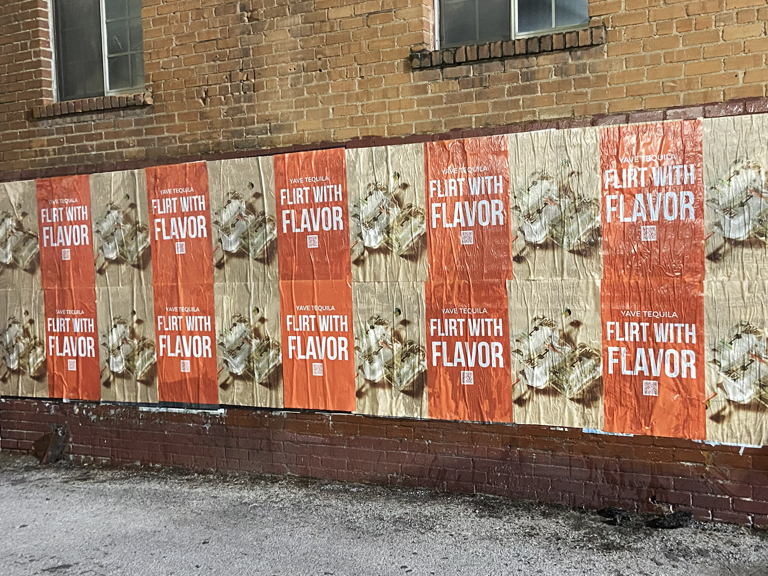
A multi-city campaign that stops at the U.S. border is leaving significant reach on the table if Mexico City is in the geographic scope of the brand’s audience. CDMX is one of the largest cities in the Western Hemisphere, with a metropolitan population exceeding 21 million and a creative, consumer-active urban core that responds to street-level marketing as well as any major U.S. market. Adding it to a multi-city program requires planning for the cross-border logistics, the local execution partner relationship, and the market-specific adaptations that make campaigns perform rather than just appear.
At American Guerrilla Marketing, based in Industry City, Brooklyn, NY, we coordinate multi-city programs across 50+ U.S. markets and extend into international markets through established local partner networks. A Mexico City addition to a U.S. multi-city campaign is not a fundamentally different kind of project. It is the same kind of project with a different set of logistical coordinates and local knowledge requirements.
Call our team at (646) 776-2770 to discuss your multi-city scope including any international markets.
Why Mexico City Belongs in Multi-City Brand Campaigns
The case for including Mexico City in a multi-city guerrilla marketing program is straightforward. The population is massive and concentrated. The city has a vibrant street culture that is highly receptive to creative outdoor advertising. The cost per impression is significantly lower than equivalent U.S. markets. And for brands with any presence in the Spanish-speaking market, CDMX is the obvious cultural epicenter.
Street-level advertising culture in Mexico City is robust and well-established. Wheatpaste campaigns, murals, brand ambassador programs, and street sampling are all familiar formats to a CDMX audience. The city’s density means that a well-placed campaign in the right neighborhoods reaches a concentrated audience with repeated impressions over the campaign window.
For brands expanding into Latin America, Mexico City is the logical starting point. A successful activation in CDMX builds the local partner relationships, the market knowledge, and the documented performance data that informs subsequent market entries.
Mexico City Neighborhood Targeting: Where to Concentrate
Mexico City is made up of 16 delegaciones (boroughs) and dozens of distinct neighborhoods, each with its own demographic profile, cultural character, and receptivity to different brand categories. Effective multi-city planning requires knowing which neighborhoods align with which campaign objectives.
Roma Norte and Condesa
Roma Norte and Condesa are the highest-priority neighborhoods for campaigns targeting millennial and Gen Z creative, design-forward, and international audiences. These neighborhoods are dense with coffee shops, restaurants, boutique retail, and cultural venues. Foot traffic is consistently high. The street art culture is strong, which means wheatpaste and mural campaigns feel native rather than intrusive.
The Roma-Condesa axis has become Mexico City’s equivalent of Brooklyn’s Williamsburg or LA’s Silver Lake. Brands that play well in those U.S. neighborhoods typically transfer well to Roma Norte and Condesa. The aesthetic expectations are sophisticated; execution quality matters.
Polanco
Polanco is Mexico City’s luxury and business district, home to high-end retail corridors, international hotel brands, financial institutions, and the embassies of multiple countries. The audience profile is upper income, professional, and internationally traveled. Campaigns targeting luxury goods, professional services, financial products, and premium brands belong in Polanco.
Street-level advertising in Polanco requires the same quality standards as comparable prestige neighborhoods in New York, Los Angeles, or Miami. A poorly produced piece in Polanco reflects badly on the brand in a way that the same piece might not in a lower-stakes market.
Centro Historico
The Centro Historico is Mexico City’s historic downtown, with the highest foot traffic volume of any area in the city. The audience is demographically broad, ranging from domestic tourists and working families to international visitors and government employees. The Centro is the right environment for campaigns targeting maximum reach and brand awareness rather than highly targeted demographic segments.
The Centro Historico also has the most complex permitting environment in the city. The historic preservation requirements and the high density of government oversight mean that campaigns here need careful local partner knowledge to navigate correctly.
Santa Fe and Pedregal
Santa Fe is Mexico City’s modern corporate district, home to major multinational office campuses, high-end residential towers, and the campus of the Universidad Iberoamericana. The audience is corporate professionals and upper-middle-class students. Campaigns targeting business decision-makers, B2B brands, and premium consumer products work well here.
Format Selection for Mexico City Campaigns
Not every format that works in a U.S. market translates directly to Mexico City. The format selection should be informed by local production availability, audience cultural context, and the physical characteristics of the target neighborhoods.
Wheatpaste Poster Campaigns
Wheatpaste poster campaigns are the workhorse format for Mexico City brand activations. The format is culturally established, local production is high quality and cost-effective, and the neighborhoods best suited to brand campaigns all have strong surfaces and relevant foot traffic. Our wheatpasting and poster campaigns framework adapts directly to CDMX through local production partners.
Design files are prepared to U.S. standards and shared digitally with local printers. Local print production is typically 40-60% less expensive than shipping printed materials from the U.S. for large-format runs. Local teams handle surface scouting, placement negotiation, and installation, with GPS documentation and photo reporting that matches U.S. campaign standards.
Mural Programs
Mexico City has one of the strongest mural traditions in the world. Diego Rivera’s work is literal public infrastructure in this city. The cultural context for brand murals is complex as a result. Murals that engage authentically with the local artistic tradition earn tremendous goodwill. Murals that are transparently commercial without any artistic quality are noticed and criticized in the creative-aware neighborhoods like Roma Norte.
We recommend commissioning local artists for Mexico City mural programs whenever possible. The resulting work is higher quality, the narrative is more authentic, and the community reception is significantly warmer. The artist’s social media following and their network’s engagement with the mural installation amplifies the campaign reach organically.
Brand Ambassador Programs
Our brand ambassador agency extends into Mexico City through local staffing partners. The ambassador profile for a CDMX activation is market-specific: bilingual ability, cultural fluency in the target neighborhood, and experience working promotional programs in the local retail and event environment. We manage the brief and quality standards centrally; local partners handle casting and field management.
Cross-Border Logistics: What Actually Takes Time
The logistical challenges of adding Mexico City to a multi-city campaign are manageable but require earlier lead time than a purely domestic program. The key friction points are material movement, partner coordination, and regulatory navigation.
Material Production
For most printed material in a Mexico City campaign, local production is faster and cheaper than shipping from the U.S. Print quality at the top Mexico City production houses is equivalent to U.S. standards. The workflow is: prepare design files and specifications centrally, share digitally with local production, review proofs, approve for production, and coordinate local delivery to the installation team.
For branded merchandise, proprietary materials, or specialty items that require U.S. production, import logistics add time and cost. Customs clearance for commercial goods entering Mexico requires advance documentation and can add 1-2 weeks to the timeline. Plan for this at the scope stage, not the week before execution.
Partner Coordination
The quality of the local partner in Mexico City is the most important variable in campaign success. We maintain relationships with production houses, installation crews, staffing agencies, and local marketing consultants who understand the specific requirements of international brand campaigns. Vetting a new local partner adds time to the first campaign; subsequent campaigns with the same partner run on an established working relationship.
Regulatory Navigation
Outdoor advertising in Mexico City is regulated at the delegacion level, and requirements vary. Roma Condesa, Polanco, and Centro Historico all have different enforcement cultures and permit requirements. Local partners with experience in the specific neighborhoods being targeted are essential for navigating this correctly. Attempting to run a campaign without local regulatory knowledge is how programs get shut down on day one.
Maintaining Campaign Consistency Across Markets
The biggest risk in a multi-city program that includes an international market is consistency degradation. The U.S. markets run at the expected quality level. The Mexico City component looks different, feels different, and is documented differently. The campaign reads as fragmented rather than coordinated.
We address this with a centralized brief and documentation protocol that applies equally to all markets in the program. Photo documentation uses the same format and angle conventions. GPS location logging is required from all markets. Reporting templates are standardized so that client-facing summaries present Mexico City results alongside U.S. results on a common scale.
Creative adaptation is managed by the same central design team that handles the U.S. markets. Language is adapted for the Spanish-language audience while the visual identity remains consistent. Color, typography, and logo usage standards apply everywhere in the program regardless of market.
Connecting Mexico City to U.S. Market Performance
A Mexico City component in a multi-city campaign performs best when it is connected to the U.S. campaign narrative rather than siloed as a separate local effort. Brands that announce their Mexico City presence to their U.S. and global audience generate additional reach from the social content surrounding the international activation.
The campaign documentation, photos and video of the CDMX installations, becomes content for the brand’s global social channels. The international dimension of a multi-market program is a story worth telling, and the visual documentation of street-level advertising in Mexico City’s most iconic neighborhoods creates compelling content that performs well across Instagram, LinkedIn, and YouTube.
Our guerrilla marketing services team coordinates documentation across all markets in a multi-city program to ensure the global campaign narrative is served by every local execution. Each market’s work feeds into a unified campaign story rather than producing isolated local reports.
Frequently Asked Questions
How do you run a guerrilla marketing campaign in Mexico City?
Effective guerrilla marketing in Mexico City requires local production partners who understand neighborhood culture, permit requirements by delegacion (borough), and the specific foot traffic patterns of target neighborhoods. Key areas include Condesa, Roma Norte, Polanco, Centro Historico, and Santa Fe for different audience profiles. Coordination from a U.S.-based agency requires a trusted local execution partner.
What neighborhoods in Mexico City are best for guerrilla marketing?
Roma Norte and Condesa are the highest-density targets for creative, design-forward, and millennial audiences. Polanco reaches luxury and business audiences. Centro Historico offers massive foot traffic volume across diverse demographics. Santa Fe and Pedregal reach corporate and high-income audiences.
Can a U.S. agency manage a Mexico City guerrilla campaign?
Yes, but execution must be done through local partners. A U.S. agency provides the campaign concept, creative direction, reporting standards, and quality control. Local Mexico City partners handle physical execution, material sourcing, permit navigation, and on-the-ground management.
How do multi-city campaigns maintain consistency across markets?
Consistency comes from a centralized brief, standardized design files adapted for each market’s format specifications, a shared documentation and reporting protocol, and a central project manager who coordinates across markets.
What formats work best in Mexico City for brand campaigns?
Wheatpaste poster campaigns, wall murals (both hand-painted and printed), and street-level sampling programs are the most common and effective formats in CDMX. Brand ambassador programs are highly effective in retail corridors and at events.
What is the budget premium for adding Mexico City to a multi-city campaign?
Adding Mexico City to an existing U.S. multi-city program typically requires 60-80% of the equivalent U.S. market cost for similar coverage, primarily because local production and labor costs are lower. Shipping materials from the U.S. adds cost; local print production is usually more cost-effective for CDMX executions.