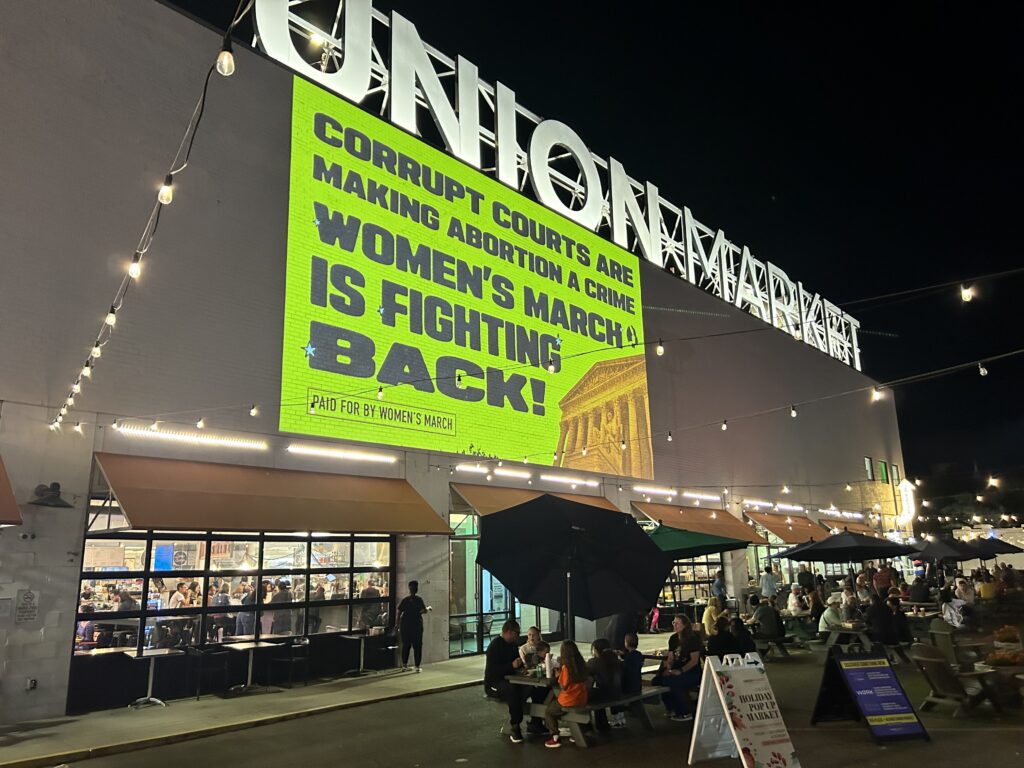
The brands that get the most out of >guerrilla marketing are those that treat it as a strategic complement to their media mix, not a standalone stunt. Physical presence in your target market’s commercial environment builds brand authority that compounds over time: each campaign cycle increases recognition, each placement reinforces previous encounters, and each successful creative moment earns organic social amplification beyond its paid footprint. American >Guerrilla Marketing designs campaigns with that compounding return in mind.
What makes projection marketing worth understanding in depth is the gap between campaigns that generate impressions and campaigns that generate results. The best campaigns are built around audience movement patterns, not just surface availability, they place messages where the right people walk, dwell, and return repeatedly, which drives the frequency that builds real brand memory. The format also benefits from organic amplification: quality street-level work in high-visibility environments gets photographed and shared, multiplying the original media investment without additional spend.
This article covers the tactical and strategic fundamentals of projection marketing, how campaigns are structured, what execution looks like in practice, how to evaluate format options against objectives and budget, and what distinguishes campaigns that move the needle from campaigns that just spend money. Whether you’re planning a first activation or optimizing an existing street-level program, the information below gives you a grounded framework for making smart decisions and getting measurable outcomes.
Overview: >Projection Advertising in New York City
>Projection advertising uses high-lumen mobile systems to display brand visuals and video on buildings, bridges, and urban surfaces, creating large-format impressions without permanent installation. Mobile rigs deploy from vehicles or fixed points. Teams secure permits or permissions, identify target surfaces, and execute timed deployments during peak foot traffic hours, typically dusk through midnight.
NYC demands precision. Prime placements get covered in 48-72 hours. Phased campaigns with professional crews who know neighborhood-specific surfaces and property relationships are non-negotiable.
For brands targeting New Yorkers at street level, >building projection campaigns provides a combination of cost efficiency, audience precision, and cultural authenticity that digital and traditional outdoor formats struggle to match. The medium places your message in the physical environment where your audience actually lives, works, and socializes, not in the interruption layer of digital screens they’ve learned to ignore.
Why building projection campaigns delivers results in New York City
Projection campaigns create genuine spectacle that organic social media amplifies. A 30-foot branded projection on a landmark building becomes a social media event, people photograph, post, and share, extending impressions far beyond the projection window. New York City is a market that rewards this kind of thinking. The city’s concentration of creative, young professional, and culturally engaged audiences in walkable neighborhood corridors creates the conditions where >street-level advertising performs at its best.
The measurement case for >building projection campaigns in New York City is straightforward: look at impression cost rather than absolute impressions. In a market where digital CPMs have climbed steadily and traditional outdoor contracts lock budgets into fixed geographic commitments, >building projection campaigns delivers flexible, precision-targeted impressions at costs that outperform the alternatives for local market activation.
The organic amplification factor adds another dimension. Well-executed >building projection campaigns in New York City’s creative neighborhoods generate social media photography and sharing that extends paid impressions 3-10x beyond direct placements. Audiences who encounter interesting street-level campaigns in SoHo or Williamsburg photograph and share them at high rates, especially when creative quality is high and placement context is culturally relevant.
Key New York City neighborhoods and activation zones
The most productive >building projection campaigns geography in New York City concentrates in a set of neighborhoods with above-average walkability, foot traffic, and audience quality:
SoHo: New York City’s most culturally influential pedestrian corridor. Audiences here are tastemakers who shape broader New York City culture and amplify brand messages through social media and word-of-mouth at rates above any other New York City neighborhood. building projection campaigns here generate both direct impressions and organic social amplification.
Williamsburg: Consistent professional foot traffic during working hours and entertainment audiences on evenings and weekends. The demographic quality, young professionals with above-average household incomes, makes this one of New York City’s highest-value building projection campaigns placements for consumer and lifestyle brands.
Lower East Side: Emerging creative and entertainment district with above-average young professional density. building projection campaigns here reach early-adopter audiences whose brand affinity and advocacy behavior drive broader market adoption.
Midtown: Established entertainment and residential corridor with high repeat pedestrian traffic from residents and regular visitors. building projection campaigns in this zone benefit from the repetition frequency that comes from audiences walking the same routes multiple times per week.
Tactics, execution, and best practices
Professional building projection campaigns execution in New York City follows a set of principles that differentiate campaigns that generate results from campaigns that generate impressions without impact:
Event calendar and campaign timing in New York City
New York City’s event calendar provides specific windows when audience concentration spikes in defined geographies. Aligning building projection campaigns with these windows maximizes impression quality:
New York Fashion Week: New York City’s highest-concentration event creates extraordinary audience density in specific corridors. building projection campaigns timed to run during and immediately before this event reach audiences at their most contextually engaged.
Art Basel New York: A secondary but significant event window that concentrates relevant audiences in defined geographic zones. building projection campaigns synchronized with this event reach audiences with high entertainment and consumption intent.
MSG and Barclays Center concerts: A recurring event that creates predictable audience concentration patterns. Brands that align building projection campaigns campaign timing with this event reach the same concentrated audience repeatedly within the campaign window.
Budget, scale, and ROI
building projection campaigns in New York City offers favorable unit economics relative to traditional outdoor and digital alternatives. The cost structure pays for professional execution rather than per-impression media rates, once materials are deployed, they generate impressions without incremental spend.
Typical New York City building projection campaigns investment ranges:
ROI benchmarking for building projection campaigns should use cost-per-meaningful-impression (CPMI) rather than raw CPM. A meaningful impression, someone who actually engages with the campaign rather than passively passes it, generates brand recall and consideration that digital ad clicks don’t necessarily replicate. When calculated on CPMI basis, professional building projection campaigns in New York City typically outperform digital display advertising and match or beat social media advertising efficiency for local market activation.
How American Guerrilla Marketing activates New York City campaigns
American >Guerrilla Marketing‘s New York City campaigns begin with intelligence rather than assumption. Physical neighborhood scouting, pedestrian pattern analysis, competitive space assessment, and property relationship mapping precede any campaign planning. We don’t work from satellite imagery and call it strategy. We work from ground-level knowledge of how your target audience actually moves through New York City’s streets.
Our New York City execution team includes professional installation crews with city-specific knowledge, established relationships with property owners and venue managers, and real-time campaign documentation protocols. Every campaign includes geo-tagged placement photography, impression estimates based on pedestrian traffic data, and qualitative performance feedback throughout the active period.
Post-campaign reporting provides: total placement documentation; estimated impression delivery by location type; organic social media amplification monitoring; and strategic recommendations for follow-on campaigns based on performance data.
Frequently Asked Questions
What makes New York City a strong market for building projection campaigns?
New York City’s combination of walkable neighborhoods like SoHo and Williamsburg, a major event calendar anchored by New York Fashion Week and Art Basel New York, and a culturally engaged young professional demographic creates ideal conditions for building projection campaigns. NYC demands precision. Prime placements get covered in 48-72 hours. Phased campaigns with professional crews who know neighborhood-specific surfaces and property relationships are non-negotiable.
How much does a building projection campaign campaign cost in New York City?
Campaign costs in New York City depend on scope, duration, and tactics. Focused single-neighborhood campaigns typically run $8,000-$20,000. Multi-neighborhood campaigns covering three to five key areas run $20,000-$45,000. Full-market saturation with multiple tactics and event synchronization runs $45,000-$100,000 or more. American >Guerrilla Marketing provides detailed quotes based on specific objectives and geographies.
How long should a guerrilla marketing campaign run in New York City?
Most effective campaigns in New York City run 3-6 weeks to build frequency with regularly commuting and neighborhood-using audiences. Event-synchronized campaigns may run 7-14 days when timed to a specific activation window like New York Fashion Week. Multi-phase campaigns can extend presence across an entire season through planned refresh deployments that maintain campaign freshness.
Which New York City neighborhoods have the highest guerrilla marketing ROI?
Based on pedestrian density, audience quality, and campaign performance data, SoHo, Williamsburg, and Lower East Side consistently deliver the strongest >guerrilla marketing ROI in New York City. SoHo combines high foot traffic with culturally engaged audiences. Williamsburg delivers consistent professional demographic reach. Lower East Side provides emerging market positioning with early-adopter audience access.