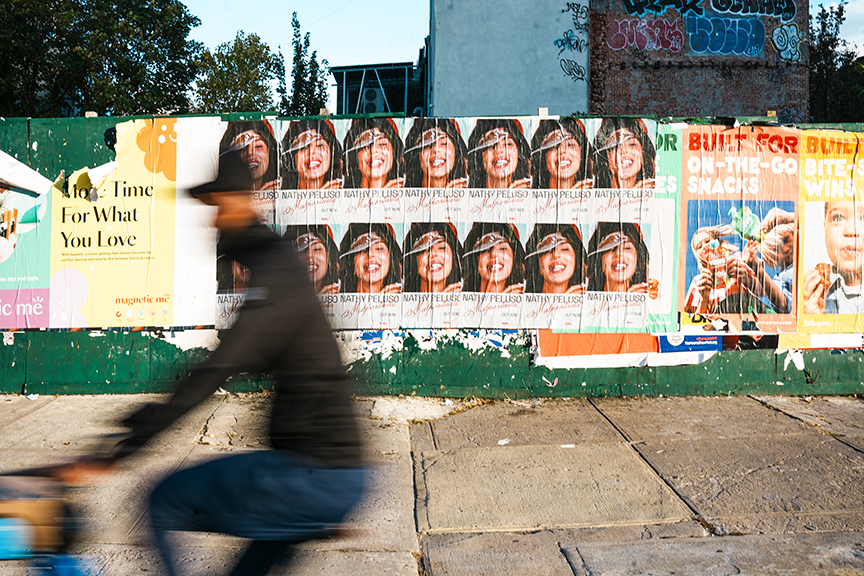
Pride parade guerrilla marketing still works in 2026 because it breaks routine in a way people can feel, photograph, and act on immediately. The audience does not have to click past it or mute it. They encounter it in the real world, where memory tends to be stronger and the brand can borrow some of the credibility of place. The best campaigns do not chase random attention. They create a moment that feels fitted to the route, the mood, and the reason the audience is there.
Recent 2026 search results around Pride parade guerrilla marketing keep pointing to the same conclusion. Creativity matters, but operational fit matters more. Brands win when they know the route, the time window, and the action they want next. That is why AGM treats field marketing less like decoration and more like behavior design. The street is not a blank canvas. It is a system of movement, stops, decisions, and repeated habits.
Why The Format Still Wins Attention
Community first festival activation can interrupt autopilot in a way standard ad inventory rarely does. People still react to surprise when it feels relevant. They still share something that gives them a good photo or a story worth retelling. They still respond when a brand solves a real moment, whether that is boredom in a queue, confusion at a venue, hunger near an event, or curiosity in a nightlife corridor. That is the practical advantage of guerrilla work. It meets people in motion rather than waiting for them to volunteer attention.
This matters because attention is expensive even when the media buy looks cheap. If a tactic gets seen but not remembered, it is not efficient. If it gets remembered but leads nowhere, it is incomplete. A smart field campaign has to do both jobs. It has to build recall and make the next action obvious.
Begin With Audience Behavior
Before creative comes route logic. Where does the audience already gather. Where do they slow down. Which blocks repeat. Which entrances, exits, stairways, crosswalks, food lines, and venue bottlenecks produce the highest concentration of likely buyers. Once those points are mapped, the format becomes easier to choose. This is why a six block zone with repeated exposure usually beats a scattered citywide plan.
For Pride parade guerrilla marketing, the route map should also answer what kind of attention is possible in that setting. A person moving quickly might only give you a glance and a scan. A person waiting in line might give you thirty seconds. A person already in a festive environment might stop for a photo. The best concept is the one matched to the actual tempo of the block.
Creative Rules That Keep The Campaign Clear
Street creative should explain itself quickly. That does not mean it has to be boring. It means the audience should understand the core point in one look. Use a visual with one main job. Use copy with one promise. Use a call to action that feels easy to complete while standing outside. In most cases the offer should be short enough to say out loud in one breath.
Brands often get into trouble when they try to stuff too much into the moment. If the campaign needs background explanation before it makes sense, the field team has to do too much work and the passive audience will keep walking. Simplicity is not a creative compromise here. It is a conversion strategy.
Production And Field Logistics
Execution quality decides whether a promising idea survives contact with the real world. Outdoor stock, weather timing, battery backups, crew positioning, route permissions, wardrobe, sample handling, and filming coverage are not side notes. They are the campaign. Good field teams think about where the sun hits, when the crowd turns over, how long an adhesive holds, and what happens if rain shifts the schedule by a day.
That is especially true for Pride parade guerrilla marketing. The difference between a polished activation and a messy one is usually preparation. It shows in the details the audience may never consciously notice: the QR code that scans instantly, the crew that stands in the right part of the flow, the visual that reads from the right distance, and the follow up page that loads before interest disappears.
Budget And Pricing
Contact AGM for pricing because Pride work should be scoped around genuine partnership, staffing, city route rules, and community commitments.
If the exact setup needs custom planning, the quote should reflect geography, timing, staffing, production complexity, and reporting needs. Some campaigns look expensive on a deck but become efficient because they concentrate exposure so well. Others look cheap until they sprawl across too many zones and become impossible to manage cleanly.
How To Measure Real Performance
Measure the campaign in three layers. First, field output. That includes placements, staffed hours, completed routes, or distributed samples. Second, response. That includes scans, signups, redemptions, RSVPs, site visits, and user generated posts. Third, business effect. That includes sales, bookings, store visits, app installs, or lead quality. This structure keeps reporting honest and makes optimization easier while the campaign is still live.
The brands getting the most from field marketing in 2026 do not wait until the end to learn. They review early zone level data, relocate if needed, and tighten the message while the audience is still there. That short loop is where experience matters.
Common Mistakes
The biggest mistakes in Pride parade guerrilla marketing are predictable. Going broad instead of dense. Choosing a format because it looks trendy instead of because it fits the route. Asking too much at the first touch. Ignoring documentation. Understaffing. Skipping weather contingency planning. None of those errors are glamorous, but they can quietly kill performance.
Another mistake is forgetting what happens after the moment of surprise. A field activation should not end at attention. It should hand the audience somewhere useful to go next. When that handoff is missing, the campaign becomes a photo opportunity with weak commercial value.
What AGM Actually Adds
AGM adds route logic, production discipline, field staffing, and the ability to shape the campaign around a real market instead of a generic idea. Sometimes that means turning a broad brief into a focused six block plan. Sometimes it means telling a brand that the tactic they want is wrong for the audience and redirecting them toward something more practical.
If you want a campaign built around timing, behavior, and measurable action instead of generic street noise, contact AGM at americanguerrillamarketing.com/contact. The strongest work usually starts with one clear audience, one strong route, and one next step the audience can take without friction.
Execution Checklist For 2026
A strong plan for Pride parade guerrilla marketing should confirm the route, the time window, the audience promise, the mobile follow through, and the proof you expect to gather in the field. That means confirming who owns documentation, who adjusts if a zone underperforms, how weather affects the schedule, and what the backup move is if a placement or staff plan changes. Campaigns usually fail in execution gaps, not in brainstorming sessions.
It also helps to pressure test the campaign against real conditions in the market. Will the copy read from the distance people actually stand. Will the offer still feel attractive when the audience is in a rush. Does the scan page work well on weak mobile data. Is the physical setup obvious enough that a passerby can understand the point without a long explanation. The more of those questions that are answered before launch, the more confident the field team can be.
Creative Review Standards
Creative should be reviewed against a blunt checklist. Can a person understand the point in one glance. Does the visual have one clear job. Is the call to action short enough to act on outdoors. Is there enough contrast to survive daylight, distance, and movement. Is the brand identifiable without overpowering the idea. This kind of discipline often feels basic, but it is the reason some activations travel beyond the street and some do not.
Another good review question is whether the campaign would still make sense if someone encountered only one piece of it. Not everyone will see the full route. Each touchpoint should still communicate enough value on its own to earn the next step.
After Launch Optimization
The first reporting window should not just measure Pride parade guerrilla marketing. It should improve it. If one block performs better than the others, move resources there. If one line of copy scans more strongly, replace weaker creative. If a certain shift underperforms, test a different day part. Field marketing gets stronger when the team treats the launch as the first useful version, not the final perfect version.
That learning loop is one reason experienced operators often outperform bigger budgets. They make faster, better decisions once the campaign meets the street. In 2026 that ability to adjust is part of the product, not an extra. Brands that build for learning usually get more from every activation.
Frequently Asked Questions
Guerrilla Marketing at Pride Parades: Do It With Respect or Do Not Do It generates better results when placement, timing, creative, and local execution all work together. These questions cover the details brands usually need before launch, during rollout, and while evaluating performance.
For ar, the strongest campaigns usually come from tight geographic targeting, message discipline, and enough repetition to be remembered. Market conditions, neighborhood flow, event calendars, commuter behavior, and production logistics all change how the tactic performs, so the planning details matter as much as the idea.
What is the main goal of Pride parade guerrilla marketing?
The main goal is to create a real world encounter that turns attention into a clear action such as a scan, signup, visit, sample, or booking inquiry.
How long should a campaign run?
That depends on the route and the moment. Some campaigns work as short bursts around one event, while others need one or two weeks of repeated exposure.
Do permits matter?
Yes. The rules change by property, city, and format. A compliant campaign is easier to sustain, document, and scale.
What makes a message work faster in public?
Simple language, strong contrast, and a very clear next step. Public attention is short, so the idea should be understandable in a glance.
How should success be measured?
Start with field output, then response, then business effect. That keeps reporting grounded instead of vague.
Does documentation matter?
Yes. Strong photos and video extend the life of the campaign and help paid social, PR, and internal reporting.
Can a smaller brand use this approach?
Absolutely. Concentrated local campaigns often work especially well for smaller brands because they can connect the activation to a nearby action quickly.
How do I scope a project with AGM?
Share the market, dates, audience, and desired action, then contact americanguerrillamarketing.com/contact for a route and format recommendation.
What makes a Pride campaign feel genuine instead of performative?
A real offer, thoughtful staffing, and messaging that fits the event matter more than loud branding. People can tell when a brand is there to contribute versus just borrow attention for a day.
Which activation formats work best during a parade?
Fast formats win. Hand-to-hand giveaways, ambassador teams, visible signage, and photo moments work well because they fit moving crowds and do not require long explanations.
Related Pages and Articles
Pride Event Market Data: Numbers Behind the Opportunity
Pride parades are among the highest-density single-day street marketing events in the U.S. calendar, but the audience varies significantly by city. Here’s the data that shapes effective Pride campaign planning.
New York City Pride (officially NYC Pride March) draws an estimated 1.5 to 2 million spectators along the Fifth Avenue route from Midtown to Greenwich Village. Brands positioned along the 5th Avenue corridor between 36th Street and Christopher Street can expect sustained crowds 4 to 8 people deep during the 4 to 5 hour parade window. This is comparable to major sporting event foot traffic, compressed into a narrower geographic zone with significantly higher audience engagement than a typical sports crowd moving toward a stadium.
San Francisco Pride, held in late June, draws approximately 200,000 to 250,000 attendees to the Civic Center area. Los Angeles Pride in West Hollywood draws 35,000 to 75,000 to the parade route and festival grounds, with the Santa Monica Boulevard corridor providing concentrated placement opportunities. Chicago Pride in Boystown draws an estimated 100,000 spectators along the Broadway, Halsted, and Belmont corridor. Each city’s route has distinct characteristics: New York concentrates the crowd along a narrow linear route, while San Francisco and Chicago spread the audience across festival grounds that extend the contact window beyond the parade itself.
Pride audience demographics skew younger than the general population and over-index significantly on discretionary consumer spending. A 2023 Community Marketing Inc. study found that LGBTQ+ consumers have a combined buying power estimated at $1.4 trillion annually in the U.S. Pride event attendees, who are self-selected for brand engagement during a values-affirmative cultural moment, represent a high-quality audience for brands that can demonstrate genuine alignment rather than performative support.
Campaign timing matters: 70 to 80% of Pride parade attendees arrive in the 60 to 90 minutes before the parade start. Street installations, sticker campaigns, and street team activations positioned on the route 2 to 3 hours before the parade begins can reach the audience during the build-up phase when attention is high and crowds haven’t yet consolidated. Post-parade festival zones, where applicable, extend the dwell time and allow for longer engagement formats than the parade corridor itself supports.
Street poster advertising and poster campaigns near Pride venues typically need to be in place 3 to 5 days before the event to maximize pre-event impressions among neighborhood residents and early-arriving out-of-town attendees. Production and installation lead time for a standard street poster campaign in a major city Pride zone runs 5 to 7 business days. Contact AGM at least 3 weeks before your target Pride event date to ensure sufficient planning and production time.