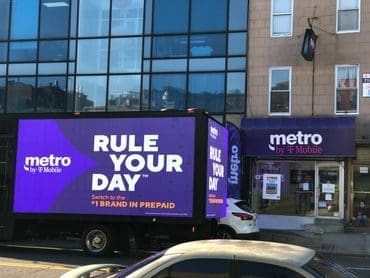
Attention is the scarcest resource in modern advertising. Consumers are exposed to thousands of brand impressions daily. Most are ignored before they register. The advertising formats that break through this noise are the ones that are large enough to demand a response, dynamic enough to disrupt the visual environment, and positioned in a context where the audience is actually present and receptive.
LED billboard trucks work because they satisfy all three conditions. The display is large-format, typically 10 feet by 22 feet or larger. The content is dynamic, supporting full-motion video and animated graphics. And unlike static billboards, which are fixed to whatever consumers happen to pass by, LED trucks follow your audience to the specific locations where they are concentrated: the stadium on game day, the entertainment district on a Friday night, the competitor’s block on a Tuesday afternoon.
American Guerrilla Marketing operates LED mobile billboard trucks and has deployed mobile billboard campaigns across 30+ U.S. and Canadian markets. This guide covers exactly how LED trucks drive attention to your business, how to route them effectively, and how to measure results.
Why Movement Drives Attention
The human visual system is hardwired to detect movement. This is evolutionary programming: motion in the peripheral field indicated potential threat or opportunity and demanded attention. Modern advertisers have been exploiting this instinct since the first illuminated signs started flashing. LED billboard trucks take it further by combining motion in the display with motion of the vehicle itself, creating a compound attention effect that static formats simply cannot produce.
A static billboard earns a fraction-of-a-second glance as a driver passes. An LED truck moving through traffic, displaying animated content, earns extended attention because the brain registers it as worth tracking. That extended attention translates into stronger message retention and better brand recall.
Research on out-of-home advertising consistently shows higher recall rates for mobile formats compared to static ones. The movement-plus-context combination is the reason.
How LED Trucks Drive Attention in Different Contexts
Event-Adjacent Campaigns
The highest attention-per-hour opportunity in LED truck advertising is the period immediately before and after a major event. Tens of thousands of people converge on a stadium, arena, or convention center, moving on foot through dense corridors where vehicle traffic is slow. An LED truck positioned on these routes generates thousands of impressions per hour from an audience that is already in an elevated engagement state.
The key is pre-positioning: arriving before the primary crowd movement begins and maintaining presence through the post-event dispersal. Our team handles route planning around event venue geography to maximize exposure windows.
Entertainment District Evening Routing
Evenings in entertainment districts create ideal LED truck conditions: pedestrian density, reduced vehicle competition for attention, and audiences that are in a social and receptive mindset. The nighttime visibility premium for LED displays, which appear dramatically brighter against a dark environment than a daylight one, amplifies impression quality beyond raw count.
Competitive Conquesting
Routing an LED truck around a competitor’s retail location, franchise cluster, or brand event is one of the more tactically precise applications. The message lands at the exact moment consumers are evaluating the competitor. A compelling differentiating offer or comparison message in this context can intercept purchase decisions at the critical window.
Residential Neighborhood Saturation
For brands targeting consumers in specific residential demographics, routing through those neighborhoods during high-traffic hours generates repeated exposures to the right audience in their own environment. The same route run multiple times over a campaign period builds recognition that compounds with each pass.
Commercial Corridor Targeting
Business districts, retail corridors, and commuter routes deliver high daily traffic volume. An LED truck on a strategic commercial corridor route during morning and evening peak hours reaches commuters repeatedly over a multi-day campaign, building familiarity through frequency.
Route Planning: The Foundation of Campaign Performance
An LED truck on a poorly planned route is an expensive vehicle going nowhere useful. The route is where the campaign’s impression potential is either realized or wasted. Effective route planning combines:
Traffic Density Data
Vehicle and pedestrian volume by street, time of day, and day of week determines which corridors deliver the most impressions per hour. Planning without this data produces routes based on intuition that may not reflect actual traffic patterns.
Demographic Alignment
Census data, Placer.ai foot traffic analytics, and market knowledge inform which neighborhoods and corridors have the highest concentration of target consumers. A campaign for a premium spirits brand should route through areas where the target demographic shops, lives, and socializes, not just through any high-traffic corridor.
Dwell Time Optimization
Strategic pausing at high-traffic intersections, pedestrian crossings, and bus stops extends the impression duration per individual. A truck moving at 30 miles per hour generates a fraction-of-a-second impression. A truck stopped at a busy intersection for 90 seconds generates extended, multiple-glance impressions from everyone waiting at the light.
Content-Context Alignment
Different creative messages perform differently in different contexts. Morning commuter routes call for different messaging than evening entertainment district routing. Planning for content-context alignment means either running different creative in different routing contexts or selecting creative that works across multiple contexts.
LED Billboard Truck Campaigns and Multi-Channel Integration
LED billboard trucks generate maximum return when integrated with ground-level campaigns rather than operated in isolation. In a standard multi-channel deployment, wheatpaste poster placements go up in target neighborhoods 3 to 5 days before the truck deployment, establishing visual familiarity with the brand before the truck makes the impression memorable through motion and scale.
Brand ambassador teams can operate on foot in the same geographic zones the truck routes through, creating ground-level interactions that complement the aerial visibility of the truck. A consumer who sees the truck from the sidewalk and then is approached by an ambassador has had two reinforcing brand exposures in a single block.
Sidewalk stencil campaigns add another touchpoint at eye level for pedestrians in the same area. The stencil, the poster, and the truck together create brand omnipresence in a defined geographic zone that is difficult for consumers to ignore and even more difficult to forget.
Content That Drives Attention: Creative Principles for LED Trucks
The display capabilities of LED trucks, including full-motion video, animation, and high brightness, create creative opportunities that static formats cannot match. But not all creative executes equally well on a mobile display. Principles for content that drives attention:
Lead with Visual Impact
The first frame matters most. Consumers who are not already looking at the display need a reason to shift their attention to it within the first second. Bold colors, high contrast, and unexpected visual elements work better than clean, minimalist designs that are easily overlooked.
Design for Distance and Motion
Text should be readable from at least 200 feet. Body copy belongs in print, not on a mobile billboard. The message hierarchy should be brand, visual, offer, in that order, with each element readable in under 3 seconds.
Use Motion Purposefully
Animation that serves the message (a product demo, a countdown, a visual transformation) performs better than animation that is just motion for motion’s sake. The movement should add information or create a visual payoff, not just fill the screen with activity.
Night Creative Optimization
For campaigns routing through entertainment districts in the evening, optimize creative for nighttime conditions: higher brightness ratios, colors that pop against dark backgrounds, and text that reads clearly against illuminated backgrounds.
Documentation and Verification
Campaign accountability is a standard expectation in modern advertising, and LED truck campaigns are no exception. AGM provides GPS-tracked route logs, timestamped photo documentation from field supervisors, and post-campaign recaps with route maps and impression estimates for every deployment. Clients know exactly where the truck was, when, and for how long, rather than relying on the operator’s word.
This documentation layer is part of every campaign we run, consistent with our broader approach to guerrilla marketing services that are fully accountable and verified.
Planning Your LED Billboard Truck Campaign
A well-structured LED billboard truck campaign starts with four decisions: market selection, campaign timing, route strategy, and creative preparation. Getting all four right is what separates campaigns that generate real attention from ones that generate impressions without impact.
Market selection should be driven by where your target consumer is most concentrated. Campaign timing should align with events, seasonal demand patterns, or competitive windows. Route strategy should be built on traffic data rather than assumption. Creative should be designed for the mobile display format from the start, not adapted from print or digital assets that were built for different contexts.
Our team walks clients through this planning process before any truck hits the road. The result is campaigns that are purposeful from the first mile.
Frequently Asked Questions About LED Billboard Trucks
How do LED billboard trucks drive attention to a business?
LED billboard trucks put your brand message on a large-format moving display that follows your customers to the locations they actually visit. The combination of size, motion, full-color LED brightness, and strategic routing creates a high-attention advertising presence that static formats cannot replicate.
What is the best way to route an LED billboard truck for maximum attention?
The most effective routes combine high-density pedestrian and vehicle corridors, event-adjacent positioning, and demographic-targeted neighborhoods. Time-of-day routing matters: morning commuter corridors, lunch-hour commercial districts, and evening entertainment areas each deliver different audience compositions.
How does LED billboard truck advertising compare to traditional billboards?
LED trucks are mobile, allowing you to reach your specific target audience in multiple locations. Traditional billboards are fixed but offer 24/7 exposure at a single location. LED trucks display video and animated content, can be repositioned between markets, and generate concentrated attention through motion and brightness in ways static formats cannot.
Can LED billboard trucks be used for competitive conquesting?
Yes. Routing an LED truck around a competitor’s location is a proven tactic. The brand message intercepts consumers who are actively considering the competitor’s offer, creating a high-impact counter-presence at the exact moment a purchase decision may be made.
How do I measure the attention generated by an LED billboard truck campaign?
AGM provides GPS-tracked route documentation, timestamped photo verification, and post-campaign impression estimates based on traffic density data for each route segment. Brands can also track downstream metrics like website visits, branded search increases, and promo code redemptions during campaign windows.
What markets does AGM operate LED billboard trucks in?
AGM has deployed mobile billboard campaigns across 30+ U.S. and Canadian markets including New York, Los Angeles, Chicago, Atlanta, Miami, Houston, and Philadelphia. Contact our team to confirm availability in your target market and discuss campaign timing.
How far in advance should I book an LED billboard truck campaign?
We recommend booking 2 to 4 weeks in advance for standard campaigns. Event-adjacent campaigns timed to major events should be booked 4 to 6 weeks out to secure availability and allow time for route planning and creative preparation.
Frequently Asked Questions
What is how led billboard trucks can drive attention to your business?
American Guerrilla Marketing provides how led billboard trucks can drive attention to your business services across 50+ U.S. markets. Every campaign is planned, scouted, executed, and GPS-documented by our field teams. We work with regional brands and Fortune 500 companies on campaigns that require real street-level execution and documented proof of performance.
How does AGM approach your business?
Our process starts with a market consultation to understand your goals, target audience, and budget. We then scout locations, handle any required permissions or permits, coordinate production and installation with our local crews, and provide a full GPS-tagged photo report after the campaign runs.
What markets does American Guerrilla Marketing cover for your business?
We operate in 50+ U.S. markets including New York, Los Angeles, Chicago, Miami, Houston, Atlanta, Seattle, Denver, Boston, and dozens of secondary markets. Contact us to confirm availability and pricing for your specific market.
How much does a your business campaign cost?
Campaign pricing depends on market, format, quantity, and duration. We work with budgets ranging from targeted single-market runs to national rollouts across multiple cities. Use our RFP Builder or contact us directly for a custom quote based on your specific campaign requirements.
How do I get started with your business through AGM?
The fastest way to get started is to submit your campaign details through our RFP Builder at americanguerrillamarketing.com, or contact us directly at [email protected] or (646) 776-2770. Our team typically responds within one business day with availability and initial pricing.