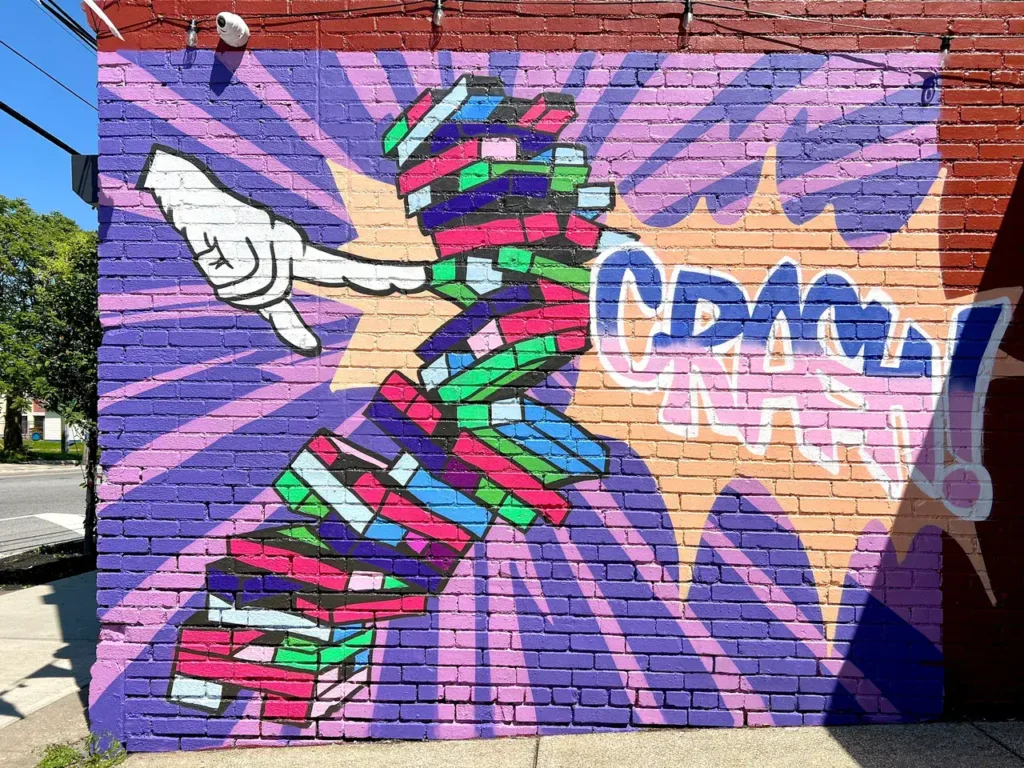
Michigan has undergone a remarkable transformation in how brands think about street-level advertising. Detroit’s revitalization story is one of the most compelling urban narratives of the past decade — and the mural art that has spread through Corktown, Eastern Market, Midtown, and along the Woodward Corridor is not just decoration. It is a signal that brands willing to put their name on the city’s walls are participating in something culturally significant, not just buying advertising space.
Our team at American Guerrilla Marketing has executed campaigns across Michigan markets — navigating Detroit’s complex neighborhood landscape, tapping Grand Rapids’ dense downtown arts district, and working with Ann Arbor’s university-adjacent wall inventory. This guide covers what brands need to know to execute successful mural advertising campaigns in Michigan: the best markets and neighborhoods, wall sourcing approaches, permit requirements, production considerations specific to Michigan’s climate, and how to build a campaign that goes beyond a single wall to create market presence.
If you are planning a mural campaign in Michigan — whether as a standalone brand anchor or as part of a larger street-level push — this is the operational reference you need before committing budget.
Why Michigan Is a Strong Mural Advertising Market
Michigan’s mural advertising market offers something that coastal markets increasingly cannot: accessibility. In New York or Los Angeles, premium wall inventory in high-visibility neighborhoods carries price tags that exclude mid-market brands. In Detroit, Grand Rapids, and Ann Arbor, strong wall inventory remains available at prices that allow brands to execute large-format campaigns without premium New York budgets — while reaching audiences with comparable quality and engagement.
Detroit’s Cultural Moment
Detroit’s revitalization has attracted a specific kind of resident and visitor — creative professionals, entrepreneurs, artists, and young families investing in an urban narrative that feels authentic rather than manufactured. That audience has above-average income, above-average engagement with brands that align with their values, and a strong positive association with brands that participate visually in the city’s renewal. A mural in Corktown or Eastern Market is not just advertising to that audience. It is a brand statement about who you are.
Grand Rapids’ Underrated Density
Grand Rapids is frequently overlooked in national media buy planning, but the city punches above its weight for mural advertising. The downtown corridor around Monroe Center and Wealthy Street has developed a walkable density with a young professional resident base that drives foot traffic comparable to much larger markets. ArtPrize — the annual public art competition that turns the city into an outdoor gallery — has created a cultural infrastructure around public art that makes mural advertising unusually well-received and photographed relative to market size.
Best Michigan Markets for Mural Advertising
Detroit: Corktown, Eastern Market, and Midtown
Corktown is Detroit’s oldest neighborhood and its most culturally active. Ford Motor Company’s acquisition and redevelopment of the old train station (Michigan Central Station) anchors the neighborhood with a major development project that will continue driving foot traffic and media attention for years. Wall inventory on the streets surrounding the station and along Michigan Avenue is premium — limited in quantity, high in visibility, and competitive for brands that understand the market.
Eastern Market is the largest historic public market district in the United States, covering 43 acres of buildings and surrounding streets. The Saturday market draws 40,000 to 50,000 visitors weekly during peak season. Mural density in Eastern Market is already high — Murals in the Market, an annual mural festival, has turned the district into a destination for mural photography. For brands seeking authentic street-level presence with massive weekly traffic, Eastern Market is Detroit’s most accessible high-impact market.
Midtown Detroit runs along Woodward Avenue between downtown and New Center, anchored by Wayne State University, the Detroit Institute of Arts, the Detroit Medical Center, and a growing density of restaurants, retail, and residential development. The pedestrian audience in Midtown skews younger and more educated than the broader metro. Wall inventory on the side streets off Woodward is available and generally well-maintained.
Grand Rapids: Downtown and Wealthy Street
Grand Rapids’ downtown mural advertising market centers on Monroe Center Street (the main retail and restaurant corridor), the Fulton Street corridor connecting downtown to East Hills, and the Wealthy Street business district. The city hosts ArtPrize annually — a competitive public art event that generates national and international coverage and draws 400,000+ visitors to the city over 19 days. Brands with mural installations in the ArtPrize corridor receive organic media exposure during the event period that amplifies campaign value significantly.
Ann Arbor: University District and Kerrytown
Ann Arbor’s mural advertising market is driven by the University of Michigan’s 47,000 students and faculty, plus the tech and life sciences companies that cluster around the university. The South University and North Campus corridors see heavy foot traffic from the student population. Kerrytown, the artisan market district north of downtown, has a more affluent and locally-engaged audience. Main Street through downtown Ann Arbor has the highest visibility for vehicular traffic, while Liberty Street and Washington Street corridors have the strongest pedestrian density.
Wall Sourcing in Michigan Markets
Michigan’s building stock — particularly in Detroit — includes a high proportion of brick masonry buildings from the early 20th century. Brick walls are excellent for hand-painted murals but require more surface prep for vinyl installations due to texture and porosity. Our scouting process in Michigan markets evaluates:
Surface Assessment
Detroit’s older buildings often have unpainted brick or previous paint layers in varying conditions. For hand-painted murals, surface prep typically involves pressure washing, crack repair, and masonry sealer application before painting begins. For vinyl installations, a skim coat or foam backer may be needed to create a sufficiently smooth surface for adhesive bonding. We assess every wall before committing to production format — some Michigan walls that look ideal from the street require significant prep work that affects project cost and timeline.
Climate Considerations for Michigan Installations
Michigan’s climate creates specific requirements that Southern or coastal markets do not face. Freeze-thaw cycles (temperatures that cross below and above freezing repeatedly in winter and spring) are the primary durability threat for mural installations. Paint adhesion failure from moisture infiltration and expansion is the main failure mode for murals not properly sealed. Vinyl adhesives must be rated for cold-temperature application and performance — standard installation adhesives can fail to cure or bond correctly below 50 degrees Fahrenheit.
Our production teams in Michigan use masonry sealers rated for freeze-thaw environments before painting, exterior paints with temperature-rated flexibility, and clear UV sealants applied after the paint cures fully. For vinyl installations, we specify cold-weather-rated vinyl and adhesives and avoid installations during periods when temperatures are forecast to drop below 40 degrees during the cure window.
Permit Requirements in Michigan Markets
Mural advertising permit requirements vary by municipality across Michigan:
Detroit
Detroit’s Department of Buildings, Safety Engineering and Environmental (BSEED) handles sign permits for commercial advertising murals. A mural with commercial messaging — brand name, product imagery, calls to action — requires a sign permit rather than being treated as public art. Applications include site plan, wall dimensions, proposed artwork, and property owner consent. Processing time typically runs 3 to 6 weeks. Detroit also has specific historic district regulations in areas like the Indian Village and Boston-Edison historic districts — murals in those areas face additional review requirements.
Grand Rapids
Grand Rapids manages sign permits through the Department of Community Development. Commercial mural applications require a sign permit and must comply with the city’s sign ordinance, which limits advertising content on building-mounted murals in certain zoning districts. The ArtPrize event period has additional registration processes if the installation is intended to participate in the competition. Our team coordinates all Grand Rapids permit filings as part of campaign execution.
Ann Arbor
Ann Arbor’s permit process for commercial murals runs through the city’s Planning & Development Services department. Commercial advertising murals are reviewed under the city’s sign ordinance. The University of Michigan’s campus areas have their own facilities review processes for installations visible from campus grounds. Ann Arbor’s downtown core has active design review requirements that apply to new sign installations including murals.
What the AGM Michigan Campaign Process Looks Like
When a brand comes to us for mural advertising in Michigan, here is how we approach the execution from our Industry City, Brooklyn, NY headquarters:
First, we align on market priority and audience targeting — which cities, which neighborhoods, what foot traffic profile matches the campaign objective. We then deploy scouts in target markets to identify available wall inventory that meets visibility, size, and surface condition requirements. Wall candidates are photographed, GPS-tagged, and presented to the brand for review before any property owner outreach begins.
Property owner negotiations in Michigan typically move faster than in coastal markets — property owners have seen fewer mural advertising inquiries and are often more open to agreements. We negotiate wall access terms, creative approval rights, and duration simultaneously. Once wall agreements are signed, permit applications are filed and production is planned in parallel to minimize timeline.
Production in Michigan markets uses local crew where possible — we maintain relationships with muralists and installation teams in Detroit, Grand Rapids, and Ann Arbor who understand local building conditions and material requirements. For branded campaigns where creative control is paramount, we bring in production direction from our core team while using local labor for surface prep and installation. Every installation receives GPS-documented photography upon completion.
Combining Michigan Murals with Other Campaign Formats
Mural advertising in Michigan works best as the visual anchor of a broader street-level campaign. Our team integrates murals with complementary formats to extend market presence beyond the mural walls:
Wheatpaste campaigns spread brand presence through the surrounding neighborhood at a fraction of the per-impression cost of mural installation. In Detroit’s Eastern Market, a mural at a primary intersection plus wheatpaste coverage in the surrounding 6-block radius creates a campaign presence that is difficult to avoid for anyone who visits the district regularly. Brand ambassador teams stationed near mural installations create the human engagement layer that converts visual awareness into active interaction. Our mural advertising service page covers the full national scope of what we offer across all markets.
Frequently Asked Questions
How much does mural advertising cost in Michigan?
Mural advertising costs in Michigan are generally below coastal market rates. Hand-painted murals in Detroit typically run $5,000 to $25,000 depending on size and artist selection. Printed vinyl murals run $2,500 to $12,000 for large-format installations. Wall rental agreements typically run $500 to $3,000 per month depending on location visibility and foot traffic. Grand Rapids and Ann Arbor are generally lower-cost than Detroit’s premium neighborhoods. Contact our team at (646) 776-2770 for a market-specific estimate.
What are the best neighborhoods for mural advertising in Detroit?
Detroit’s top mural advertising neighborhoods include Corktown (gentrifying, high foot traffic, young professional audience concentrated around Michigan Central Station), Eastern Market (40,000-50,000 weekly visitors during peak season), Midtown along Woodward (university and arts audience, dense pedestrian activity), and the developing Woodbridge and New Center districts. Ferndale and Royal Oak in the metro area also offer strong mural advertising environments with younger demographics.
Do I need a permit for mural advertising in Michigan?
Yes. Permit requirements vary by city. Detroit’s BSEED handles sign permits for commercial murals. Grand Rapids requires permits through Community Development. Ann Arbor processes mural sign applications through Planning & Development Services. Processing times run 3 to 6 weeks depending on the municipality. Our team manages all Michigan permit applications as part of the campaign execution process.
Can AGM execute mural campaigns in Michigan?
Yes. We execute mural advertising campaigns in Detroit, Grand Rapids, Ann Arbor, Lansing, and other Michigan markets. We handle wall sourcing, property owner negotiations, permit applications, production crew coordination, and GPS-documented installation reports. Michigan campaigns are coordinated from our headquarters at Industry City, Brooklyn, NY with local production teams in each market.
How long do murals last in Michigan’s climate?
Michigan’s freeze-thaw climate requires specific material choices for mural durability. Properly prepared and sealed painted murals can last 3 to 5 years in Michigan. Surface preparation (masonry sealing, crack repair) before painting is critical. Vinyl installations require cold-weather-rated adhesives and UV-resistant laminates to handle Michigan’s temperature extremes. Installations executed with proper materials and prep consistently outperform those using standard materials by 2 to 3x in lifespan.