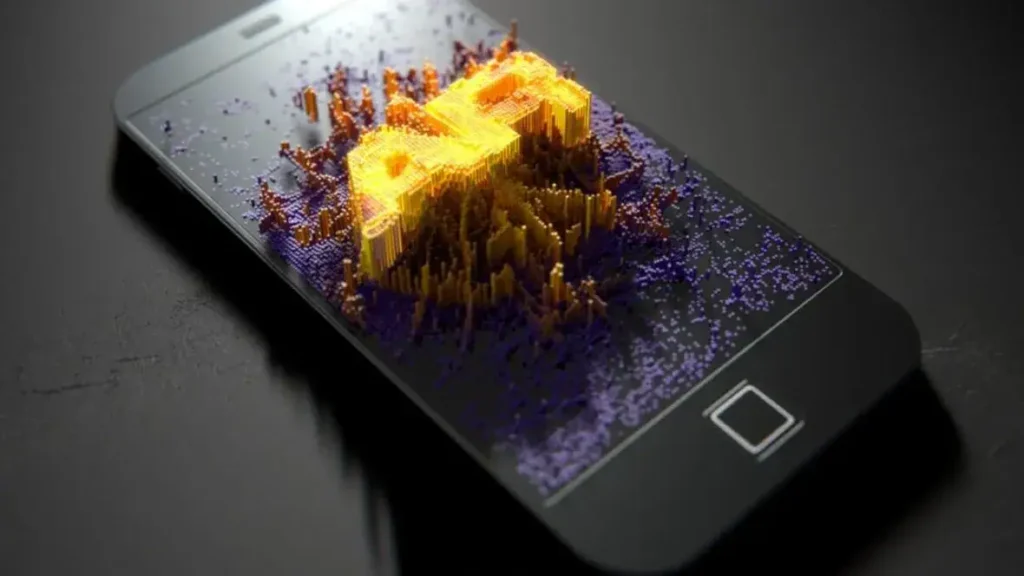
Augmented reality sits at an intersection that did not exist a decade ago: the boundary between the physical world and the digital one. Unlike virtual reality, which replaces physical reality entirely with a digital environment, AR keeps the real world in view and layers digital content on top of it. The result is an experience where digital objects appear to exist in physical space, viewed through a camera-equipped device or a specialized headset.
What makes AR significant for marketers, brands, and businesses is not just the technology itself but what it enables: interactive, participatory experiences that consumers choose to engage with rather than passively receive. In an environment where advertising is increasingly skipped, blocked, or ignored, AR creates moments that consumers actually seek out.
This guide covers what augmented reality actually is, how it works technically, where it is being applied across industries, and how brands are integrating AR into marketing campaigns and experiential activations.
Defining Augmented Reality
Augmented reality is a technology that overlays digital content, including images, 3D objects, animations, text, and sound, onto the user’s real-world environment. The digital content is positioned and oriented relative to the physical world, so it appears to exist within the space the user is looking at rather than floating separately from it.
The “augmented” in augmented reality refers precisely to this enhancement of reality: reality is the base layer, and digital content is added to it. This distinguishes AR from virtual reality (which replaces reality) and from traditional digital displays (which present digital content on screens separate from the physical environment).
Consumer AR is most commonly experienced through smartphone cameras, where an app uses the camera feed to identify the environment and overlay digital content in the correct position. Social media filters on Instagram, Snapchat, and TikTok are the most widely used consumer AR applications in existence, experienced by hundreds of millions of people daily without most of them thinking of it as “augmented reality.”
How Augmented Reality Works
Environmental Recognition
AR systems begin by understanding the physical environment. The camera captures the scene, and computer vision software analyzes the image to identify surfaces, objects, and spatial relationships. Advanced AR systems can recognize specific objects (a face, a product package, a floor surface) and understand the orientation and depth of what they see.
Marker-Based vs. Markerless AR
Early AR systems required visible markers, such as QR codes or printed targets, to anchor digital content. Markerless AR uses environmental analysis to place digital content on any appropriate surface without requiring a special target. Modern consumer AR is predominantly markerless, which makes it significantly more flexible for marketing applications.
Content Rendering
Once the system understands the environment, it renders digital content at the correct position, scale, and orientation to appear integrated with the physical space. Real-time tracking ensures the digital content stays correctly positioned as the user or the device moves. This tracking is computationally intensive, which is why AR capability has historically been tied to increasingly powerful mobile processors.
Display
For smartphone AR, the rendered composite view is displayed on screen in real time. For headset AR, the display is optical, with digital content projected directly into the user’s field of vision while they look through transparent lenses at the real world.
Key Applications of Augmented Reality
Gaming and Entertainment
Pokemon GO demonstrated in 2016 that consumer AR gaming had massive market potential: the game generated over $1 billion in revenue in its first year by placing digital creatures in real-world locations that players visited to collect them. The format remains a significant category, with ongoing development in location-based AR gaming that incentivizes physical movement through digital reward structures.
Entertainment applications extend beyond gaming: AR experiences at theme parks, museums, and live events create participatory moments that enhance the physical experience with digital layers.
Retail and E-Commerce
Virtual try-on has become one of the most commercially significant AR applications. Furniture retailers like IKEA allow customers to place virtual furniture in their actual rooms before purchasing. Cosmetics brands allow customers to try on makeup colors via smartphone camera. Eyewear brands offer virtual frame fitting. The consistent finding across these applications is that AR reduces purchase hesitation and return rates by closing the gap between product aspiration and real-world context.
Marketing and Brand Activations
Brands use AR in marketing to create interactive experiences that generate engagement, sharing, and memory. Branded AR filters on social media platforms allow consumers to interact with brand elements and share the experience with their networks, generating earned media from a single asset. Location-based AR activations reward consumers for visiting specific physical locations with exclusive digital experiences.
For experiential marketing campaigns, AR creates natural shareable moments. A consumer who has a visually striking AR experience at a brand activation is highly likely to capture and share that moment, extending the campaign’s reach beyond the immediate physical activation. Our experiential marketing team has integrated AR components into activations where the digital layer creates the shareability that amplifies the physical campaign’s reach.
Healthcare and Medicine
Medical applications of AR range from surgical guidance, where digital overlays during procedures help surgeons visualize anatomy without looking away from the operating field, to medical training, where AR simulations allow practitioners to practice procedures in realistic digital environments. These applications are in active deployment at major medical centers and represent one of the highest-stakes use cases for the technology.
Architecture and Construction
AR allows architects and clients to view proposed designs at full scale in the actual location where they will be built. Construction teams can overlay building plans onto a physical site, seeing exactly where structural elements should be positioned. These applications reduce costly errors and improve communication between technical and non-technical stakeholders.
Education and Training
AR in education creates interactive learning experiences that connect abstract concepts to visual and spatial representations. Anatomy students can explore 3D organ models overlaid on physical space. History students can view historical reconstructions of sites in their actual location. Corporate training programs use AR to simulate workplace scenarios for skills development.
Augmented Reality in Marketing: Specific Applications
Social Media AR Filters
Branded filters on Instagram, Snapchat, and TikTok represent the most accessible AR marketing format. Brands can create custom filters that incorporate brand elements (logos, colors, product imagery, branded visual effects) into user-generated content. When consumers use these filters and share the resulting content, the brand reaches their network at zero incremental cost per impression.
Filter performance varies significantly based on how entertaining, flattering, or novel the filter experience is. Filters that transform the user’s appearance or create a genuinely surprising visual experience generate far more organic sharing than filters that simply overlay a logo.
Product Visualization
AR product visualization allows consumers to see products in their actual environment before purchasing. The applications with the strongest commercial impact are those where real-world context is most important to the purchase decision: furniture, home decor, lighting, flooring, and similar categories where how something looks in a specific space is the primary purchase concern.
Location-Based AR Activations
Location-triggered AR experiences activate when a user is at a specific physical location, rewarding them with exclusive digital content. Brands use these to drive foot traffic to retail locations, event venues, and campaign activation sites. Combined with street-level marketing that draws attention to the AR experience, these activations create a bridge between physical and digital consumer engagement.
This integration of physical and digital is particularly relevant for brands running guerrilla marketing campaigns. A physical installation, poster, or brand activation becomes a trigger point for an AR experience that extends the campaign’s content and creates a shareable digital layer.
Event AR Activations
Live events create concentrated audiences that are already in an elevated engagement state. AR activations at events, concerts, sports games, and brand experiences create interactive moments that stand out in a stimulation-rich environment. The best event AR experiences are designed for immediate shareability: the consumer does something visually interesting with the brand, captures it, and shares it within minutes.
Limitations and Considerations for AR Marketing
AR marketing is not without friction. Consumer adoption requires an action, typically opening an app or scanning a code, that creates a participation barrier that traditional advertising does not have. The quality of the experience must justify the effort of that action. Mediocre AR experiences that require significant setup for minimal payoff damage the brand more than they help it.
The most successful AR marketing deployments solve for this friction through familiar platforms. Filters deployed natively on Instagram or Snapchat require no additional app installation, which dramatically lowers the participation barrier and increases adoption rates.
Production quality also matters enormously. Low-resolution 3D models, imprecise tracking that causes digital objects to drift, and frame rates that cause visible jitter create negative brand impressions. AR marketing that looks cheap creates an association with cheapness that the brand cannot afford.
The Future of AR in Marketing and Business
The trajectory for AR is toward wider hardware distribution and lower production costs. As AR capabilities become standard on all smartphones and wearable devices become more mainstream, the participation barrier for AR experiences will continue to fall. At the same time, improved tools for AR content creation are reducing the production cost and timeline for branded AR experiences, making the format accessible to brands at lower budget thresholds.
The integration of AR with location data, consumer behavior analytics, and personalization systems is creating increasingly sophisticated use cases where AR experiences adapt to the individual consumer’s context, preferences, and history with the brand.
Frequently Asked Questions About Augmented Reality
What is augmented reality?
Augmented reality (AR) is a technology that overlays digital content, including images, animations, text, or 3D objects, onto the user’s view of the real world. Unlike virtual reality, AR does not replace the real environment: it enhances it with digital layers that appear to exist within the physical space.
How does augmented reality work?
AR systems use cameras and sensors to capture the physical environment, then use software to identify surfaces and objects and overlay digital content in the correct position and orientation. The result is a composite view where digital and physical elements appear to coexist in the same space, updating in real time as the device or user moves.
What are the main applications of augmented reality?
AR has major applications in gaming and entertainment, retail virtual try-on, marketing and brand activations, healthcare and surgical guidance, architecture and construction, and education and training. Consumer-facing AR is most commonly delivered through smartphone apps and social media filters.
How is augmented reality used in marketing?
Brands use AR in marketing through interactive product demonstrations, virtual try-on experiences, branded AR filters on social platforms, location-triggered AR activations, and event activations designed to create shareable, memorable moments that extend a campaign’s reach through earned media.
What is the difference between augmented reality and virtual reality?
Virtual reality creates a fully immersive digital environment that replaces the physical world, typically requiring a headset. Augmented reality keeps the real world visible and adds digital elements to it, accessible on standard smartphones without specialized hardware.
Can augmented reality be used in experiential marketing campaigns?
Yes. AR activations create interactive moments at events and brand activations that give consumers a reason to stop, engage, and share. A well-designed AR experience at a street-level activation generates earned media from a single deployment point, extending the campaign’s reach significantly beyond the immediate physical audience.
What hardware do consumers need to experience augmented reality?
Most consumer AR experiences require only a smartphone with a camera. Social media platforms including Instagram, Snapchat, and TikTok have built AR filter tools accessible to brands. Dedicated AR headsets like Microsoft HoloLens are used in professional enterprise settings for more complex AR applications.
Frequently Asked Questions
What is exploring augmented reality definition and applications?
American Guerrilla Marketing provides exploring augmented reality definition and applications services across 50+ U.S. markets. Every campaign is planned, scouted, executed, and GPS-documented by our field teams. We work with regional brands and Fortune 500 companies on campaigns that require real street-level execution and documented proof of performance.
How does AGM approach and applications?
Our process starts with a market consultation to understand your goals, target audience, and budget. We then scout locations, handle any required permissions or permits, coordinate production and installation with our local crews, and provide a full GPS-tagged photo report after the campaign runs.
What markets does American Guerrilla Marketing cover for and applications?
We operate in 50+ U.S. markets including New York, Los Angeles, Chicago, Miami, Houston, Atlanta, Seattle, Denver, Boston, and dozens of secondary markets. Contact us to confirm availability and pricing for your specific market.
How much does a and applications campaign cost?
Campaign pricing depends on market, format, quantity, and duration. We work with budgets ranging from targeted single-market runs to national rollouts across multiple cities. Use our RFP Builder or contact us directly for a custom quote based on your specific campaign requirements.
How do I get started with and applications through AGM?
The fastest way to get started is to submit your campaign details through our RFP Builder at americanguerrillamarketing.com, or contact us directly at [email protected] or (646) 776-2770. Our team typically responds within one business day with availability and initial pricing.