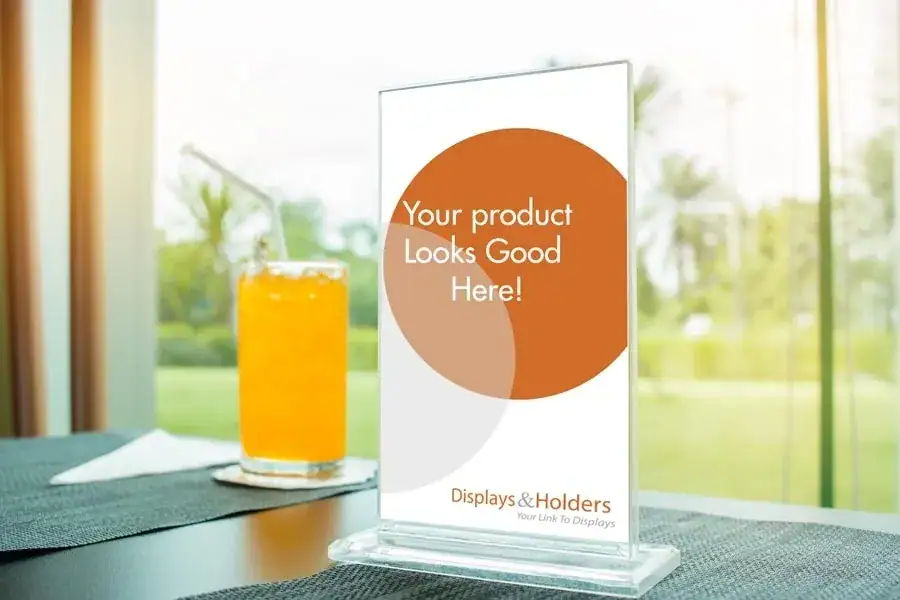
Most marketing advice focuses on digital channels — social ads, search campaigns, email automation. That’s not wrong, but it overlooks a medium that delivers something digital can’t: the undivided attention of someone sitting still for 45 minutes with nothing to look at but what’s on the table in front of them. Table top advertising is one of the most effective and most underused local marketing formats available to small and mid-sized businesses.
Our team at American Guerrilla Marketing designs campaigns that reach people in the physical world — at the street level, in transit, and in the dining and social environments where they actually spend their time. We deploy guerrilla marketing campaigns across 50+ U.S. markets and consistently find that formats with long dwell times outperform high-reach, low-engagement alternatives. A diner who reads your table tent three times during a meal is a better prospect than someone who scrolled past your banner ad at 40 miles per hour.
This guide breaks down what table top advertising is, why it works, which formats perform best, how to select the right restaurant partners, and how to build a local campaign that generates measurable results.
What Is Table Top Advertising?
Table top advertising places branded marketing materials on the tables of restaurants, bars, cafes, and other dining venues. The placement is deliberate — these materials are positioned where diners will see them during the entirety of their visit, creating extended, repeated exposure in a relaxed, receptive environment.
Common Table Top Advertising Formats
The most common table top format is the tent card — a folded printed card positioned at the center or corner of a table. Tent cards can be double-sided, allowing one face to carry an advertiser’s message and the other to carry the restaurant’s promotional content (specials, events, loyalty program information). This mutual value exchange is why restaurants often welcome advertiser partnerships: the tent card serves their operational needs at no cost to them.
Placemats offer larger creative surface area and can be printed as single-use paper or reusable laminated materials. Paper placemats are less common in post-pandemic environments due to hygiene preferences, but laminated reusable formats remain popular. Coasters are a lower-profile format that works particularly well in bar environments where table space is limited and coasters serve a functional purpose. Digital table displays — small screens or tablets positioned at tables — are a premium format that allows for video content, interactive engagement, and real-time content updates.
The Dining Context Advantage
Dining is one of the few remaining contexts where consumers are genuinely separated from their phones for extended periods. Social dining norms — and restaurant culture in general — create environments where looking up from your device is encouraged. In that context, table top advertising faces virtually no competition for attention. The message sits in the visual field, returns to the diner’s attention between conversations, and is physically handled multiple times during a meal. This level of engagement is impossible to replicate digitally.
Why Table Top Advertising Works for Local Businesses
The table top format isn’t just about dwell time — it’s about context, community, and the trust transfer that happens when a local restaurant implicitly endorses the businesses advertising on its tables.
Captive Audience with Extended Dwell Time
Average dining duration at casual restaurants is 45 to 75 minutes. At upscale restaurants, it’s often 90 minutes or more. During that time, table top advertising has a captive audience with nothing to do but eat, drink, and look around. A diner will typically look at a table tent multiple times throughout a meal, often reading it more thoroughly on the second or third look than they would a traditional ad format. This repetition within a single exposure event builds message retention in a way that single-impression media can’t.
Neighborhood Targeting Precision
Restaurants serve their immediate neighborhood. A restaurant in Park Slope, Brooklyn serves Park Slope residents. One in Lincoln Park, Chicago serves Lincoln Park residents. Table top advertising in these venues reaches a geographically precise audience — your target neighborhood community — with near-perfect accuracy. This precision rivals the best digital geo-targeting at a fraction of the cost, and without the cookie deprecation and attribution problems that plague digital campaigns.
Trust Through Restaurant Association
When your brand appears in a restaurant that a neighborhood resident trusts and frequents, there’s an implicit endorsement. The restaurant has, in effect, vetted you by allowing your material on its tables. This association doesn’t make your ad an editorial recommendation, but it does mean your brand is encountered in a context of trust rather than the skepticism that greets most advertising. Local business advertising in particular benefits from this halo — a neighborhood service provider’s tent card at a beloved local restaurant feels like a community connection rather than an intrusion.
Word-of-Mouth Amplification
Dining is inherently social. People eat with friends, family, colleagues. A table tent that sparks a conversation — “Have you heard of this?” — amplifies its reach beyond the immediate diner. In social dining contexts, a single well-placed table tent can generate multiple genuine recommendations within a single meal. For local businesses, this word-of-mouth amplification is the highest-quality marketing available.
Best Table Top Advertising Formats by Venue Type
Different dining environments call for different table top approaches. Matching format to venue type maximizes effectiveness and ensures materials feel appropriate to the environment.
Casual and Fast Casual Dining
High-volume casual dining and fast casual restaurants offer maximum impression counts — hundreds or thousands of table turns per week at high-traffic locations. Tent cards are the standard format in these environments, often positioned alongside condiment holders or at the center of each table. Creative in high-traffic casual environments needs to be legible at a glance and visually compelling enough to earn a second look from distracted diners.
Bar and Nightlife Venues
Bar environments offer a different audience and a different interaction model. Coasters are the natural format — functional, expected, and handled repeatedly throughout a visit. Bar advertising reaches consumers in a social, often celebratory mood that’s receptive to entertainment, lifestyle, and event advertising. Promoter-driven campaigns — driving awareness for concerts, club nights, or sports events — perform particularly well in bar venues.
Coffee Shops and Cafes
Coffee shops serve a daytime audience — remote workers, students, neighborhood regulars — with extended dwell times and high repeat visit rates. Table advertising in coffee shop environments has the benefit of repeat exposure across multiple visits. A regular who comes in five days per week sees your tent card or placemat repeatedly, building awareness through frequency rather than single extended exposure.
Upscale and Fine Dining
Fine dining environments require more conservative, elegant creative approaches. Aggressive promotional advertising feels jarring in these contexts. High-end brands, cultural institutions, luxury services, and premium experiences align better with upscale dining environments than mass-market consumer brands. The audience is smaller but highly qualified — higher income, higher discretionary spending, and often in decision-making mode about the exact categories that fine dining advertisers tend to represent.
Making Table Top Advertising Measurable
One historical criticism of table top advertising was that it was difficult to measure. QR codes and digital integration have changed that completely. Modern table top campaigns can be precisely measured through digital action tracking.
QR Codes and Landing Page Attribution
Every table tent or placemat in a campaign gets a unique QR code that links to a campaign-specific landing page. Scans are tracked in real time, providing impression-to-action conversion data that’s as precise as any digital campaign. Location-specific QR codes allow performance comparison across restaurant partners, identifying which venues deliver the highest engagement rates and informing future placement decisions.
Promo Codes and Offer Tracking
Table top materials featuring unique promo codes allow direct revenue attribution. When a customer redeems a code, you know exactly which restaurant delivered that acquisition. This tracking method is simple, requires no technical infrastructure beyond a basic discount system, and provides clear evidence of campaign ROI that satisfies even skeptical finance teams.
Phone Call Tracking
For local service businesses — contractors, healthcare providers, legal services — call tracking numbers on table top materials measure inbound call volume attributable to the campaign. Each restaurant location gets a unique phone number, calls are tracked, and the campaign’s call generation performance is measured in real time.
Integrating Table Top Advertising into a Broader Local Campaign
Table top advertising is most powerful when it’s one element of a coordinated local marketing strategy. Standalone table tent campaigns are effective; table tent campaigns that work in concert with street-level visibility and digital presence are transformative.
The Street-to-Table Campaign Model
We often build campaigns that pair street-level visibility — sidewalk stencils, poster campaigns — with table top placements in the same neighborhood. A consumer who sees your brand on the sidewalk outside their favorite restaurant and then encounters your table tent inside experiences a frequency effect that dramatically improves recall. Two touchpoints in the same physical geography within a short time window creates the impression that your brand is genuinely part of the neighborhood.
Pairing with Brand Ambassador Programs
A brand ambassador stationed near restaurant entrances at peak dining hours creates a human touchpoint that complements the table-level message. Ambassadors can drive app downloads, distribute samples, or collect contact information — extending the campaign’s commercial reach beyond what a passive table placement can achieve alone.
Frequently Asked Questions About Table Top Advertising
What is table top advertising?
Table top advertising places branded marketing materials directly on restaurant, bar, or cafe tables where diners will see them during their meal. Formats include tent cards, placemats, coasters, table wraps, and digital displays positioned at table level for maximum dwell-time exposure.
What types of businesses benefit most from table top advertising?
Local service businesses, entertainment venues, event promoters, consumer apps, real estate agents, healthcare providers, and any brand targeting a neighborhood or community audience benefit from table top advertising. The format is particularly effective for businesses whose customers overlap with the restaurant’s patron demographic.
How much does table top advertising cost?
Table top advertising costs vary by format and scale. A local tent card campaign across a handful of restaurants can be executed for a few hundred dollars in production plus placement fees. Larger network placements across dozens of locations in a city typically range from $2,000 to $10,000 per month.
How long do diners spend looking at table top advertising?
Dining dwell time averages 45 to 90 minutes at sit-down restaurants, and table top advertising is present throughout that window. Unlike a billboard passed in seconds, a table tent or placemat can be read, studied, and revisited multiple times during a single meal.
Is table top advertising still relevant in the digital age?
Yes. Dining is one of the few remaining contexts where consumers are physically separated from their screens for extended periods. Table top advertising reaches people during those rare moments of focused attention, making it highly valuable despite the growth of digital channels.
Can table top advertising drive digital engagement?
Absolutely. Table top ads with QR codes link directly to websites, app download pages, event registration, or social media profiles. This bridge from physical placement to digital action makes table top advertising measurable in ways that traditional print advertising often isn’t.
How do you select the right restaurants for a table top advertising campaign?
Select restaurants where the patron demographic aligns with your target customer. Consider average check size, neighborhood, cuisine type, and traffic volume. High-traffic casual dining and fast casual locations offer maximum impression volume. Upscale restaurants offer a premium demographic profile at lower impression volume.
Frequently Asked Questions
What is table top advertising the secret weapon for local businesses?
American Guerrilla Marketing provides table top advertising the secret weapon for local businesses services across 50+ U.S. markets. Every campaign is planned, scouted, executed, and GPS-documented by our field teams. We work with regional brands and Fortune 500 companies on campaigns that require real street-level execution and documented proof of performance.
How does AGM approach local businesses?
Our process starts with a market consultation to understand your goals, target audience, and budget. We then scout locations, handle any required permissions or permits, coordinate production and installation with our local crews, and provide a full GPS-tagged photo report after the campaign runs.
What markets does American Guerrilla Marketing cover for local businesses?
We operate in 50+ U.S. markets including New York, Los Angeles, Chicago, Miami, Houston, Atlanta, Seattle, Denver, Boston, and dozens of secondary markets. Contact us to confirm availability and pricing for your specific market.
How much does a local businesses campaign cost?
Campaign pricing depends on market, format, quantity, and duration. We work with budgets ranging from targeted single-market runs to national rollouts across multiple cities. Use our RFP Builder or contact us directly for a custom quote based on your specific campaign requirements.
How do I get started with local businesses through AGM?
The fastest way to get started is to submit your campaign details through our RFP Builder at americanguerrillamarketing.com, or contact us directly at [email protected] or (646) 776-2770. Our team typically responds within one business day with availability and initial pricing.