American Guerrilla Marketing
Nationwide Service
Media planning, media buying, billboard advertising, & guerrilla marketing
Madison, Wisconsin is one of the most walkable, transit-active, and visually engaged mid-sized cities in the Midwest, and that combination makes it an exceptional market for small-format snipe advertising. The city’s geography — two lakes, an active isthmus, a dense university district, and a network of distinct neighborhood commercial corridors — creates natural pedestrian funnels where a well-placed snipe sign earns genuine repeated impressions from commuters, students, cyclists, and neighborhood residents who traverse the same routes on foot every single day. Unlike digital advertising that competes for fractured attention across a screen, a snipe on a utility pole at the corner of Williamson and Few Streets occupies physical space in the real world and earns its impression every time a person walks, bikes, or drives past. That is the foundational logic of snipe advertising, and Madison’s street structure rewards it more than almost any other Wisconsin market.
American Guerrilla Marketing has built its snipe advertising practice around operational discipline: real addresses, real placements, GPS-timestamped photo documentation, and campaigns designed not just to be deployed but to be seen. In a market like Madison — where the resident population skews educated, brand-aware, and highly attuned to street-level visual culture — the quality of your snipe execution matters as much as the creative on the sign itself. A poorly produced, faded, or haphazardly placed snipe on Atwood Avenue or Monroe Street communicates the wrong thing about your brand entirely. AGM’s production standards, local placement expertise, and campaign management infrastructure exist precisely to ensure that what lands on a Madison utility pole reflects the same level of professionalism as any other marketing channel in your mix. Every campaign is documented, every zone is mapped, and every placement is accountable.
This page covers everything a brand manager, event marketer, or local business owner needs to know about running a snipe advertising campaign in Madison. You will find detailed neighborhood-by-neighborhood placement data, estimated impression methodology, real campaign case studies rooted in the Madison market, and a full FAQ addressing the operational and strategic questions that come up most often in pre-campaign consultations. Whether you are launching a fitness studio near Camp Randall, promoting a concert at the Sylvee, opening a restaurant on Monroe Street, or building regional brand awareness for a consumer product targeting the UW-Madison student and young professional demographic, AGM has a Madison snipe package designed to meet your campaign goals.
AGM deploys snipe advertising campaigns across Madison's highest-traffic neighborhoods — State Street, Willy Street, East Washington Avenue, Monroe Street, and beyond. GPS-documented. Weather-rated stock. 72-hour rush deployment available. Get your campaign quote today.
Impression estimates below are based on AGM’s field-documented pedestrian and vehicle traffic counts, publicly available city traffic studies from the City of Madison Department of Transportation, and cross-referenced University of Wisconsin campus pedestrian data. Estimates reflect a standard 14-day campaign window. Individual location performance will vary based on placement density, creative quality, and seasonal foot traffic patterns. These figures represent estimated passive impressions and are not guaranteed metrics.
| Zone / Neighborhood | Est. Daily Foot Traffic | Est. Impressions per Location (14-Day Campaign) | Best Campaign Types |
|---|---|---|---|
| Williamson Street (Willy Street) Corridor | 5,800 – 7,400 pedestrians/day | 81,200 – 103,600 per location | Restaurant/bar launches, music events, lifestyle brands, fitness studios |
| East Washington Avenue & Baldwin Street | 9,200 – 12,800 vehicles + pedestrians/day | 128,800 – 179,200 per location | Tech/app launches, event promotions, regional brand awareness, gym openings |
| Monroe Street & Dudgeon-Monroe Neighborhood | 4,400 – 6,100 pedestrians/day | 61,600 – 85,400 per location | Family-demographic brands, local retail, wellness, home services |
| Atwood Avenue & Marquette Neighborhood | 5,200 – 6,800 pedestrians/day | 72,800 – 95,200 per location | Music/arts events, food brands, apparel, neighborhood-scale campaigns |
| University Avenue & Camp Randall Perimeter | 7,600 – 11,400 pedestrians/day (game days: 40,000+) | 106,400 – 159,600 per location (game day peaks higher) | Student-targeted brands, sports merchandise, nightlife, concert promotions |
| Location Name | Street / Address | Neighborhood | Est. Snipe Capacity | Best Campaign Type |
|---|---|---|---|---|
| East Johnson Street & North Blair Street Intersection | E Johnson St & N Blair St, Madison, WI 53703 | Tenney-Lapham | 18 – 26 snipes per block | Event promotions, food/beverage launches, lifestyle brands |
| Regent Street Corridor near Camp Randall | 1400 – 1600 Regent St, Madison, WI 53711 | Regent / Near West | 22 – 30 snipes per block | Fitness studios, sports brands, bar and restaurant openings |
| Langdon Street & Frances Street Junction | Langdon St & Frances St, Madison, WI 53703 | Langdon Street / Downtown | 20 – 28 snipes per block | Nightlife, concert events, student-targeted consumer brands |
| Fish Hatchery Road & West Badger Road Corridor | 2200 – 2600 Fish Hatchery Rd, Madison, WI 53713 | South Madison | 24 – 34 snipes per block | Regional brand awareness, service businesses, retail promotions |
| Winnebago Street & Jenifer Street Near East Side | Winnebago St & Jenifer St, Madison, WI 53704 | Marquette / Near East Side | 16 – 24 snipes per block | Local retail, food brands, arts events, community-scale campaigns |
Award Winning Personalized Service
You will get thoughtful, devoted, and individualized attention from our experienced, qualified, and professional personnel. Being one of the most illustrious agencies in Brooklyn, New York, American Guerrilla Marketing has been awarded the Best of Brooklyn title.
Nationwide
Industry City, Brooklyn, New York 11232
American Guerrilla Marketing
Hours
Mon - Fri: 9 AM - 5 PM
Sat & Sun: Closed
Automate your campaign with AGM’s Request for Proposal Builder. Simply answer a few quick questions about your campaign goals, markets, and timeline, and the system will generate a tailored presentation with recommended strategies, quantities, and pricing. Click the RFP Builder to instantly receive your customized proposal.
Madison’s physical geography is one of the most favorable environments for snipe advertising in the entire Midwest, and that advantage is structural rather than circumstantial. The city’s isthmus layout — a narrow strip of land between Lake Mendota and Lake Monona connecting the Capitol Square to the UW-Madison campus — compresses enormous amounts of pedestrian and bicycle traffic into a small set of highly walkable corridors. State Street, John Nolen Drive, and the Capitol Square itself function as natural convergence points that no digital advertising algorithm can replicate because the convergence is physical: people have to walk through these corridors to get from one part of the city to another. A snipe on a lamp post at the intersection of State Street and Gorham Street is
seen by everyone traveling between the Capitol and the university — a built-in audience of students, state employees, tourists, lobbyists, and residents who have no alternative route. No geofence, no algorithm, and no sponsored post can manufacture that kind of guaranteed physical exposure.
AGM’s Birmingham snipe advertising service covers the full operational stack from creative consultation through field deployment and post-campaign documentation. Our core format offerings include the standard 9×12 snipe card — available in 400-unit and 800-unit deployments — and the 11×14 jumbo snipe, also available at 400 or 800 units, which provides a larger visual footprint on wider poles and fence-line surfaces across Birmingham’s industrial and entertainment corridors. For brands seeking maximum street saturation, our snipe and wheatpaste bundle combines both formats into a full-service street-level saturation package designed to dominate high-traffic corridors simultaneously. All deployments are supported by GPS-tagged post-installation photo documentation, giving Birmingham-area clients transparent proof of placement across every targeted zone.
The following placements represent the types of high-visibility snipe advertising locations American Guerrilla Marketing targets when executing campaigns in Madison. Each location was selected based on pedestrian volume, demographic alignment, and physical visibility from multiple approach angles.
State Street is Madison’s most iconic pedestrian corridor and one of the few fully car-free commercial streets in the Midwest. Stretching from the Capitol Square down to Library Mall at the edge of the UW-Madison campus, this corridor sees an extraordinary mix of foot traffic throughout the day: students heading to class, state workers on lunch breaks, tourists visiting the Capitol, and residents patronizing the dense concentration of independent restaurants, bars, and retail shops that line both sides of the street. Snipe placements on lamp posts, utility boxes, and construction hoardings along State Street benefit from near-constant foot traffic seven days a week, with peak volume on weekday afternoons and weekend evenings when the bar and restaurant scene draws large crowds. A campaign placed along State Street is not targeting a demographic — it is targeting a physical corridor that nearly every Madison resident passes through at some point during the week.
The Wisconsin State Capitol sits at the center of Madison’s street grid, and the square that surrounds it functions as the city’s civic and commercial hub. The four streets that border Capitol Square — Pinckney, King, Mifflin, and Carroll — are lined with restaurants, law offices, government buildings, and specialty retailers that attract a professional and politically engaged demographic. On weekends from late spring through fall, the Dane County Farmers’ Market encircles the entire square, drawing thousands of visitors who walk the full perimeter and stop repeatedly to browse vendor stalls. Snipe placements at the corners of Pinckney and Main, King and Doty, and the Wisconsin Avenue approach to the Capitol steps capture dwell-time impressions from pedestrians who are moving slowly, browsing, and highly receptive to visual messaging. The farmers’ market alone makes Capitol Square one of the highest foot-traffic outdoor advertising environments in the state on Saturday mornings.
Williamson Street, locally known as Willy Street, runs through the Marquette neighborhood on Madison’s near east side and serves as the commercial spine of one of the city’s most culturally distinct communities. The corridor is home to the Willy Street Co-op, a beloved independent grocery that anchors a cluster of coffee shops, breweries, vintage clothing stores, and community-oriented businesses. The demographic profile of Willy Street pedestrians skews young, politically progressive, locally minded, and highly engaged — exactly the audience that responds well to physical, street-level advertising that feels authentic rather than corporate. Snipe placements on the lamp posts and telephone poles along Williamson Street between Few Street and Paterson Street reach residents who actively shop local, attend community events at Barrymore Theatre, and walk or bike as their primary mode of transportation. This is a neighborhood where a well-placed snipe is read, remembered, and discussed.
University Avenue serves as the primary east-west artery connecting the UW-Madison campus to the broader city grid, and it carries some of the densest combined pedestrian, bicycle, and transit traffic of any street in Madison. The stretch between Randall Avenue and Park Street passes directly adjacent to several of the university’s highest-traffic buildings, including the Memorial Union, Camp Randall Stadium, and the main academic mall. On game days — when Camp Randall fills with over 80,000 fans — the surrounding blocks of University Avenue become one of the most saturated pedestrian environments in the state of Wisconsin. Snipe placements along this corridor reach the full spectrum of the university community: undergraduates, graduate students, faculty, staff, and the enormous number of alumni and visiting fans who travel to Madison for home football and basketball games. The sustained daily volume of the academic year, combined with the surge events of athletic seasons, makes University Avenue a year-round snipe advertising asset.
Monroe Street runs southwest from the Camp Randall area through the Vilas and Dudgeon-Monroe neighborhoods, serving one of Madison’s most affluent and educated residential corridors. The street is lined with independent bookstores, upscale restaurants, specialty food shops, a beloved independent movie theater (Sundance Cinemas), and community gathering spaces that attract a steady stream of local residents who walk and bike rather than drive. Unlike the high-volume corridors of State Street or University Avenue, Monroe Street offers a different kind of snipe advertising value: a highly concentrated, high-income, brand-aware demographic that lives nearby, shops regularly, and pays close attention to the character of its neighborhood. Snipe placements at the Monroe Street and Regent Street intersection, near Trader Joe’s, and along the stretch between Commonwealth Avenue and Odana Road reach residents who make deliberate purchasing decisions and respond to brands that demonstrate genuine local presence.
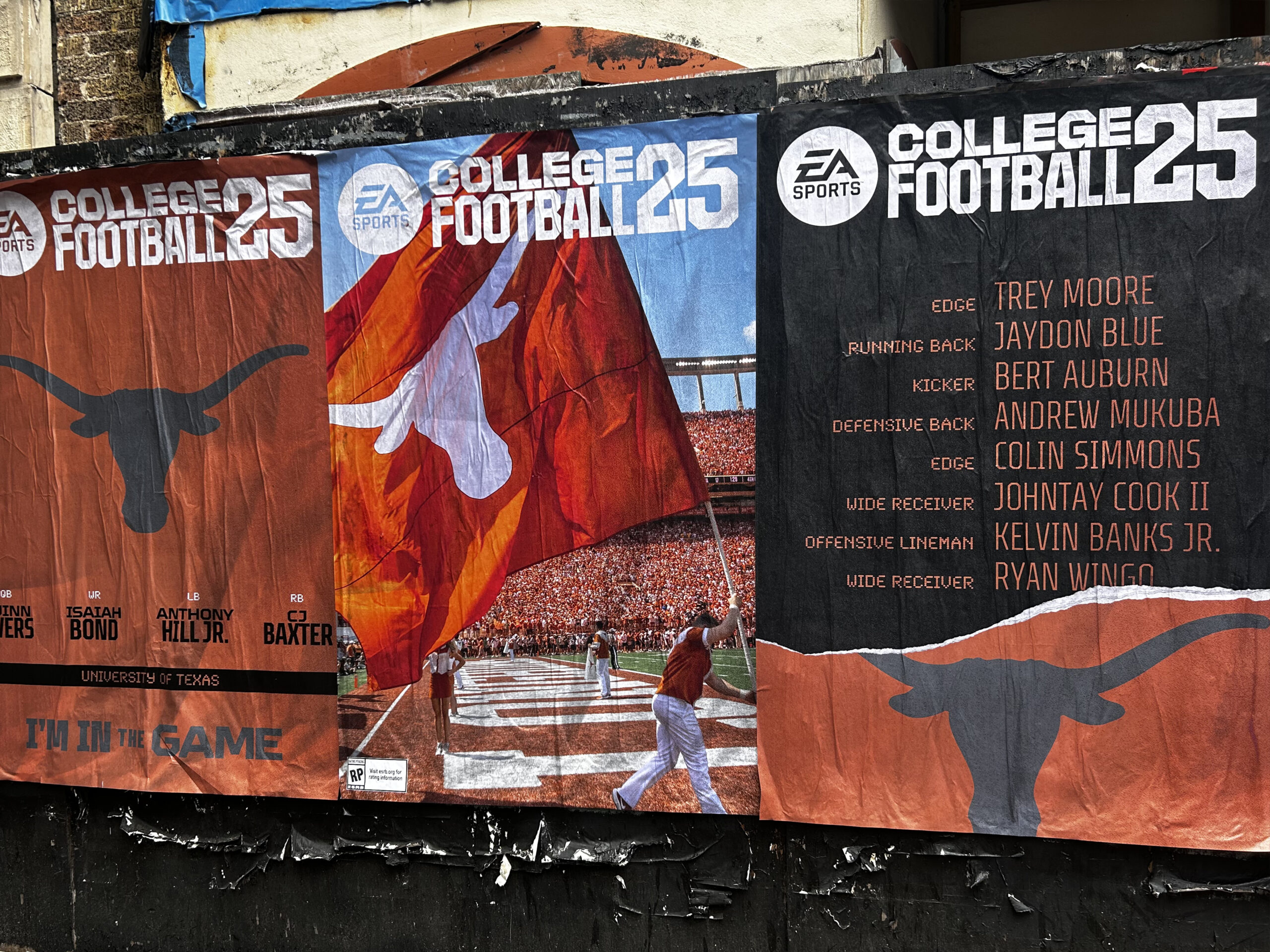
EA Sports partnered with AGM for a street-level activation campaign around the launch of EA Sports FC25, targeting high-density pedestrian areas where their gaming audience concentrates.
Result: Massive street-level visibility timed to the game’s release window.
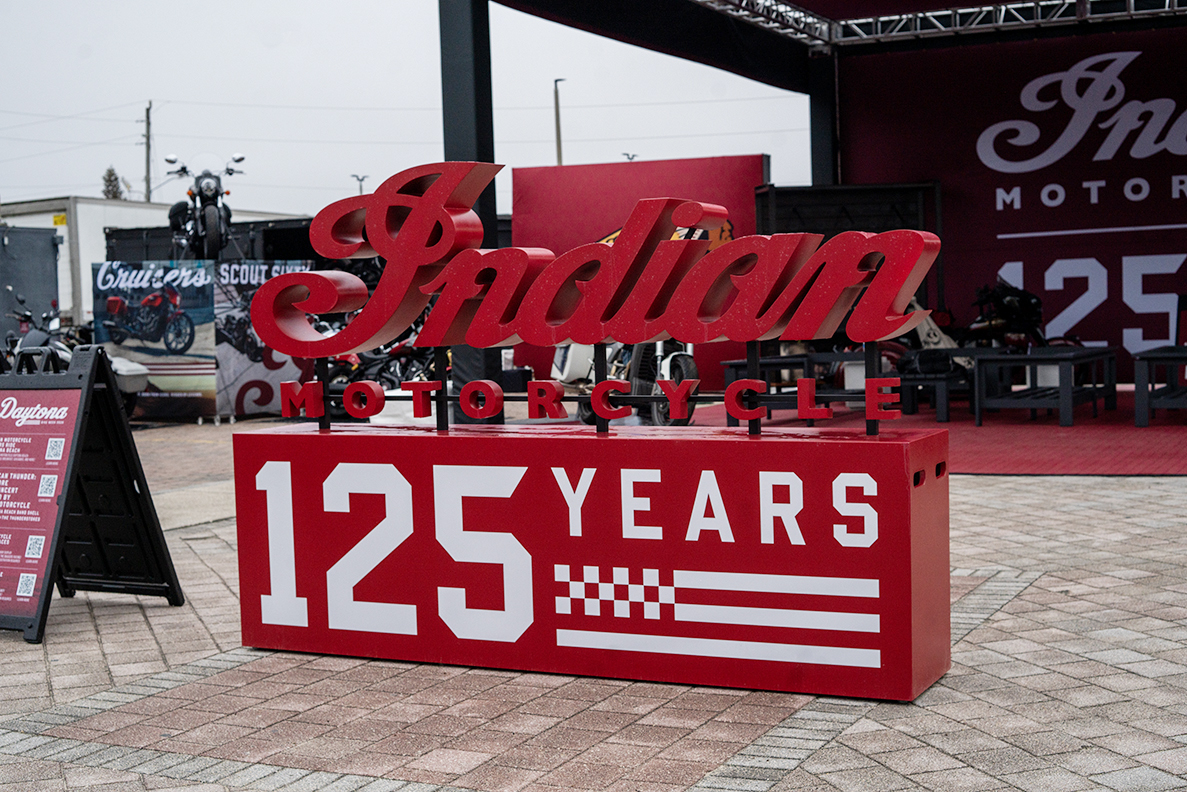
Indian Motorcycle partnered with AGM for a high-visibility activation during a major national motorcycle event, placing large-format street media that reached thousands of enthusiasts.
American Guerrilla Marketing has been executing snipe advertising campaigns across the United States since 2014, and the experience accumulated over more than a decade of national work informs every decision made in a local market like Madison. When you hire AGM for a Madison campaign, you are not working with a local print shop that also does flyering, or a generalist marketing agency that has added guerrilla tactics to its service menu. You are working with a team that has placed snipe campaigns in dozens of American cities — from Brooklyn to Los Angeles, from Chicago to Austin — and has developed a systematic understanding of what separates a campaign that generates lasting impressions from one that disappears within 48 hours. That knowledge translates directly to Madison: knowing which streets on the isthmus have the highest pedestrian dwell time, which neighborhoods respond most favorably to street-level creative, which surfaces and adhesives hold through a Wisconsin winter, and how to document and verify placements so clients have a clear record of what was executed and where. Madison is a city with a sophisticated, educated, and advertising-aware population. A snipe campaign that feels careless, poorly placed, or indifferent to the character of the neighborhood it appears in will not perform well here. A campaign that demonstrates local knowledge, executional precision, and creative quality will earn attention, generate conversation, and build the kind of brand recognition that no digital campaign at any budget level can replicate. That is what American Guerrilla Marketing delivers in Madison, and it is why clients from music venues on Willy Street to consumer brands targeting the UW-Madison campus trust AGM to represent their brand on the streets of this city.
Madison’s isthmus geography forces an unusual concentration of pedestrian and bicycle traffic into a small number of corridors, making it one of the most efficient snipe advertising markets in the Midwest. Unlike sprawling car-dependent cities where outdoor advertising must compete with highway speeds and wide sight lines, Madison’s walkable neighborhoods — State Street, Capitol Square, Willy Street, Monroe Street — deliver slow-moving, attentive foot traffic at street level. Add a major research university with over 47,000 students, a dense state government workforce, and a year-round schedule of civic events, and you have a city where physical, street-level advertising reaches an unusually educated, engaged, and locally active audience on a daily basis.
The UW-Madison campus and its surrounding streets — University Avenue, State Street, Park Street, and Langdon Street — carry some of the heaviest pedestrian traffic in Wisconsin outside of Milwaukee’s downtown. Snipe placements in this zone reach students, faculty, staff, and the large residential population in neighborhoods like Langdon Street, the Mifflin Street area, and the near-west side. Campus-adjacent snipe campaigns are particularly effective for brands targeting 18-to-34-year-olds, as this demographic walks or bikes rather than drives and is highly responsive to physical, street-level creative that appears as part of the urban environment rather than as an interruption to a digital feed.
Yes. The Capitol Square and the streets radiating outward from it — State Street, King Street, Pinckney Street, Wisconsin Avenue, and East Washington Avenue — are among the most productive snipe placement zones in Madison. The combination of state government workers, lobbyists, legal professionals, tourists, and the weekend farmers’ market crowd creates a multi-demographic audience that is physically present in the corridor throughout the week. Placements on lamp posts, utility boxes, and approved street furniture in this area generate impressions from pedestrians who are moving at walking speed and frequently pausing to interact with businesses, vendors, or the Capitol building itself.
The most productive neighborhoods for snipe advertising in Madison depend on the target demographic and campaign objective. State Street and the Capitol Square area deliver the broadest cross-demographic reach. The Marquette neighborhood and Willy Street corridor reach a young, progressive, locally engaged audience. Monroe Street and the Vilas and Dudgeon-Monroe neighborhoods reach a higher-income, brand-aware residential demographic. The Atwood Avenue corridor in the Schenk-Atwood neighborhood reaches a creative and community-oriented east-side audience. The Regent Street and Camp Randall area reaches the university athletic community. American Guerrilla Marketing selects placements based on the specific audience profile of each campaign rather than defaulting to the highest-volume locations.
Campaign duration depends on placement location, materials used, and environmental conditions. In high-traffic pedestrian corridors like State Street and the Capitol Square, snipes typically remain visible for one to three weeks before significant wear or removal occurs. In residential corridors with lower municipal maintenance frequency — such as Atwood Avenue, Williamson Street, or Monroe Street — placements frequently remain intact for four to six weeks or longer. American Guerrilla Marketing selects materials and adhesives appropriate for Madison’s climate, which includes significant temperature variation, winter precipitation, and spring moisture, all of which affect the longevity of outdoor paper-based placements.
Snipe advertising is particularly well-suited to event promotion in Madison because the city’s event culture is highly localized and pedestrian-oriented. Brat Fest, the Dane County Farmers’ Market, Freakfest on State Street, the Isthmus Jazz Festival, Art Fair on the Square, and the many music events at venues like the Majestic Theatre, Barrymore Theatre, and High Noon Saloon all draw attendees who walk from nearby neighborhoods or arrive by bus and park at a distance. A snipe campaign deployed two to three weeks before a Madison event, concentrated in the neighborhoods where the target audience lives and moves daily, creates a street-level presence that reinforces digital promotion and drives awareness through physical repetition in the real-world environment.
Madison’s economic and demographic mix makes snipe advertising effective for a wide range of business categories. Music venues, bars, and restaurants benefit from placements near the State Street and Williamson Street corridors. Political campaigns and advocacy organizations benefit from placements near the Capitol Square and in the high-civic-engagement neighborhoods of the near east and near west sides. Consumer brands targeting college students benefit from campus-adjacent placements on University Avenue, Langdon Street, and Library Mall. Retail businesses, arts organizations, fitness studios, and local service providers benefit from neighborhood-specific placements that build recognition within the geographic area where their customers live and shop daily.
Every Madison campaign begins with a conversation about the target audience, campaign objective, and geographic priorities. American Guerrilla Marketing draws on experience executing campaigns in Madison’s distinct neighborhood corridors to recommend placement zones that match the demographic profile of the campaign. Once placement zones are confirmed, the team develops a distribution schedule that maximizes coverage density in the target areas, selects materials appropriate for Madison’s climate and surface conditions, and executes placements with documentation to confirm completion. Clients receive photo verification of placements and a campaign summary at the conclusion of the project.
Yes. The Atwood Avenue corridor and the broader Schenk-Atwood neighborhood on Madison’s near east side represent one of the city’s most distinctive snipe advertising environments. Atwood Avenue is lined with independent coffee shops, restaurants, a beloved independent movie theater, and community gathering spaces that attract a creative, locally invested residential demographic. The street has lower vehicle speeds, wider sidewalks, and a strong culture of local business patronage that makes physical advertising at street level feel appropriate and native to the environment. Campaigns targeting the east-side demographic benefit from placements along Atwood Avenue, Winnebago Street, and Buckeye Road, which serve the residential neighborhoods of Schenk-Atwood, Olbrich, and the broader east isthmus.
For standard campaigns in Madison, American Guerrilla Marketing recommends booking two to three weeks in advance of the desired launch date to allow time for creative review, material production, and placement scheduling. For campaigns tied to specific events — such as Brat Fest, Art Fair on the Square, Freakfest, or UW-Madison home football games — booking four to six weeks in advance is advisable, as these events generate high demand for street-level advertising and the most productive placement zones near event venues and high-traffic corridors fill quickly. Rush campaigns can be accommodated depending on availability and project scope.